Artwork
Samson Mocked by the Philistines
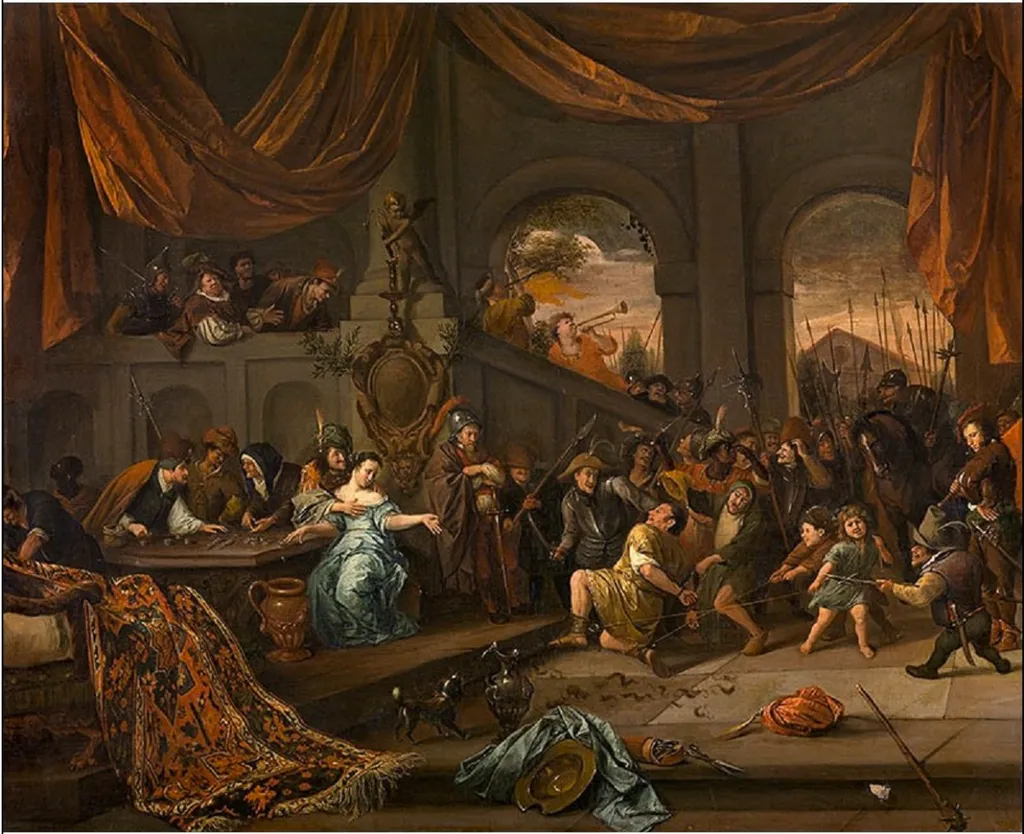
Samson Mocked by the Philistines is an oil painting by the Dutch Golden Age artist Jan Steen. It is held in the collection of the Royal Museum of Fine Arts Antwerp.
About this work
Subject & Meaning
The painting depicts the biblical narrative of Samson Mocked by the Philistines, focusing on the moment immediately following his betrayal by Delilah.
The painting depicts the biblical narrative of Samson Mocked by the Philistines, focusing on the moment immediately following his betrayal by Delilah. The composition shows the bound hero with his shorn hair lying on the ground, surrounded by a jeering crowd of tormentors. Central to the iconography is Delilah, who taunts the captive by tossing coins into a pot while making an obscene gesture and accepting the advances of a lustful man. This scene captures the loss of Samson's divine strength, which resided in his hair, and emphasizes themes of treachery and humiliation. Jan Steen infuses this religious subject with his characteristic humor, chaos, and grotesque energy, transforming a solemn scriptural event into a raucous, folk-like spectacle of mockery.
Technique & Style
Samson Mocked by the Philistines is executed in oil paint on canvas, measuring 65.7 cm in height and 82.3 cm in width. The work was created circa 1676 and underwent significant investigation and restoration at the Mauritshuis in The Hague in 2018. Prior to this intervention, the painting was misattributed to an 18th-century copyist, Jacques Ignatius de Roore, a status it held from the 1940s until the recent reattribution to Jan Steen.
Stylistically, the painting displays the artist's characteristic humor, satire, and chaotic energy within a popular scene, contrasting with a darker, underlit composition. The handling emphasizes a bustling crowd of tormentors surrounding the biblical hero, capturing a moment of betrayal and physical vulnerability. The formal qualities reflect Steen's ability to infuse religious narratives with vivid, earthy realism and dynamic group interactions.
History & Provenance
Jan Steen painted *Samson Mocked by the Philistines* on canvas between 1675 and 1676. The work first appeared in an eighteenth-century auction catalogue described as a painting of Samson bound by the Philistines, noted for its rare ideas and attributed to Steen. From the 1940s until 2017, the Royal Museum of Fine Arts Antwerp classified the piece as an eighteenth-century copy by Jacques Ignatius de Roore based on a Steen original. Following investigation and restoration at the Mauritshuis in The Hague in 2018, experts reattributed the painting to Steen, overturning the previous hypothesis. The work was subsequently featured in the exhibition *Jan Steen vertelt* at the Mauritshuis in early 2018.
The painting is held in the collection of the Royal Museum of Fine Arts Antwerp (KMSKA). Its attribution history is complex; while an 18th-century auction catalogue identified it as an original Jan Steen, the museum classified it from the 1940s until 2017 as an 18th-century copy by Jacques Ignatius de Roore. Following investigation and restoration at the Mauritshuis in The Hague during 2018, experts reattributed the work to Steen.
Regarding exhibition history, the work was displayed under the title De bespotting van Simson as part of the Jan Steen vertelt exhibition at the Mauritshuis. This presentation ran from February 15 to May 13, 2018.
Legacy
The painting’s reputation shifted dramatically after its 2018 reattribution to Jan Steen. Previously regarded as an 18th‑century copy by Jacques Ignatius de Roore, technical examination at the Mauritshuis restored its status as an autograph work from about 1675-1676. Early modern viewers praised its inventive composition, as an 18th‑century auction description called it “very good and with rare ideas.” In 2018 the Mauritshuis featured the newly confirmed Steen in the exhibition *Jan Steen vertelt*, presented as *De bespotting van Simson*. The revised attribution renewed scholarly and public interest in the artist’s handling of biblical satire and crowd dynamics, anchoring the work more securely within Steen’s late oeuvre.
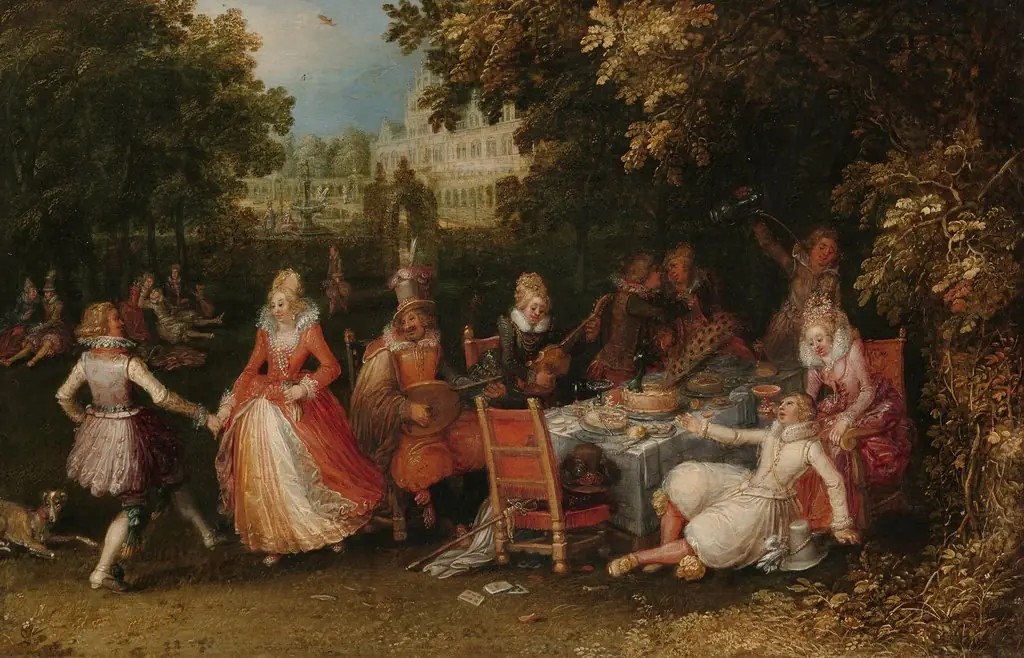
Artist & collection
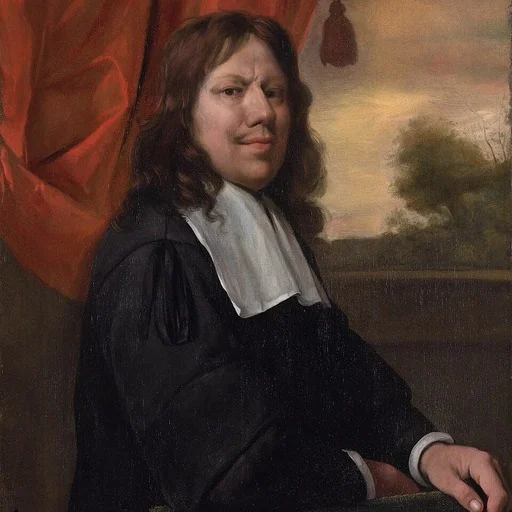
Artist
Jan Havickszoon Steen was a Dutch Golden Age painter, one of the leading genre painters of the 17th century.

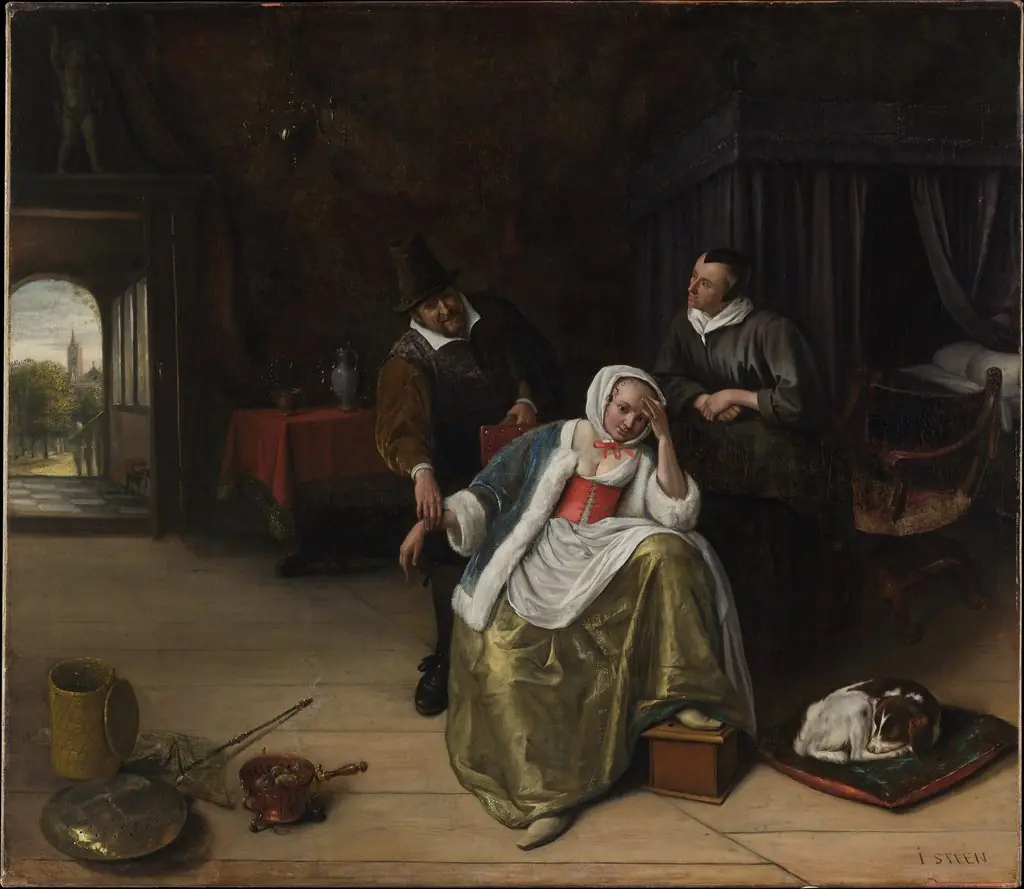 Paintings of physicians by Jan Steen
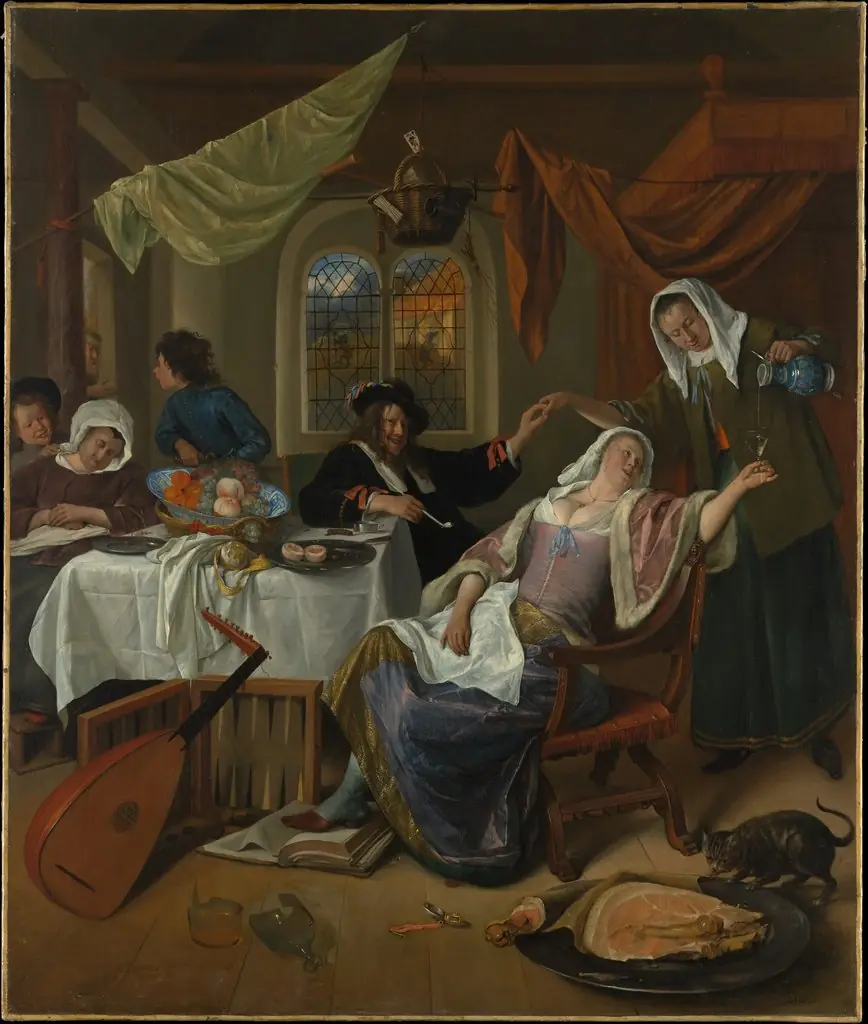 The Dissolute Household
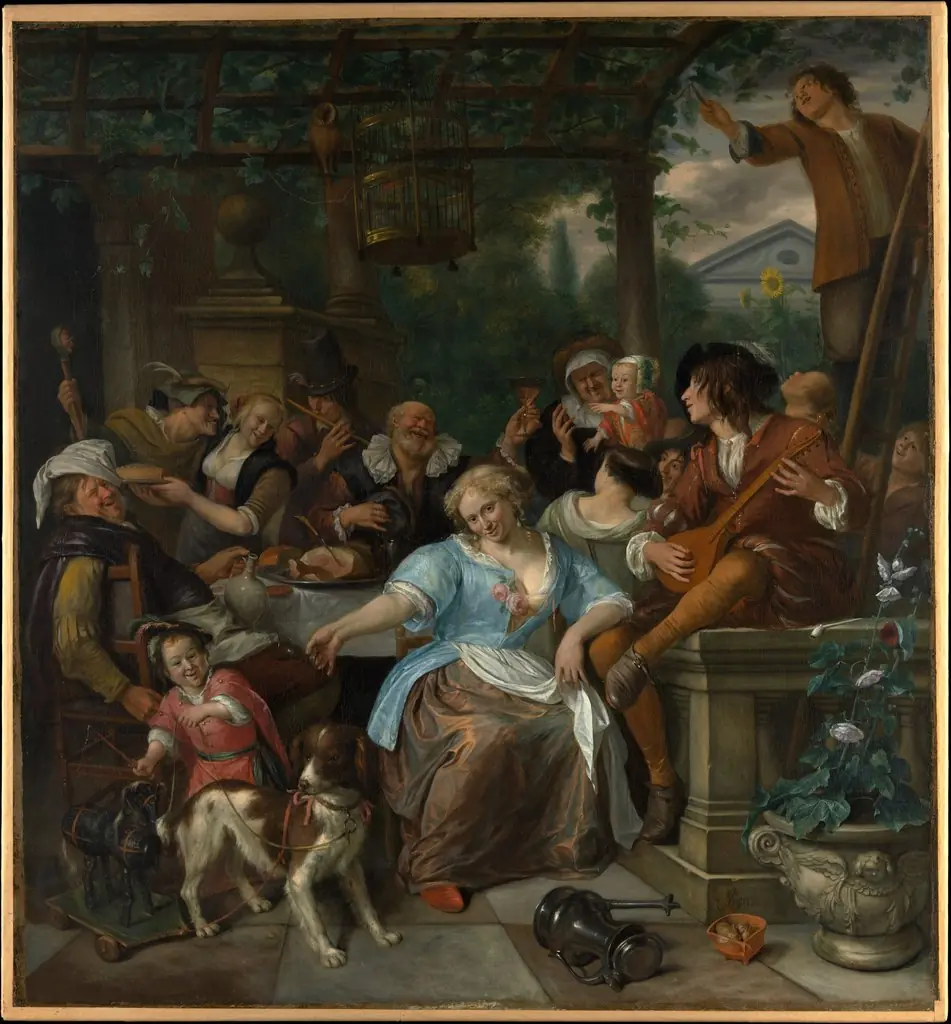 Merry Company on a Terrace
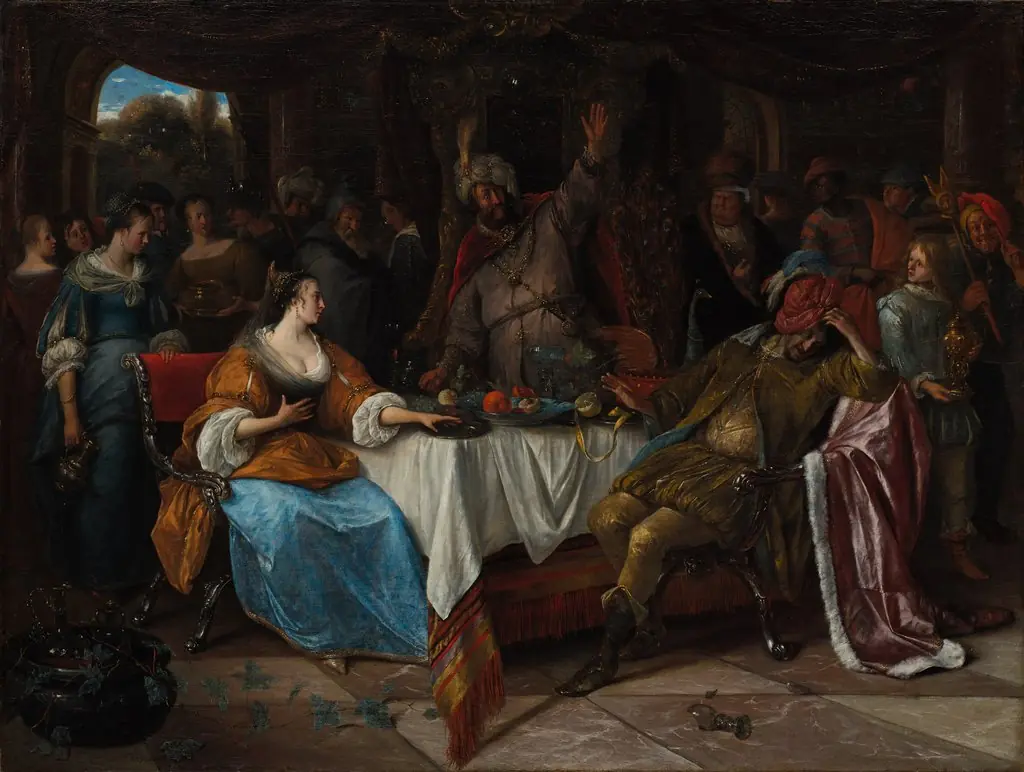 Esther, Ahasuerus, and Haman
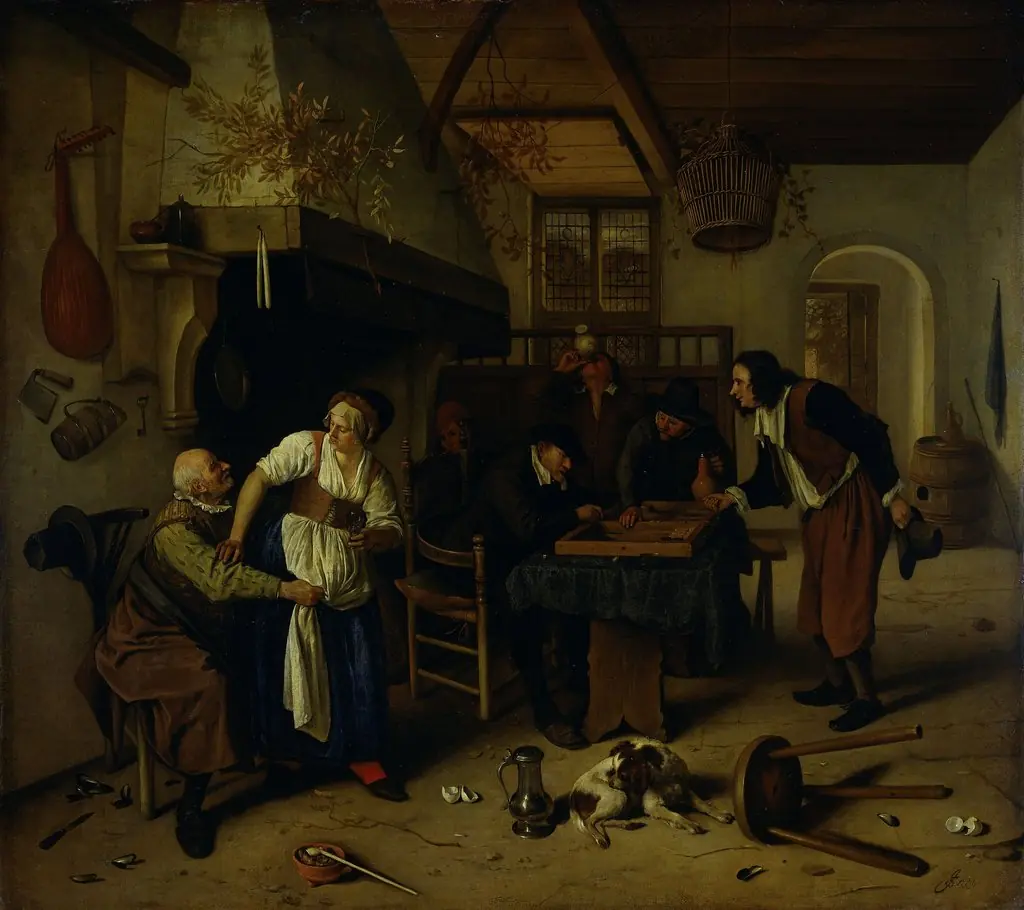 Interior of an inn with an old man amusing himself with the landlady and two men playing backgammon, known as 'Two kinds of games'
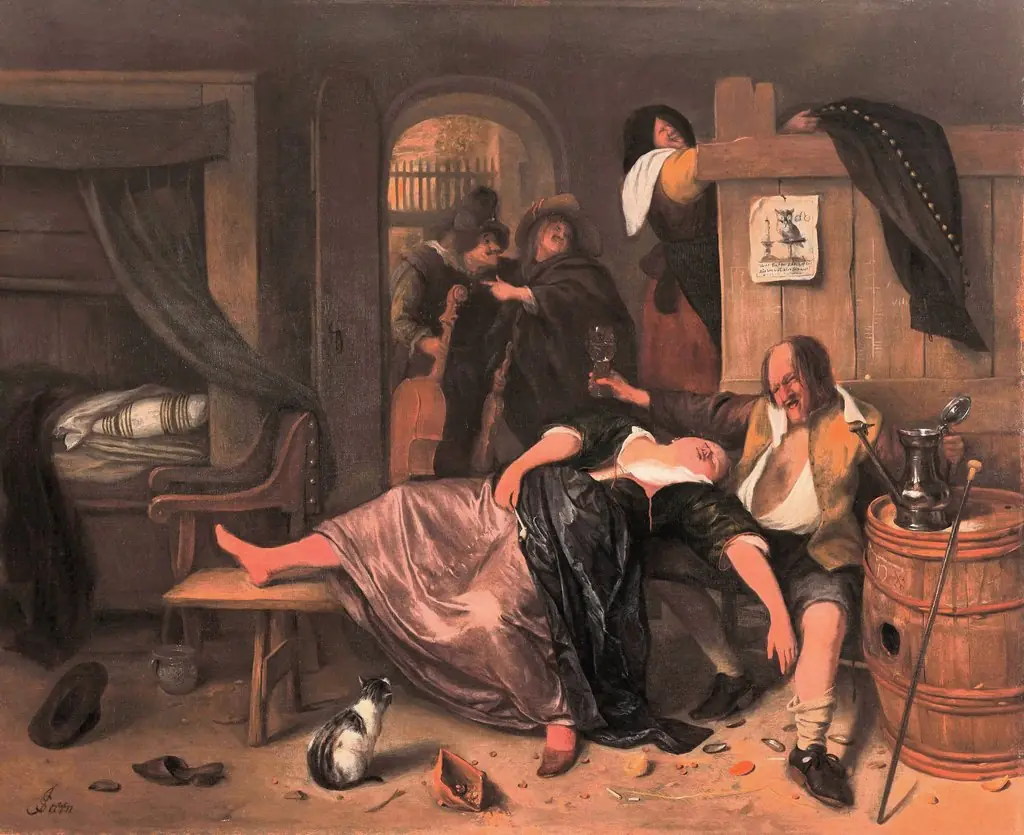 The Drunken Couple
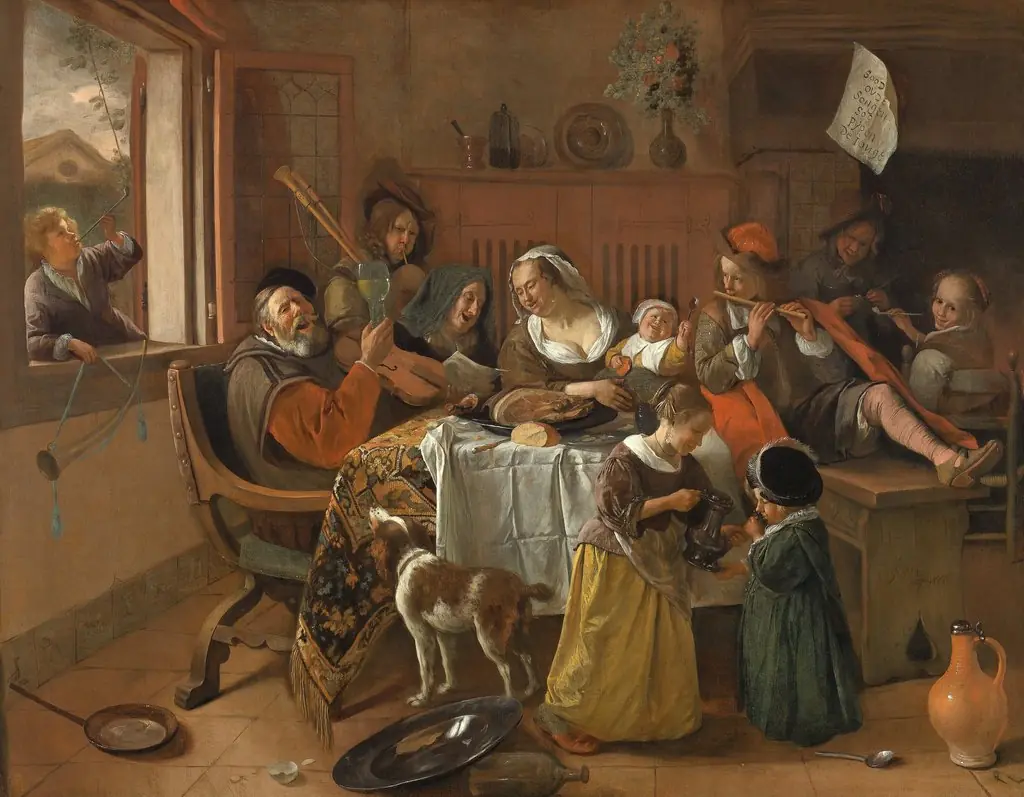 The Happy Family
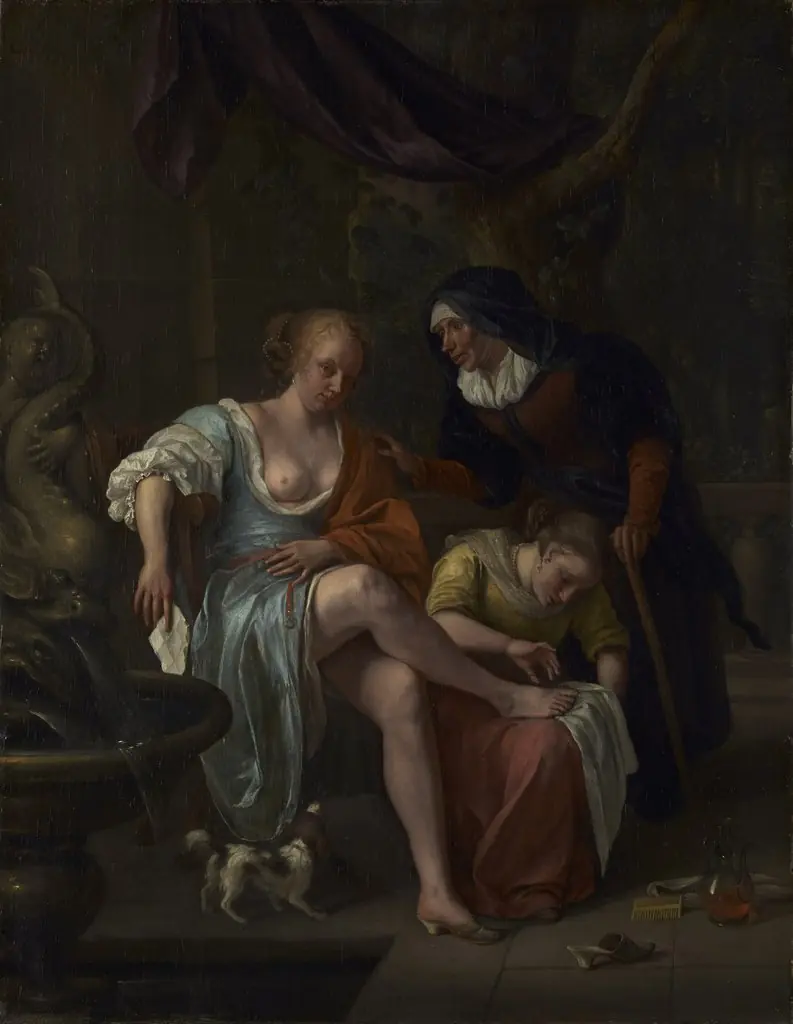 Bathsheba after the Bath
- The fête champêtre
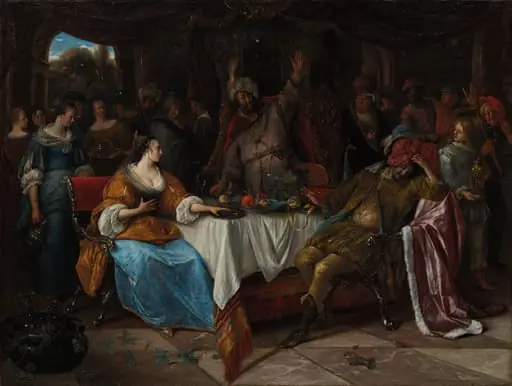 Esther, Ahasuerus, and Haman
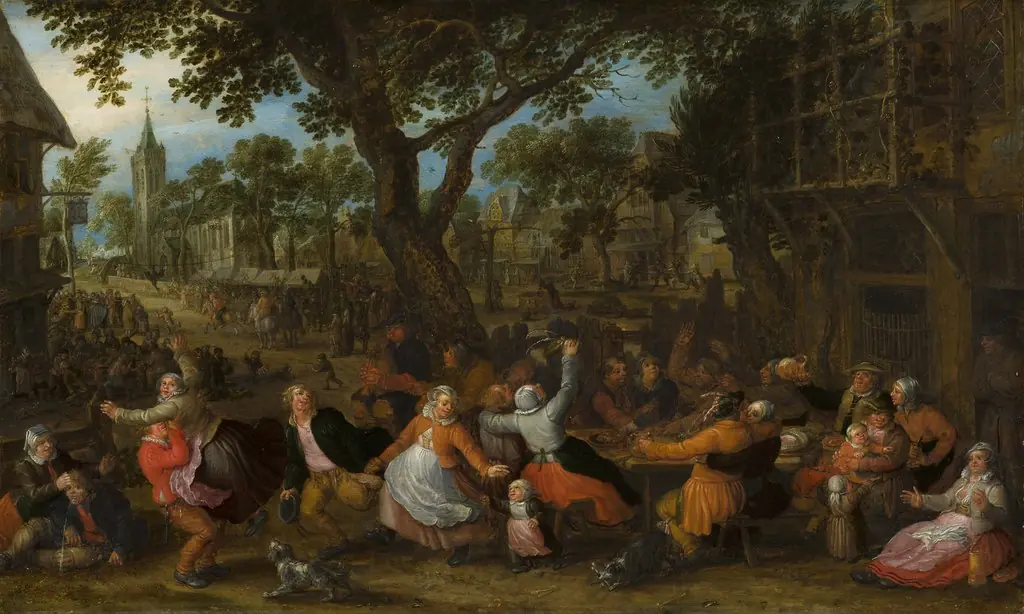 Country Fair
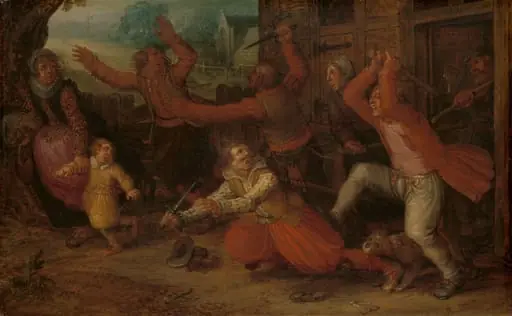 The Peasant’s Pleasure
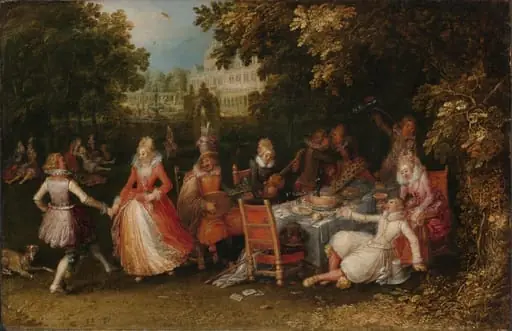 The Fête Champêtre
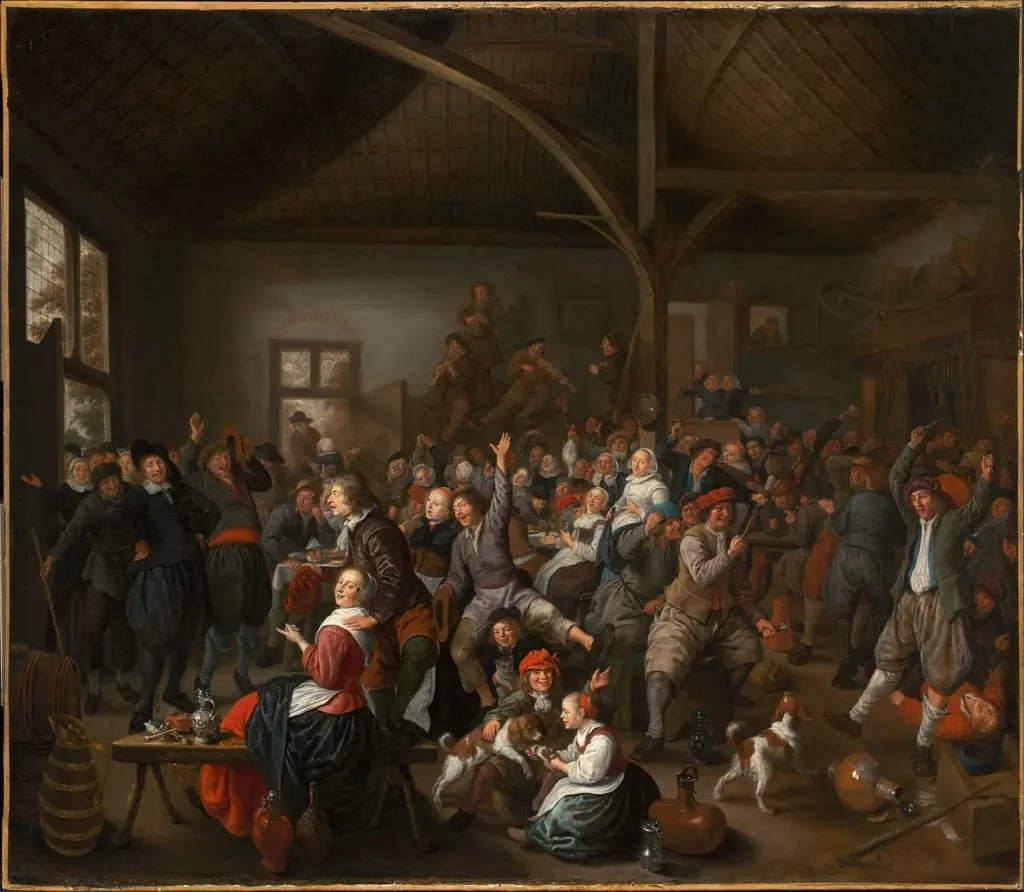 Peasants Carousing
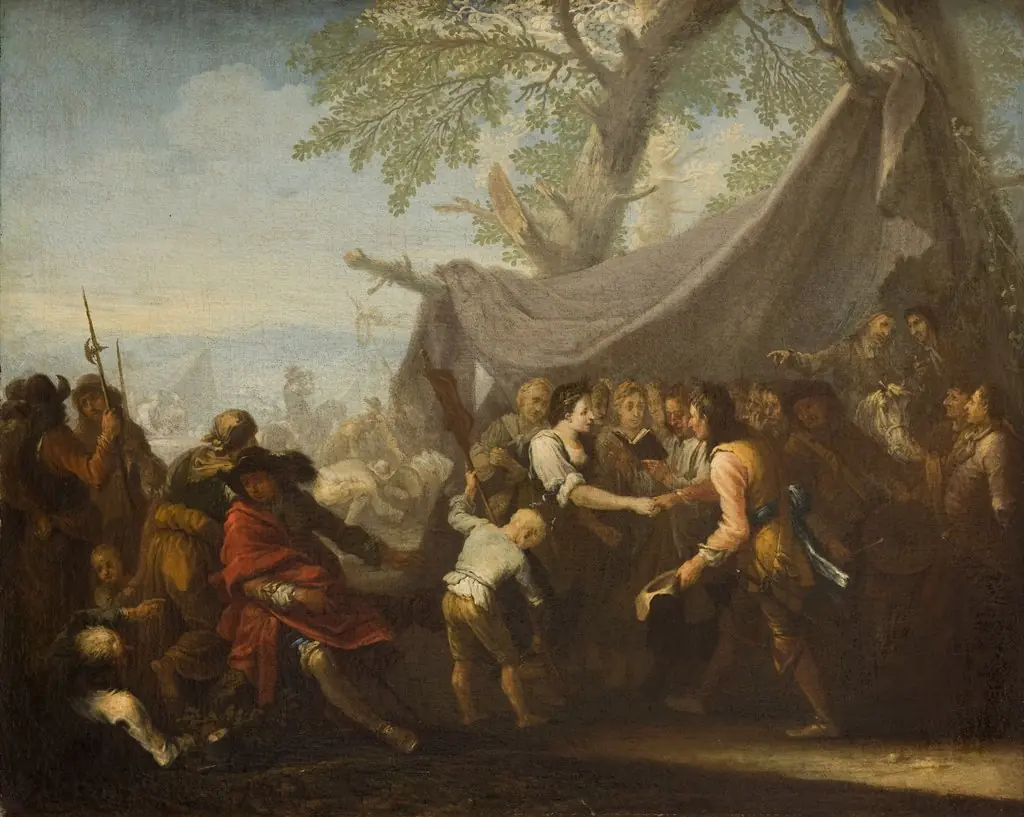 Event at a Military Camp (Wedding at a Military Camp)
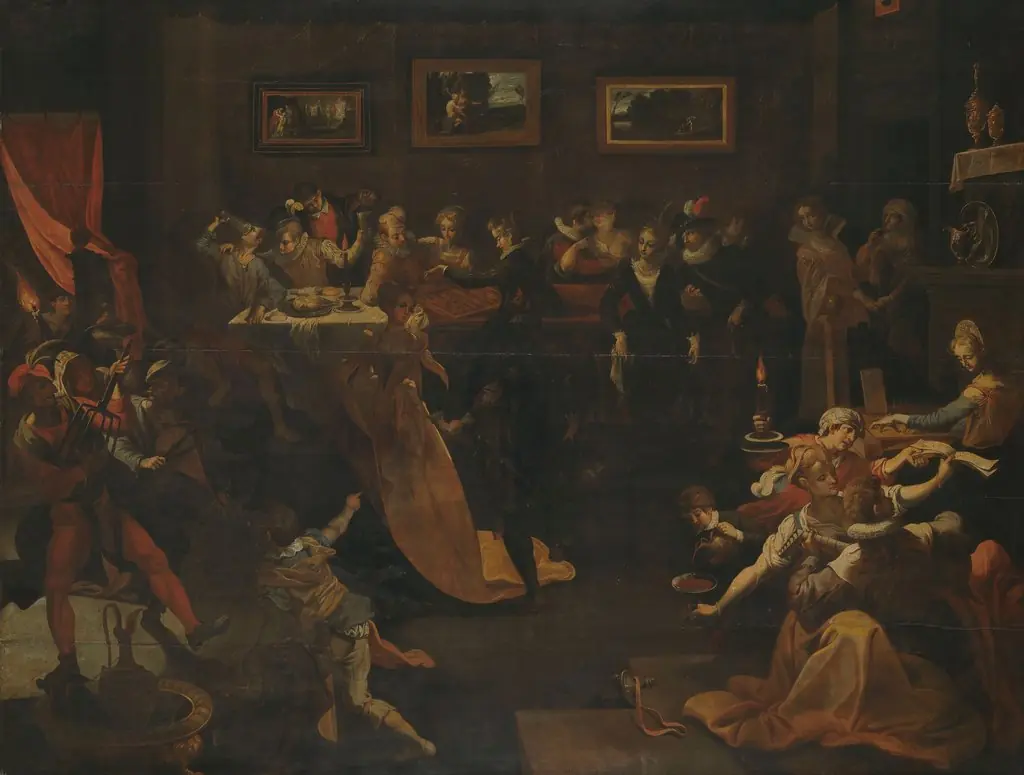 Night Banquet and Masquerade
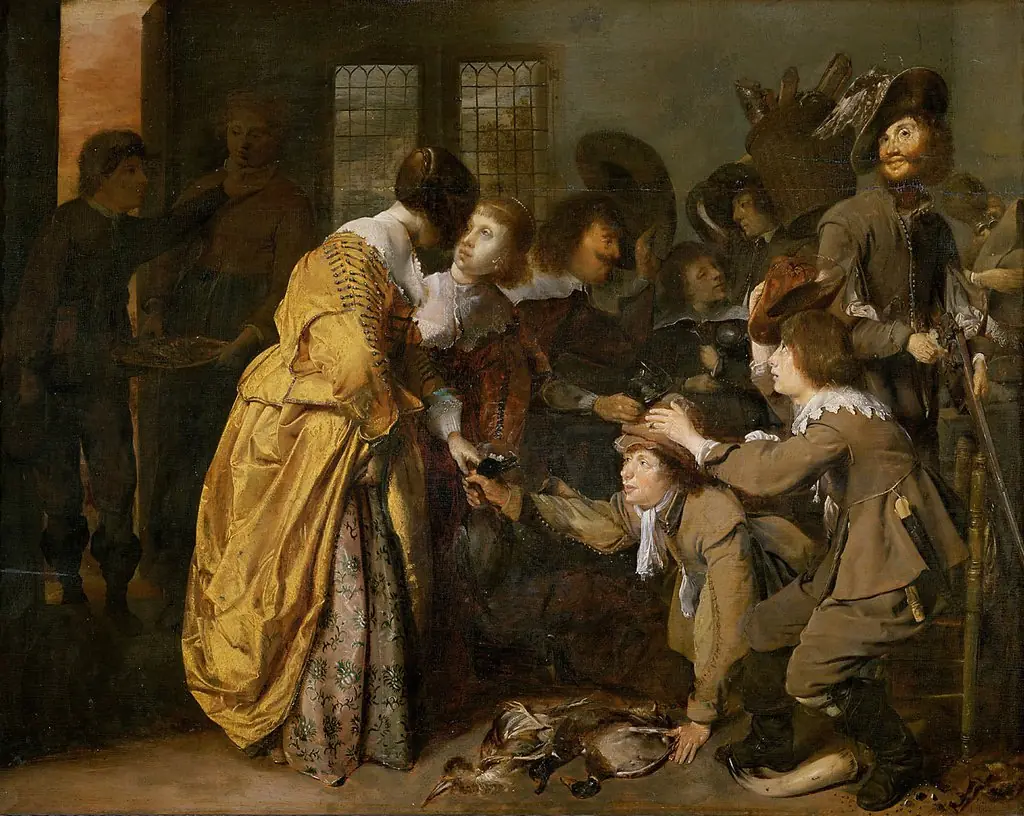 Interior with men returning from hunting and women inspecting the game
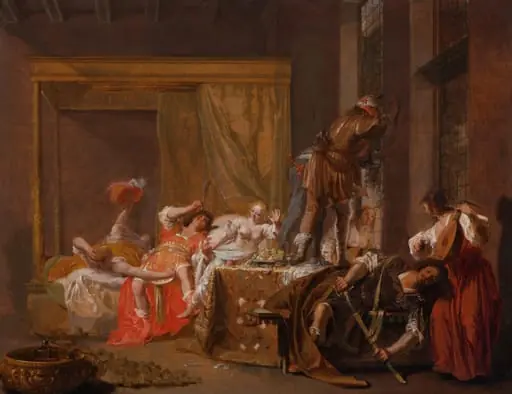 Scene from the Wedding of Messalina and Gaius Sillius
 The peasant's pleasure