Artwork
Arcadian Landscape with Shepherds and Animals
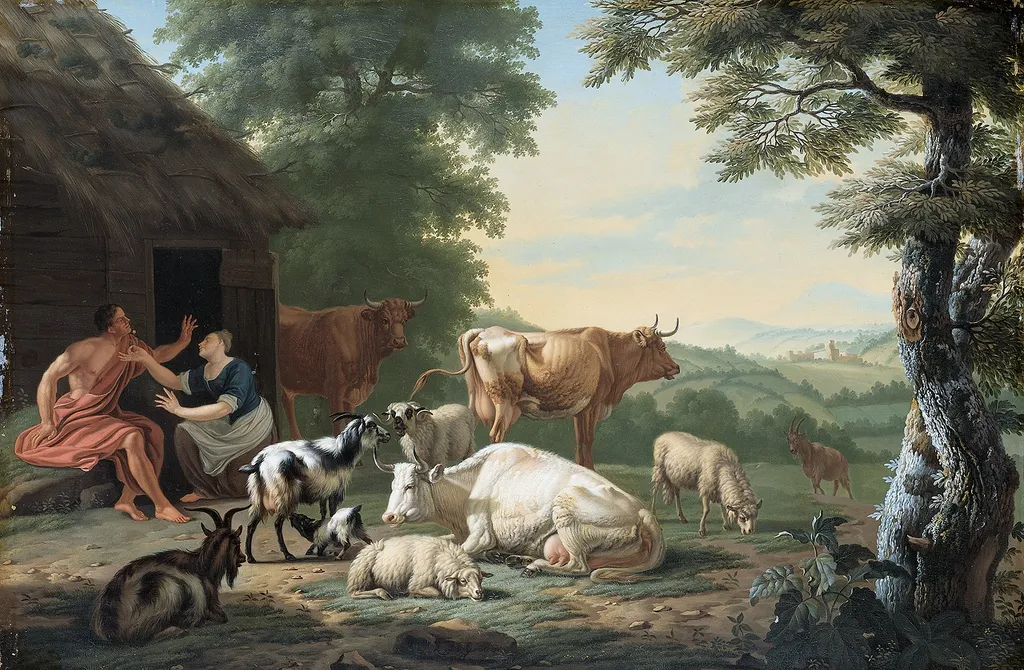
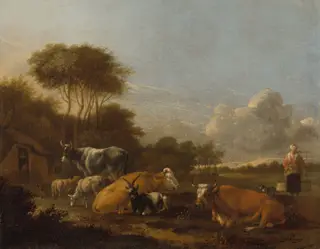
Arcadian Landscape with Shepherds and Animals is an oil painting by the Rococo painting artist Jan van Gool. It dates from 1750 and is held in the collection of the Rijksmuseum.
About this work
Subject & Meaning
These elements constitute the iconography of an Arcadian landscape, a traditional symbol of rural tranquility and harmonious coexistence with nature.
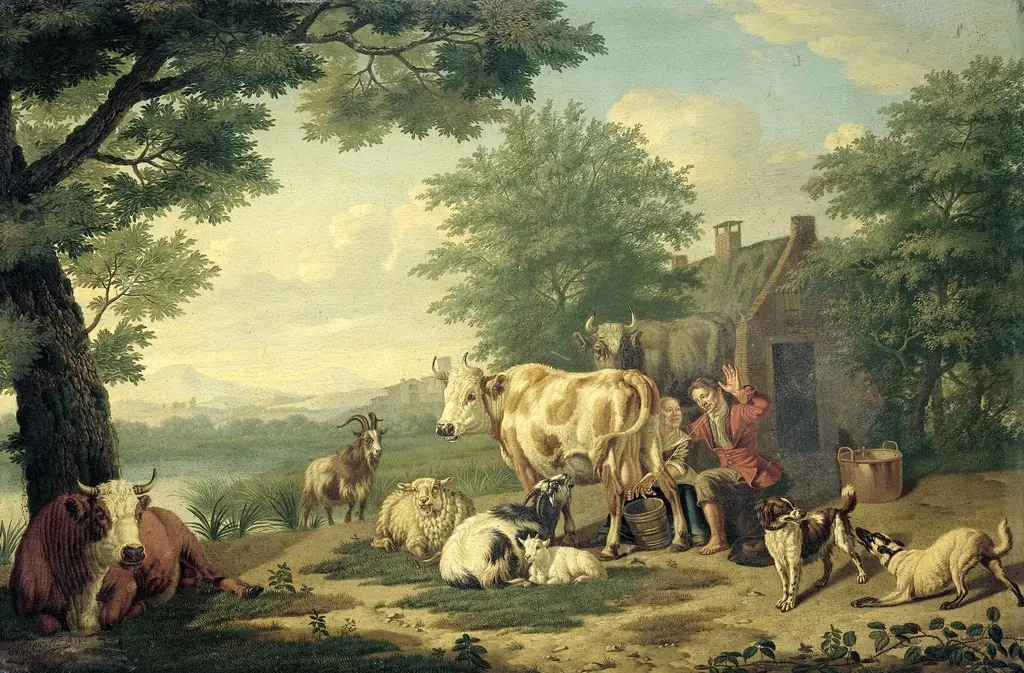
The painting shows a pastoral scene with a shepherd accompanied by cattle and a goat beneath a leafy tree and a modest hut. These elements constitute the iconography of an Arcadian landscape, a traditional symbol of rural tranquility and harmonious coexistence with nature. The presence of domesticated animals and a simple shelter evokes themes of abundance, moral virtue, and the idealized countryside celebrated in 18th-century Dutch art.
By placing the figures in a lush, orderly setting, the work conveys a nostalgic vision of pastoral peace that aligns with the genre's emphasis on idyllic scenery rather than narrative drama.
History & Provenance
Arcadian Landscape with Shepherds and Animals is an oil painting on panel created in 1750 by Dutch artist Jan van Gool, measuring 42.5 cm by 63 cm. It depicts cattle, a goat, a shepherd, a tree and a hut, and is classified as a landscape painting. The piece entered the collection of Adriaan van der Hoop before being acquired by the Rijksmuseum in Amsterdam, where it remains part of the Adriaan van der Hoop collection. No record of a specific commission exists.
Context
Jan van Gool painted Arcadian Landscape with Shepherds and Animals in 1750 using oil on panel. The painting measures 42.5 cm by 63 cm and is part of the Adriaan van der Hoop collection, held by the Rijksmuseum in Amsterdam. Its inclusion in this public collection indicates recognition of van Gool's contribution to the Dutch landscape tradition and demonstrates the work's enduring presence in museum displays.
Overview
Jan van Gool, a Dutch painter and writer from The Hague, created Arcadian Landscape with Shepherds and Animals around 1750. This oil painting depicts a tranquil pastoral scene, characteristic of the Rococo period in which he worked. The composition features shepherds and various animals within a serene natural setting, reflecting a common theme of idealized rural life. It is currently held in the collection of the Rijksmuseum.
Technique & Style
Van Gool's approach to this landscape demonstrates an acute observation of nature, particularly in his rendering of animals. He meticulously captures their natural postures and movements, even within a composed setting. For instance, the varied curvature of the cows' horns highlights this attention to detail.
The artist also employs textural contrasts, such as the rough-hewn wood of the hut against the smooth expanse of grass, adding tactile richness to the composition. The gentle illumination further enhances the painting's serene mood.
Legacy
While Jan van Gool was an active painter during his lifetime, his enduring recognition today largely stems from his contributions as a writer. He is primarily remembered for his biographical accounts of artists from the Dutch Golden Age, which provide valuable historical insights into the period's artistic landscape. This literary work has overshadowed his painted oeuvre in contemporary art historical discourse.
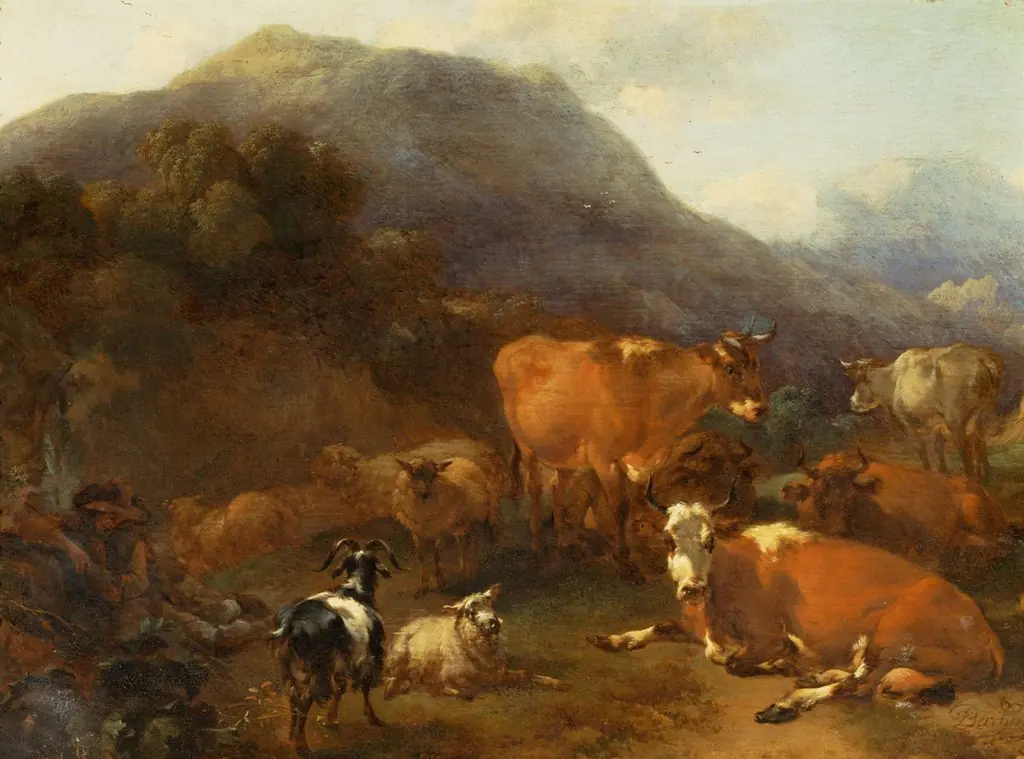
Artist & collection
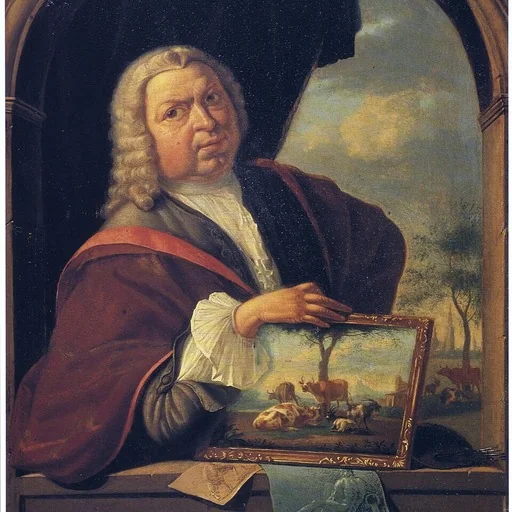
Artist
Johan, or Jan van Gool (1685–1763), was a Dutch painter and writer from The Hague, now remembered mainly as a biographer of artists from the Dutch Golden Age.

- Landscape with cattle and shepherds
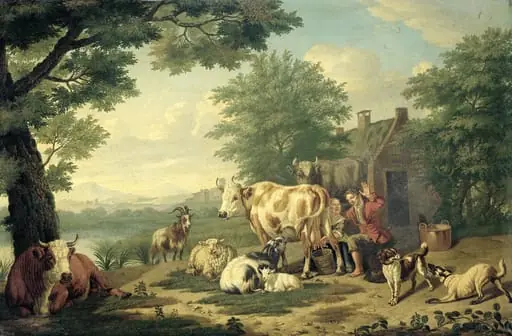 Milking Time
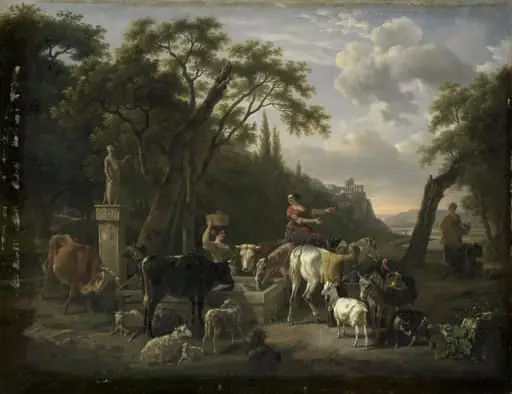 Italian Landscape with Shepherds and Animals at a Fountain
 Meadow with Animals
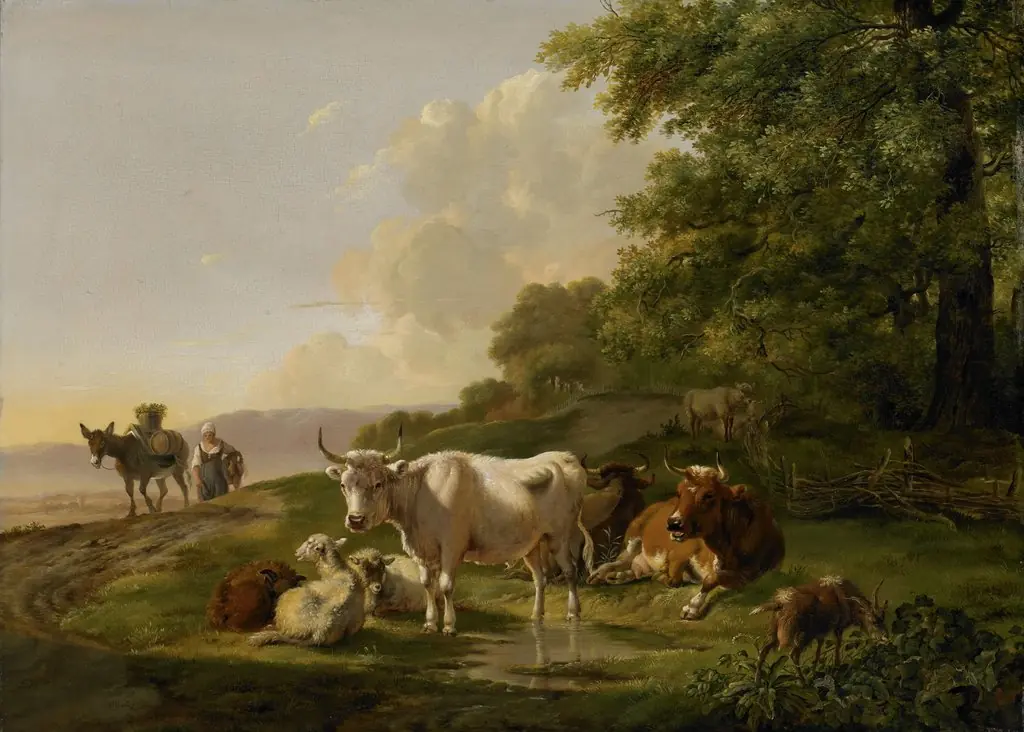 Landscape with Cattle
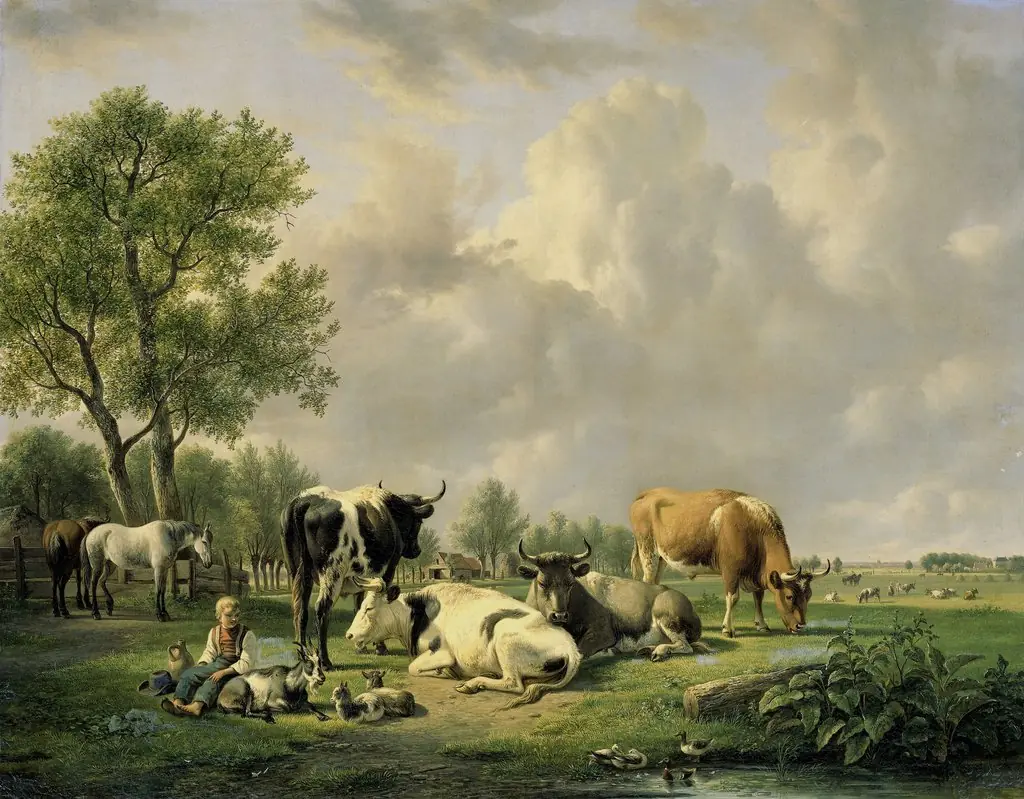 Meadow with Animals
 Rustic Scene with Woman Milking
 Italian Landscape with Shepherds and Animals at a Fountain
 Milking Time
 Landscape with Cows
 Landscape with Cattle
 Landscape with Cattle near Darthuizen