Artwork
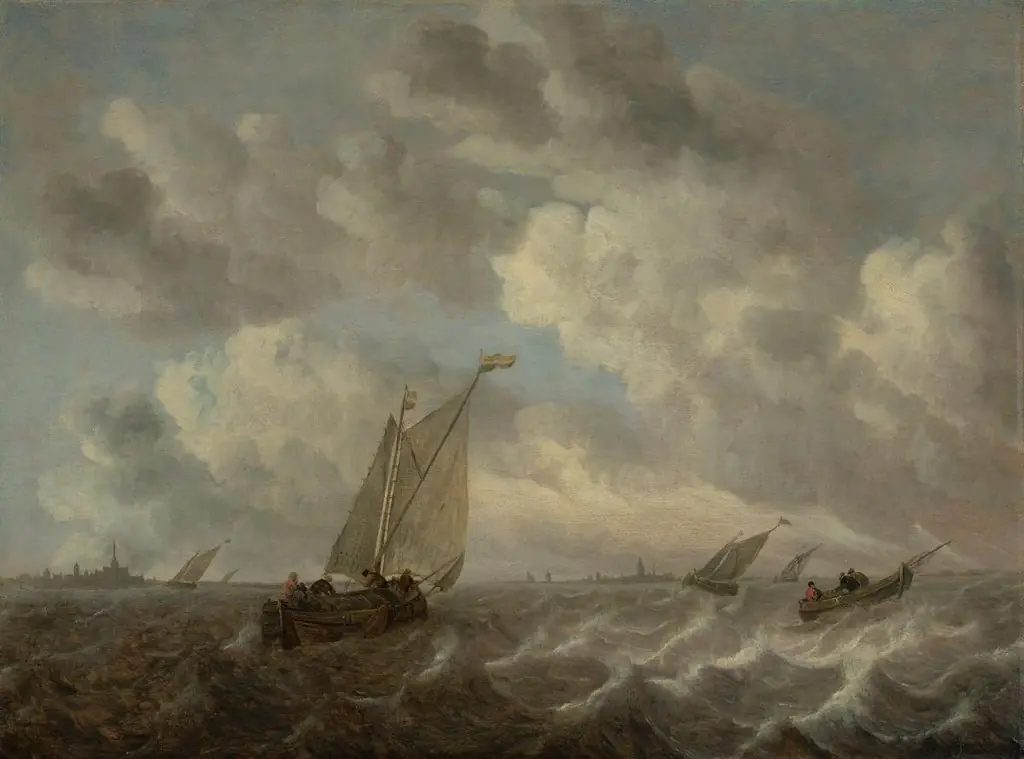
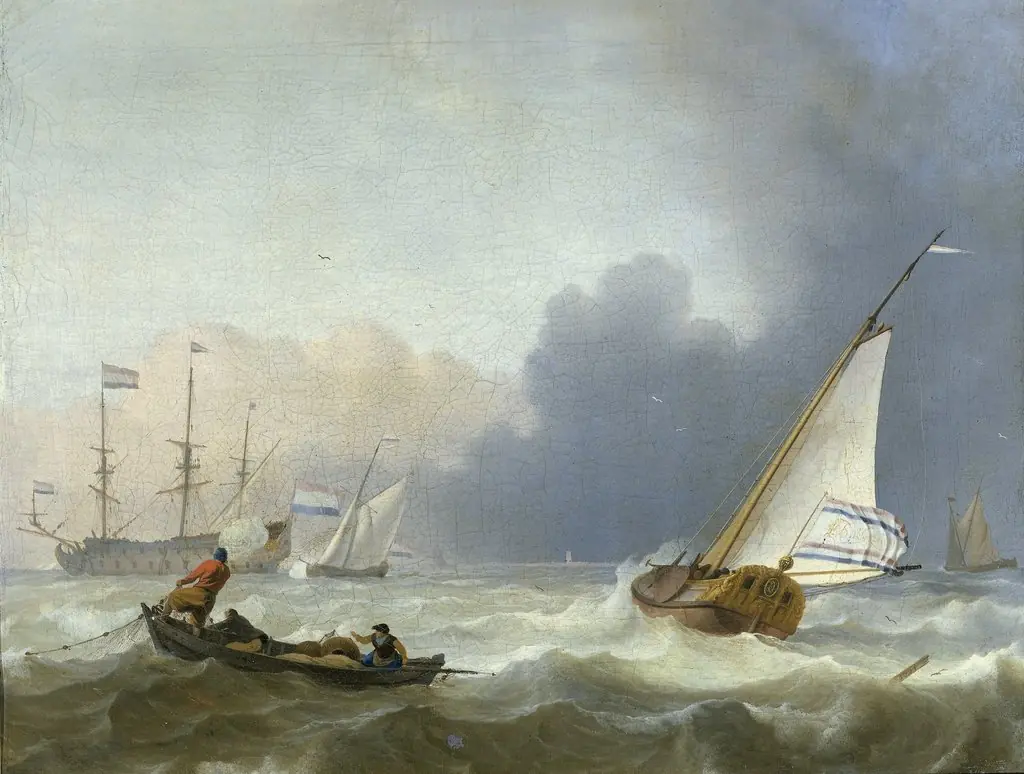
Zeil- en roeiboten in een riviermonding
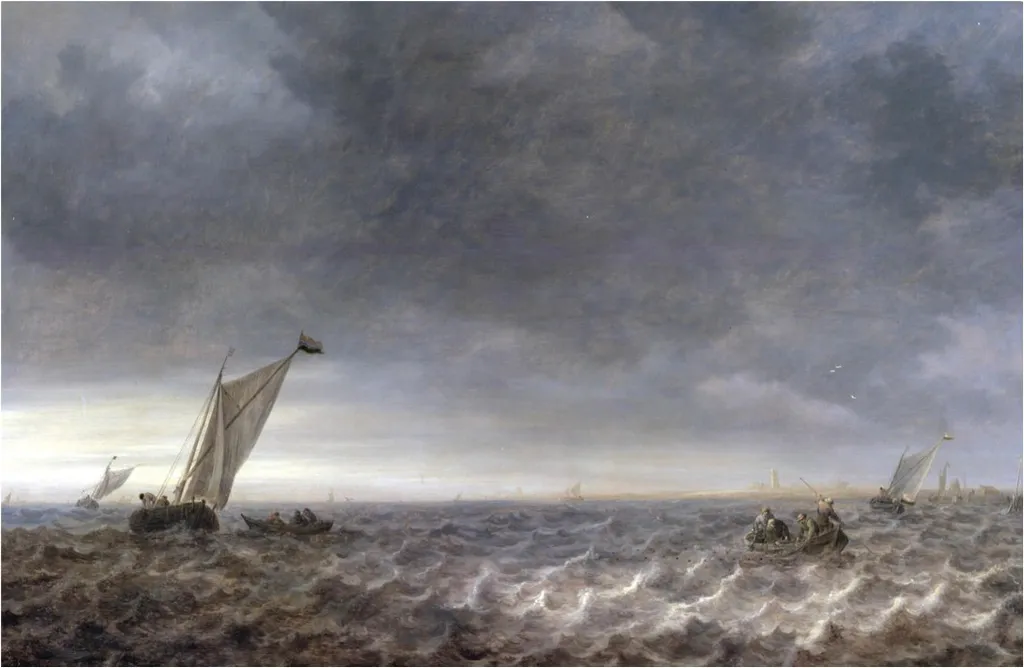
Zeil- en roeiboten in een riviermonding is an oil painting by the Dutch Golden Age artist Jan van Goyen. It dates from 1640 and is held in the collection of the Rijksmuseum.
About this work
Technique & Style
The work measures 77 cm in height and 116 cm in width, reflecting the substantial scale often employed for Dutch river scenes of this period.
Executed in 1640, this marine painting by Jan van Goyen utilizes oil paint applied to a wooden panel support. The work measures 77 cm in height and 116 cm in width, reflecting the substantial scale often employed for Dutch river scenes of this period. Stylistically, the piece is classified within the marine genre, depicting boats situated within a river mouth setting.
The composition focuses on the interplay of vessels and water, characteristic of van Goyen's approach to capturing atmospheric conditions and maritime activity in the Netherlands.
History & Provenance
The painting was created in 1640 by Jan van Goyen as an oil on panel work depicting a river scene with boats. It was produced in the Netherlands and entered the collection of Museum De Lakenhal, later also held by the Rijksmuseum and Kunsthandel P. de Boer before being acquired by the Bavarian State Painting Collections. The work bears the canonical inception date of 1640-01-01 and measures 77 cm in height by 116 cm in width.
Zeil- en roeiboten in een riviermonding is held in the collection of Museum De Lakenhal. The painting has also been associated with the Rijksmuseum, Kunsthandel P. de Boer, and the Bavarian State Painting Collections over the course of its history. The work is located at Museum De Lakenhal and the Rijksmuseum.
Context
Jan van Goyen's 1640 painting Zeil- en roeiboten in een riviermonding situates the artist within the prolific Dutch Golden Age marine genre, where his economical tonal landscapes reflected contemporary interest in riverine commerce and maritime activity. The work's depiction of flatboats navigating a river mouth aligns with documented 17th-century Dutch trade patterns and environmental representations, as evidenced by its classification as marine art and material composition of oil on panel. Its presence in major institutional collections including Museum De Lakenhal and the Rijksmuseum underscores scholarly recognition of van Goyen's influence on later landscape painting, while its material details, oil paint medium and panel support, contribute to technical analyses of 1640s Dutch painting practices.
Overview
Created in 1640 by Jan van Goyen, this oil painting captures a turbulent river mouth where three modest vessels navigate churning waters beneath a brooding sky. The composition emphasizes the clash between human craft and the forces of nature, a recurring theme in the artist’s extensive body of work during the Dutch Golden Age.
Subject & Meaning
The scene presents a small fleet of sailing and rowing boats confronting rough waves and dark clouds, suggesting a moment of struggle against inclement weather. The presence of a fluttering flag on one mast hints at identification or purpose, while the overall mood conveys the precariousness of river travel in the 17th‑century Netherlands.
Artist & collection

Artist
Jan Josephszoon van Goyen (Dutch pronunciation: ; 13 January 1596 – 27 April 1656) was a Dutch landscape painter.

- Travellers Disembarking at a Jetty on the Scheldt in Strong Winds
 Bewegte See mit Fischerbooten
 After the Storm
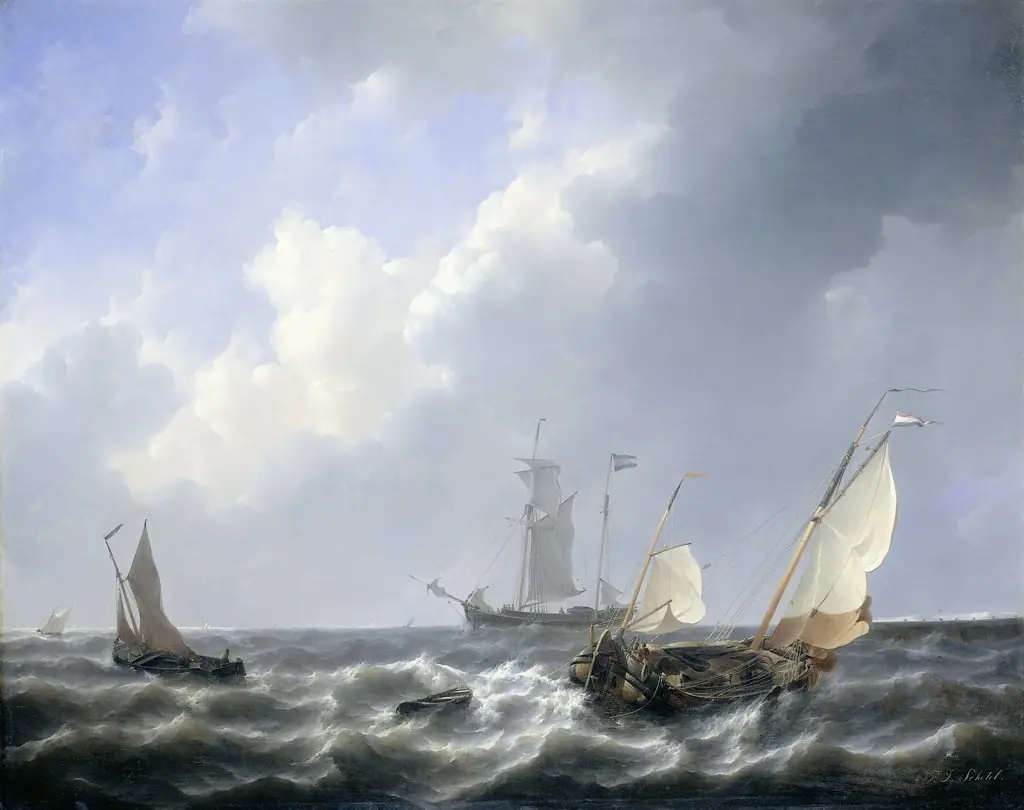 Seascape from the Zeeland Waters, near the Island of Schouwen
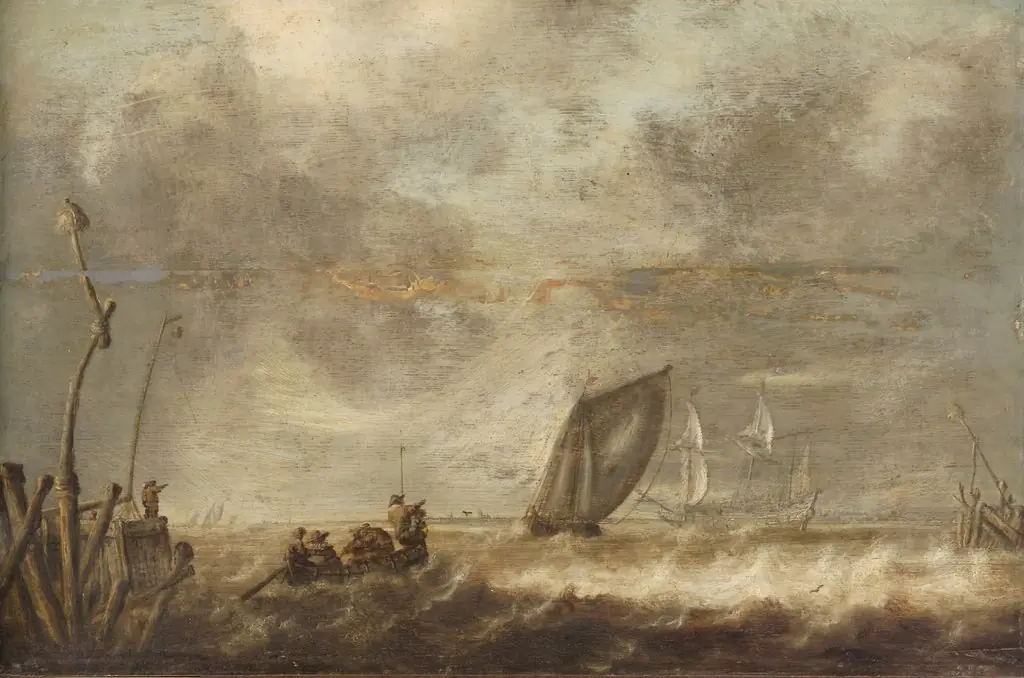 Seestück
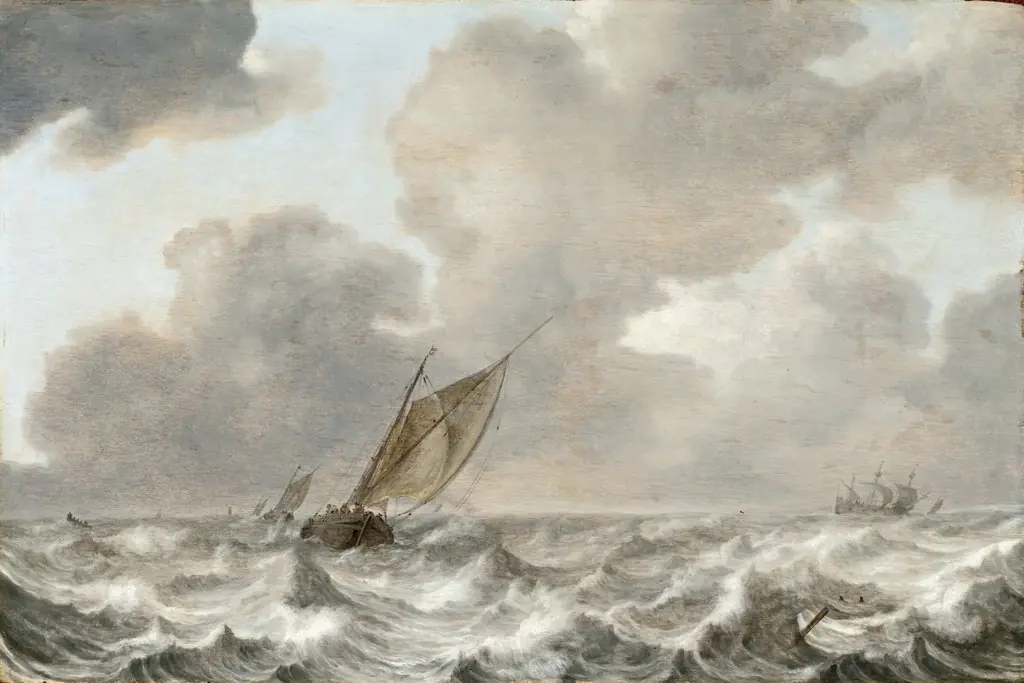 Vessels in a Moderate Breeze
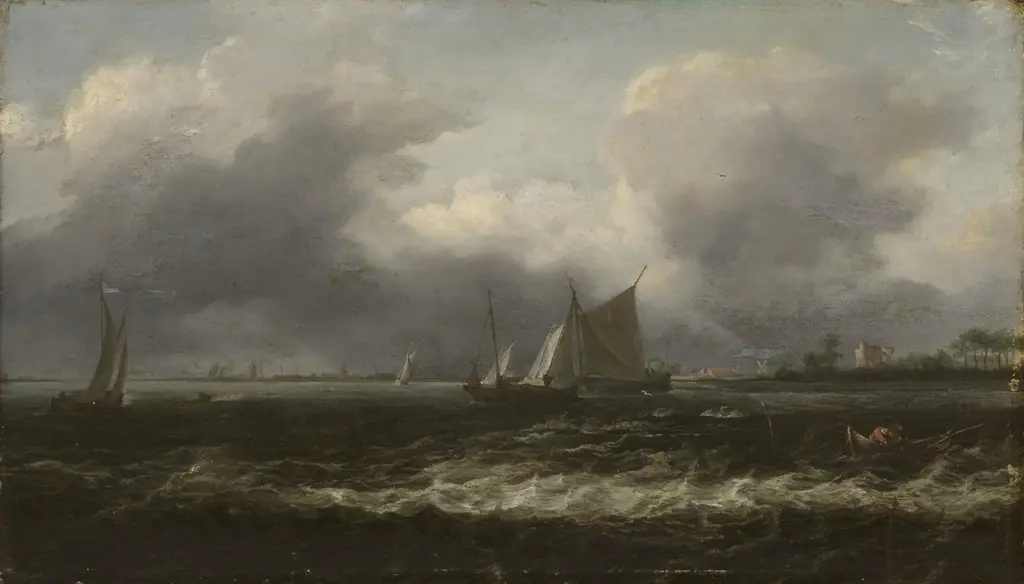 Rough Sea
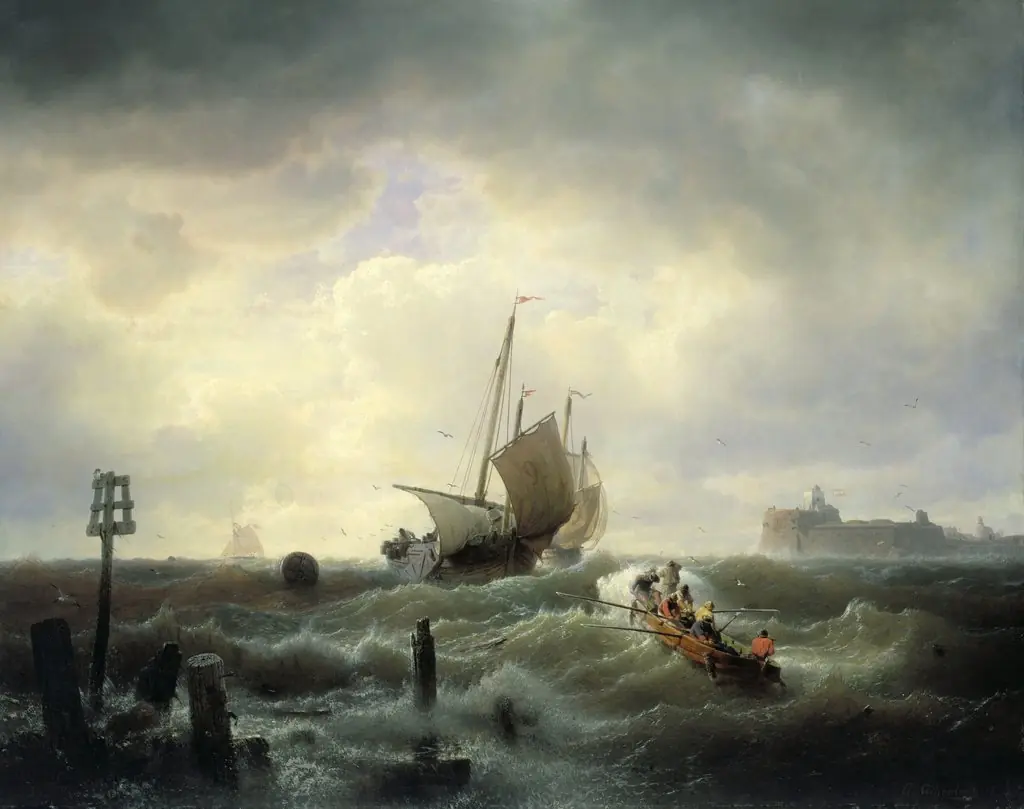 The Entrance to the Harbour at Hellevoetsluys
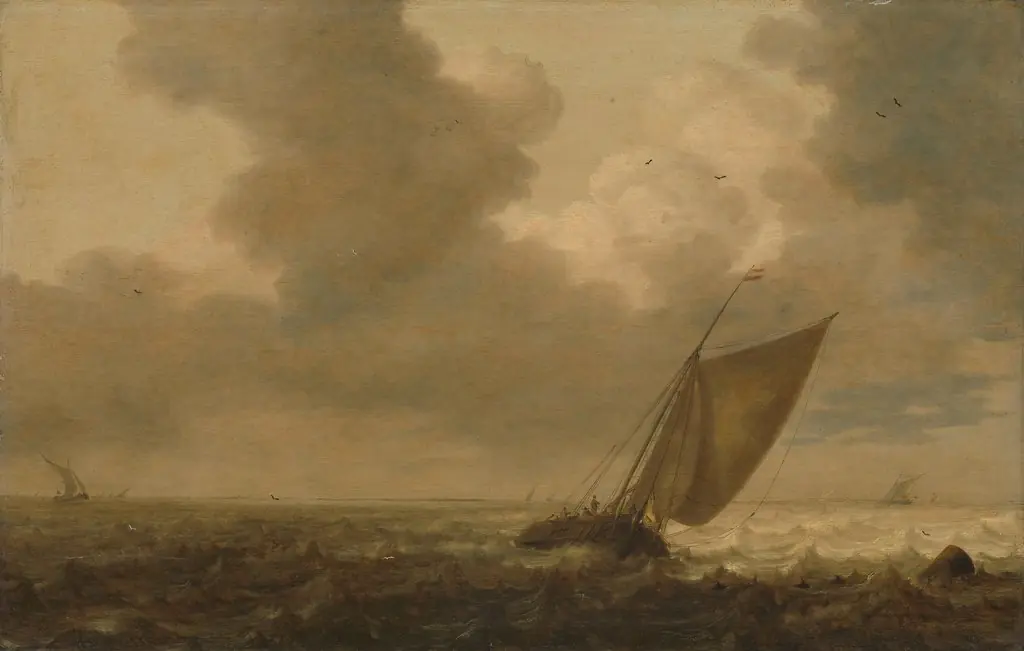 Fishing boat with the wind in the sails
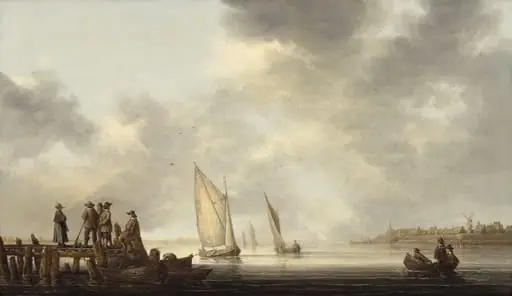 A Pier Overlooking Dordrecht
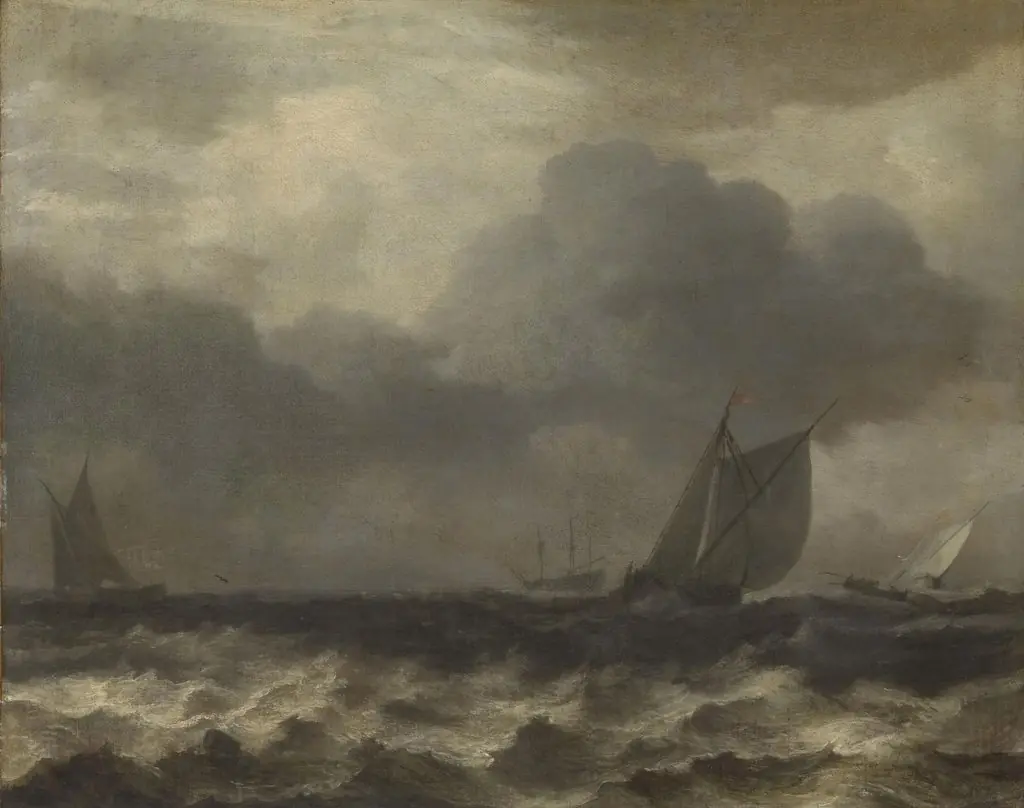 Rough Sea
 Rough sea with a Dutch yacht under sail