Artwork
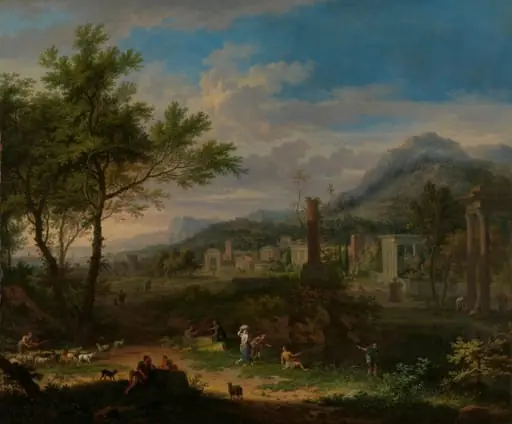
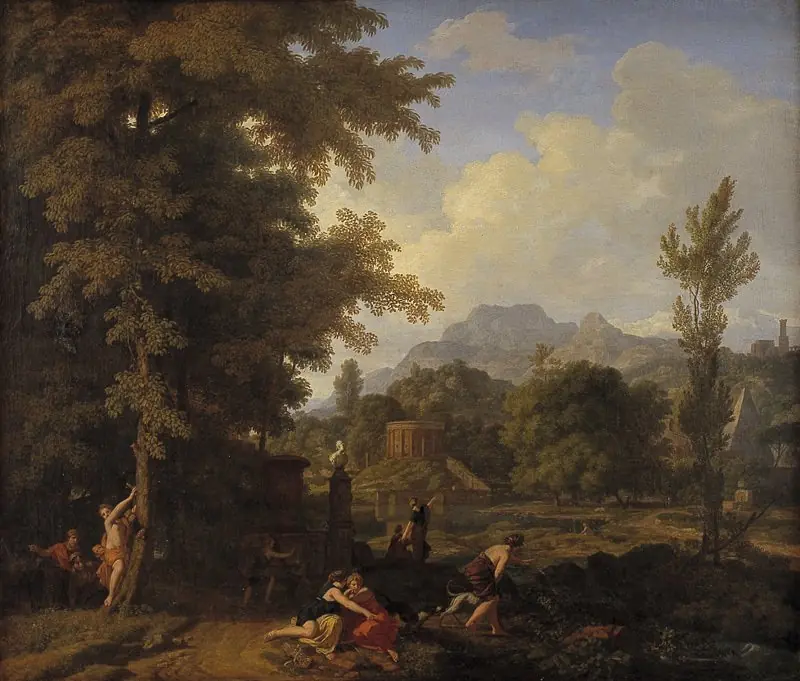
Arcadian Landscape with a Ceremonial Sacrifice
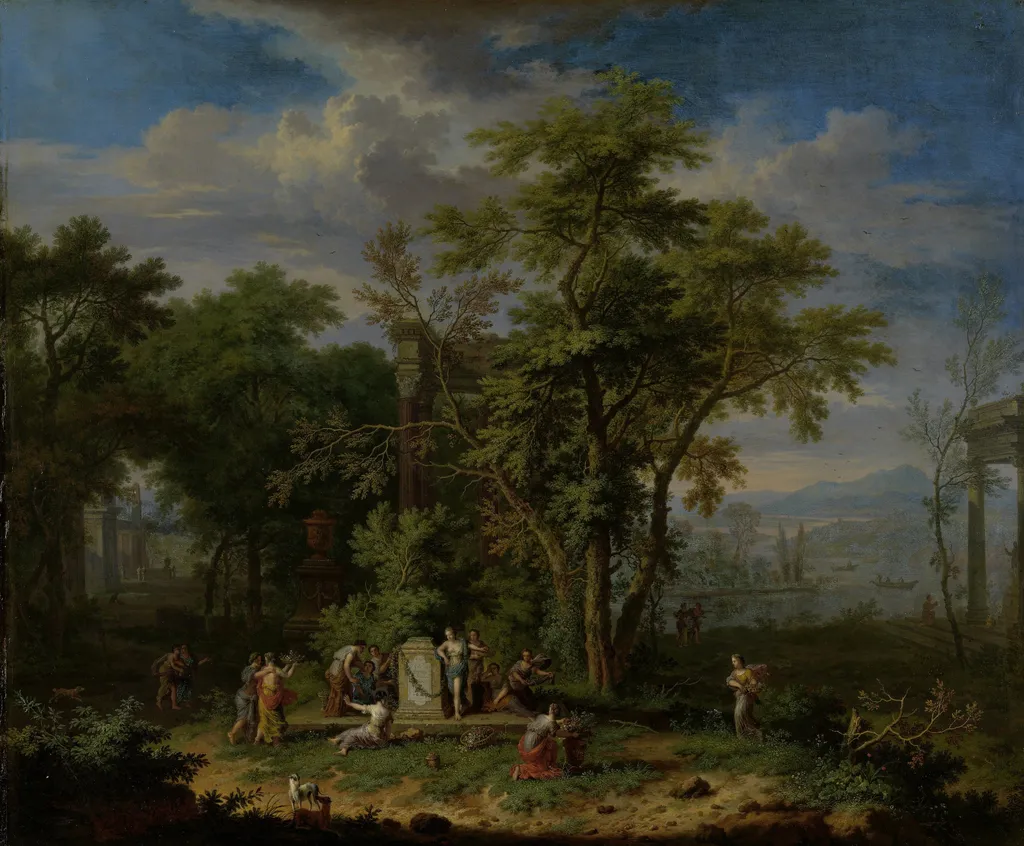
Arcadian Landscape with a Ceremonial Sacrifice is an oil painting by the Rococo painting artist Jan van Huysum. It dates from 1724 and is held in the collection of the Rijksmuseum.
About this work
Technique & Style
The copper panel provides a smooth, rigid ground that takes luminous glazes and crisp detail, qualities well suited to the small-scale landscape format.
The painting is executed in oil paint on a copper support, a technique that allowed for the fine, enamel-like finish associated with Jan van Huysum's cabinet pictures. The copper panel provides a smooth, rigid ground that takes luminous glazes and crisp detail, qualities well suited to the small-scale landscape format. The work measures 57 cm in height by 68 cm in width.
Stylistically, the composition belongs to the Arcadian landscape tradition, staging a ceremonial sacrifice within an idealized pastoral setting. The smooth handling of the copper surface supports the polished, highly finished brushwork characteristic of Dutch eighteenth-century cabinet painting.
History & Provenance
Arcadian Landscape with a Ceremonial Sacrifice was created by Jan van Huysum in 1724, executed in oil on copper. The painting was later held in the collection of Adriaan Leonard van Heteren Gevers, and it subsequently entered the holdings of the Rijksmuseum through the Kabinet van Heteren Gevers, where it remains located. No further details of commission or intermediate ownership are documented in the available sources.
Arcadian Landscape with a Ceremonial Sacrifice is held by the Rijksmuseum in Amsterdam, where it is associated with the Kabinet van Heteren Gevers collection. The painting was formerly owned by Adriaan Leonard van Heteren Gevers, the collector whose holdings formed the nucleus of that cabinet. No specific inventory or accession number is recorded in the available sources, and no exhibition history is documented.
Overview
Arcadian Landscape with a Ceremonial Sacrifice, painted on copper in 1724 by Jan van Huysum, is a characteristic work of the Rococo movement, blending meticulous naturalism with ornate elegance.
Subject & Meaning
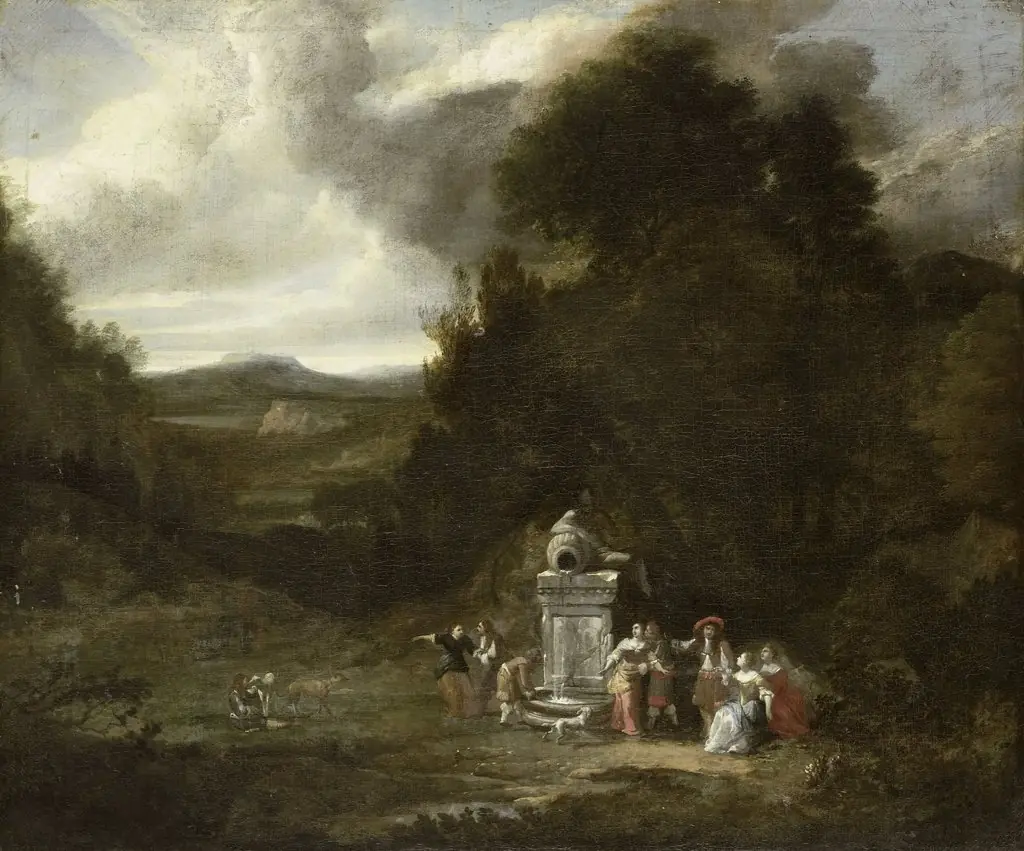
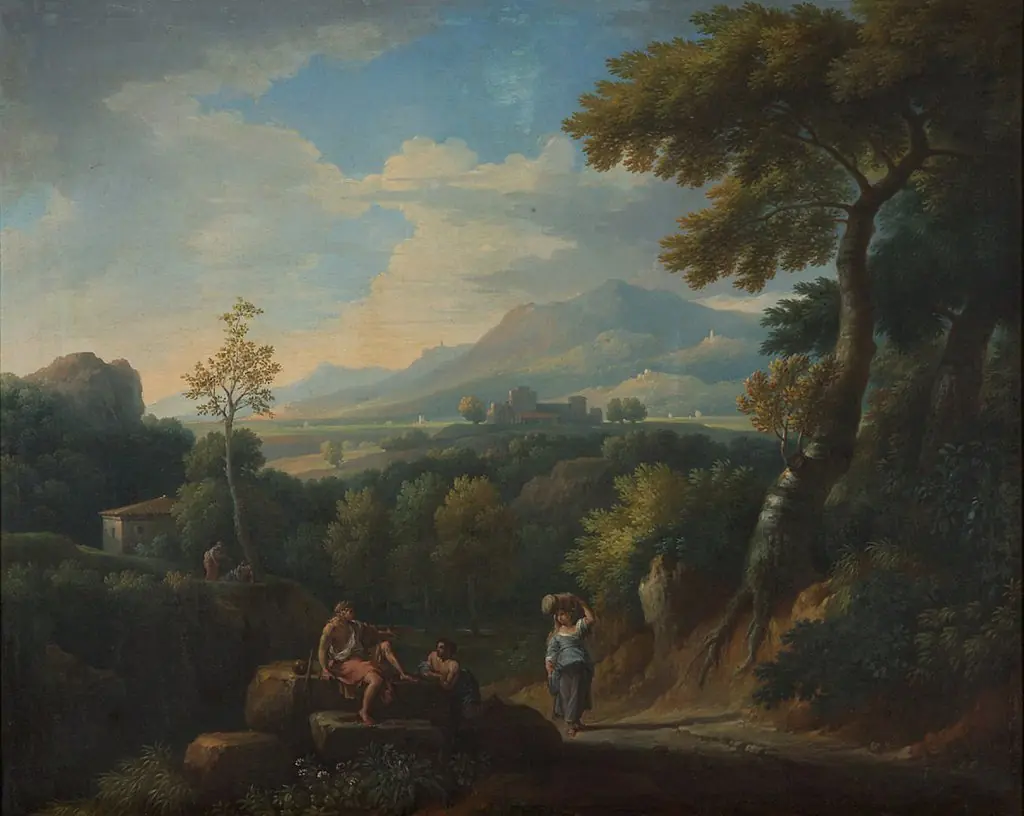
The painting depicts a serene outdoor ceremony in a lush forest clearing, with figures gathered around an altar, possibly participating in a harvest ritual or similar observance, surrounded by meticulously rendered flora and fauna.
Context
As a Rococo piece, it embodies the movement's lighthearted yet ornate compositions, distinguishing it from heavier, more dramatic artistic styles of the period.
Legacy
While specific lasting impacts of this piece are not broadly documented, it remains a notable example of Van Huysum's contribution to 18th-century Dutch Rococo landscape painting.
Own this work as a print
Artist & collection

Artist
Jan van Huysum (or Jan van Huijsum) (15 April 1682 – 8 February 1749) is the most notable member of the Van Huysum family of artists working in Dutch Golden Age of the 17th and 18th centuries; "by common consent, Jan…