Artwork
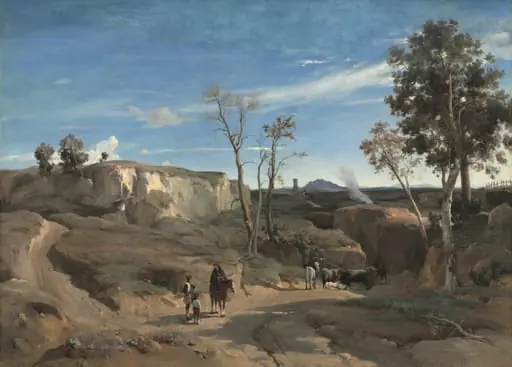
La Cervara, the Roman Campagna
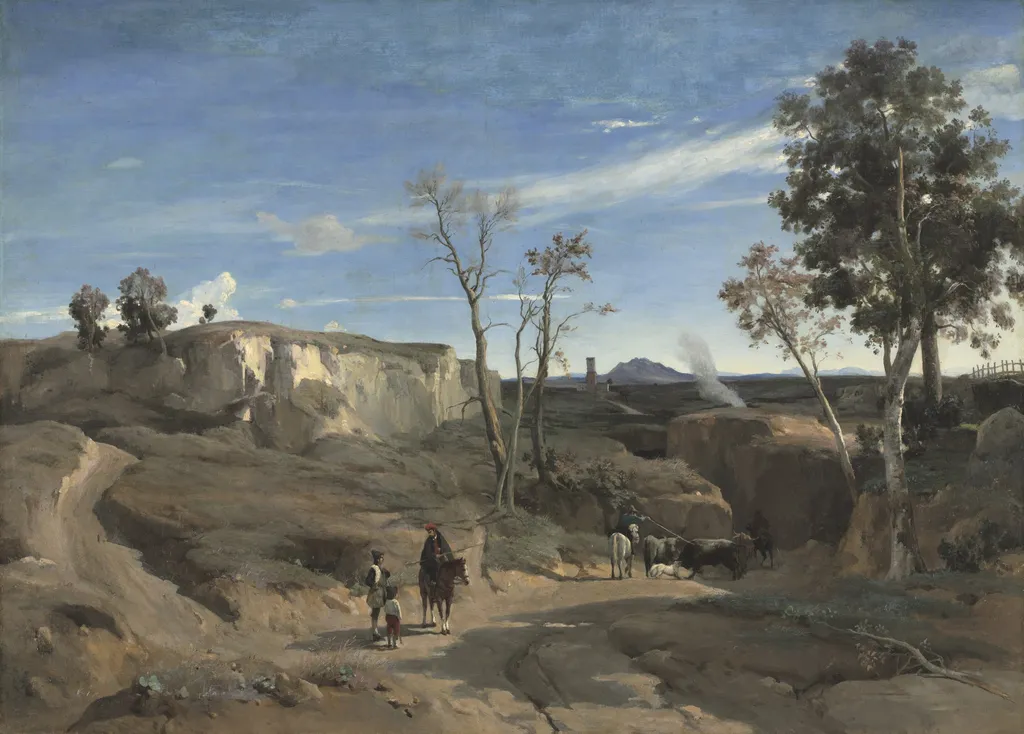
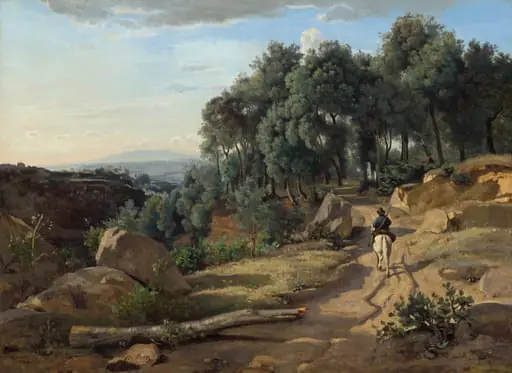
La Cervara, the Roman Campagna is an oil painting by the Realist artist Jean Baptiste Camille Corot. It dates from 1830 and is held in the collection of the Cleveland Museum of Art.
About this work
Technique & Style
Corot applied thin layers of oil paint to achieve a delicate tonal balance and a soft, atmospheric rendering of the landscape.
La Cervara, the Roman Campagna is an oil painting executed on canvas. The support is a rectangular canvas measuring roughly 97.4 cm in height and 135.5 cm in width, as recorded in the museum's catalogue. Corot applied thin layers of oil paint to achieve a delicate tonal balance and a soft, atmospheric rendering of the landscape.
The composition centers on a solitary tree, a motif that emphasizes the artist's interest in naturalistic detail and the subtle play of light across the Roman terrain. The work was first shown at the Salon of 1831 and is held in the Cleveland Museum of Art.
History & Provenance
La Cervara, the Roman Campagna is an oil-on-canvas painting by Jean-Baptiste Camille Corot, painted in France in 1830 and first shown at the Salon of 1831. The work measures approximately 97.4 centimeters in height and 135.5 centimeters in width and is classified as a painting within Corot's oeuvre. It belongs to the collection of the Cleveland Museum of Art, where it is housed in the museum's European paintings department; its accession number is not recorded in the available documentation. The painting was later featured in a retrospective of the artist titled Corot 1796–1875.
Overview
Jean-Baptiste-Camille Corot's oil painting, La Cervara, the Roman Campagna, dates from 1830. This work depicts a specific locale within the Roman countryside, a frequent subject for artists of the period. The painting is part of the collection at The Cleveland Museum of Art, representing a significant moment in the artist's early career.
Subject & Meaning
The painting portrays a sun-drenched, rocky landscape of the Roman Campagna, traversed by a winding path. In the foreground, a farmer guides oxen pulling a plow, while a man on horseback leads a small group, including a child, further along the route. Dry grasses and sparse, leafless trees characterize the terrain, with a solitary tree standing prominently. A distant volcano, subtly emitting smoke, adds a contemplative element to the expansive, clear sky.
Context
Corot held a pivotal position in nineteenth-century landscape painting, influencing subsequent generations of artists. His early works, such as La Cervara, reflect a transition from the classical ideals of balanced composition to a more direct engagement with natural light and atmosphere. This evolving method foreshadowed the innovative approaches to outdoor painting that would become central to the Impressionist movement later in the century.
Own this work as a print
Artist & collection
Artist
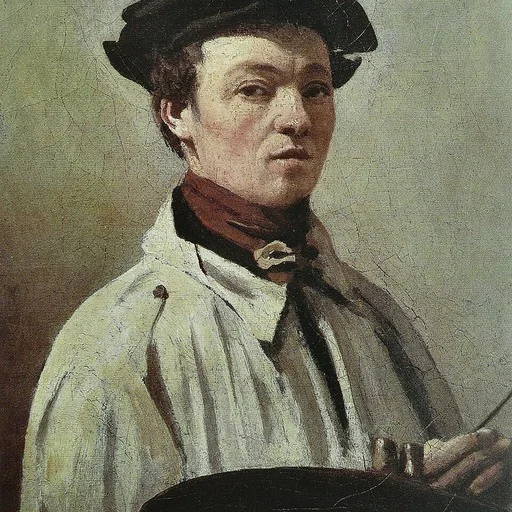
Jean-Baptiste-Camille Corot (UK: KORR-oh, US: kə-ROH, kor-OH; French:; 16 July 1796 – 22 February 1875), or simply Camille Corot, was a French landscape and portrait painter as well as a printmaker in etching.