Artwork
Trees in a Swamp
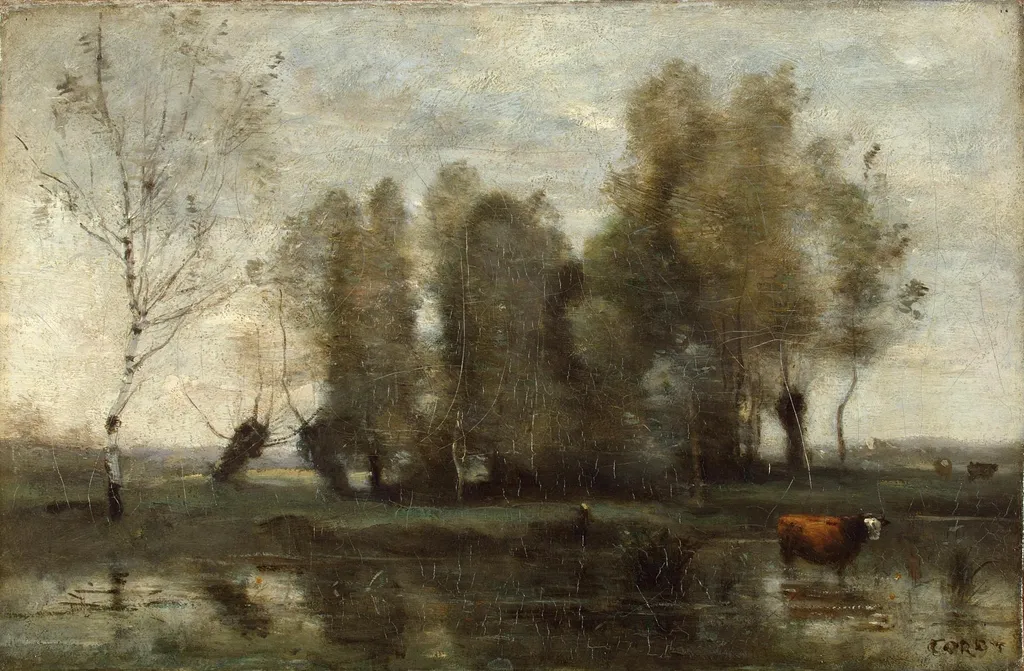
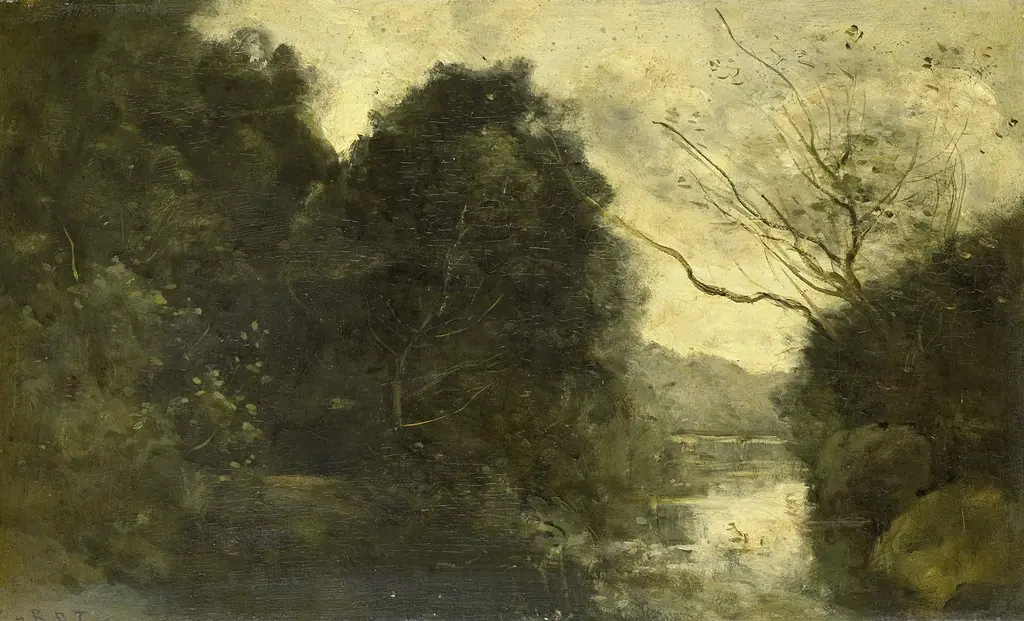
Trees in a Swamp is an oil painting by the Realist artist Jean Baptiste Camille Corot. It dates from 1857 and is held in the collection of the Hermitage Museum.
About this work
Subject & Meaning
Corot’s rendering emphasizes the quiet interplay of land and water, using the swamp’s reflective surface to unify the composition and suggest atmospheric depth.
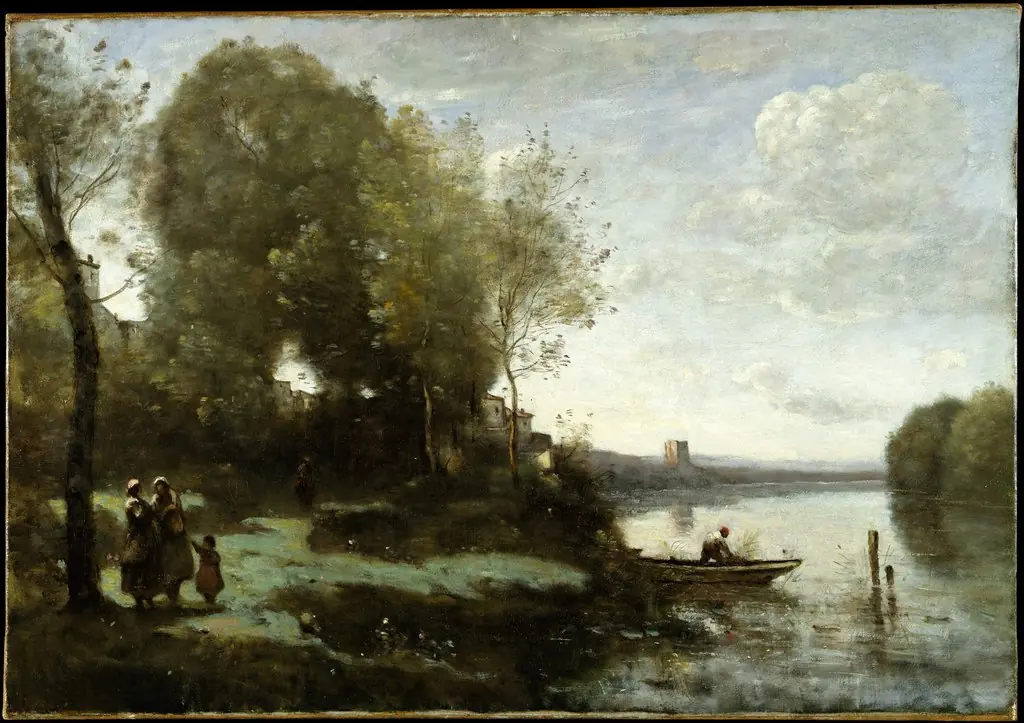
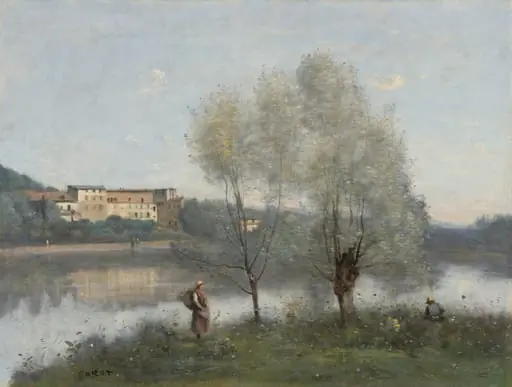
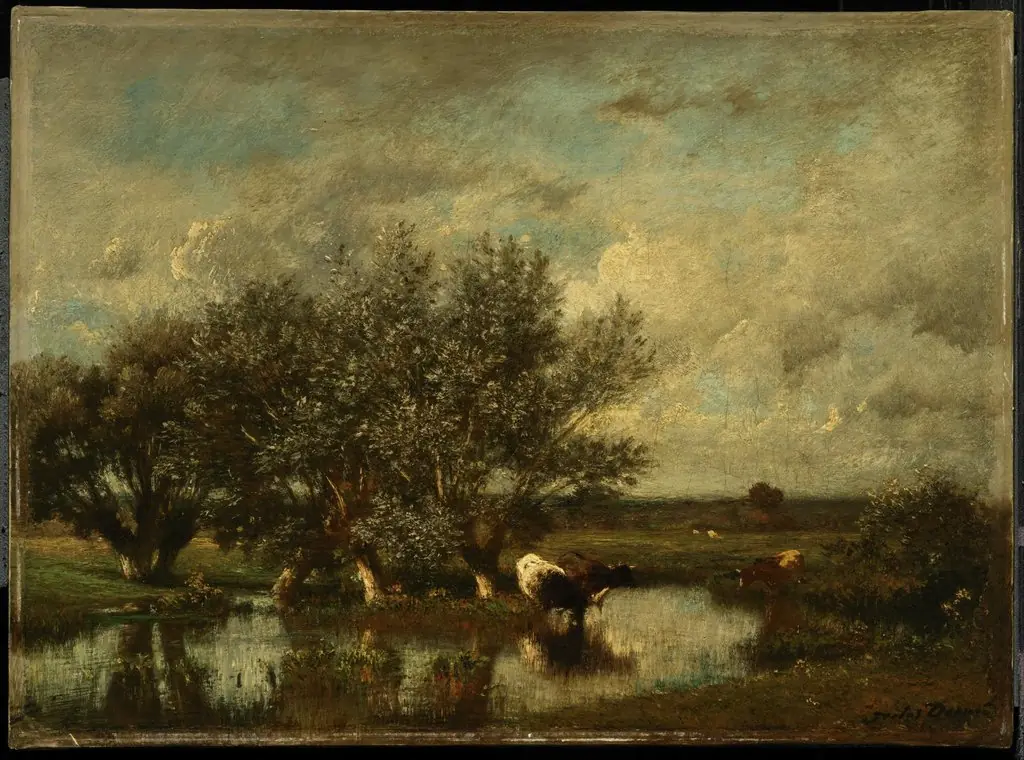
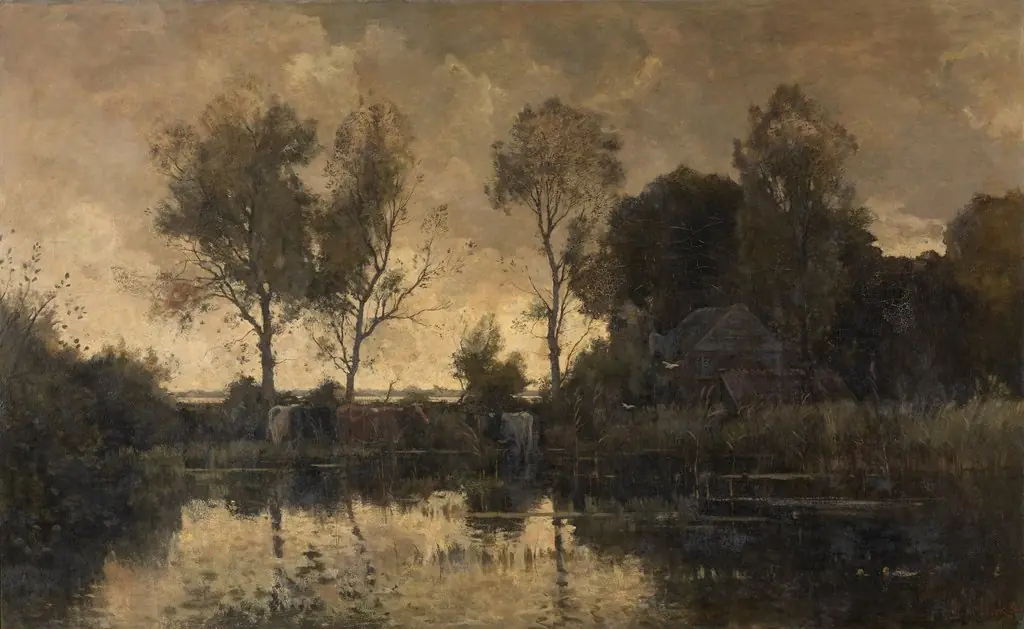
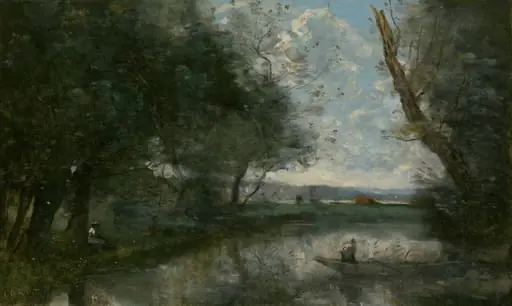
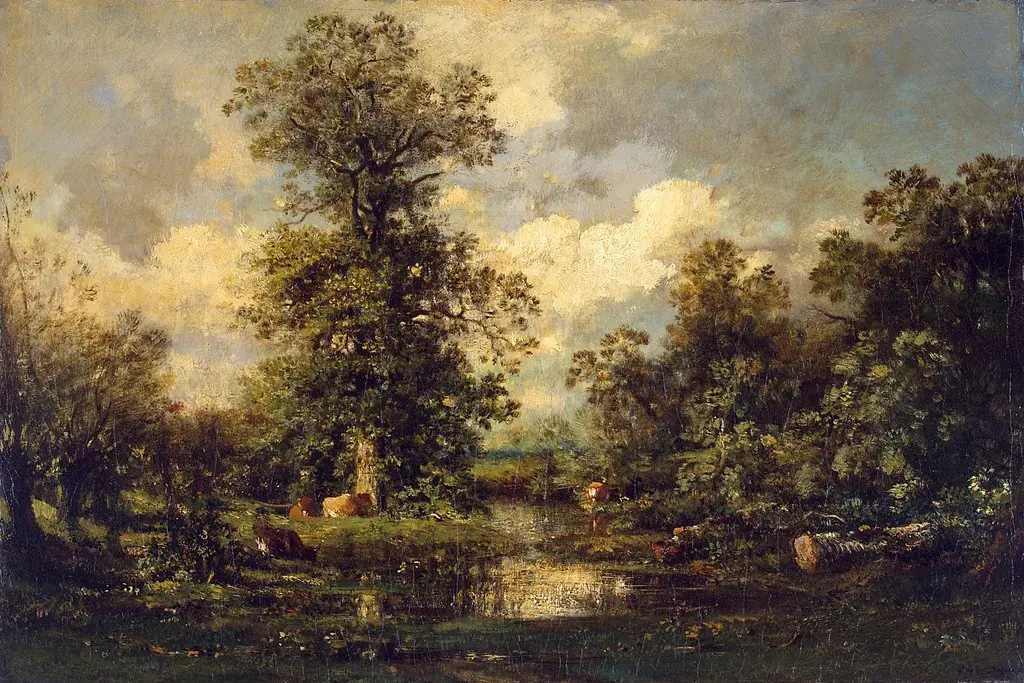
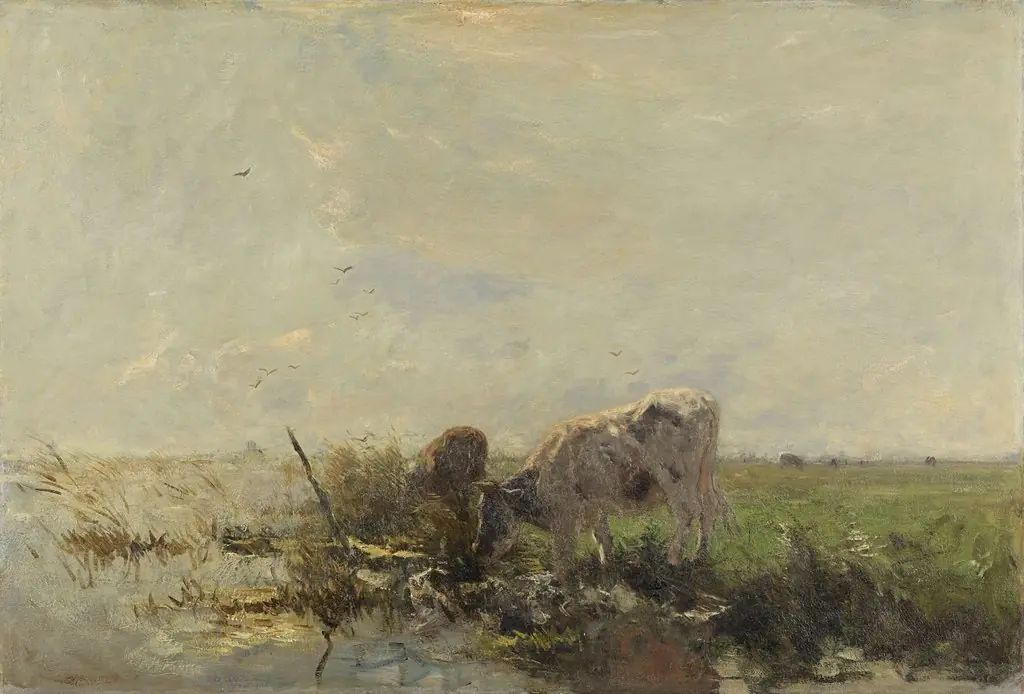
The painting depicts a densely wooded wetland where slender trees rise from still, reflective water, evoking the flat, misty expanses of the French countryside near Fontainebleau. A small herd of cattle is gathered at the water’s edge, their forms silhouetted against the subdued light filtering through overcast skies.
Corot’s rendering emphasizes the quiet interplay of land and water, using the swamp’s reflective surface to unify the composition and suggest atmospheric depth. The scene functions less as a narrative and more as a contemplative evocation of nature’s rhythms, aligning with mid-nineteenth-century tendencies to valorize rural landscapes as sites of tranquil beauty rather than symbolic allegory.
Technique & Style
Jean-Baptiste Camille Corot executed Trees in a Swamp in 1857 as an oil painting on canvas. The work measures 25.5 cm in height and 38 cm in width. Created in France, the piece depicts a landscape featuring trees, a swamp, and cattle.
As a painting classified within Corot's oeuvre from this period, the medium of oil on canvas defines its material construction and handling characteristics.
History & Provenance
Jean-Baptiste Camille Corot created the oil painting Trees in a Swamp in 1857. The work was executed in France on a canvas support, measuring 25.5 cm in height and 38 cm in width. Current records indicate the painting is held within the collection of the Hermitage Museum.
While the specific commission details and the full chain of prior ownership are not detailed in the available records, the work's inception is firmly dated to 1857, establishing its place within the artist's mid-career output.
Legacy
The painting has been cited as a precedent for the tonal intimacy found in later landscape works by artists such as Isaac Levitan and the Symbolist generation, who valued Corot's ability to render swampy terrain with a quiet, contemplative mood. Its composition, balancing dense foliage with subtle animal presence, has been referenced in studies of Russian landscape evolution and in exhibitions that trace the development of naturalistic mood in European art after 1850. The work remains part of the Hermitage Museum's collection, ensuring continued scholarly attention to its role in shaping 19th‑century atmospheric landscape painting.
Overview
Trees in a Swamp, painted in 1857 by Jean-Baptiste-Camille Corot, is an oil painting depicting a serene, naturalistic landscape. Characterized by its calm and contemplative atmosphere, the work showcases the artist's transitional style between traditional and emerging artistic movements.
Context
This work was produced during a period of artistic transition in France, with Corot influencing the shift from traditional landscape painting to more modern, outdoor-painting techniques that would later define Impressionism.
Own this work as a print
Artist & collection
Artist
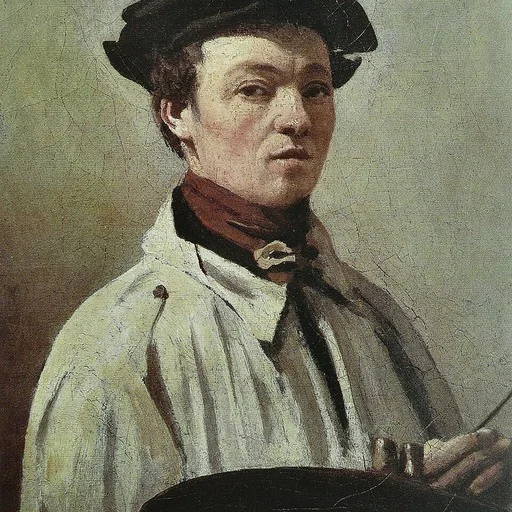
Jean-Baptiste-Camille Corot (UK: KORR-oh, US: kə-ROH, kor-OH; French:; 16 July 1796 – 22 February 1875), or simply Camille Corot, was a French landscape and portrait painter as well as a printmaker in etching.