Artwork
Danaë
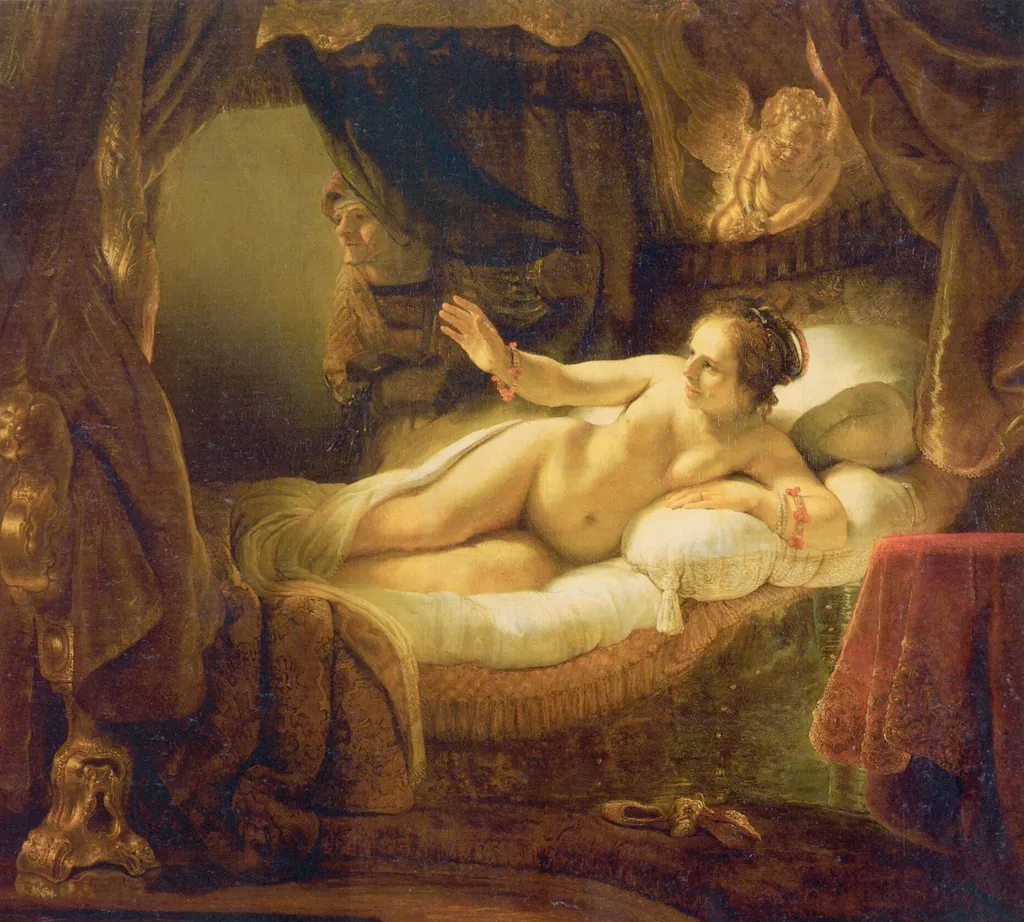
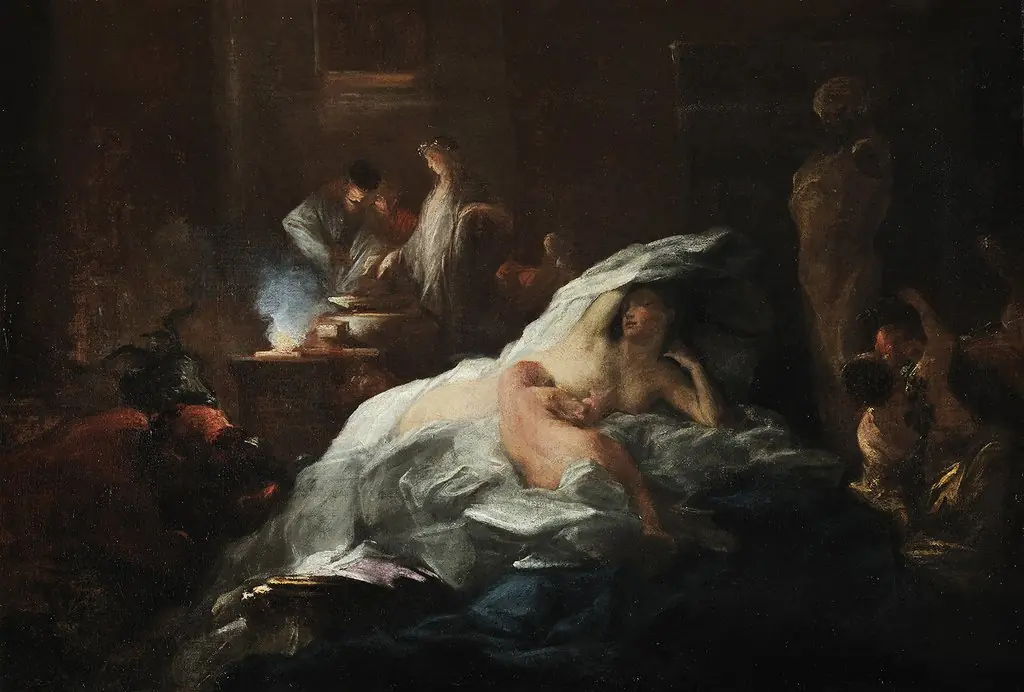
Danaë is an oil painting by the Dutch Golden Age artist Rembrandt van Rijn. It dates from 1636 and is held in the collection of the Hermitage Museum.
About this work
Subject & Meaning
Its creation during the Dutch Golden Age reflects the era's fascination with mythological subjects rendered with psychological depth.
The painting portrays Danaë, a figure from Greek mythology and mother of Perseus, depicted nude and reclining on a bed as she prepares to receive Zeus in the guise of a shower of gold. The composition emphasizes her fertility and the divine intervention that leads to the birth of the hero. Rembrandt originally modeled the figure on his wife Saskia, later altering the face to resemble his mistress Geertje Dircx, a change confirmed by X-ray analysis.
The work's iconography combines a mythological narrative with a contemporary domestic setting, using light and gold to symbolize both celestial power and sensuality. Its creation during the Dutch Golden Age reflects the era's fascination with mythological subjects rendered with psychological depth.
Technique & Style
The painting is executed in oil on canvas, measuring about 185 × 202.5 cm, and was begun in 1636 before Rembrandt reworked the composition, changing the pose, face and the original rain-of-gold motif. The work uses a canvas support and layered oil technique, and its formal treatment relies on life-size scale, dramatic chiaroscuro and mythic narrative. After a 1985 acid and knife attack that damaged the central figures, conservators immediately verticalized the canvas, washed it with water and oversaw a twelve-year restoration. The restored piece retains its original structural integrity and stylistic balance.
History & Provenance
The work titled Danaë was begun by Rembrandt in 1636 and subsequently reworked no later than 1643, during which the composition was altered and the figure's face replaced. It originally belonged to Pierre Crozat's collection before being acquired by the State Hermitage Museum in 1772, where it has remained. The painting measures 185 × 202.5 cm, executed in oil on canvas.
X-ray analysis reveals an earlier depiction of a rain of gold that was later painted out, and the model shifted from Rembrandt's wife Saskia to his mistress Geertje Dircx.
The painting is housed in the State Hermitage Museum, St. Petersburg, where it entered in 1772 as part of the Pierre Crozat collection. It has been on public view in the Hermitage's permanent exhibition since the 18th century, in the gallery dedicated to Dutch Golden Age paintings.
Context
Rembrandt's Danaë (1636–1643) occupies a singular place in the Dutch Golden Age canon for its monumental scale and sustained reworking. Scholars note the painting's unusually long genesis, during which Rembrandt altered the composition's iconography and shifted the model from his wife Saskia to his mistress Geertje Dircx, as revealed by radiographic analysis. The work's reception has been shaped by its dramatic history: in 1985 it was severely vandalized with sulfuric acid and a knife, requiring a twelve-year restoration led by Ye.
N. Gerasimov and colleagues. Critical discussions often position Danaë within Rembrandt's broader engagement with mythological subjects and his evolving treatment of female figures, while its restoration has prompted technical studies on pigment behavior and conservation ethics. The painting's layered transformations, including the suppression of a shower of gold coins, underscore Rembrandt's processual approach to narrative and form.
Legacy
Rembrandt's Danaë is widely regarded as one of his most magnificent works, despite initial commercial difficulties likely caused by its large scale. The painting's reputation is significantly defined by its dramatic history of destruction and recovery. On 15 June 1985, it was severely vandalized by Bronius Maigys, who slashed the canvas and poured sulfuric acid on it, causing extensive damage to the central figure.
This incident transformed the artwork into a symbol of resilience, as it underwent a complex, twelve-year restoration process by the Hermitage Museum's laboratory staff, concluding in 1997. The painting's legacy also encompasses its role in art historical analysis; X-ray studies revealing significant alterations, such as the change of the model's face from Saskia to Geertje Dircx and the removal of a shower of gold, have provided critical insights into Rembrandt's evolving creative process. The work remains a celebrated masterpiece of the Dutch Golden Age.
Overview
Rembrandt van Rijn's oil painting, Danaë, depicts a pivotal moment from Greek mythology. Initially completed in 1636, the artist significantly revised the work by 1643. This large-scale canvas features the mythological figure Danaë, mother of Perseus, in a life-sized representation.
The artwork has been part of the Hermitage Museum's collection in St. Petersburg, Russia, since the eighteenth century.
Own this work as a print
Artist & collection

Artist
Rembrandt Harmenszoon van Rijn, known mononymously as Rembrandt, was a Dutch Golden Age painter, printmaker, and draughtsman.