Artwork
Joseph and Potiphar's Wife
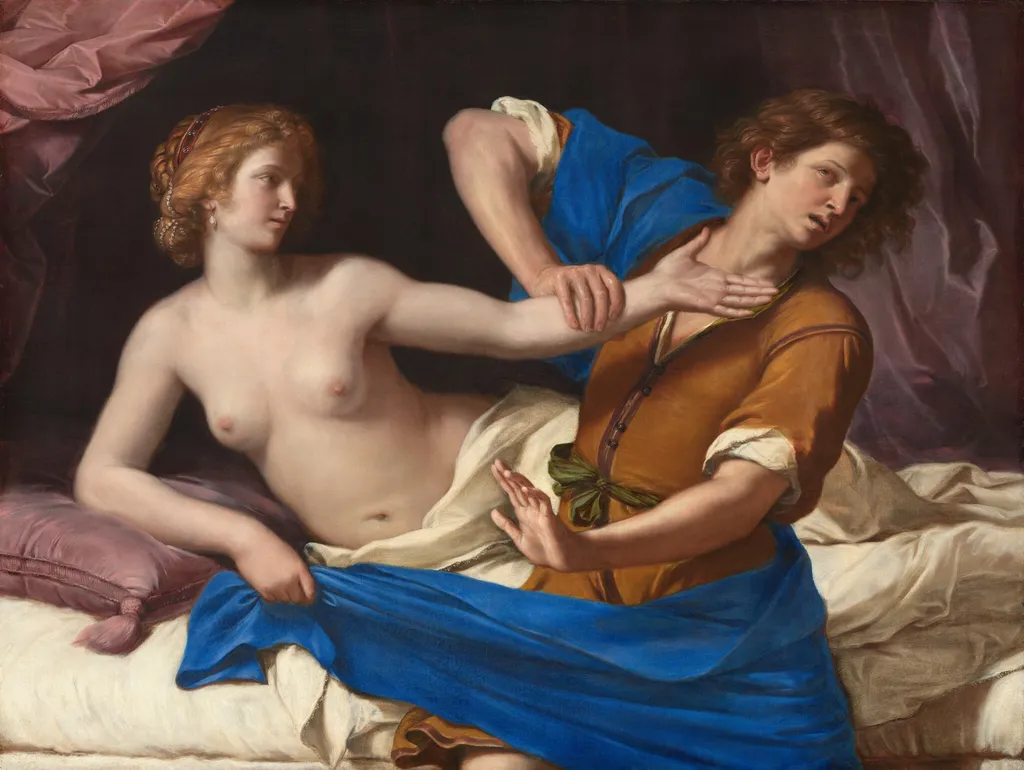
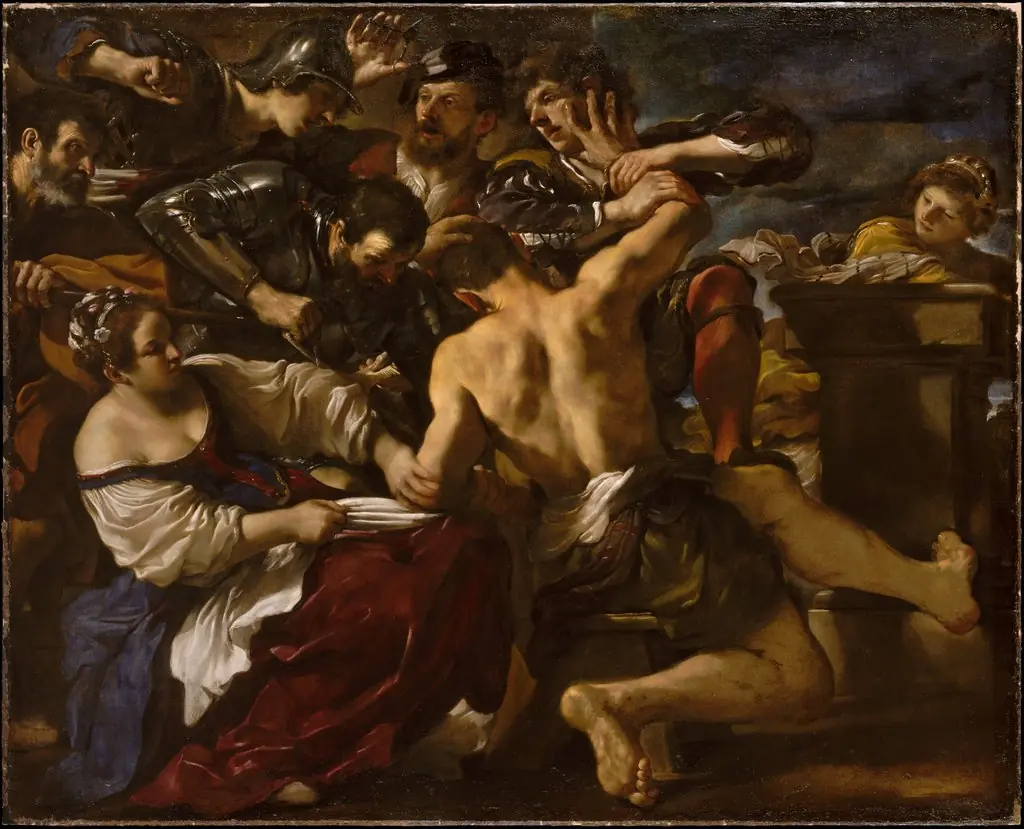
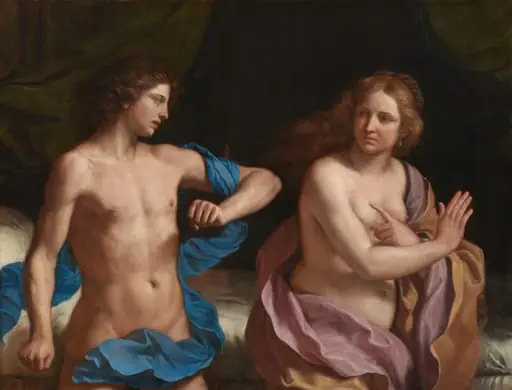
Joseph and Potiphar's Wife is an oil painting by the Baroque artist Guercino. It dates from 1649 and is held in the collection of the National Gallery of Art.
About this work
Subject & Meaning
As a piece of religious art, the composition focuses on the moral drama of the scene, capturing the tension between temptation and virtue.
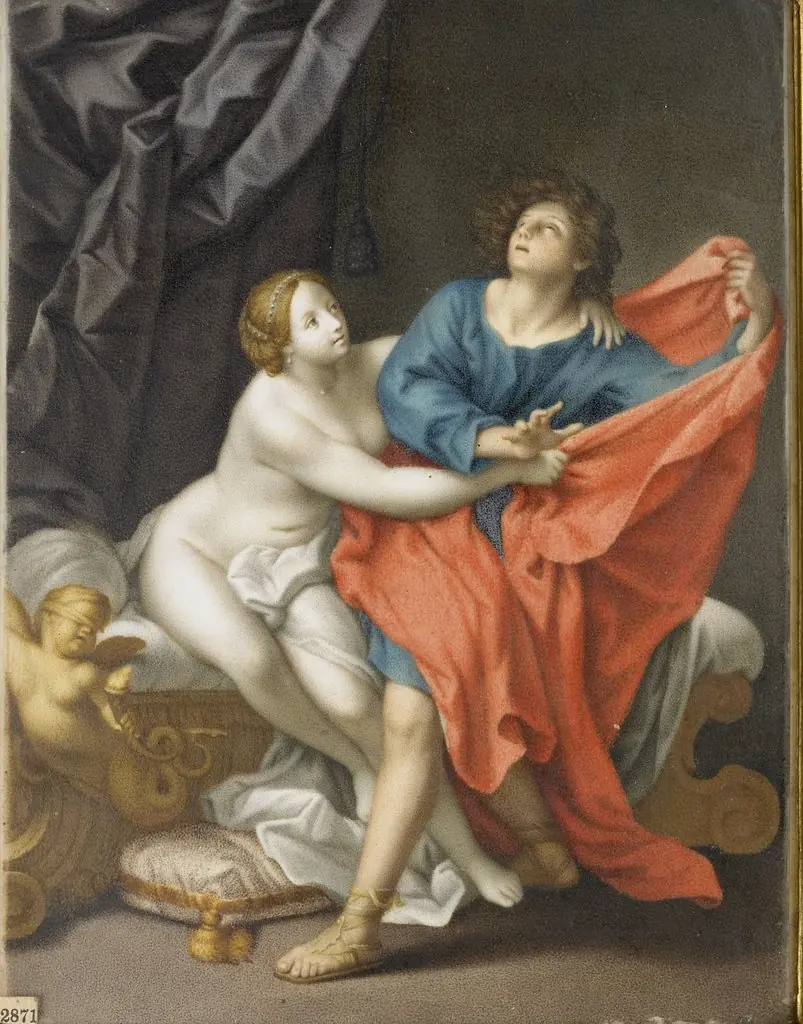
Guercino's 1649 oil painting illustrates the biblical narrative of Joseph and Potiphar's wife, explicitly identified in historical records as a 'fuga di Gioseppe' (Joseph's flight). The work depicts the moment of Joseph's escape from the advances of Zulaikha, the wife of his master Potiphar. As a piece of religious art, the composition focuses on the moral drama of the scene, capturing the tension between temptation and virtue.
The subject matter serves as a visual representation of chastity and divine protection, central themes in the Genesis account. While the specific iconographic details of the figures' gestures are not enumerated in the available texts, the title and documentary evidence confirm the work's function as a didactic religious image intended to convey the spiritual significance of Joseph's resistance to sin.
Technique & Style
The painting is an oil on canvas work measuring 123.2 cm in height and 158 cm in width, created in 1649 as recorded in Guercino's account book for a commission by Aurelio Zaneletti of Reggio Emilia. The composition depicts the biblical episode of Joseph and Potiphar's wife, identified as Zulaikha, a subject typical of religious art of the period. Its canvas support reflects the standard material used by the artist for large-scale religious subjects.
The work passed through the dealer Samuel Woodburn and the 3rd Marquess of Londonderry before entering the National Gallery of Art collection in 1986.
History & Provenance
Commissioned in 1649 by Aurelio Zaneletti (or Zanoletti), a collector from Reggio Emilia, this painting was executed by Guercino between 1649 and 1650. The artist's account books document a down payment of twenty-one scudi on 10 March 1649 for a work described as having two half-figures, followed by a final payment of 150 scudi on 25 August of that year for the completed piece depicting Joseph's flight. By 1820 the dealer Samuel Woodburn had acquired the work in Italy and transported it to England.
It entered the collection of Charles Stewart, 3rd Marquess of Londonderry, in London by 1833, and remained with the Londonderry family by descent until 1986, when it was purchased by the National Gallery of Art in Washington, D.C., where it is now held.
Overview
Guercino's Joseph and Potiphar's Wife, painted in 1649, is an oil on canvas that illustrates a dramatic biblical narrative. This work reflects a significant evolution in the artist's approach, moving away from the robust naturalism characteristic of his earlier Baroque period. Instead, it showcases a more measured and classical equilibrium, embodying the stylistic shifts within the early Italian Baroque movement and its emphasis on religious storytelling.
Context
Created during the mid-17th century, Joseph and Potiphar's Wife is firmly situated within the early Italian Baroque movement. This period was characterized by a strong focus on religious narratives and emotional intensity, often commissioned by the Church or aristocratic patrons. Guercino's career spanned significant artistic hubs, including Rome and Bologna, allowing him to absorb and contribute to the evolving stylistic trends of the era, blending regional influences into his distinctive approach.
Own this work as a print
Artist & collection
Artist
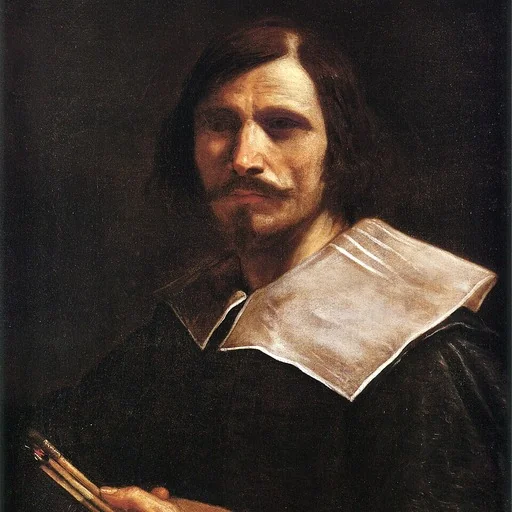
Giovanni Francesco Barbieri (8 February 1591 – 22 December 1666), better known as (il) Guercino (Italian pronunciation: ), was an Italian Baroque painter and draftsman from Cento in the Emilia region, who was active in Rome and Bologna.