Artwork
Wedding of Prince Jérôme Bonaparte and Princess Frédérique-Catherine of Wurtemberg, August 22, 1807
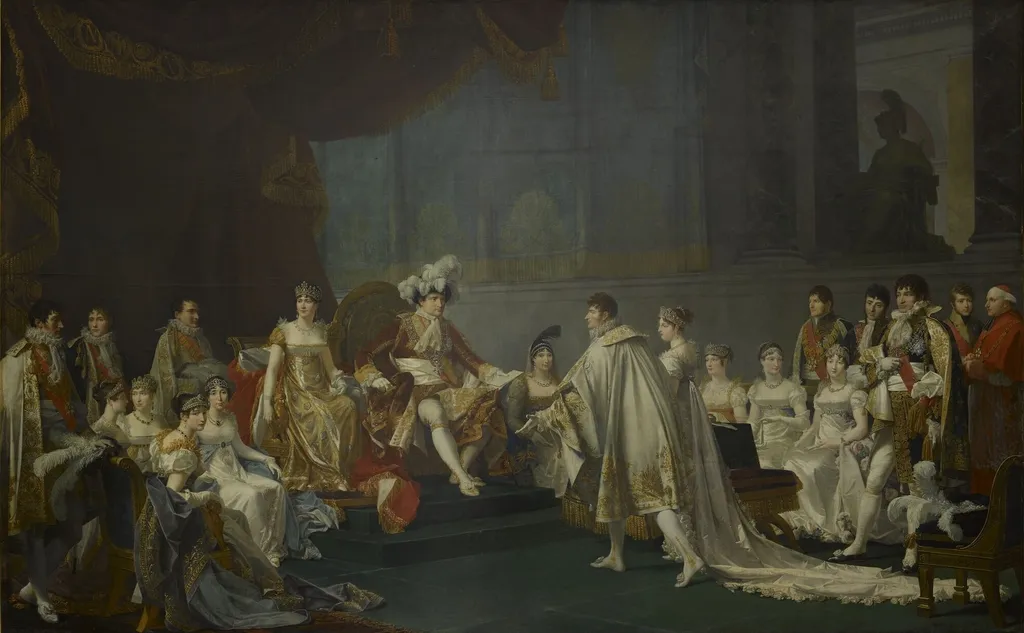
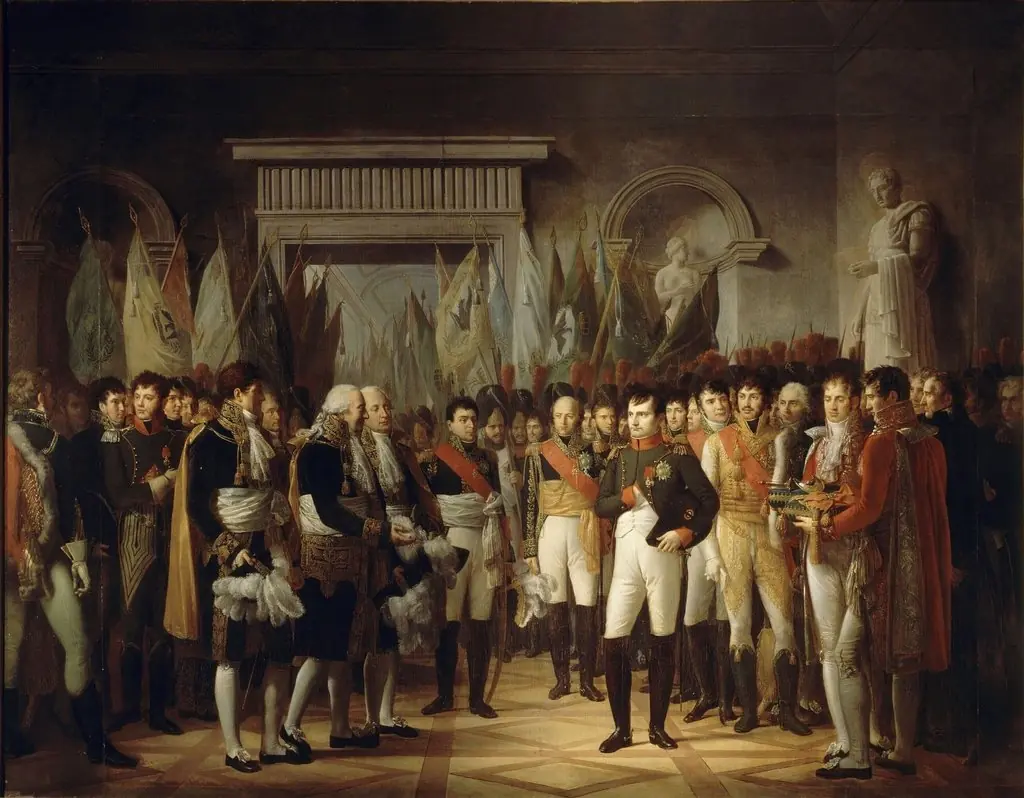
Wedding of Prince Jérôme Bonaparte and Princess Frédérique-Catherine of Wurtemberg, August 22, 1807 is an oil painting by Jean Baptiste Regnault. It is held in the collection of the Palace of Versailles.
About this work
Subject & Meaning
The union accompanied the establishment of the French-backed Kingdom of Westphalia, over which Jérôme reigned until 1813.
Jean-Baptiste Regnault's history painting depicts the civil wedding ceremony of Prince Jérôme Bonaparte and Princess Frédérique-Catherine of Württemberg, which took place on August 22, 1807, at the Tuileries Palace in Paris. The composition functions as a dynastic portrait, featuring a large assembly of the Bonaparte family, including Emperor Napoleon, who pressured Jérôme to dissolve his previous marriage to Elizabeth Patterson to secure this political alliance with the Kingdom of Württemberg.
Commissioned by Napoleon in 1807, the work was intended to serve as the model for a tapestry destined for the Salon de Mars, symbolizing the consolidation of imperial power through strategic marital unions. The union accompanied the establishment of the French-backed Kingdom of Westphalia, over which Jérôme reigned until 1813.
Technique & Style
Executed in oil on canvas, this history painting adheres to the Neoclassical style of Jean-Baptiste Regnault's training. The formal composition depicts the civil ceremony within the Tuileries Palace, populated by numerous portraits of the Bonaparte dynasty arranged in the structured manner typical of official imperial commissions. Napoleon originally intended it as the design for a tapestry to decorate the Salon de Mars.
The large canvas measures approximately 4 by 6.46 metres and was exhibited at the Salon of 1810 before entering the Museum of the History of France at Versailles.
History & Provenance
Napoleon Bonaparte commissioned Jean-Baptiste Regnault in 1807 to paint the wedding of his brother Jérôme and Princess Catherine of Württemberg as the model for a tapestry destined for the Salon de Mars. Regnault completed the oil-on-canvas history painting, which was exhibited at the Salon of 1810 in the Louvre; some catalogue records give a completion date of 1850, but this is untenable, as Regnault died in 1829. The painting entered the national collections and is now housed in the Museum of the History of France at the Palace of Versailles, where it bears inventory numbers MV 1558, INV 7392, and MR 2362.
Context
Napoleon commissioned Regnault to paint the wedding in 1807 as the model for a tapestry intended for the Salon de Mars. The completed work was shown at the Salon of 1810 in the Louvre and now resides in the Museum of the History of France at the Palace of Versailles, where it forms part of the institution's Napoleonic collections. Regnault, trained in the Neoclassical style and a contemporary of Jacques-Louis David and François-André Vincent, rendered the scene with numerous portraits of Bonaparte family members, underscoring its dynastic purpose.
As a history painting exhibited at the official Salon and held in a national museum, the work exemplifies the official art of the Napoleonic era.
Overview
Jean-Baptiste Regnault's oil painting captures the civil marriage ceremony of Prince Jérôme Bonaparte and Princess Frédérique-Catherine of Wurtemberg. Executed in 1807, this historical work commemorates a significant dynastic alliance within the Napoleonic era. The scene unfolds at the Tuileries Palace in Paris, depicting a pivotal moment in the political landscape of early 19th-century Europe.
Legacy
Following their wedding, Jérôme and Catharina assumed the throne of the newly formed Kingdom of Westphalia, a French satellite state, governing from 1807 until 1813. Their rule concluded with the dissolution of the kingdom after Napoleon's defeat at the Battle of Leipzig. Subsequently, Princess Catharina chose to accompany her husband into permanent exile, remaining with him despite the downfall of the Napoleonic empire.
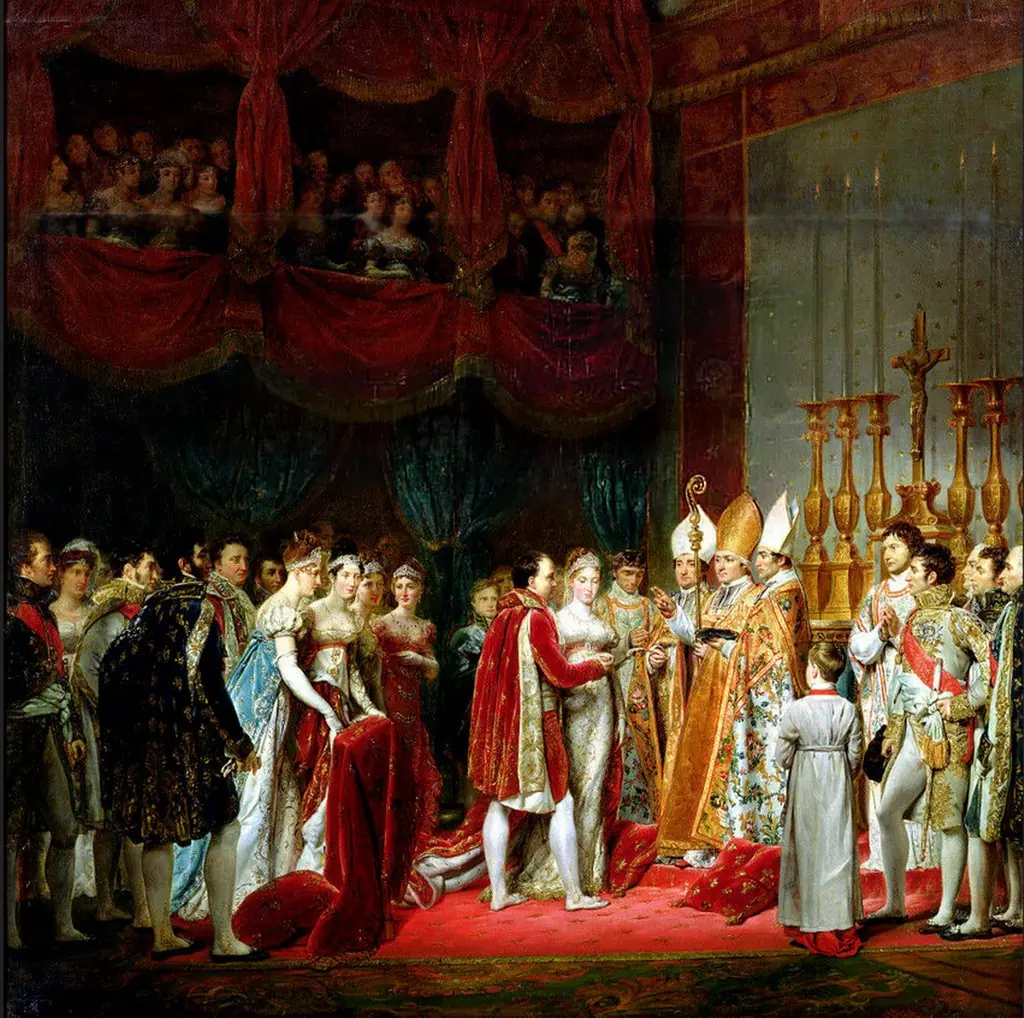
Artist & collection


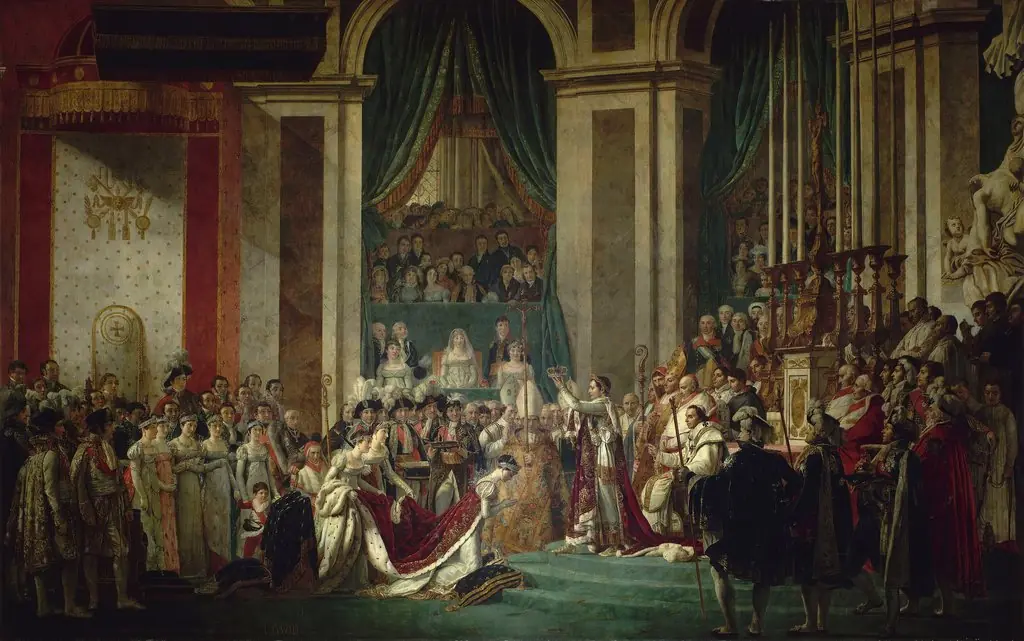 Coronation of Emperor Napoleon I and Coronation of the Empress Josephine
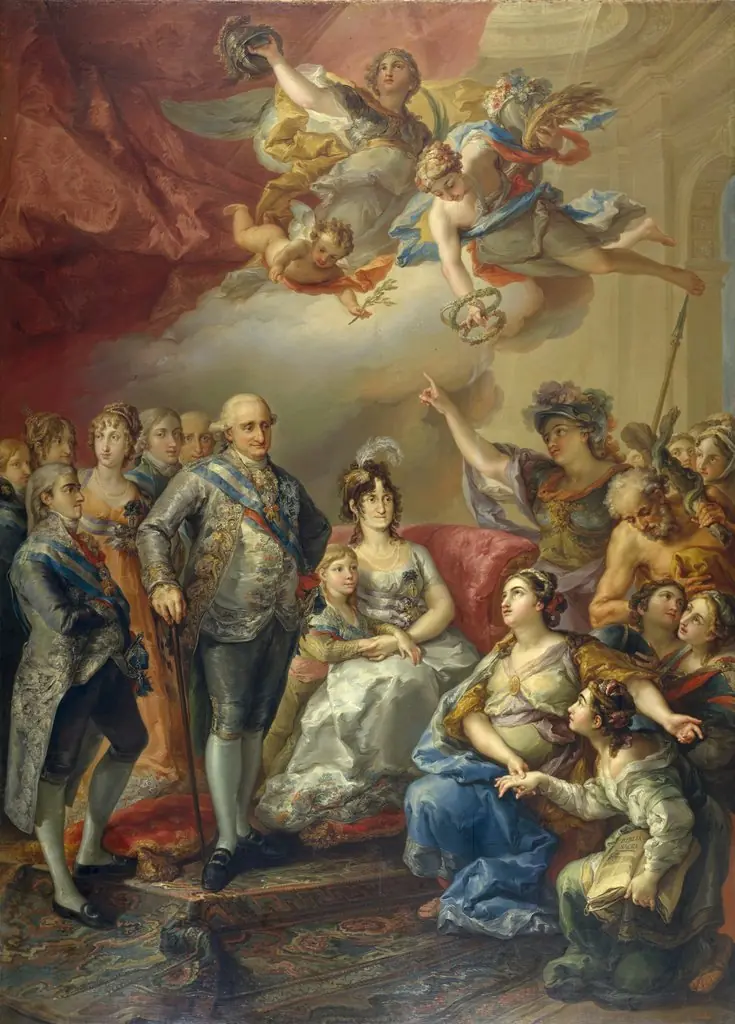 Charles IV and his Family honoured by the University of Valencia
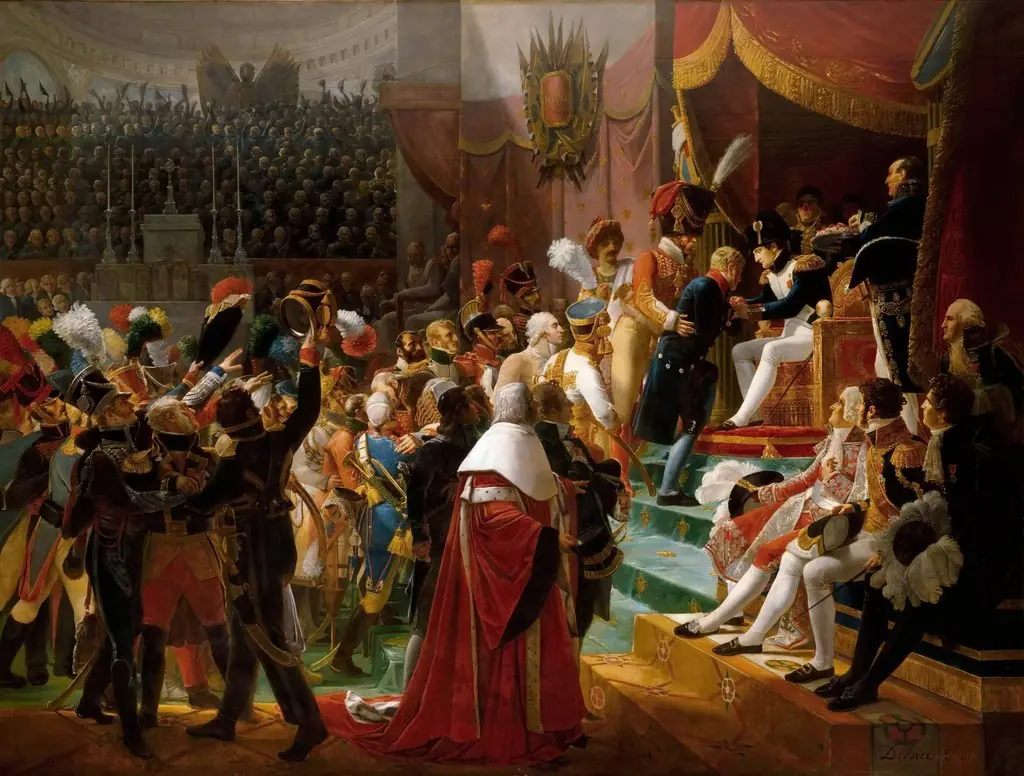 First distribution of the decorations of the Legion of Honor, made by Bonaparte, in the church of the imperial hotel of Invalides, July 14, 1804
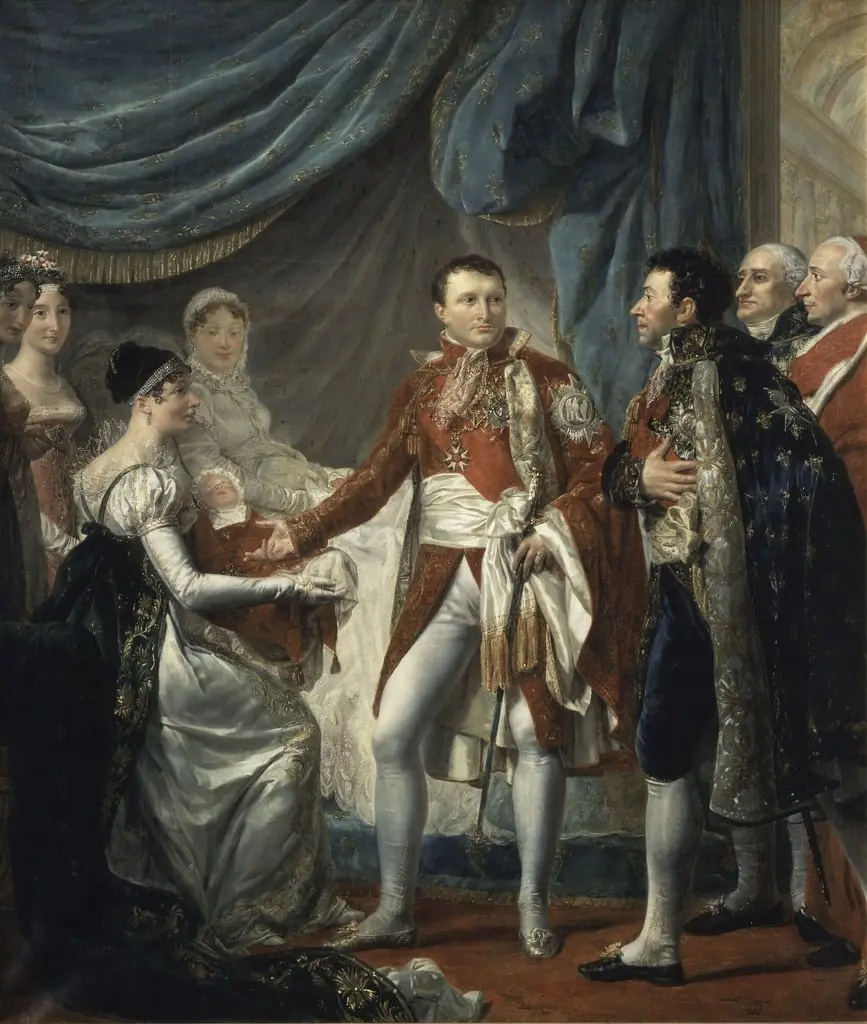 Napoleon I presents the King of Rome to the dignitaries of the Empire, March 20, 1811
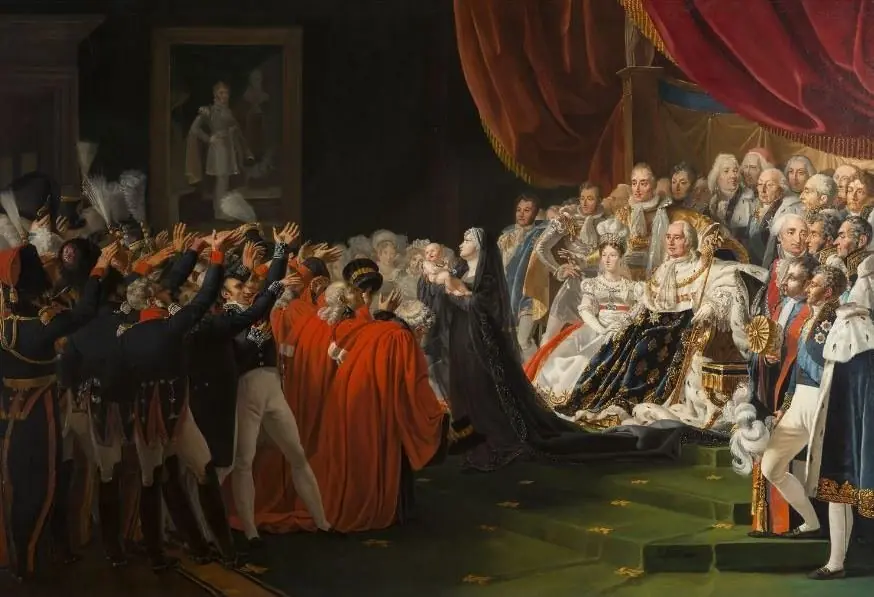 The Duke of Bordeaux presented to the people and the army by the Duchess of Berry in the presence of the king, surrounded by the royal family and the main figures of the State
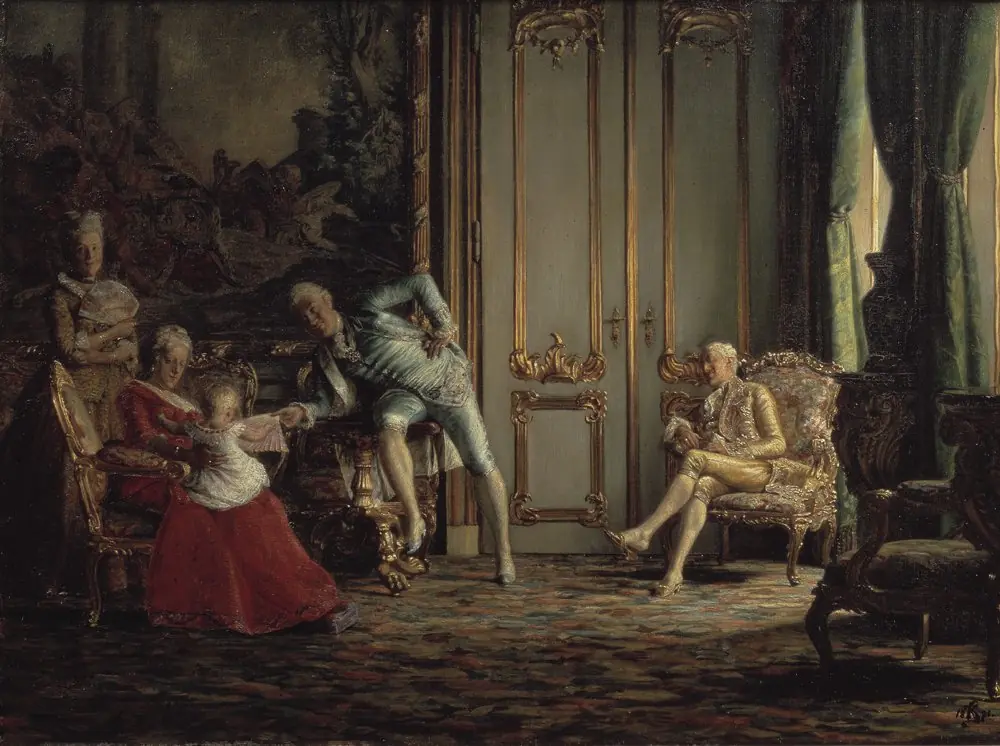 Et interiør fra forrige århundrede
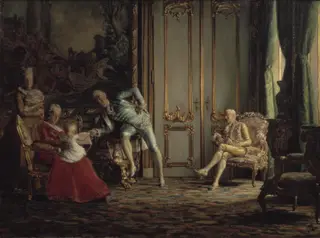 An Interior from the Past Century. Scene from the Court of Christian VII
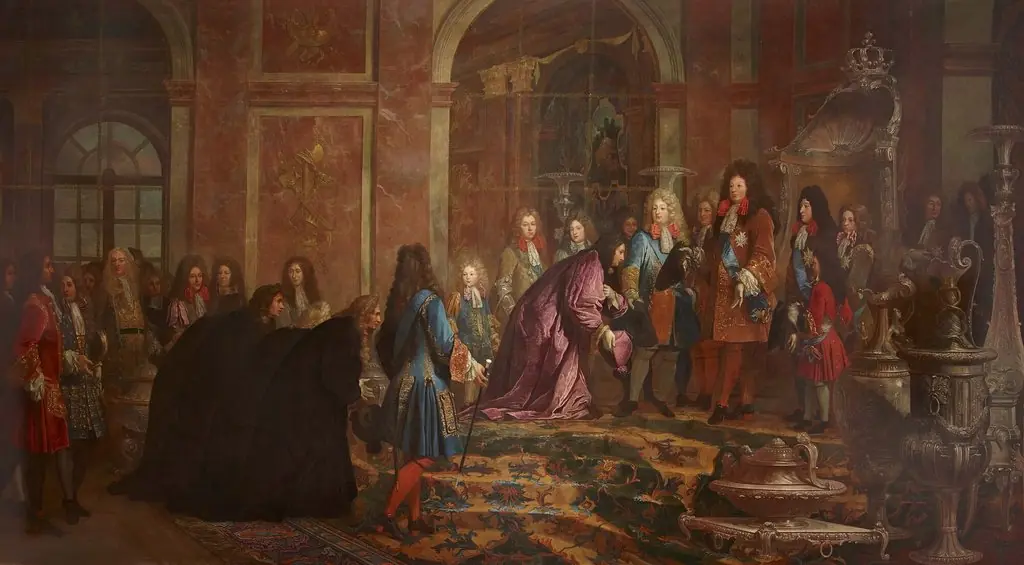 Reparations made to Louis XIV by the Doge of Genoa on 15 May 1685
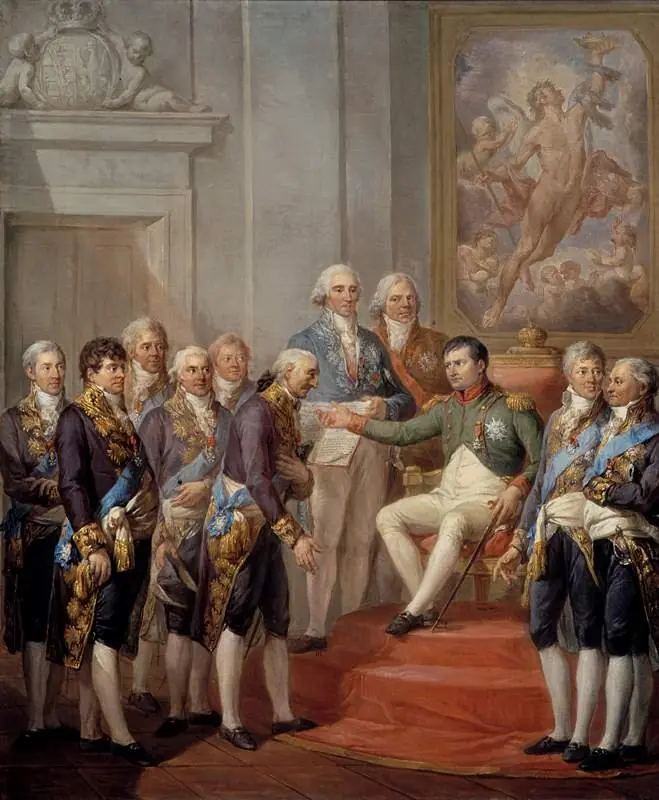 Granting of the Constitution of the Duchy of Warsaw by Napoleon
 Untitled
 The Emperor receiving the deputies of the Conservative Senate in Berlin at the royal palace, 19 November 1806
- Marriage of Napoleon I and Marie Louise, 2 April 1810