Artwork
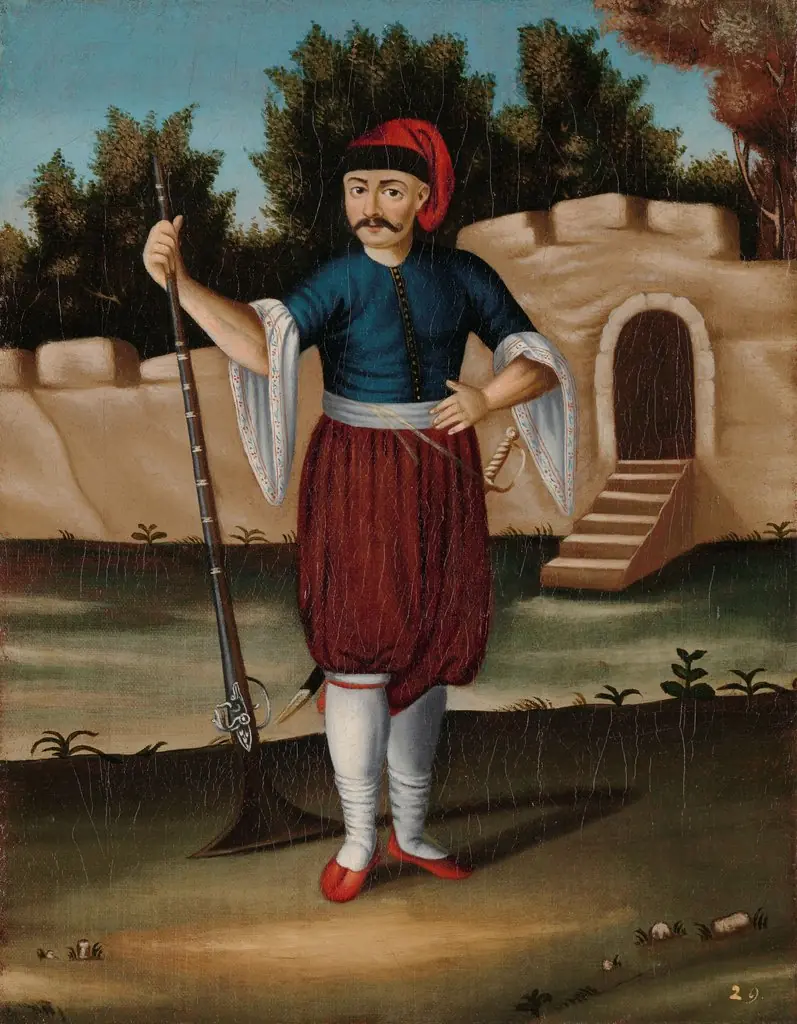
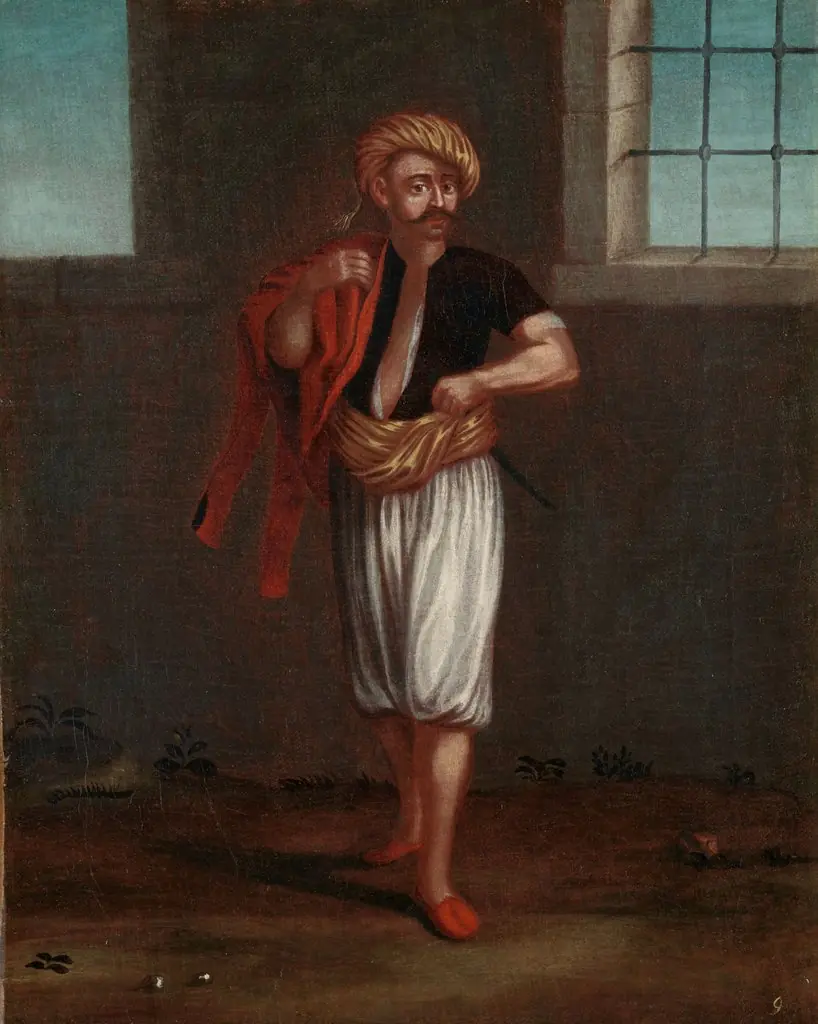
Man from the Island of Mykonos
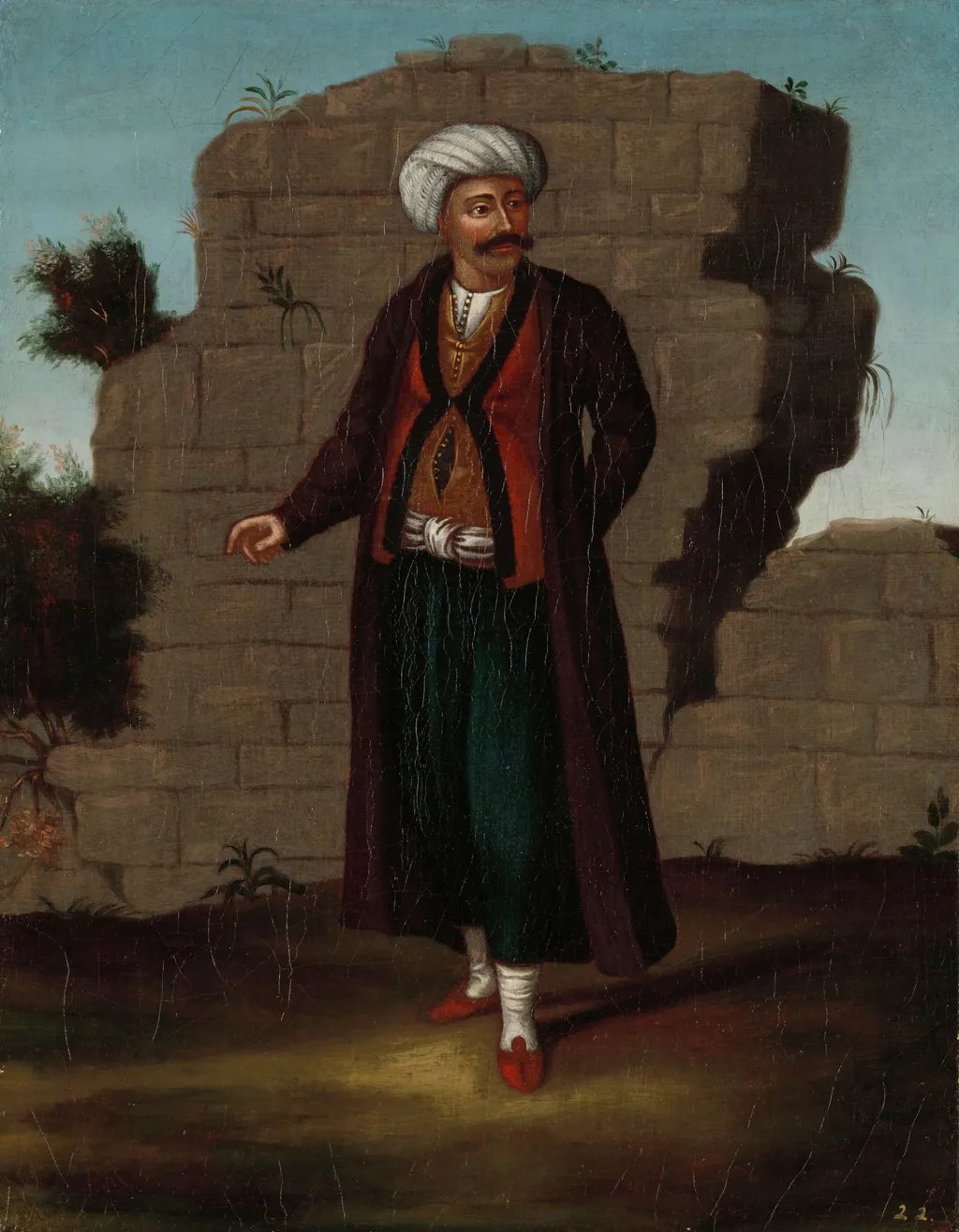
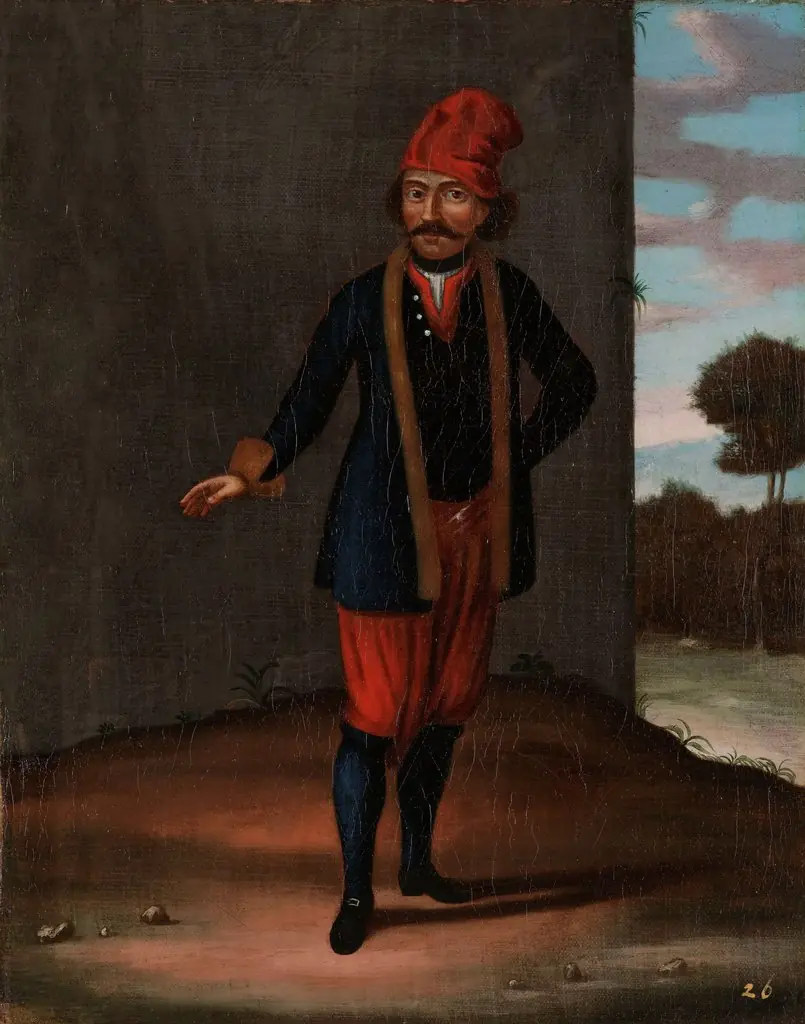
Man from the Island of Mykonos is an oil painting by the Rococo painting artist Jean Baptiste Vanmour. It dates from 1718 and is held in the collection of the Rijksmuseum.
About this work
Subject & Meaning
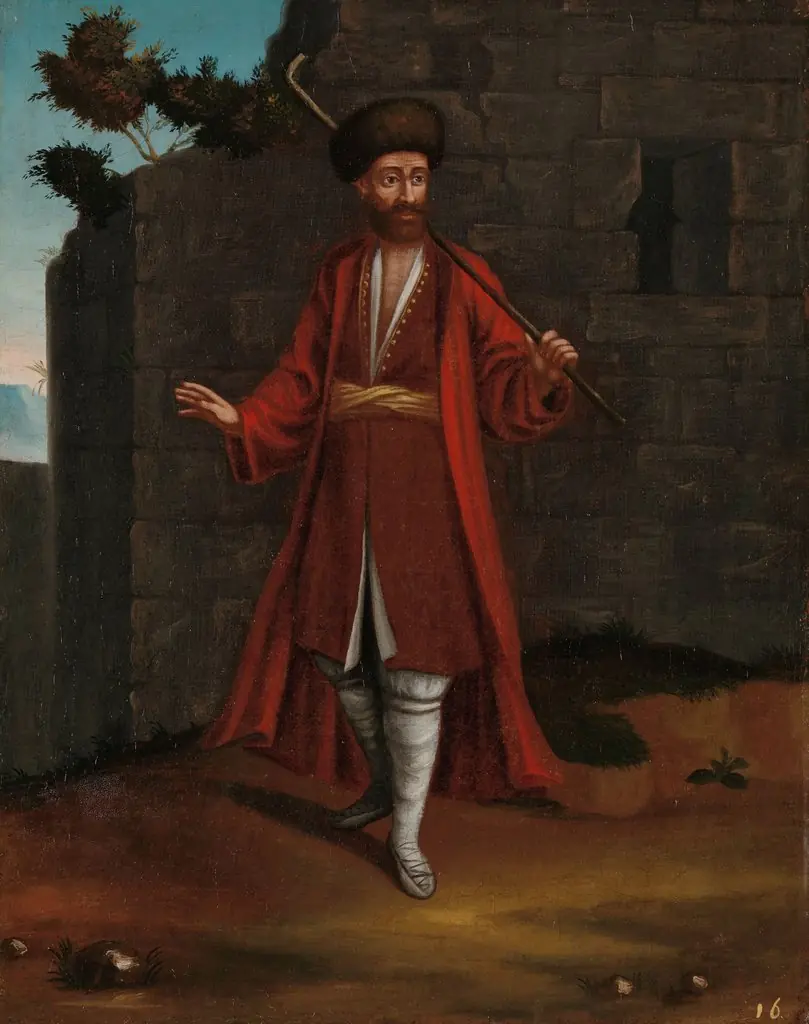
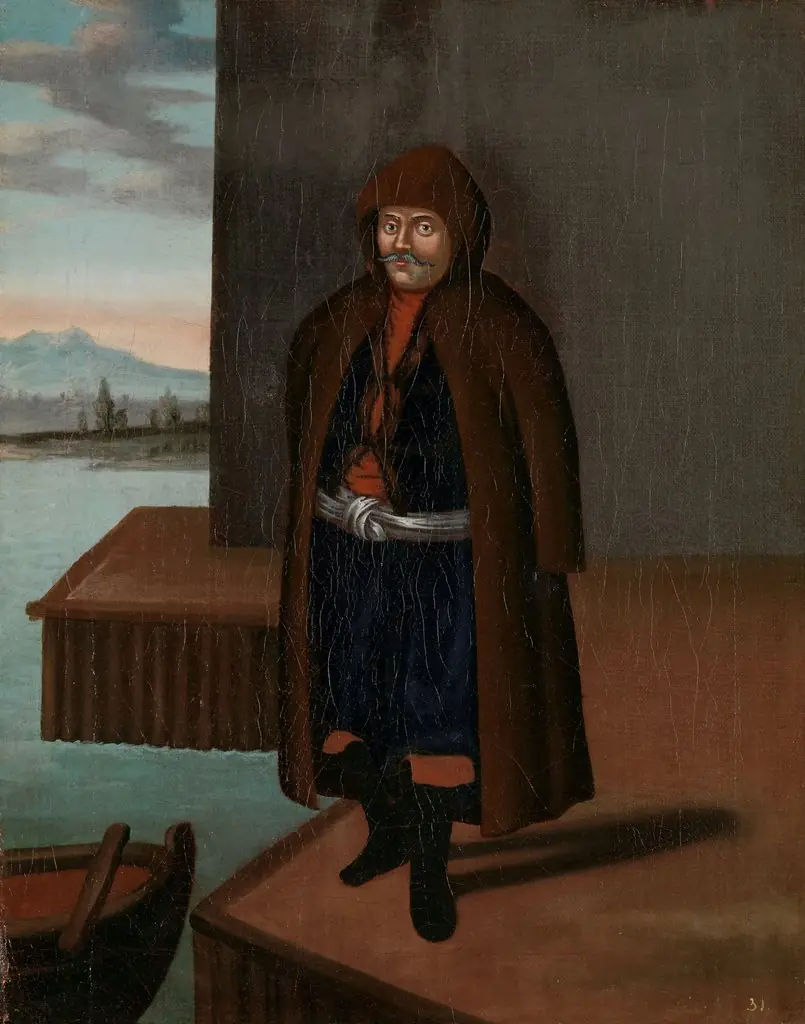
The painting depicts a single male figure identified in its title as “Man from the Island of Mykonos,” indicating that the sitter was likely a Greek subject from that Cycladic island. Dressed in a dark coat with a white shirt and wearing a red cap, the figure’s attire points to contemporary Ottoman-influenced dress of the early eighteenth century rather than to classical Greek costume, suggesting a cosmopolitan identity shaped by Mediterranean trade and diplomacy.
In the context of Vanmour’s broader Levantine portraiture, the work reflects the artist’s practice of recording local figures encountered in Ottoman diplomatic circles, capturing individual likeness and social status rather than mythological or allegorical meaning.
Technique & Style
The work is an oil painting executed on canvas. It measures 39 cm in height by 31 cm in width and was created in Istanbul in 1718. The portrait depicts a man and is signed by Jean Baptiste Vanmour.
Its surface shows typical handling marks consistent with its age, and the formal composition emphasizes a restrained palette and clear delineation of form.
History & Provenance
Man from the Island of Mykonos is an oil portrait painted in 1718 by Jean Baptiste Vanmour. The work entered the collection of the Dutch diplomat Cornelis Calkoen and later passed to his brother Nicolaas Calkoen. It was subsequently acquired by the Rijksmuseum, where it remains on display. The painting was created in Istanbul and is catalogued with the dimensions 39 cm by 31 cm.
Overview
Jean Baptiste Vanmour’s 1718 oil painting titled Man from the Island of Mykonos presents a solitary figure against a weathered stone wall. The work belongs to the Rococo period and is part of the Rijksmuseum’s collection. Vanmour, a Flemish‑French artist active in the early eighteenth century, is noted for his meticulous portraiture of individuals from Ottoman‑influenced regions.
Context
Vanmour’s career was shaped by his work for the French embassy in Constantinople, where he produced numerous portraits of court officials and local figures. This painting reflects the broader eighteenth‑century fascination with exotic subjects and the desire to record the diverse peoples encountered along Mediterranean trade routes.
Own this work as a print
Artist & collection
Artist
Jean Baptiste Vanmour or Van Mour (9 January 1671 – 22 January 1737) was a Flemish-French painter, remembered for his detailed portrayal of life in the Ottoman Empire during the Tulip Era and the rule of Sultan Ahmed III.