Artwork
Whirling Dervishes
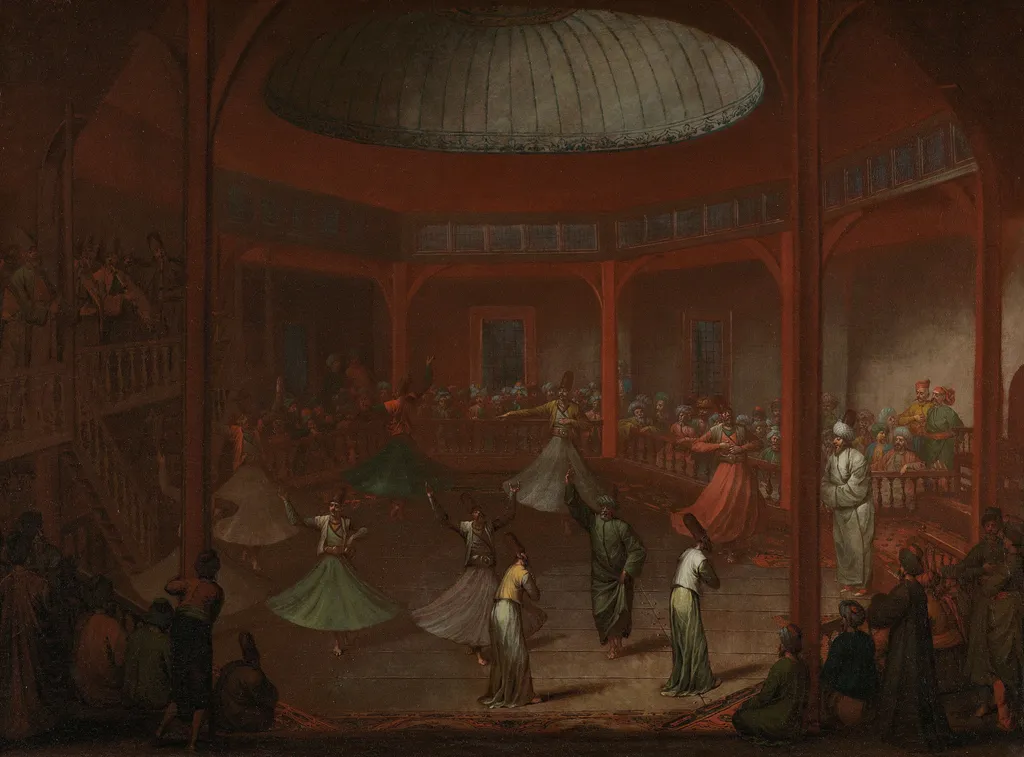
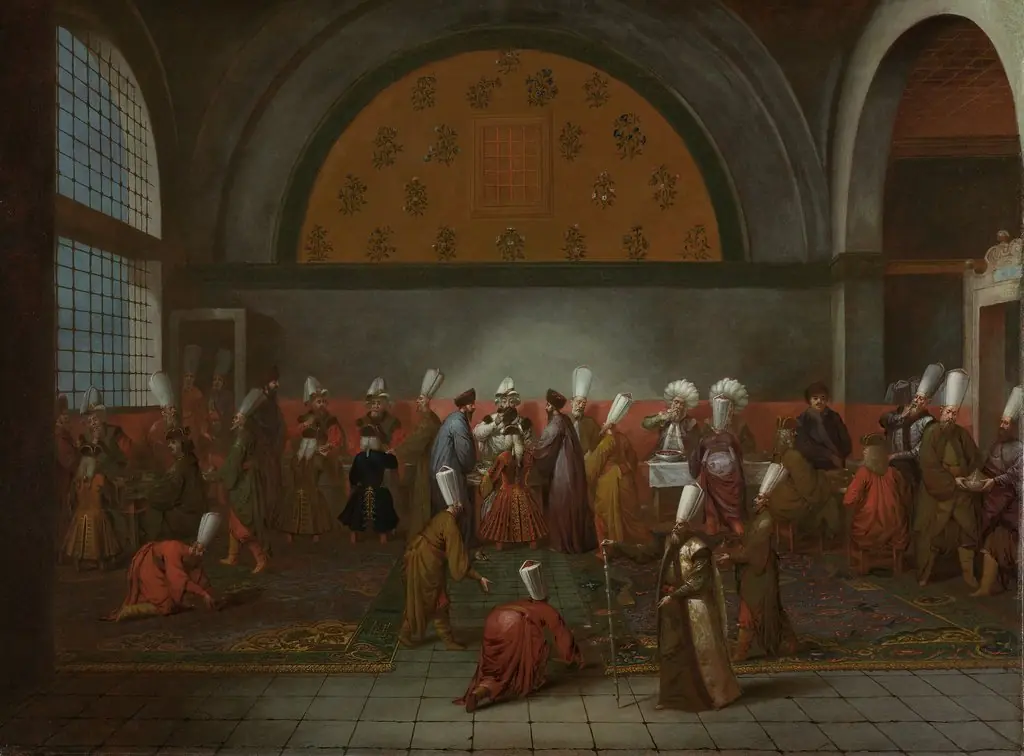
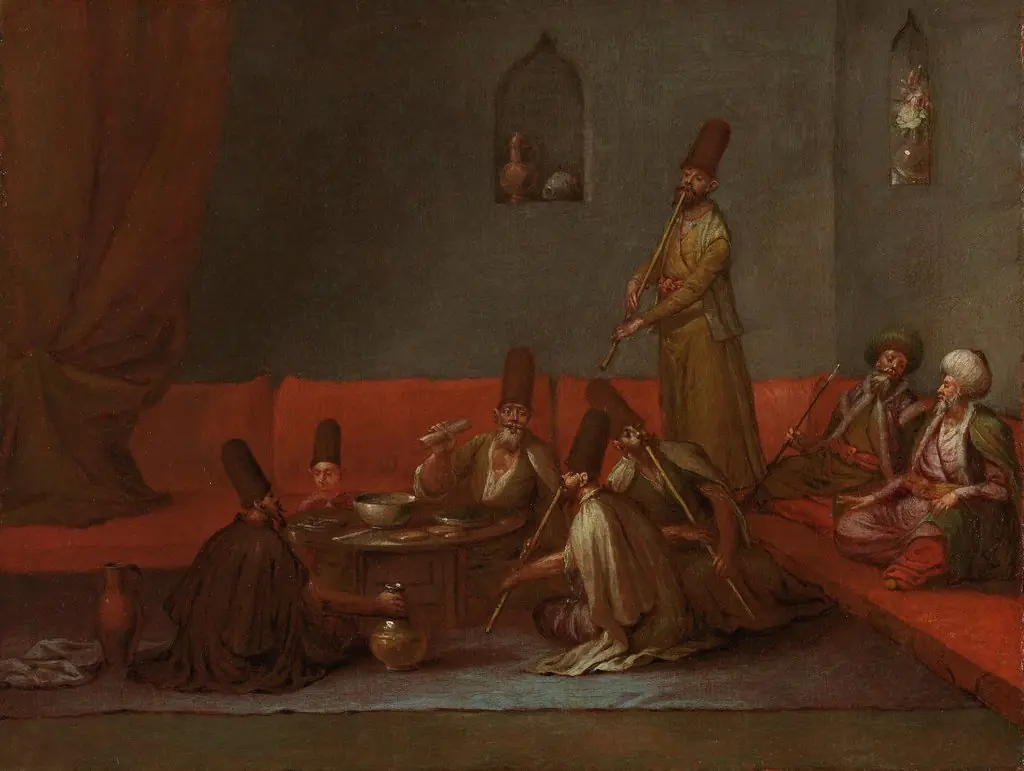
Whirling Dervishes is an oil painting by the Rococo painting artist Jean Baptiste Vanmour. It dates from 1728 and is held in the collection of the Rijksmuseum.
About this work
Subject & Meaning
The work visualizes a moment of devotional practice rather than a historical event, emphasizing the meditative and ecstatic dimensions of Sufi worship.
The painting depicts a ritual performance by Sufi dervishes, known as the whirling ceremony, in which participants rotate around a central point as part of their dhikr (remembrance) practice. The composition centers on the circular motion of the dervishes, their long robes and tall hats forming a rhythmic pattern that conveys spiritual ecstasy and transcendence. The setting appears to be an interior space, possibly a lodge or hall, indicated by the architectural elements and the presence of a central figure who may represent a leader or guide of the ceremony.
The work visualizes a moment of devotional practice rather than a historical event, emphasizing the meditative and ecstatic dimensions of Sufi worship.
Technique & Style
Executed in 1728, this work is an oil painting applied to a canvas support. The composition measures 76 cm in height and 101 cm in width. Stylistically, the piece functions as a depiction of a dervish, capturing the subject within the traditions of early eighteenth-century painting.
The application of oil paint on canvas allows for the detailed rendering of the figure, consistent with the artist's approach to documenting cultural subjects during this period.
History & Provenance
The painting Whirling Dervishes was created in 1728 by the artist Jean Baptiste Vanmour. Executed in oil on canvas, the work depicts a dervish and measures 76 cm in height by 101 cm in width. Historical records indicate that the piece was once part of the collection of Cornelis Calkoen and Nicolaas Calkoen.
It is currently held by the Rijksmuseum in Amsterdam, where it resides within the holdings of the former Directie van de Levantse handel en de Navigatie op de Middellandse Zee and the Koninklijk Kabinet van Zeldzaamkeiten.
The painting Whirling Dervishes by Jean Baptiste Vanmour is held in the collection of the Rijksmuseum in Amsterdam. It entered the museum's holdings as part of the Directie van de Levantse handel en de Navigatie op de Middellandse Zee, which was formerly associated with the Koninklijk Kabinet van Zeldzaamheden and the Nederlandsch Museum voor Geschiedenis en Kunst. Prior to its acquisition by the institution, the work was owned by Cornelis Calkoen and Nicolaas Calkoen.
The provided sources do not contain specific accession numbers or a record of past exhibitions for this artwork.
Legacy
Whirling Dervishes has shaped European perceptions of Ottoman ceremonial life through its vivid portrayal of Sufi ritual, inspiring 19th-century Orientalist artists and informing ethnographic studies of dervish orders. The painting's composition and thematic focus were cited in early 20th-century art historical surveys of Eastern Mediterranean culture, cementing its reputation as a key visual record of 18th-century Ottoman court ceremonies.
Overview
Whirling Dervishes, painted in 1728 by Jean Baptiste Vanmour, is an oil painting depicting a scene of Sufi dervishes in motion, set within an Ottoman interior. The work exemplifies the artist's fascination with Ottoman culture during the Tulip Era.
Context
The painting's setting, with its curved ceiling, arched doorways, and dimly lit interior, provides a vivid backdrop to the dervishes' ritual. The contrast between the static, observant crowd and the dynamic, swirling dancers highlights the artist's ability to convey movement and contemplation within a single scene.
Own this work as a print
Artist & collection
Artist
Jean Baptiste Vanmour or Van Mour (9 January 1671 – 22 January 1737) was a Flemish-French painter, remembered for his detailed portrayal of life in the Ottoman Empire during the Tulip Era and the rule of Sultan Ahmed III.