Artwork
Design for Stage Set for the Second Act of Elisca or L'Habitante de Madagascar
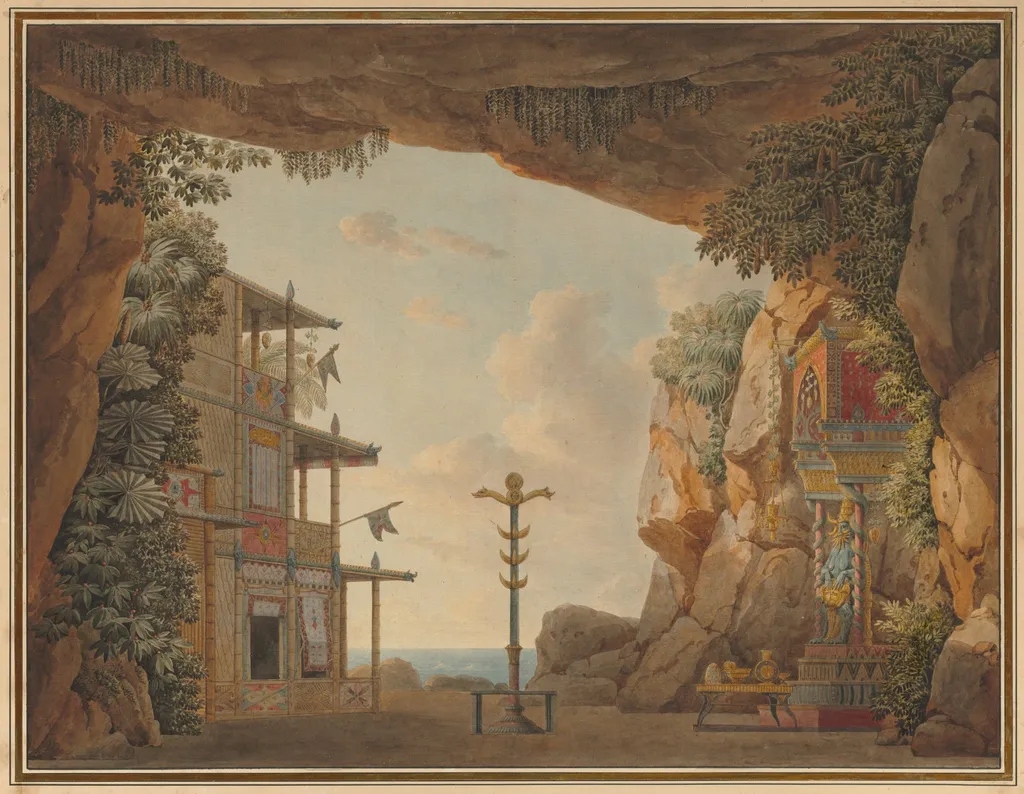
Design for Stage Set for the Second Act of Elisca or L'Habitante de Madagascar is a drawing by the Romanticist artist Jean Thomas Thibault. It dates from 1798 and is held in the collection of the Cleveland Museum of Art.
- Accession no.
- 1978.80
- Credit line
- Delia E. Holden Fund
About this work
Overview
Jean‑Thomas Thibault’s 1798 drawing, titled Design for Stage Set for the Second Act of Elisca or L’Habituée de Madagascar, is a preparatory sketch for a theatrical scenery. Executed on paper, the composition depicts an imagined coastal landscape populated by two ornate structures, palm foliage, and a central pole topped with a cross. The work is part of the Cleveland Museum of Art’s collection.
Subject & Meaning
The inclusion of tropical plants and distant clouds creates an atmospheric backdrop that enhances the story’s sense of adventure and far‑off locales.
The drawing visualizes the second act of the opera Elisca, situating the drama on a rocky shoreline where exotic architecture frames the action. One edifice features a balcony with two figures poised to look outward, while the other supports a statue holding an object, suggesting narrative cues for the performers. The inclusion of tropical plants and distant clouds creates an atmospheric backdrop that enhances the story’s sense of adventure and far‑off locales.
Technique & Style
Rendered in fine pen and wash, Thibault balances line work with muted tonal shading to convey depth and texture. The palette, though limited to monochrome on paper, hints at the bright reds, blues, and golds of the intended painted set through annotated color notes. Architectural elements blend Asian motifs, such as sweeping roofs, with European classicism, reflecting the period’s fascination with hybrid, picturesque scenery.
History & Provenance
Created in 1798 for a French stage production, the sketch remained in private hands before being acquired by the Cleveland Museum of Art in the early 20th century. Its survival offers insight into the collaborative process between designers and directors during the late‑18th‑century operatic boom, illustrating how visual planning contributed to theatrical experiences of the era.
Context
Thibault’s design aligns with Romantic sensibilities that prized the exotic, the sublime, and the emotional power of nature. The imagined Madagascar setting, dramatic cliffs, and lush vegetation evoke the era’s yearning for distant, untamed landscapes. By integrating theatrical illusion with Romantic aesthetics, the drawing exemplifies how stage design served as a conduit for the movement’s broader cultural preoccupations with mystery and emotional intensity.
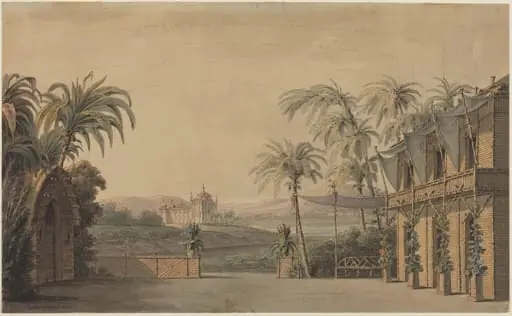
Own this work as a print
Artist & collection
Artist
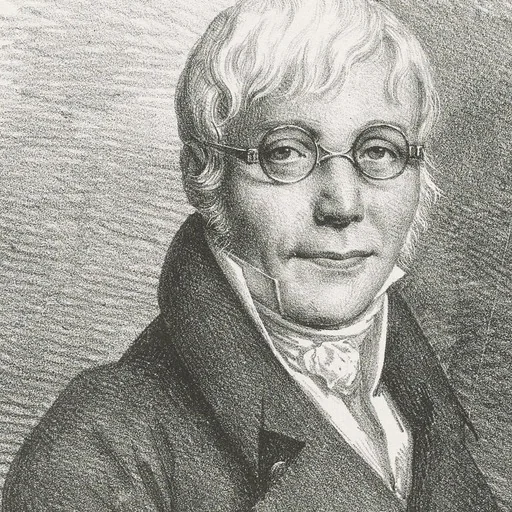
Jean Thomas Thibault (1757–1826) was a French artist, born in Montier-en-Der.

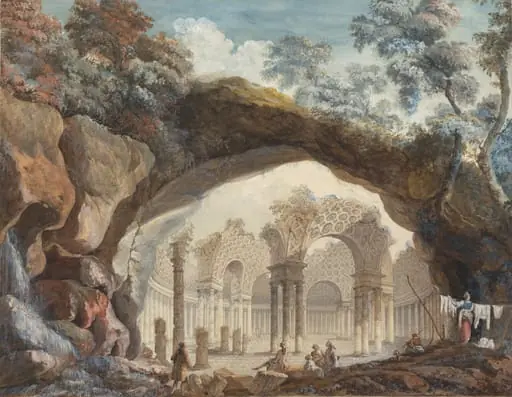 Architectural Fantasy: Ruins of a Circular Temple Seen through a Natural Arch
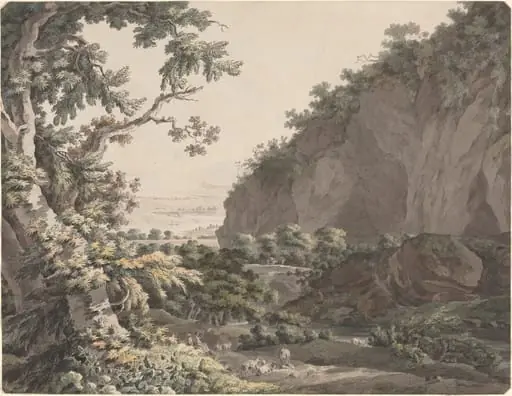 A Wooded Valley with Rocky Cliffs
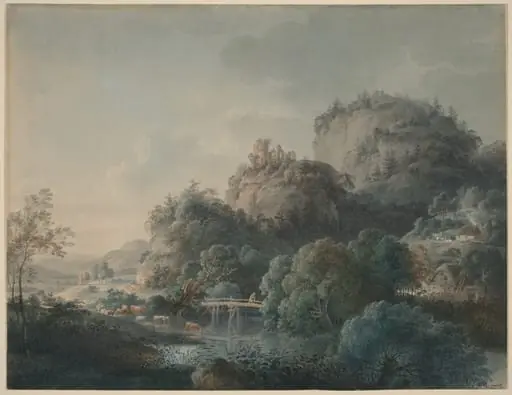 The Ruins of the Monastery of Oybin in the Zittau Mountains
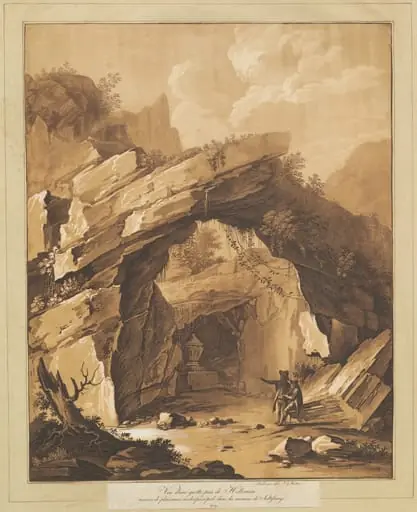 View of the Grotto by Heilbrunn, near Salzburg
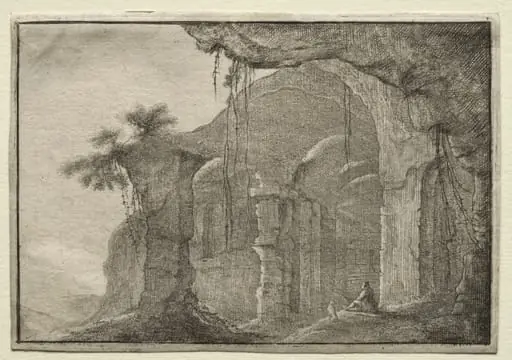 Ruins of an Amphitheatre
 Theatre of Myra, now Demre, in Lycia
 The Return of the Cattle
 An Extensive River Landscape
 Saint Paul and Saint Anthony by the Entrance to the Cave
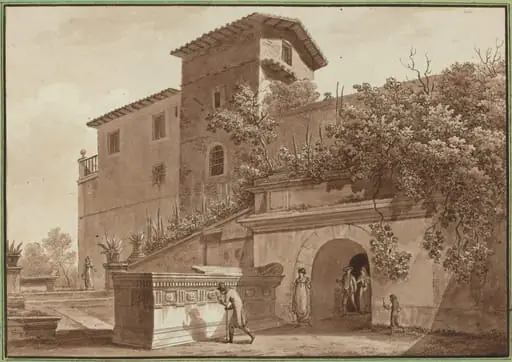 Tomb of Scipios
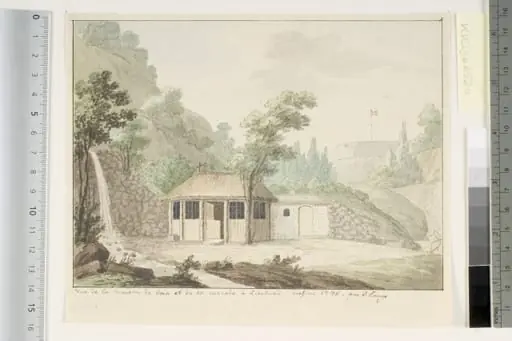 Liselund
- Turkish Stage Design