Artwork
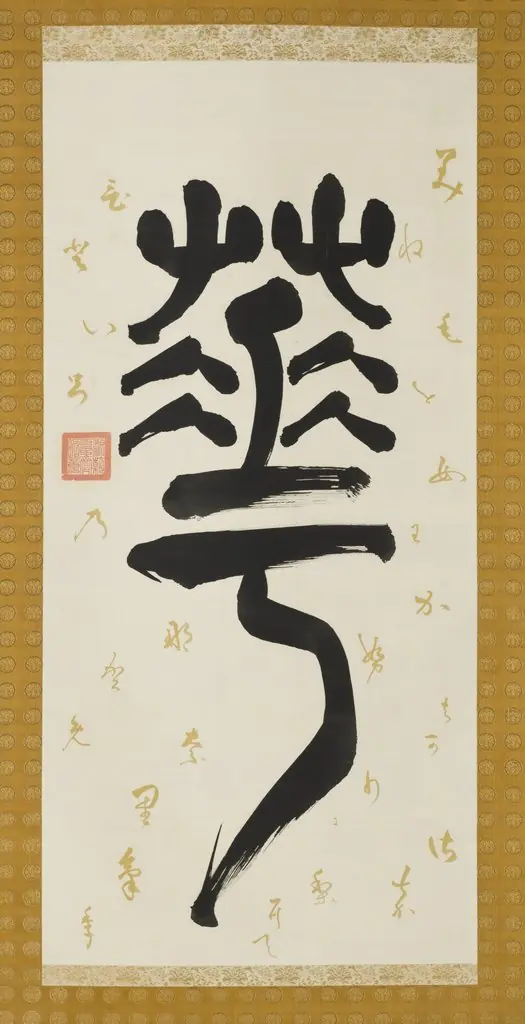
For a hundred years [I have been] a person with no attachments
![For a hundred years [I have been] a person with no attachments, by Jiun, unspecified, 1792](https://artifactworldgallery.com/img/jiun--for-a-hundred-years-i-have-been-a-person-with-no-attachments--b29f06e3a79d2459-w1024.webp)
For a hundred years [I have been] a person with no attachments is an unspecified painting by the Nanga artist Jiun. It dates from 1792 and is held in the collection of the Metropolitan Museum of Art.
About this work
Overview
It is part of the collection at the Metropolitan Museum of Art.
Created in 1792 by the artist Jiun, this work titled For a hundred years [I have been] a person with no attachments is a narrow, vertically oriented sheet of paper. It is part of the collection at the Metropolitan Museum of Art. The piece consists solely of black ink calligraphic marks arranged in stacked, bold characters against a light, off‑white ground, framed by thin patterned borders at the top and bottom.
Subject & Meaning
The artwork presents a single line of Chinese calligraphy that reads the contemplative phrase “For a hundred years I have been a person with no attachments.” The text conveys a philosophical stance on detachment and endurance, reflecting a personal or literary sentiment common in late‑eighteenth‑century East Asian thought.
Technique & Style
Jiun employed a brush loaded with black ink, applying each stroke in a single, unmediated motion. The resulting characters are uneven, with rough edges that suggest spontaneity and vigor. The composition’s stark contrast between ink and the pale paper, together with the decorative woven‑patterned borders, underscores a minimalist aesthetic while retaining a tactile, hand‑crafted quality.
History & Provenance
The painting was produced in 1792 and has remained in private or institutional hands before entering the Metropolitan Museum of Art’s collection. The museum acquired the piece as part of its Asian art holdings, though specific acquisition details are not publicly recorded.
Context
During the late Qing dynasty, calligraphic works often served both as literary expression and as visual art. Jiun’s choice of a solitary, declarative phrase aligns with contemporary trends that valued personal introspection and the display of brush mastery. The work’s format, a tall, narrow sheet, was typical for hanging scrolls used in scholarly or devotional spaces.
Artist & collection
Artist
Jiun painted single-panel calligraphic scrolls that slice right to the bone. In “For a hundred years [I have been] a person with no attachments” (1782), a few spare ink strokes and a line of kanji strip away everything…

- Snow, Moon, Flower Calligraphy
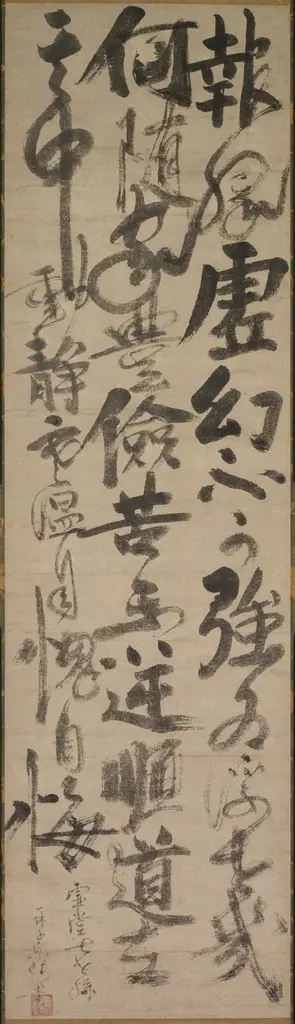 Reflections of Priest Foyen
 Reflections of Priest Foyen
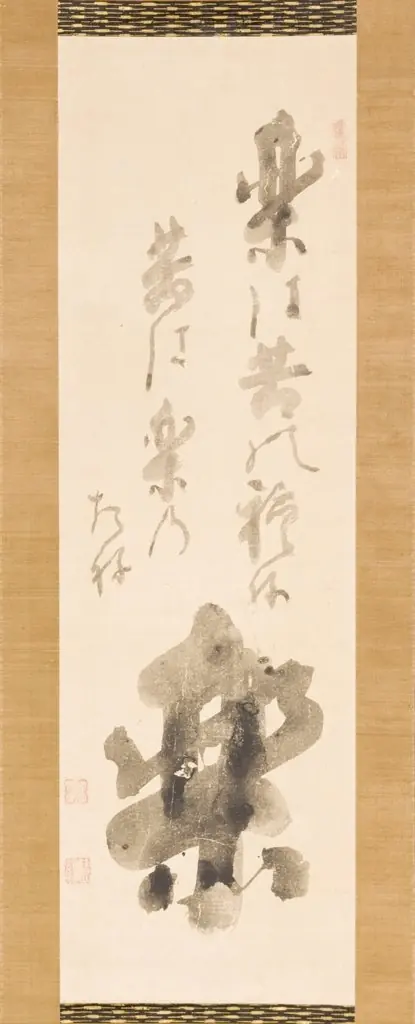 'JOY: In joy lie the seeds of sufferings; in sufferings lie the seeds of joy (RAKU: Raku wa kū no tane; Kū wa raku no tane)'
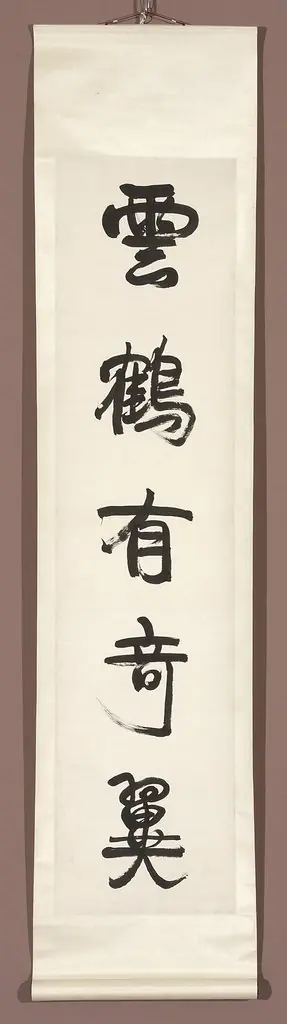 Zwój z kaligrafią: "Yun he you qi yi"
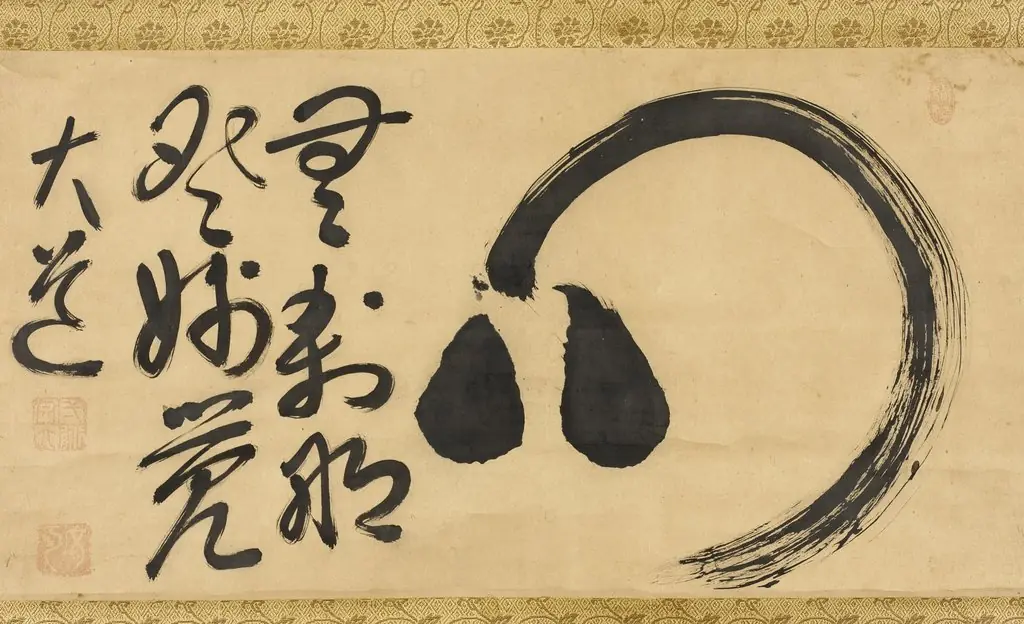 The Character for "Heart/Mind" as an Ensō
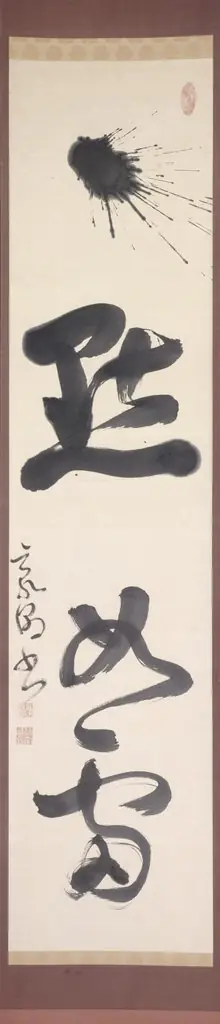 One Silence Like a Clap of Thunder
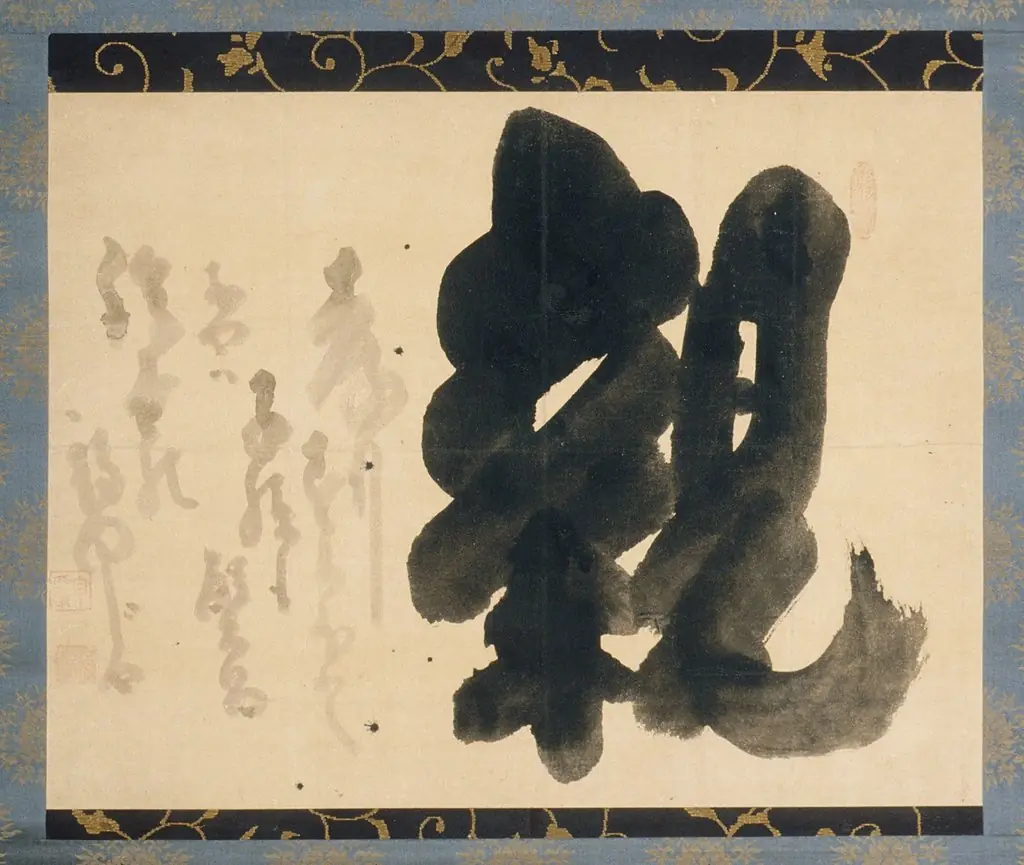 Oyakōkō: Love for One's Parents
 Calligraphy (reverse)
 Untitled
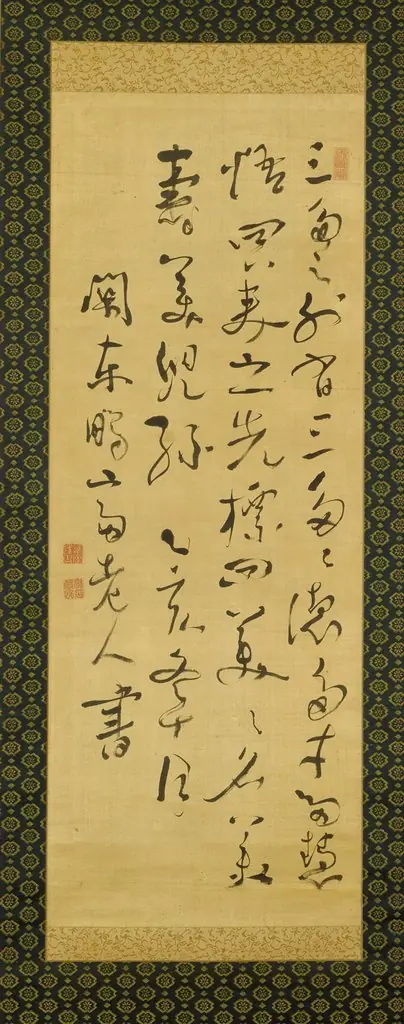 Confucian Poem
 Chinese Poem: Seven-character-quatrain
 北宋 徽宗 竹禽圖 卷|Finches and bamboo
 拾遺古徳伝絵断簡|Illustrated Biography of Hōnen (Shūikotokūden-e)
 清 傳高鳳翰 書畫合璧 冊|Landscapes and Calligraphy
 Famous Women
 清 詩午閑人 瀟湘八景詩畫 冊|Eight Landscape Scenes and Calligraphy
 清 諸家 名家書畫 冊|Album of painting and calligraphy for Maoshu
 Fishing Boat on Reed Covered Bank and Calligraphy
 池大雅書 「楓橋夜泊」屏風|"Maple Bridge Night Mooring"