Artwork
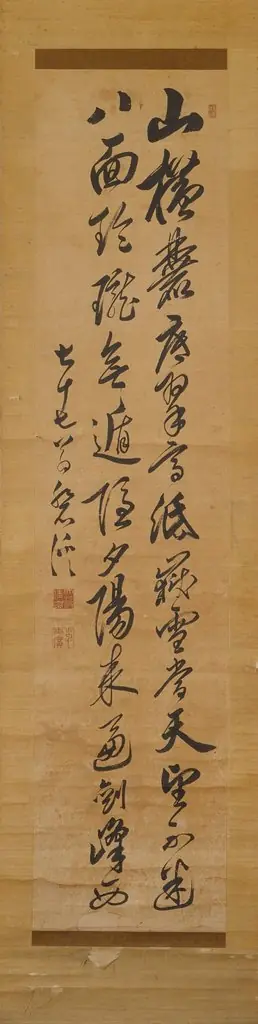
池大雅書 「楓橋夜泊」屏風|"Maple Bridge Night Mooring"
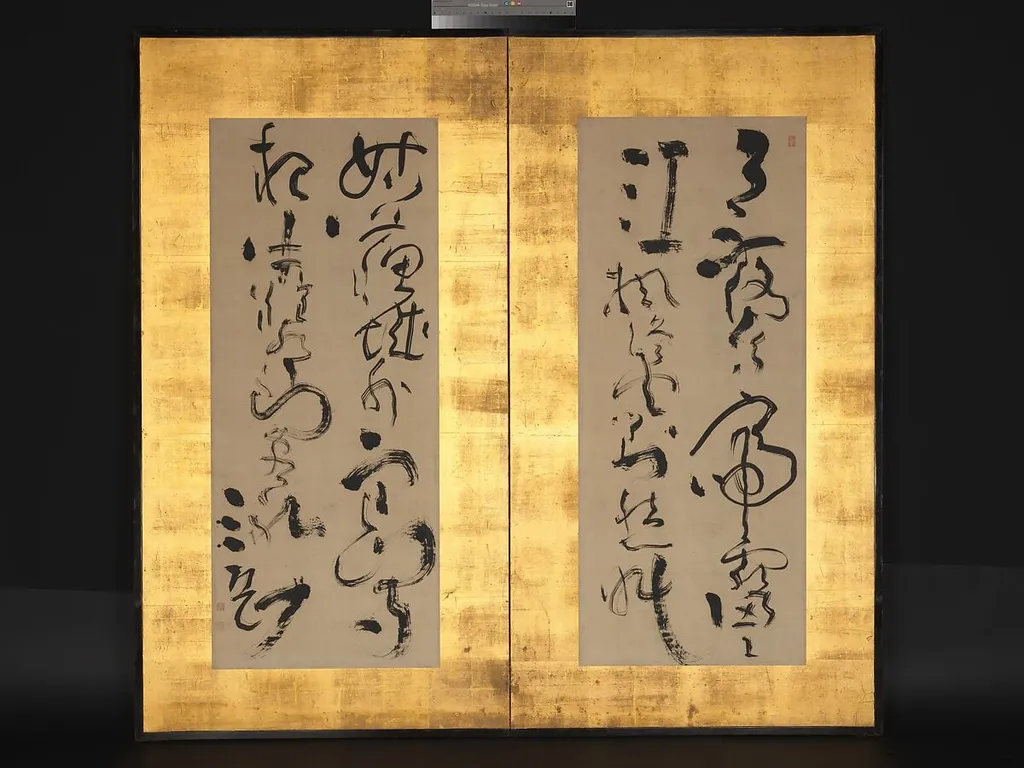
池大雅書 「楓橋夜泊」屏風|"Maple Bridge Night Mooring" is an ink painting by the Nanga artist Ike Taiga. It dates from 1770 and is held in the collection of the Metropolitan Museum of Art.
- Accession no.
- 2008.66
- Credit line
- Purchase, Friends of Asian Art Gifts, 2008
About this work
Subject & Meaning
Symbolically, the work merges literary and visual arts, reflecting Edo-period literati ideals that prized poetic allusion and emotional resonance.
The screen "Maple Bridge Night Mooring" by Ike Taiga depicts a poetic landscape centered on the theme of Zhang Ji’s famous Tang-dynasty poem, Maple Bridge Night Mooring (楓橋夜泊). The work integrates calligraphy and imagery, with the artist transcribing the poem in elegant brushstrokes alongside a minimalist rendering of the scene described, moonlit waters, a solitary boat, and the Maple Bridge itself. The poem’s lines evoke solitude, transient time, and the melancholy of travel, themes reinforced by the spare, ink-wash composition.
Symbolically, the work merges literary and visual arts, reflecting Edo-period literati ideals that prized poetic allusion and emotional resonance. The screen’s restrained palette and brushwork amplify the introspective mood, inviting contemplation of nature’s quiet beauty and the fleeting nature of human experience.
Technique & Style
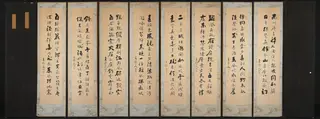
The work is executed in ink on paper and takes the form of a two-panel folding screen, a format that allowed the calligraphy to be read across the joined panels while also functioning as a decorative object. The medium is classified simply as paintings, with the imagery identified as calligraphy and poetry rather than pictorial landscape, indicating that the visual emphasis rests on the brushwork of the characters themselves rather than on painted scenery.
Stylistically, the piece belongs to the Japanese tradition of literati-style calligraphy, in which the brush handling of the script is treated as an expressive art. The support of paper mounted onto the folding screen structure reflects the standard Edo-period preparation for calligraphic works of this scale.
History & Provenance
The two-panel folding screen Maple Bridge Night Mooring was created by Ike Taiga in 1770 in Japan, executed in ink on paper and combining landscape imagery with calligraphy and poetry.
The screen entered the collection of the Metropolitan Museum of Art, which acquired it in 2008. It is catalogued under accession number 2008.66 within the museum’s Asian Art holdings and has been shown in the Japanese art galleries. Detailed exhibition records for the piece are not documented in the available sources.
Overview
Created in 1770, this two-panel folding screen by Ike Taiga combines landscape painting with calligraphy to visualize the famous Tang dynasty poem "Maple Bridge Night Mooring" by Zhang Ji. Executed in ink on paper, the work exemplifies the Nanga (Southern School) style, prioritizing literati expression over strict realism. The composition is divided by a vertical column of calligraphy that runs down the center, integrating the text as a structural and thematic element.
On the left panel, a small boat rests beneath a bridge, evoking the poem's scene of a traveler's solitude. The right panel features jagged trees leaning over a dark river, rendered with expressive, dry brushstrokes characteristic of Taiga's mature style. This piece reflects Taiga's deep engagement with Chinese literary culture and his role in defining the Japanese literati painting movement.
By merging visual art with poetry, the screen transforms a textual narrative into a spatial experience, inviting the viewer to contemplate the interplay between the written word and the depicted landscape. The work stands as a significant example of Taiga's ability to synthesize Chinese poetic themes with Japanese aesthetic sensibilities during the Edo period.
Context
"Maple Bridge Night Mooring" exemplifies the literati tradition, known as bunjinga in Japan, where scholars and artists combined painting, poetry, and calligraphy. Taiga, a prominent figure in this movement, personally inscribed the verse and painted the accompanying scene. This integration reflects an appreciation for classical Chinese culture and a belief in the expressive power of uniting literary and visual arts.
Artist & collection

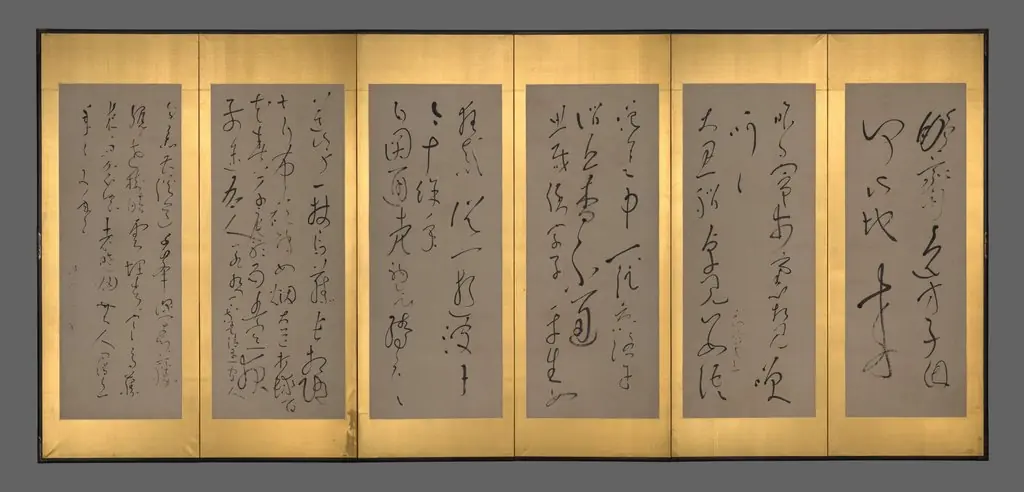
- Calligraphy 「鵬齋逸才子」 書
 Calligraphy (reverse)
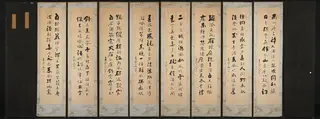 Calligraphy (reverse)
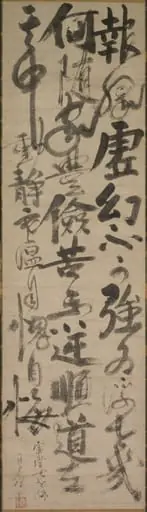 Reflections of Priest Foyen
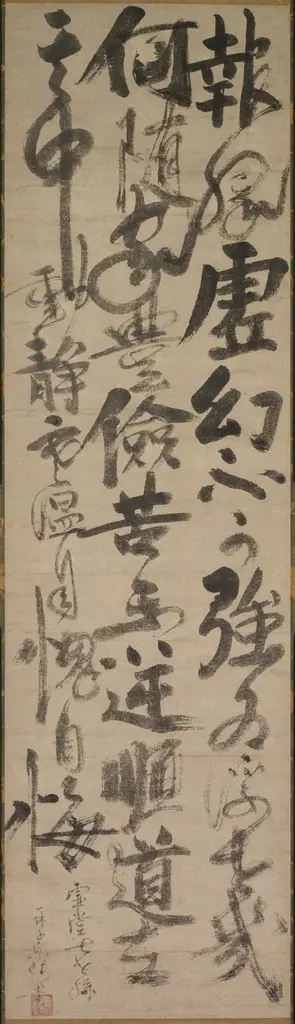 Reflections of Priest Foyen
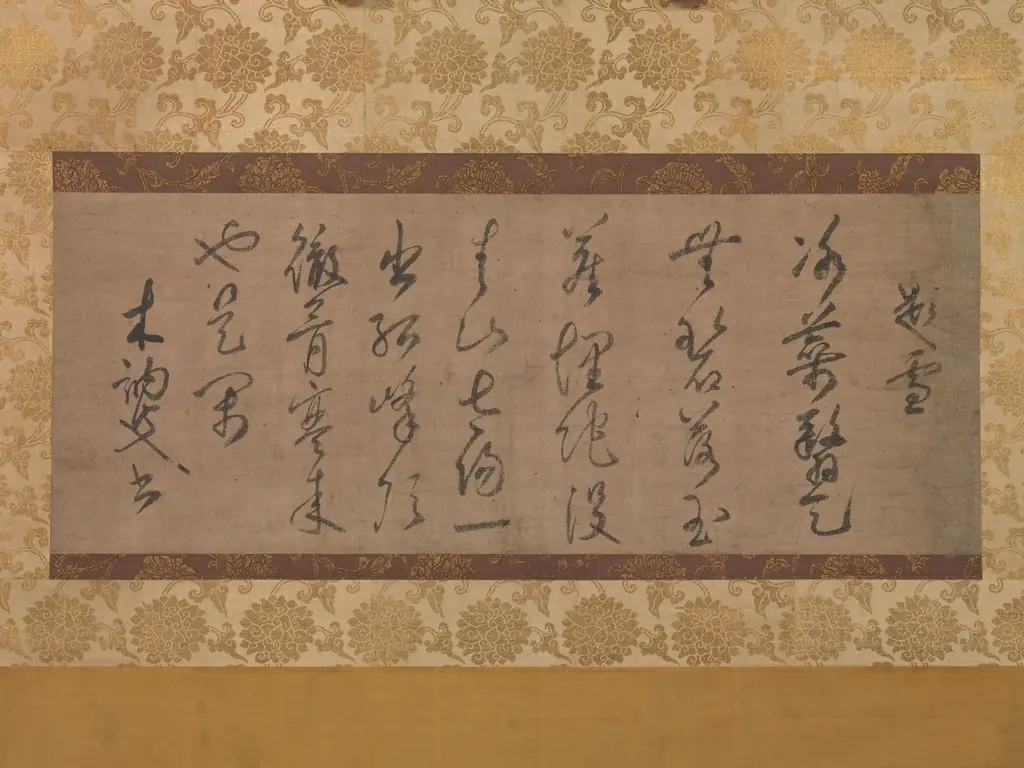 Poem on the Theme of Snow
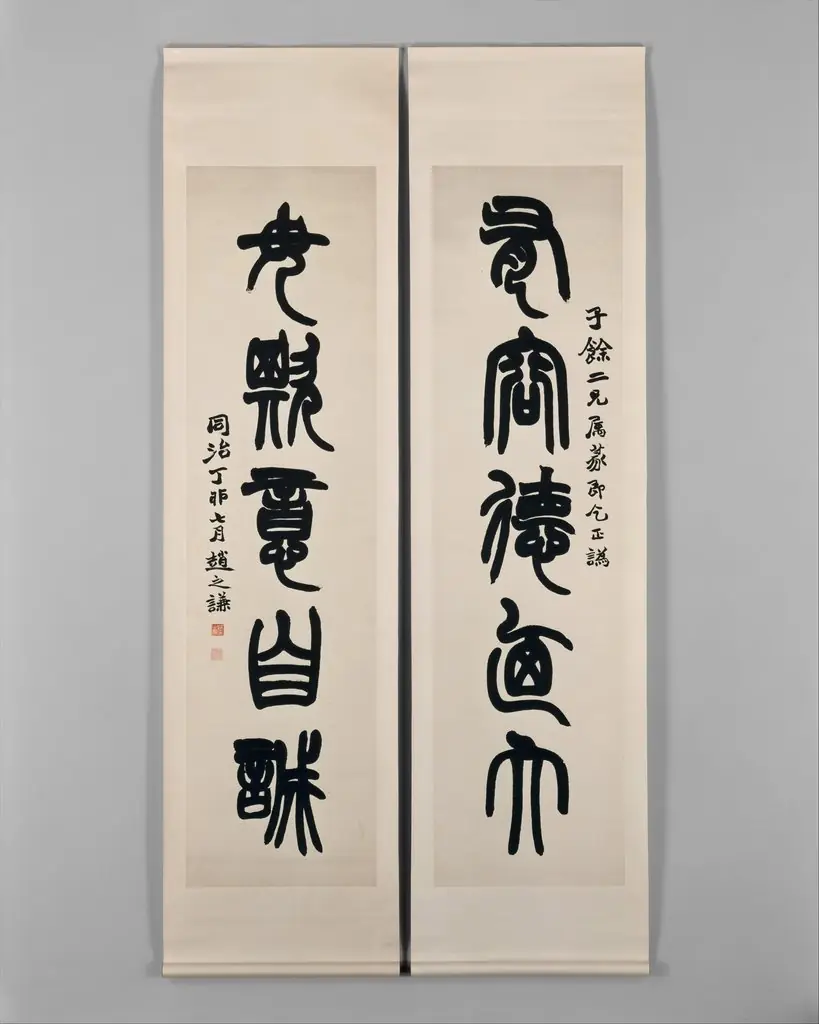 Couplet
 Calligraphy with Willow and Swallows
![For a hundred years [I have been] a person with no attachments, by Jiun](https://artifactworldgallery.com/img/jiun--for-a-hundred-years-i-have-been-a-person-with-no-attachments--b29f06e3a79d2459-w320.webp) For a hundred years [I have been] a person with no attachments
For a hundred years [I have been] a person with no attachments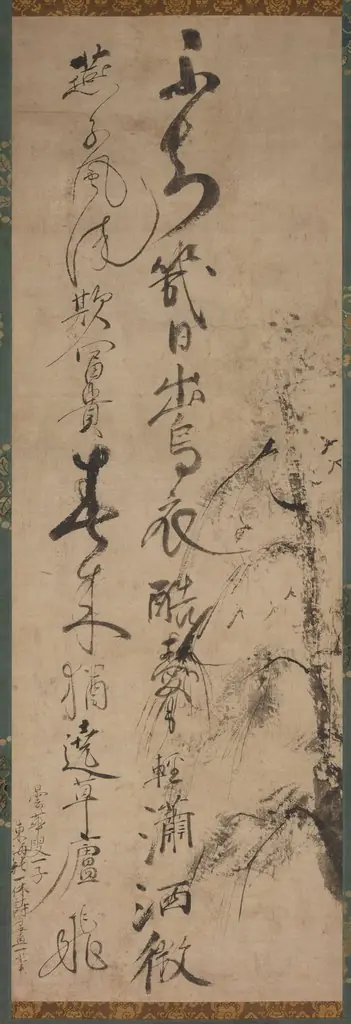 Calligraphy with Willow and Swallows
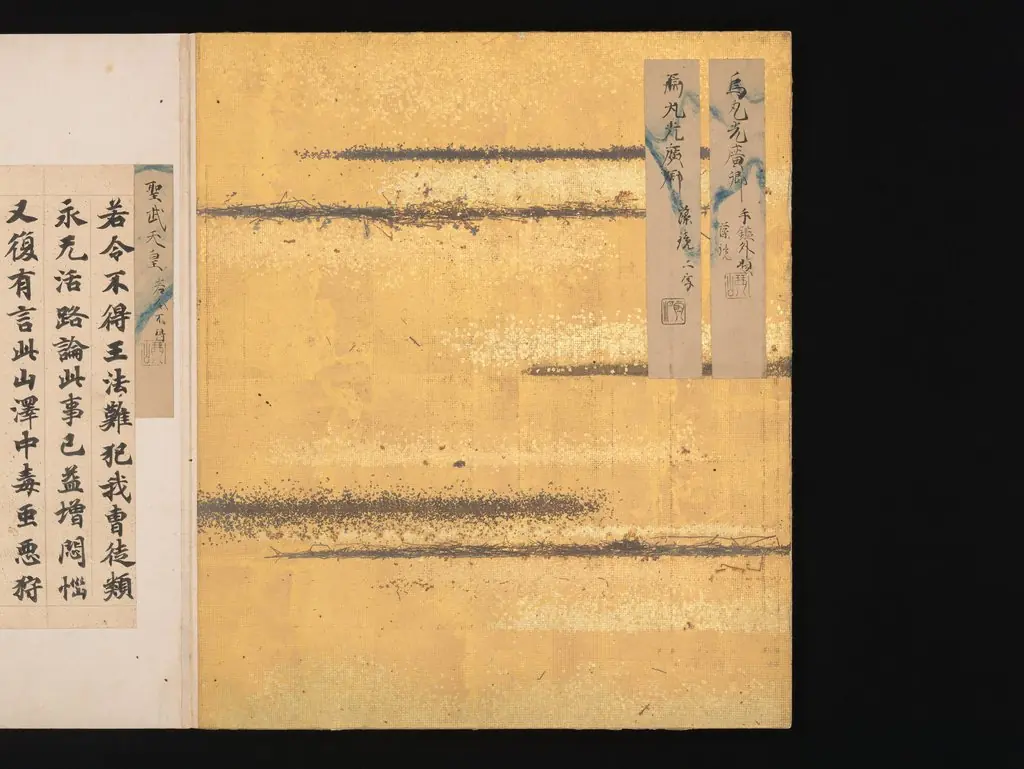 A Mirror of Gathered Seaweed (Mokagami) Calligraphy Album
 Chinese Poem: Seven-character-quatrain