Artwork
清 傳高鳳翰 書畫合璧 冊|Landscapes and Calligraphy
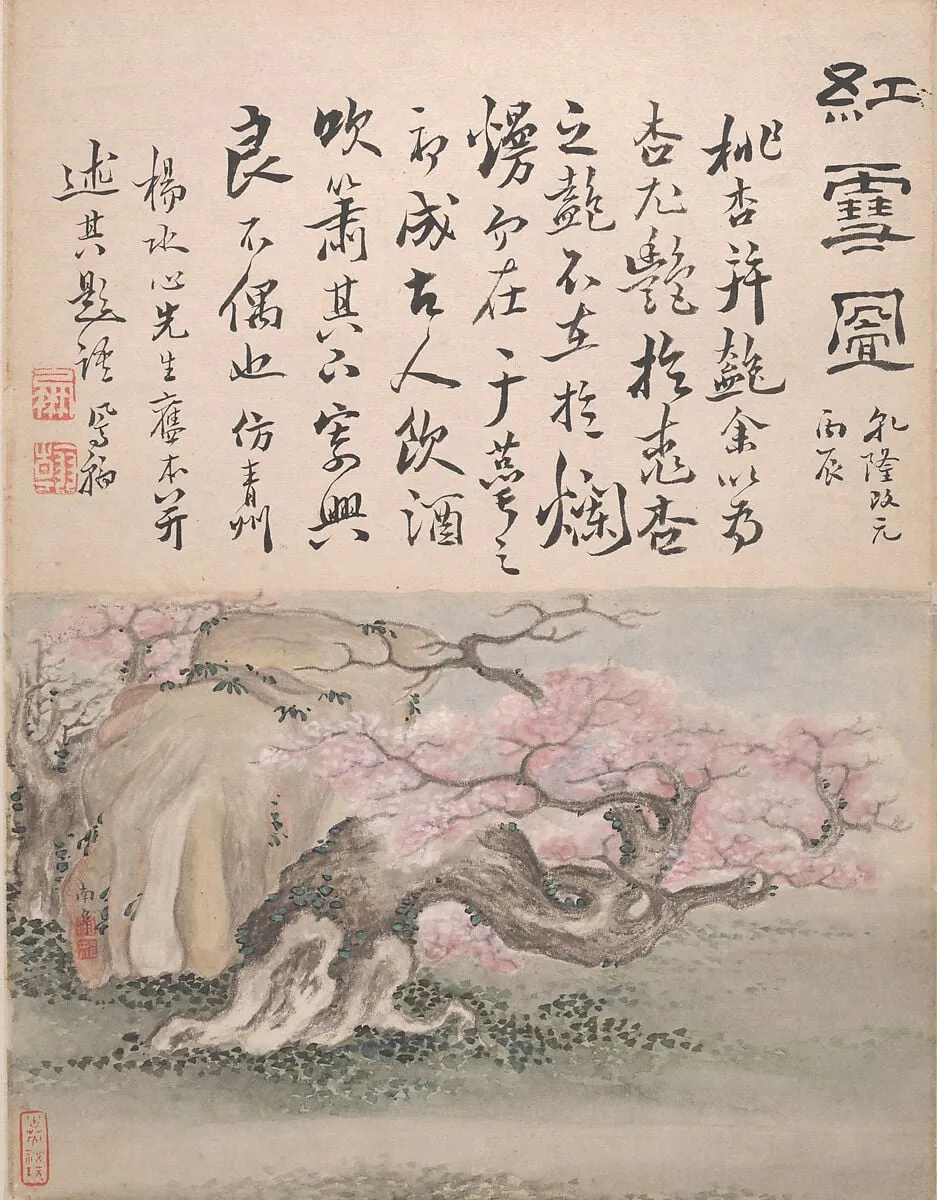
清 傳高鳳翰 書畫合璧 冊|Landscapes and Calligraphy is an ink painting by the Baroque artist Gao Fenghan. It dates from 1736 and is held in the collection of the Metropolitan Museum of Art. Created in 1736, this album comprises six pages of ink and color on paper, featuring landscapes paired with calligraphy.
- Accession no.
- 1981.285.8a–f
- Credit line
- Edward Elliott Family Collection, Purchase, The Dillon Fund Gift, 1981
About this work
Subject & Meaning
The visual subject matter consists of traditional Chinese landscapes rendered in ink and color on paper, arranged as an album of six distinct leaves.
The album, created in 1736 by Gao Fenghan, presents a synthesis of landscape painting and calligraphy. The visual subject matter consists of traditional Chinese landscapes rendered in ink and color on paper, arranged as an album of six distinct leaves. Beyond the scenic depiction, the work's iconography is defined by the explicit inclusion of calligraphic text within the composition, establishing a dialogue between the pictorial and the written word.
This combination reflects the scholarly ideal of the literati artist, where painting and writing are viewed as complementary expressions of culture and personal cultivation. The pairing of these two art forms within a single album format signifies the integration of visual scenery and literary thought, a hallmark of the Qing dynasty's artistic tradition.
History & Provenance
The album of six landscapes and calligraphy pages, attributed to Gao Fenghan, was created in 1736 during the Qing dynasty. Executed in ink and color on paper, the work originates from China and measures 31.8 cm in height by 24.8 cm in width. While the specific commissioning patron or the immediate chain of ownership prior to modern times is not detailed in the available records, the work is currently held in the collection of the Metropolitan Museum of Art.
The dating to 1736 establishes its place within the artist's mature period, reflecting the stylistic characteristics of his landscape and calligraphic output from that era.
Overview
Created in 1736, this album comprises six pages of ink and color on paper, featuring landscapes paired with calligraphy. The work was executed by Gao Fenghan at age 64, following the paralysis of his right hand. Forced to adapt, the artist taught himself to paint and write with his left hand, a physical constraint that fundamentally altered his technique.
The resulting brushwork is characterized by a looser, freer quality compared to his earlier right-handed output, often displaying a rugged spontaneity. Each page presents a distinct landscape composition, depicting mountains, trees, and rivers, integrated with calligraphic inscriptions. This album stands as a significant testament to Gao's resilience and artistic evolution during his late period.
It exemplifies the Qing dynasty literati tradition of combining painting and poetry, while simultaneously marking a unique stylistic shift driven by physical necessity. The work is historically notable for demonstrating how disability influenced the aesthetic of the artist's final years, contributing to his reputation as a master of the 'left-handed' style.
Technique & Style
Gao Fenghan created this album at the age of 64, following the paralysis of his right hand. Adapting to this challenge, he developed a new approach, teaching himself to paint with his left hand. This change in technique resulted in a distinct aesthetic, characterized by a noticeably looser and freer quality in his brushwork. The ink and color on paper medium further accentuates the fluidity and spontaneity of these compositions.
Artist & collection


- 清 陸漢 山水八開 冊|Eight landscapes
 Untitled
 明 藍瑛 仿宋元山水圖 冊|Landscapes after Song and Yuan masters
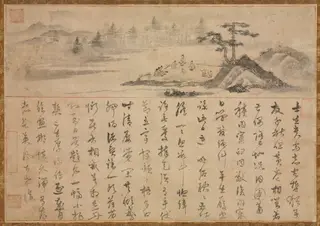 Gathering among the Members of Office Censor-General
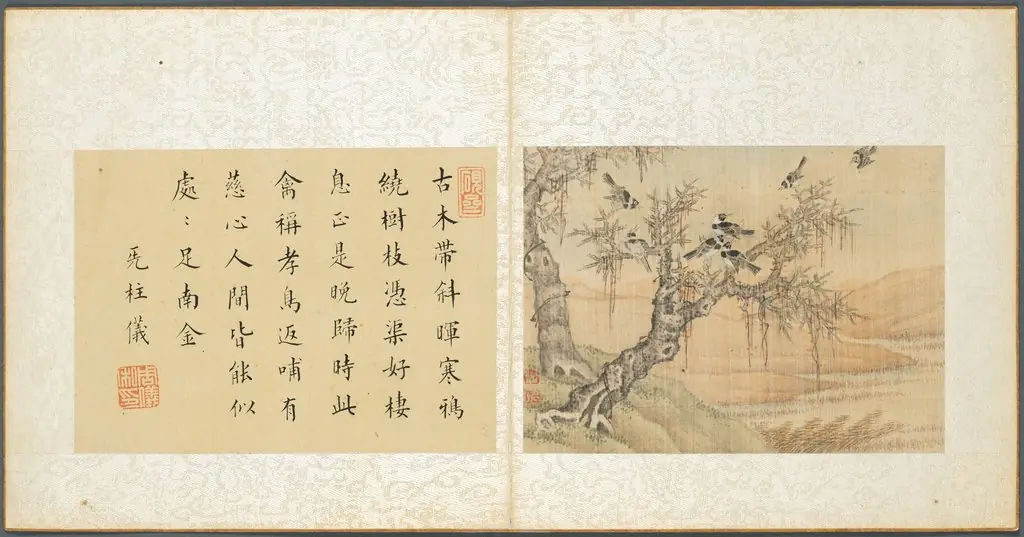 Album of Miscellaneous Subjects, Leaf 9
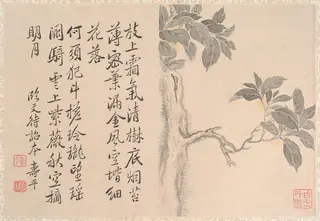 清 仿惲壽平 桂花圖 冊頁|Cassia Tree
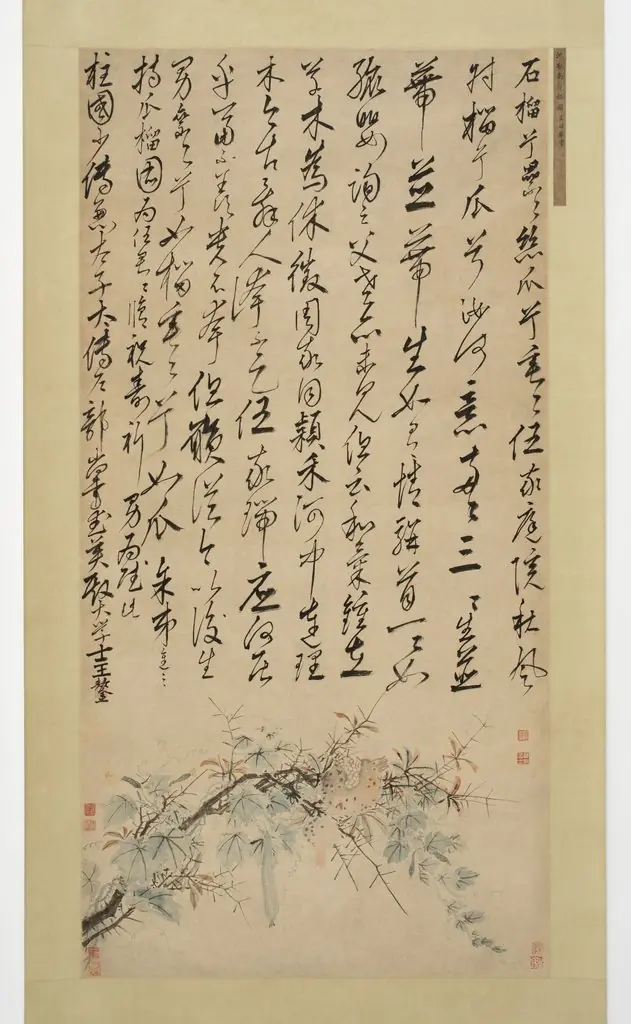 Ode to the Pomegranate and Melon Vine
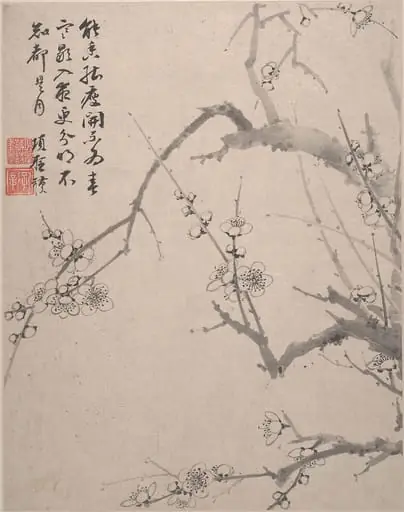 明/清 項聖謨 山水花鳥圖 冊|Landscapes, Flowers and Birds
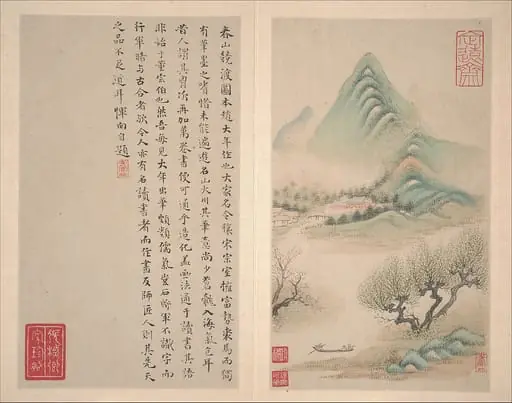 明/清 惲向 仿古山水圖 冊 紙本|Landscapes after old masters
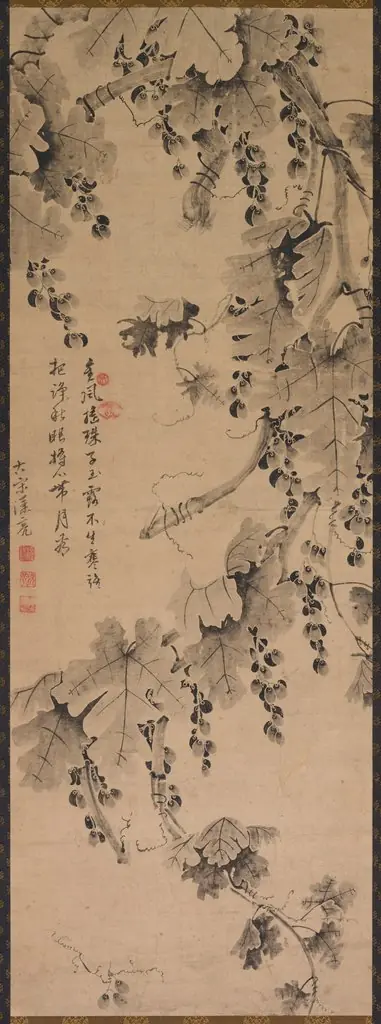 Grapevine
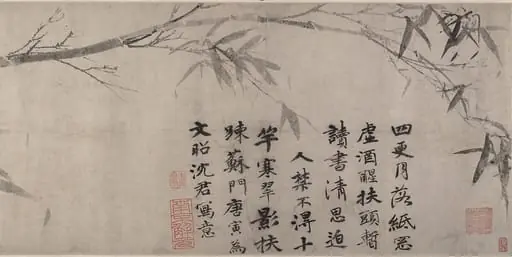 明 唐寅 墨竹圖 卷|Ink bamboo
 『春雨集』 摺物帖柳々居辰斎画 紅梅|Spring Rain Collection (Harusame shū), vol. 1: Plum Tree in Bloom
 北宋 徽宗 竹禽圖 卷|Finches and bamboo
 拾遺古徳伝絵断簡|Illustrated Biography of Hōnen (Shūikotokūden-e)
 Famous Women
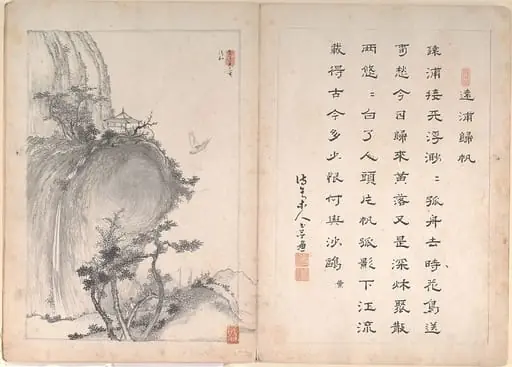 清 詩午閑人 瀟湘八景詩畫 冊|Eight Landscape Scenes and Calligraphy
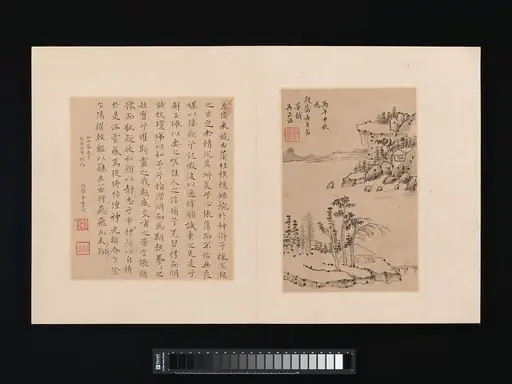 清 諸家 名家書畫 冊|Album of painting and calligraphy for Maoshu
 Fishing Boat on Reed Covered Bank and Calligraphy
 池大雅書 「楓橋夜泊」屏風|"Maple Bridge Night Mooring"
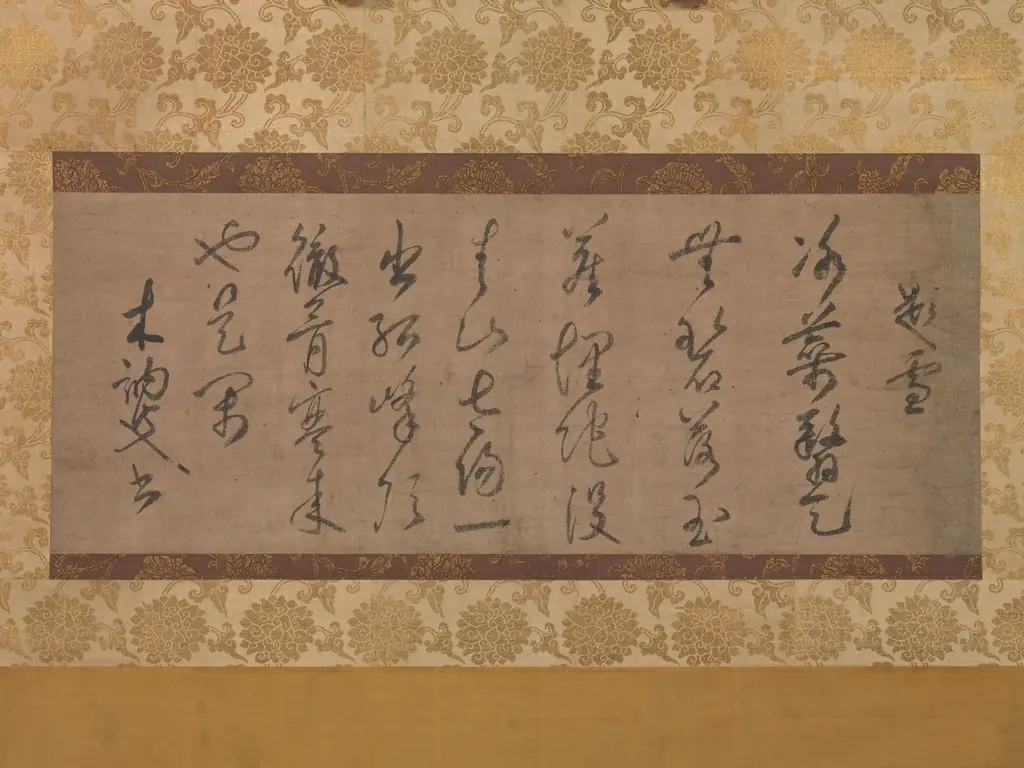 Poem on the Theme of Snow