Artwork
L'oncle Joan
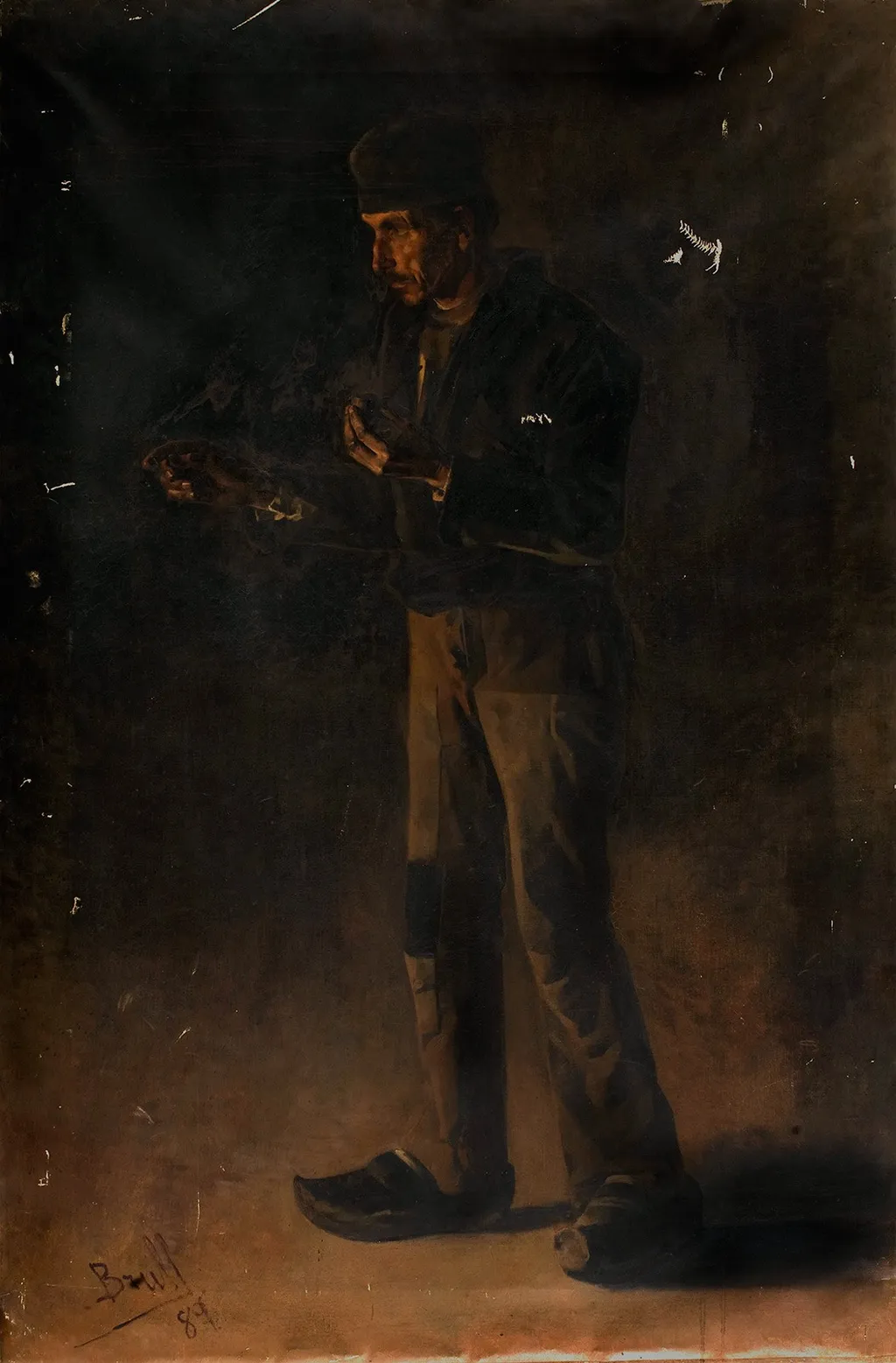
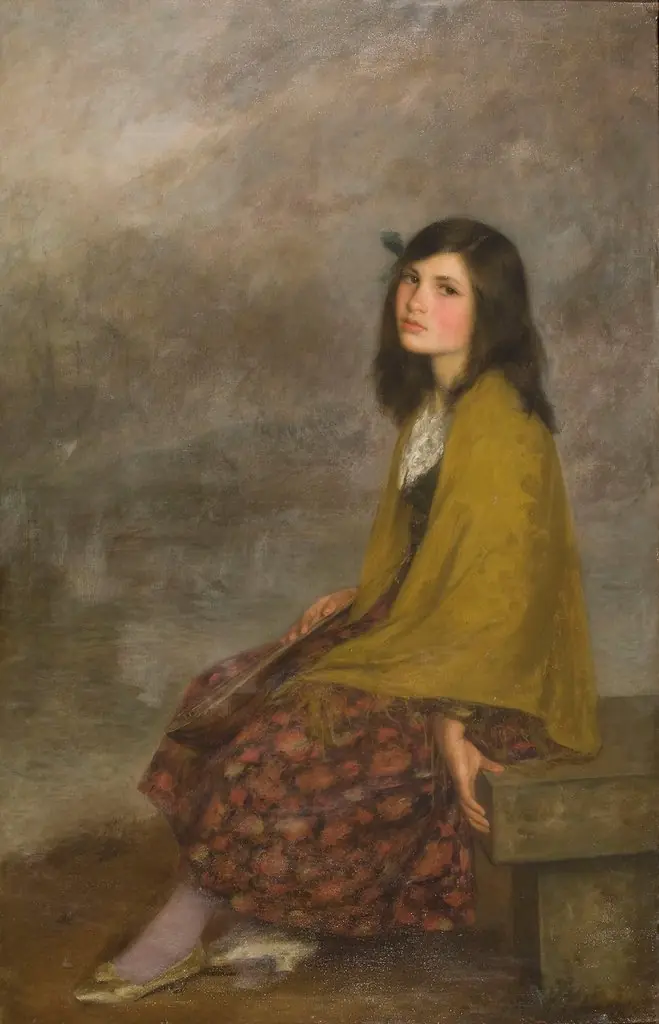
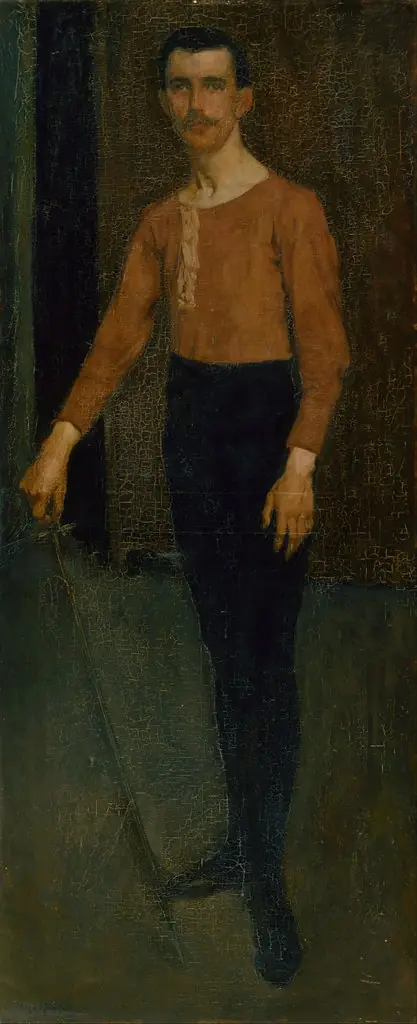
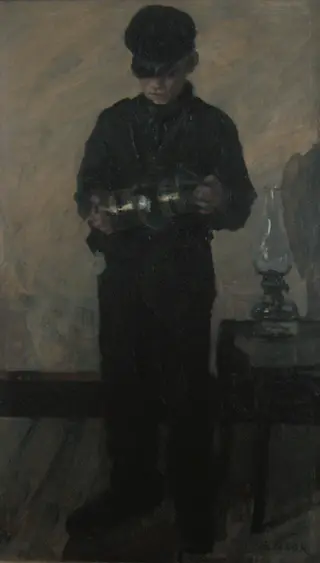
L'oncle Joan is an oil painting by the Art Nouveau artist Joan Brull Vinyoles. It dates from 1895 and is held in the collection of the Museu Nacional d'Art de Catalunya. Created in 1895, L’oncle Joan is an oil painting by Catalan artist Joan Brull i Vinyoles.
About this work
Overview
Created in 1895, L’oncle Joan is an oil painting by Catalan artist Joan Brull i Vinyoles. The work is part of the Museu Nacional d’Art de Catalunya’s collection and exemplifies the Art Nouveau aesthetic that was prevalent in late‑19th‑century Catalonia.
Subject & Meaning
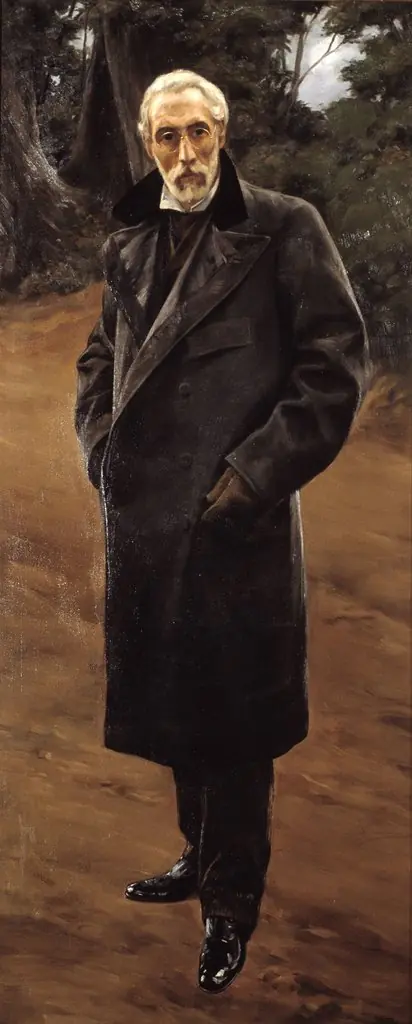
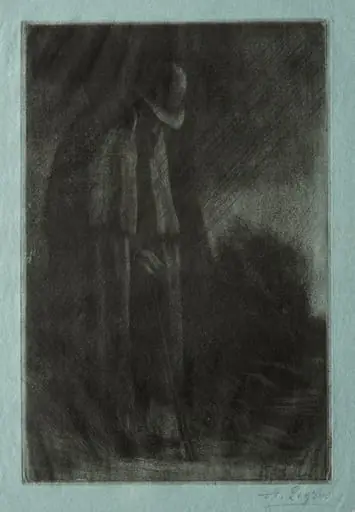
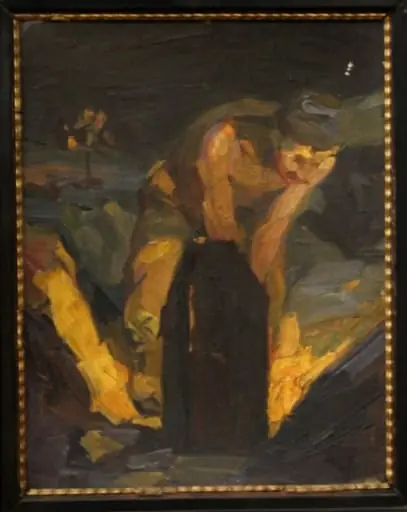
The canvas depicts a solitary figure dressed in dark attire, his hands clasped before him and his face partially illuminated by an unseen light source. The subdued palette and the man’s introspective pose convey a mood of quiet contemplation, inviting viewers to consider themes of solitude and inner reflection.
Technique & Style
Brull employs a restrained palette of deep tones, allowing the limited light to model the subject’s features with subtle chiaroscuro. The brushwork is smooth and precise, characteristic of Symbolist painters who favored atmospheric effects over overt detail, while the overall composition aligns with Art Nouveau’s emphasis on elegant, flowing lines.
History & Provenance
After its completion, the painting entered the holdings of the Museu Nacional d’Art de Catalunya, where it remains on display. Its acquisition reflects the museum’s commitment to preserving works that illustrate the development of Catalan modernism during the fin de siècle.
Context
L’oncle Joan was produced during Brull’s involvement with a circle of Catalan Symbolist artists, including Adrià Gual and Alexandre de Riquer. This network fostered a shared interest in poetic imagery and the exploration of inner states, situating the work within a broader movement that merged Symbolist ideas with the decorative sensibilities of Art Nouveau.
Artist & collection
Artist
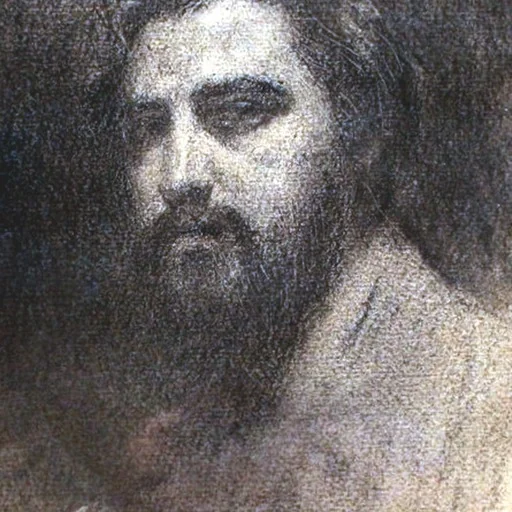
Joan Brull i Vinyoles (25 January 1863 – 3 February 1912) was a Catalan painter active in the late 19th century.