Artwork
Portrait of Gaspar Melchor de Jovellanos
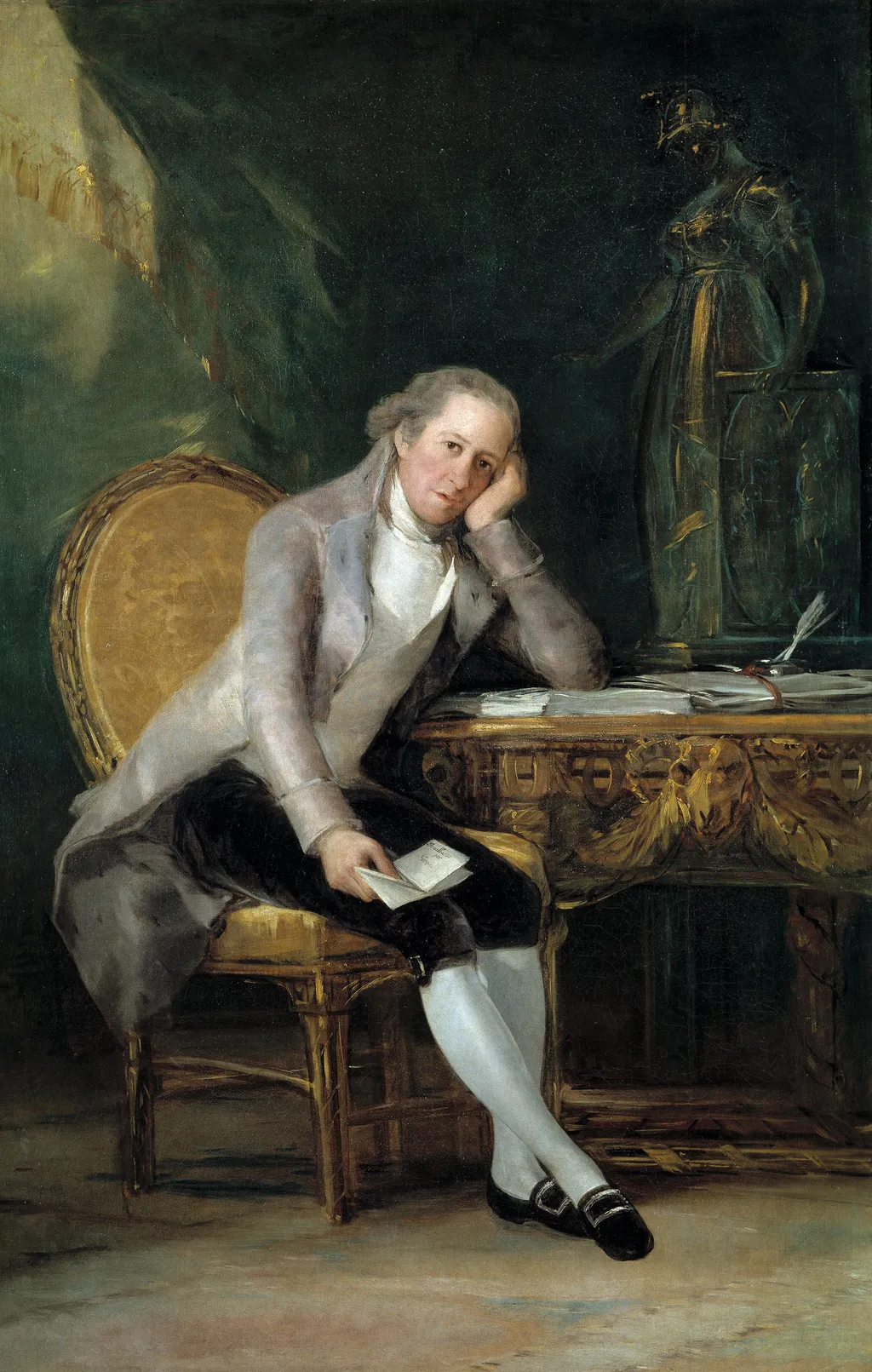
Portrait of Gaspar Melchor de Jovellanos is an oil painting by the Neoclassicist artist Francisco de Goya. It dates from 1800 and is held in the collection of the Museo del Prado.
About this work
Subject & Meaning
The background features a statue of Minerva, goddess of the arts and sciences, which reinforces the scholarly and meditative atmosphere surrounding the sitter.
Painted in 1800, this portrait depicts Gaspar Melchor de Jovellanos, a prominent jurist and leading figure of the Spanish Enlightenment who served as Minister of Grace and Justice. Goya presents the subject seated at a table covered with books and documents, holding a pen near an inkwell, capturing him in a moment of deep contemplation. This arrangement emphasizes Jovellanos's intellect and his dedication to administrative reform.
The background features a statue of Minerva, goddess of the arts and sciences, which reinforces the scholarly and meditative atmosphere surrounding the sitter. Through this iconography, the work symbolizes the ideals of the Enlightenment, portraying Jovellanos not merely as a politician but as a man of reason and learning. The sober clothing and elegant posture further reflect the dignity and seriousness of his role.
Technique & Style
Portrait of Gaspar Melchor de Jovellanos is an oil painting on canvas executed in 1800. The work measures 205 × 133 cm and belongs to the Neoclassical portrait genre. Goya built the image with smooth brushwork that emphasizes the sitter's contemplative gaze and the sober attire of the minister.
A classical bust of Minerva appears in the background, reinforcing the intellectual tone of the composition. The formal balance combines a restrained palette with careful rendering of the documents and books on the table, highlighting the subject's scholarly character.
History & Provenance
Francisco Goya painted the Portrait of Gaspar Melchor de Jovellanos in 1800, while he served as court painter and a member of the Royal Academy. The oil on canvas measures 205 × 133 cm. The two men had a prior professional connection dating back to 1783, when Jovellanos mediated a commission for Goya to create altarpieces for the University of Salamanca. The painting depicts Jovellanos seated at a table surrounded by books and documents, with a statue of Minerva in the background to emphasize his intellectual pursuits. It currently resides in the collection of the Museo del Prado in Madrid.
Context
The 1800 portrait of Gaspar Melchor de Jovellanos was painted by Francisco Goya at the height of his court career, when he was the favored painter of the Spanish monarchy and a member of the Real Academia de Bellas Artes de San Fernando. Jovellanos was a leading reformist figure of the Spanish Enlightenment, and he had earlier facilitated Goya's 1783 commission for altarpieces at the University of Salamanca; the two shared ties to Enlightenment intellectual networks that prized science, letters, and the arts.
The painting is classified within Neoclassicism and is held at the Museo del Prado, where it is read as a meditation on Enlightenment statesmanship. The depicted statue of Minerva reinforces the scholarly, contemplative atmosphere, while the sitter's sober dress and elegant pose convey the intellectual refinement that Goya sought to capture.
Overview
Francisco Goya completed this oil painting in 1800, capturing the likeness of Gaspar Melchor de Jovellanos, a prominent Spanish statesman and intellectual. The portrait presents Jovellanos in a seated posture, surrounded by objects indicative of his literary and administrative work. This piece exemplifies the neoclassical aesthetic prevalent at the time, characterized by its emphasis on clear composition and structured forms, and is now housed at the Museo del Prado in Madrid.
Own this work as a print
Artist & collection
Artist
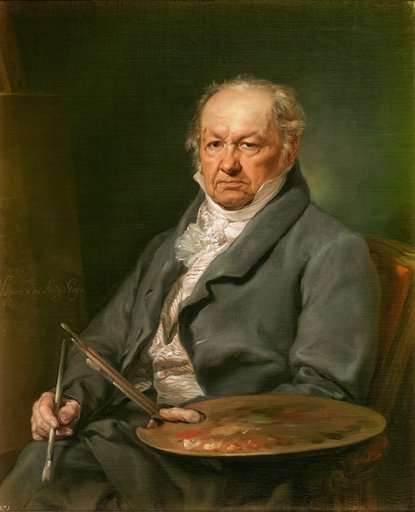
Francisco José de Goya y Lucientes was a Spanish romantic painter and printmaker.

- Portrait of Antoine-Denis Chaudet
 José Álvarez de Toledo, marqués de Villafranca y duque de Alba
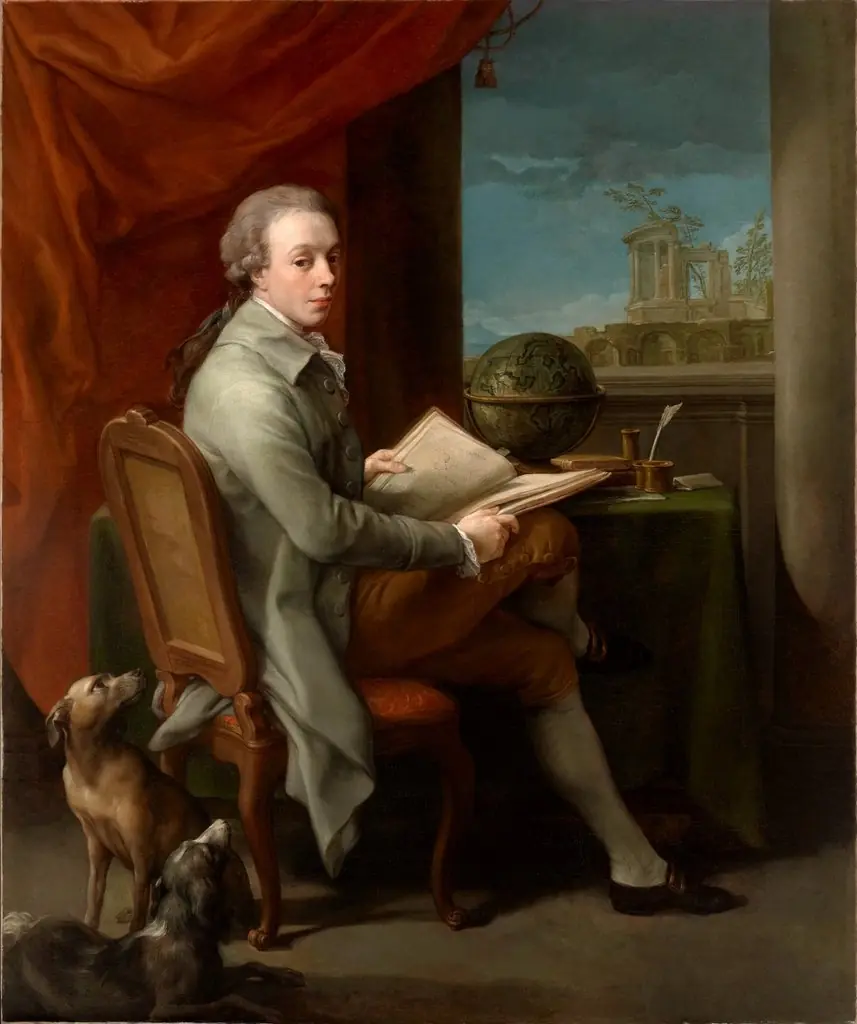 Thomas Taylour, Viscount of Headfort, later 2nd Earl of Bective and 1st Marquess of Headfort (1757–1829)
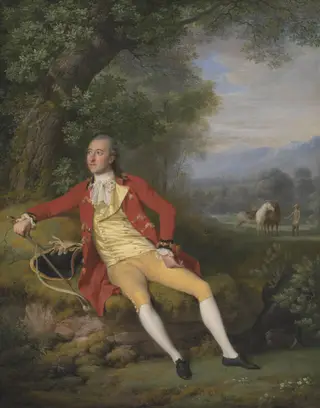 Portrait of an Envoy to the French and English Courts
 Portrætskitse. Maleren N.A. Abildgaard (?).
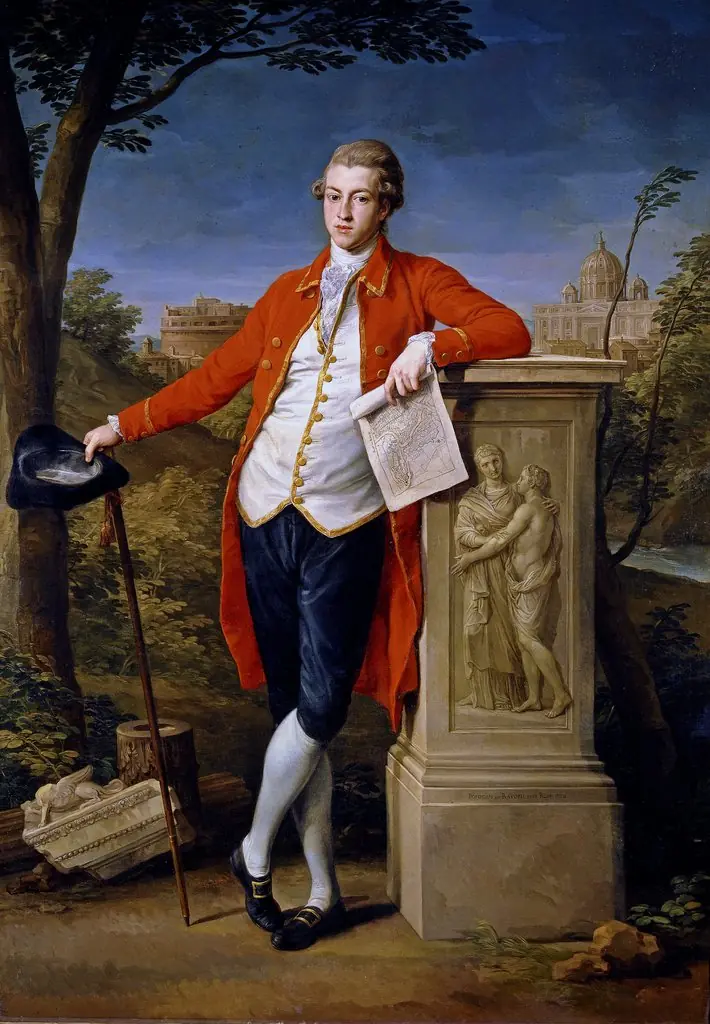 Francis Basset, I Baron of Dunstanville
 Portrætskitse. Maleren N.A. Abildgaard (?).
 George Legge, Viscount Lewisham
 Charles Maurice de Talleyrand Périgord (1754–1838), Prince de Bénévent
 Study of a Seated Cavalier Reading
 A Philosopher