Artwork
Skovlandskab ved Hellebæk. Efterår
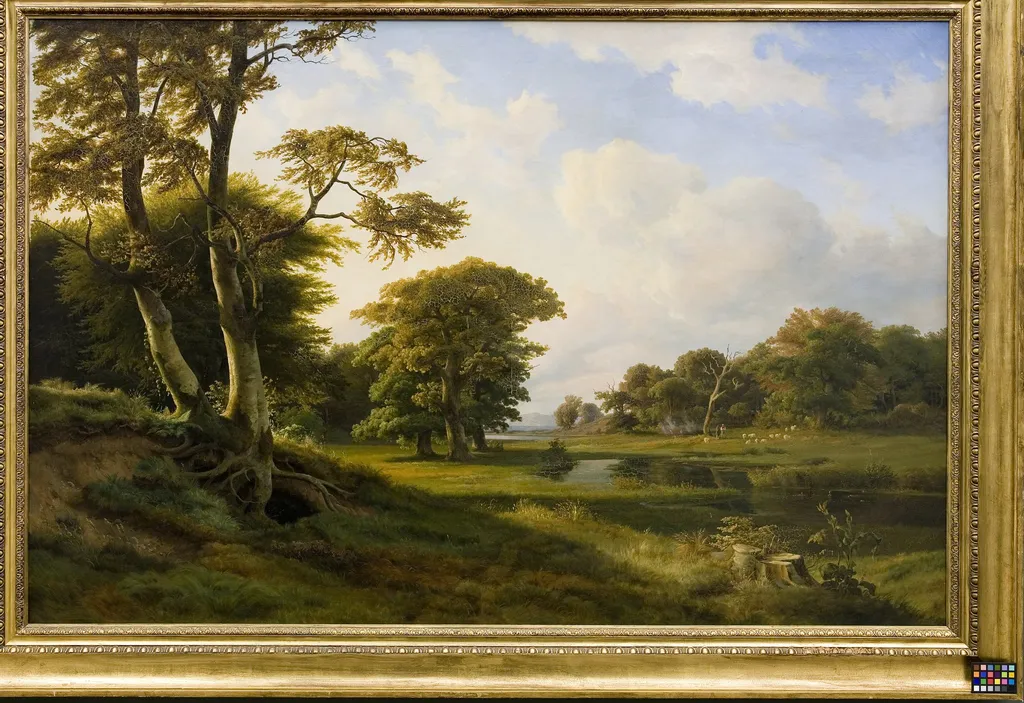
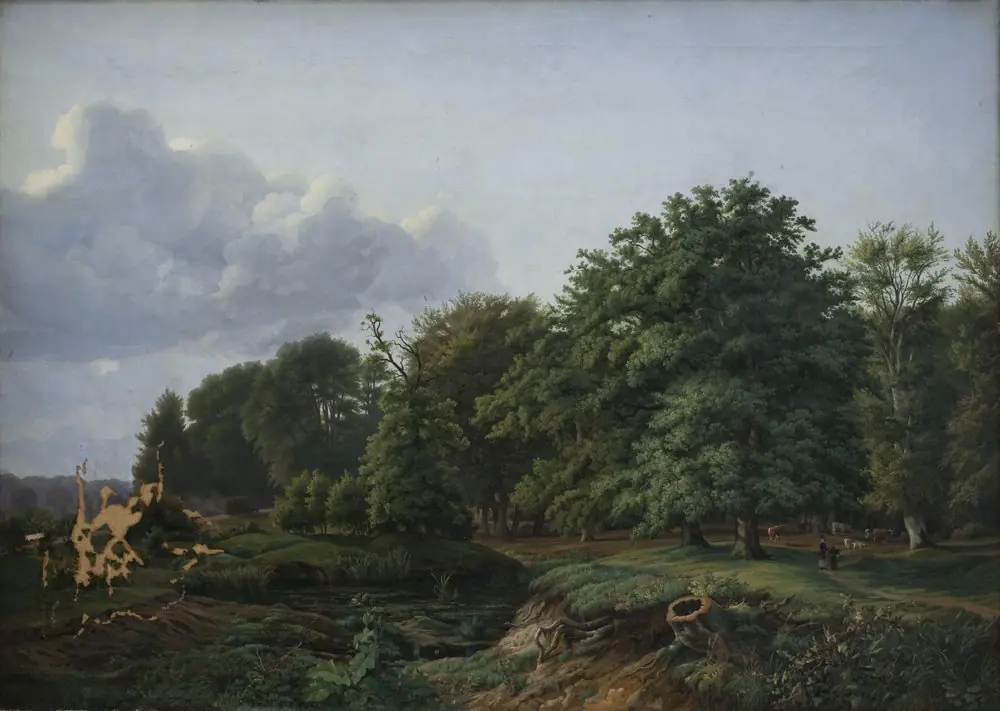
Skovlandskab ved Hellebæk. Efterår is an oil painting by the German Romanticist artist Johann Hermann Carmiencke. It dates from 1842 and is held in the collection of the Statens Museum for Kunst. Johann Hermann Carmineck’s 1842 oil painting titled Skovlandskab ved Hellebæk.
About this work
Overview
Autumn) is an oil painting on canvas created in 1842 by the German-Danish landscape painter Johann Hermann Carmiencke.
Skovlandskab ved Hellebæk. Efterår (Forest Landscape at Hellebæk. Autumn) is an oil painting on canvas created in 1842 by the German-Danish landscape painter Johann Hermann Carmiencke. Measuring 115.5 by 174.0 cm, the work is held in the collection of the Statens Museum for Kunst (National Gallery of Denmark) in Copenhagen. Painted during a pivotal period in Carmiencke's career, the canvas exemplifies the naturalistic landscape tradition that flourished in Denmark during the mid-nineteenth century, combining precise observation of local Danish scenery with the compositional lessons the artist had absorbed through his training in Dresden and Copenhagen.
Subject & Meaning
The painting depicts an autumnal woodland scene at Hellebæk, a coastal town in North Zealand, Denmark. The composition is divided horizontally, with a broad sky occupying the upper half of the canvas. On the left, massive beech trees with pale, smooth trunks and spreading green canopies dominate the foreground, their roots exposed on a grassy bank. A calm stream or pond stretches horizontally across the middle ground, reflecting the trees and sky. Beyond the water, open meadows extend toward distant woodland. Small figures and sheep appear near the right horizon, while a tree stump and wildflowers occupy the right foreground. The seasonal theme is conveyed through deep greens, golden yellows, and earthy browns below, with pale blues and soft whites above. The inclusion of pastoral elements, such as the sheep and diminutive human figures, situates the landscape within a tradition of idyllic, habitable nature rather than wilderness, suggesting harmony between human activity and the natural world.
Technique & Style
Carmiencke executed the work in oil paint on canvas, employing a polished and naturalistic finish characteristic of academic landscape painting of the period. The brushwork is smooth and detailed, particularly in the rendering of foliage and water, with light entering from the left and casting shadows to the right. This careful handling reflects the artist's training in Johan Christian Dahl's school in Dresden, where precision in the depiction of natural phenomena was paramount. The visible craquelure across the paint surface indicates the age and historical condition of the canvas. The overall effect is one of balanced composition and tonal harmony, with the horizontal format emphasizing the expansive quality of the sky and the flat Danish terrain.
History & Provenance
The painting was created in 1842, during Carmiencke's mature Danish period. After studying in Dahl's school in Dresden from 1831 and at the Academy in Copenhagen from 1834, with further instruction in Leipzig, Carmiencke had returned to Copenhagen in 1838. He traveled extensively as an artist in Sweden, Bavaria, and the Tyrol before this work was painted, and would later visit Italy from 1845 to 1846. The painting entered the collection of the Statens Museum for Kunst, where it remains today. It is one of five works by Carmiencke in that museum's holdings. The painting has been reproduced in scholarly literature on Scandinavian landscape painting and German artists' travels, including reference in Olaf Klose's 1975 publication on Scandinavian landscape pictures and German artist journeys from 1780 to 1864.
Context
Carmiencke occupied a significant position within the network of nineteenth-century European landscape painting. His training in Dresden placed him in direct contact with the Norwegian-Danish painter Johan Christian Dahl, a central figure in the Romantic landscape tradition and a friend of Caspar David Friedrich. His subsequent studies in Copenhagen connected him to the Danish Golden Age, a period of extraordinary achievement in Danish culture and art. The choice of Hellebæk as subject matter reflects the widespread practice among Danish and German artists of recording specific, identifiable localities with topographical accuracy. This approach aligned with the broader European trend toward naturalism in landscape painting, even as it retained the composed, idealized qualities of academic practice. Carmiencke's eventual emigration to New York in 1851, prompted by the First Schleswig War, and his subsequent success as a painter and teacher in America, adds a transatlantic dimension to his career, though this particular work remained in Denmark.
Legacy
While Carmiencke's later reputation was substantially shaped by his American career, Skovlandskab ved Hellebæk. Efterår remains a significant document of his Danish period and of mid-century landscape naturalism. The painting's continued presence in the Statens Museum for Kunst ensures its accessibility for the study of nineteenth-century Scandinavian art and the international circulation of landscape conventions. Carmiencke's works, including this canvas, have been discussed in the context of German artists' travels and their engagement with Nordic scenery. The artist's broader legacy includes thirty-five etchings of landscapes, some published by the Art Association of Copenhagen in 1850 and 1851, which extended his influence beyond the single paintings he produced. His American works, particularly mountain landscapes, have received more sustained attention in United States art history, while this Danish-period painting preserves his connection to the European landscape tradition at its most accomplished.
Own this work as a print
Artist & collection

Artist
Johann Hermann Carmiencke (1810–1867) was an artist, born in Hamburg.

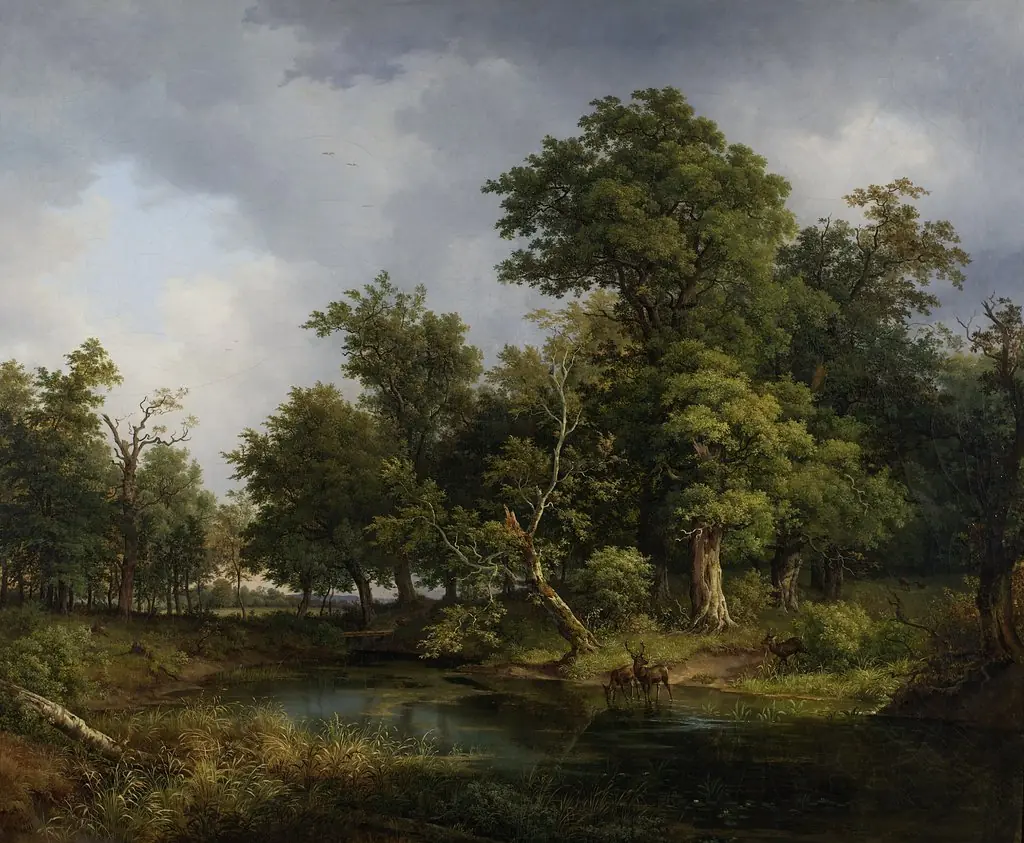 Waldlandschaft
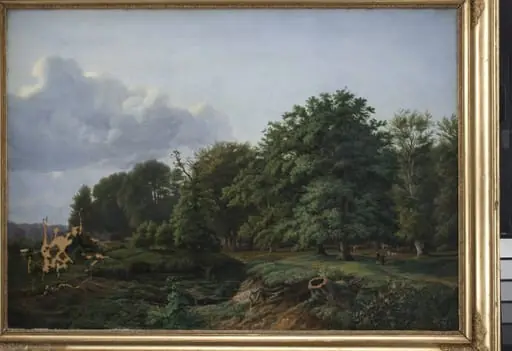 A Forrest near Hellebæk in the North of Zealand. Afternoon.
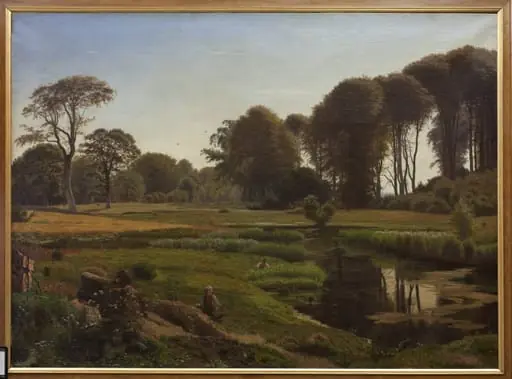 En sommerdag. Motiv fra Horneland ved Fåborg
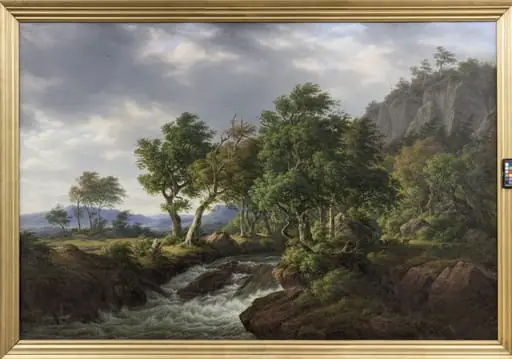 Klippelandskab. Djupadal i Bleking
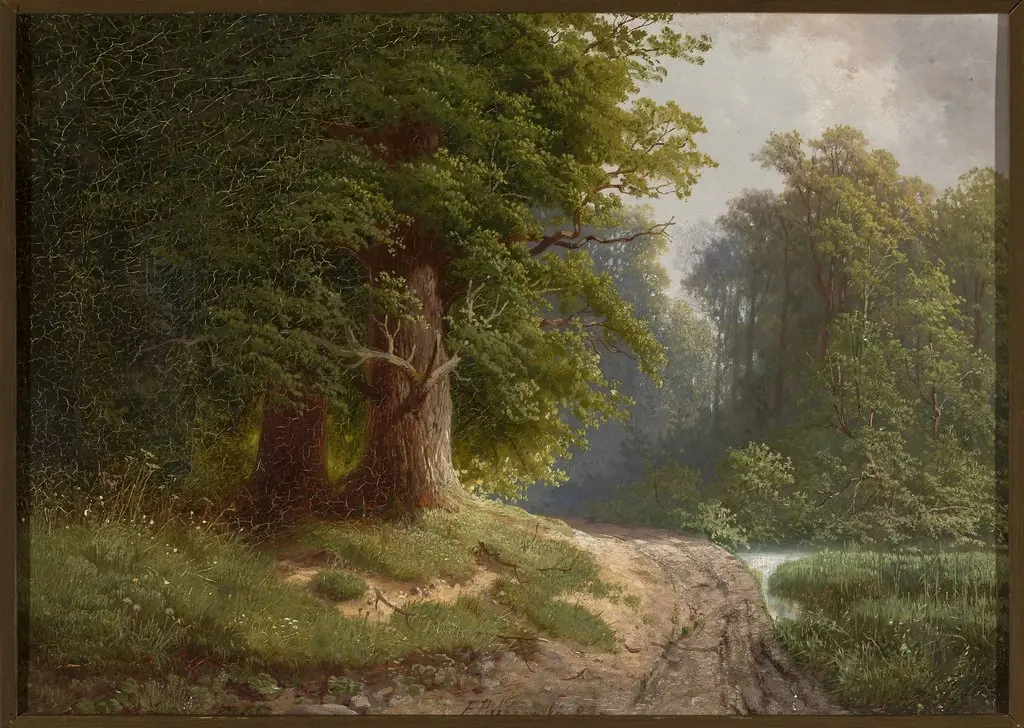 After the rain in autumn
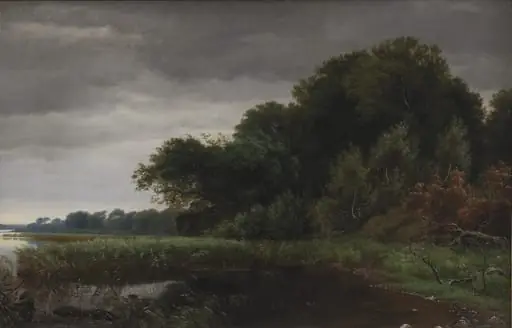 Opklarende vejr efter en regnbyge ved Gurre Sø
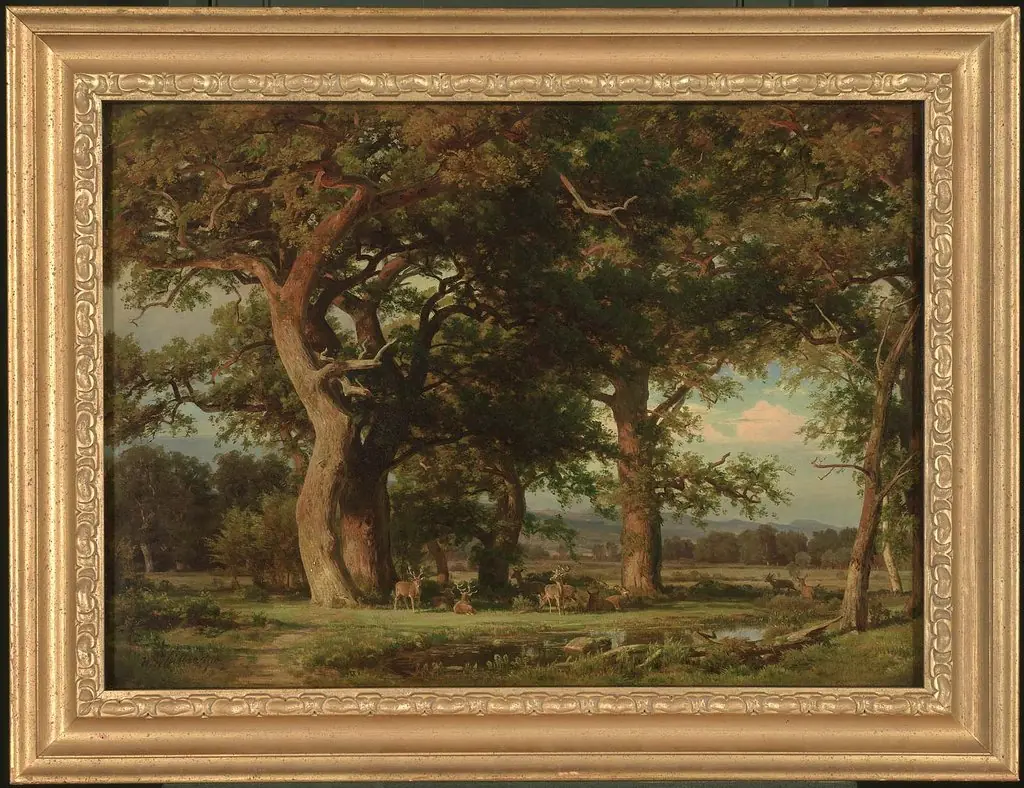 Outskirts of the Forest
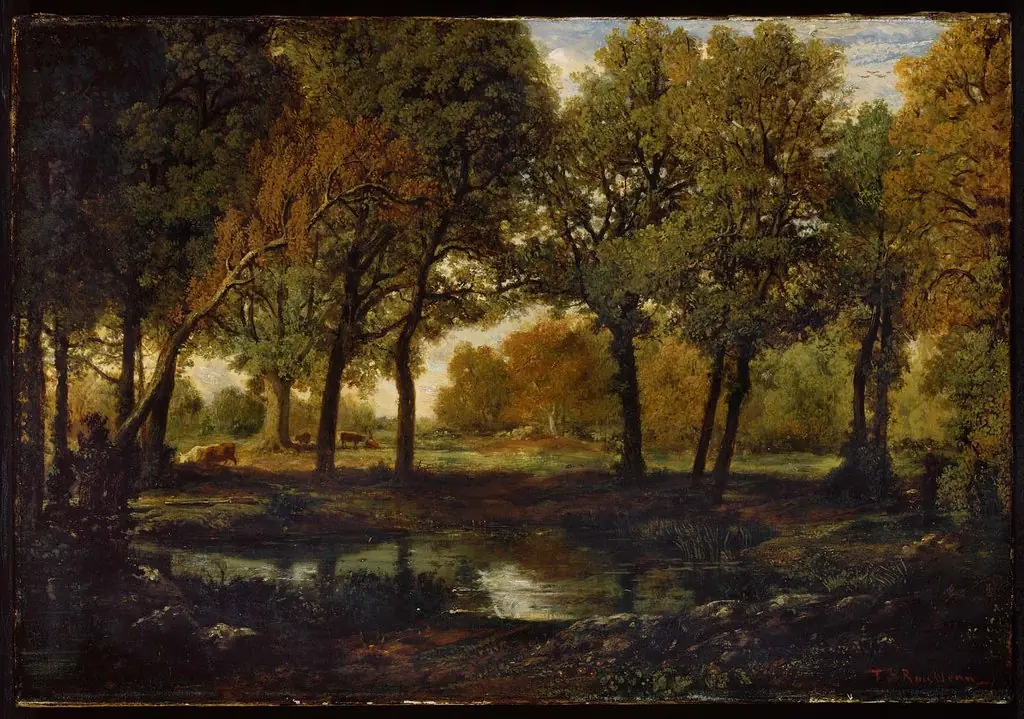 Pool in the Forest
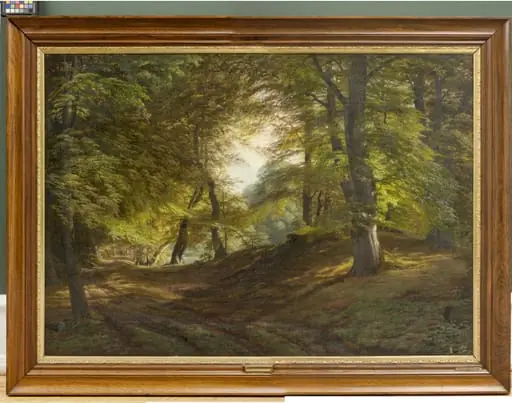 A Wood near Frederiksborg Castle
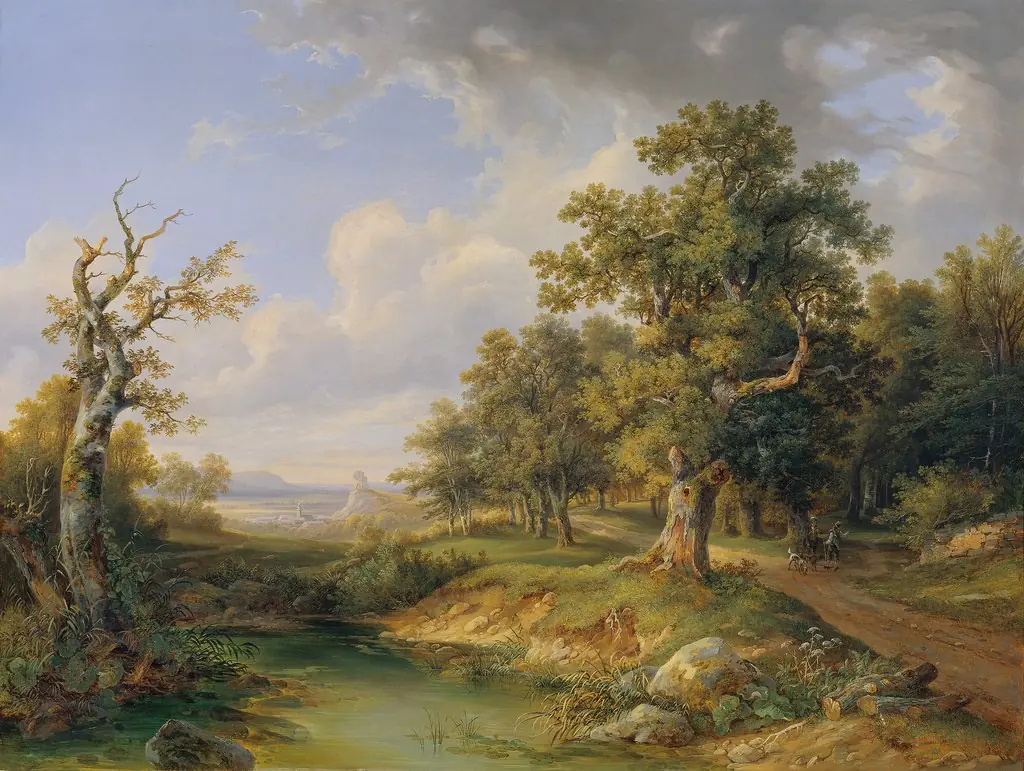 Wood near Mödling
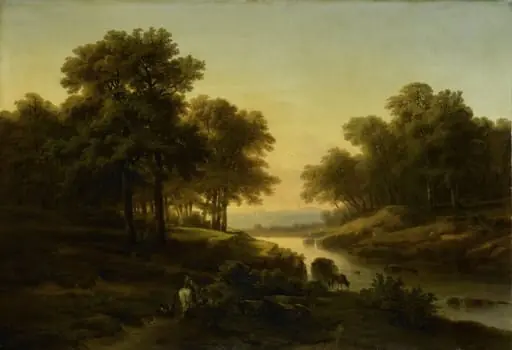 Landscape
- Skovlandskab ved Hellebæk. Efterår