Artwork
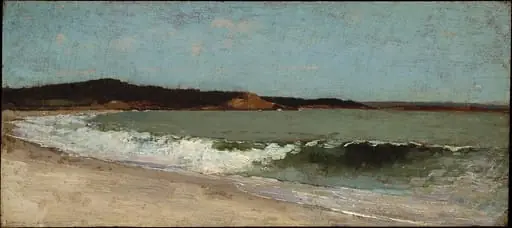
Eaton's Neck, Long Island
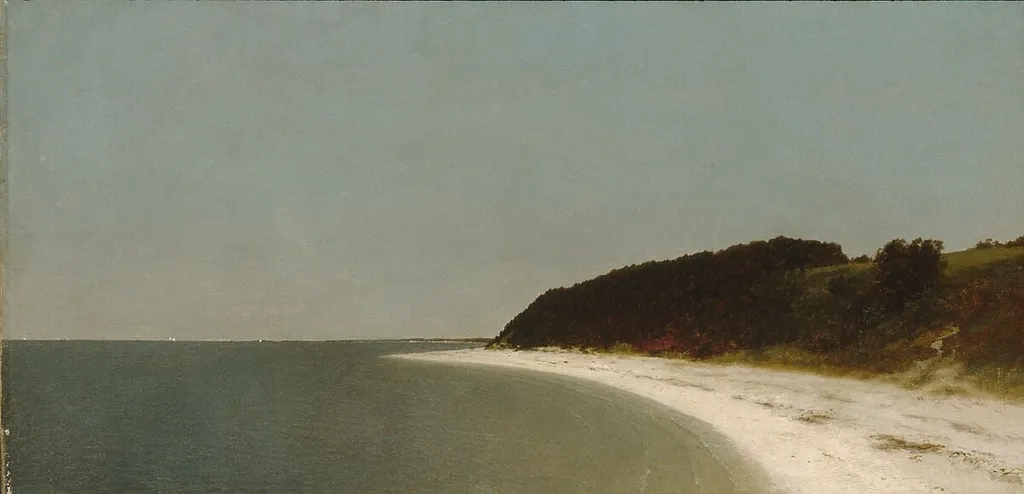
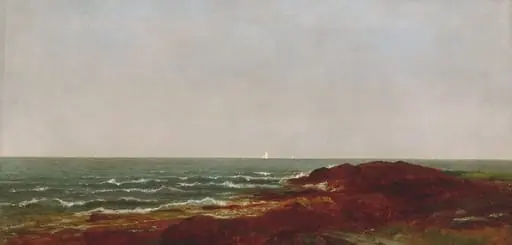
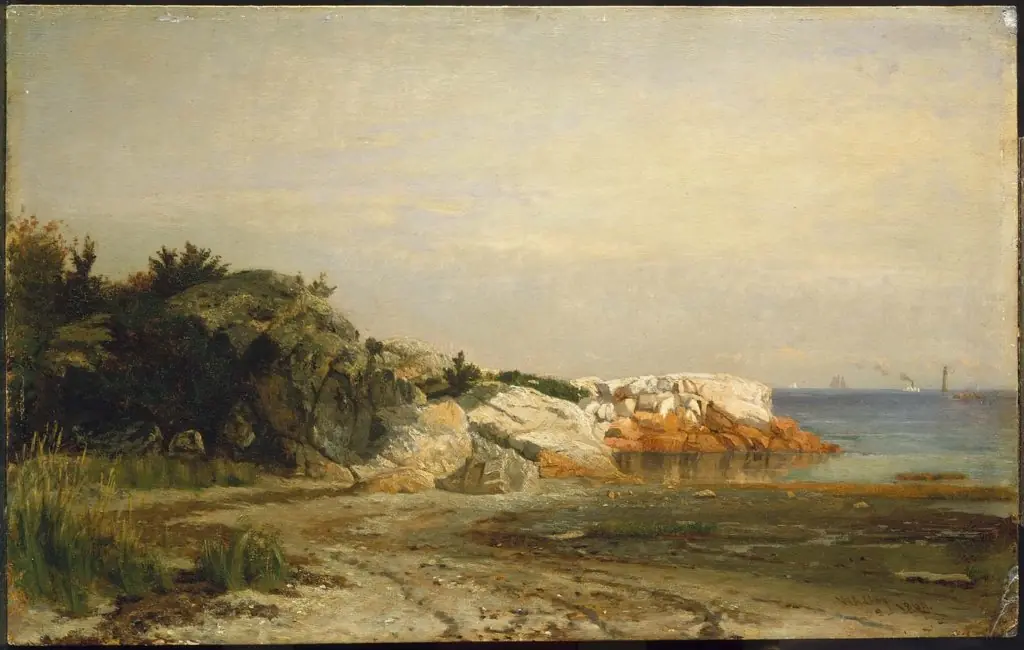
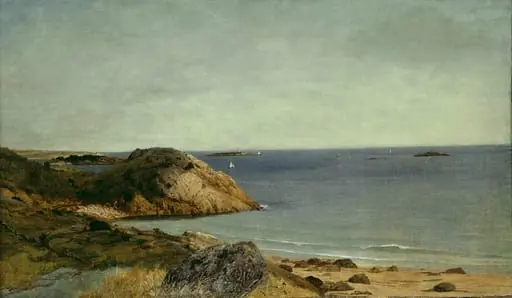
Eaton's Neck, Long Island is an oil painting by the Hudson River School artist John Frederick Kensett. It dates from 1872 and is held in the collection of the Metropolitan Museum of Art.
About this work
Technique & Style
As a landscape genre piece, the painting depicts a beach scene, utilizing the fluidity of oil to render the atmospheric qualities of the Long Island shoreline.
Eaton's Neck, Long Island is executed in oil paint on a canvas support, a standard medium for mid-to-late nineteenth-century American landscape painting. Created in 1872, the work measures 45.7 centimeters in height and 91.4 centimeters in width, presenting a horizontal format that emphasizes the expansive coastal vista. As a landscape genre piece, the painting depicts a beach scene, utilizing the fluidity of oil to render the atmospheric qualities of the Long Island shoreline.
The physical dimensions and material composition align with the artist's established practice of capturing natural light and topography through traditional oil techniques. The work remains part of the collection's American Wing holdings, preserving its original medium and support structure.
History & Provenance
Eaton's Neck, Long Island is an oil-on-canvas landscape by John Frederick Kensett completed in 1872. The painting entered the collection of the Metropolitan Museum of Art, where it is classified under The American Wing and currently held. Its dimensions are recorded as 45.7 cm in height by 91.4 cm in width.
No further details regarding commission, prior ownership, intermediate provenance, or specific creation circumstances are documented in the available sources.
Overview
Eaton's Neck, Long Island, painted by John Frederick Kensett in 1872, is a late-career landscape that exemplifies the artist's mature Luminist style. Executed in oil on canvas shortly before the artist's death, the work depicts the tranquil coastline of Long Island with a focus on atmospheric clarity and stillness. The composition features a broad expanse of calm water meeting a sandy shore under a vast, cloudless sky, creating a sense of infinite space and serenity.
Kensett employs a restrained palette and meticulous brushwork to render the subtle gradations of light reflecting off the water and sand. Small boats rest near the shore, adding a human element without disrupting the scene's profound quietude. This painting reflects Kensett's lifelong dedication to capturing the spiritual essence of the American landscape through precise observation of light and atmosphere.
As one of his final works, it stands as a definitive statement of the Hudson River School's Luminist phase, prioritizing meditative stillness over dramatic narrative. The piece demonstrates the artist's ability to distill the natural world into a harmonious, almost abstract arrangement of light, water, and sky.
Subject & Meaning
The painting depicts a secluded beach on Long Island, rendered with a sense of profound stillness. Kensett emphasized the quietude of the scene, showing a calm expanse of sand and water under a nearly cloudless sky. A few small boats rest gently near the shore, contributing to the overall impression of an undisturbed natural setting, a theme Kensett frequently explored.
Context
This particular landscape holds additional significance as it was completed in 1872, shortly before John Frederick Kensett's death. The painting reflects his enduring appreciation for the untouched, quiet spaces found in nature. It serves as a testament to his consistent artistic vision, which sought to capture the subtle beauty and profound tranquility of the American landscape.
Artist & collection

Artist
John Frederick Kensett was an American landscape painter and engraver born in Cheshire, Connecticut.