Artwork
A Gorge in the Mountains (Kauterskill Clove)
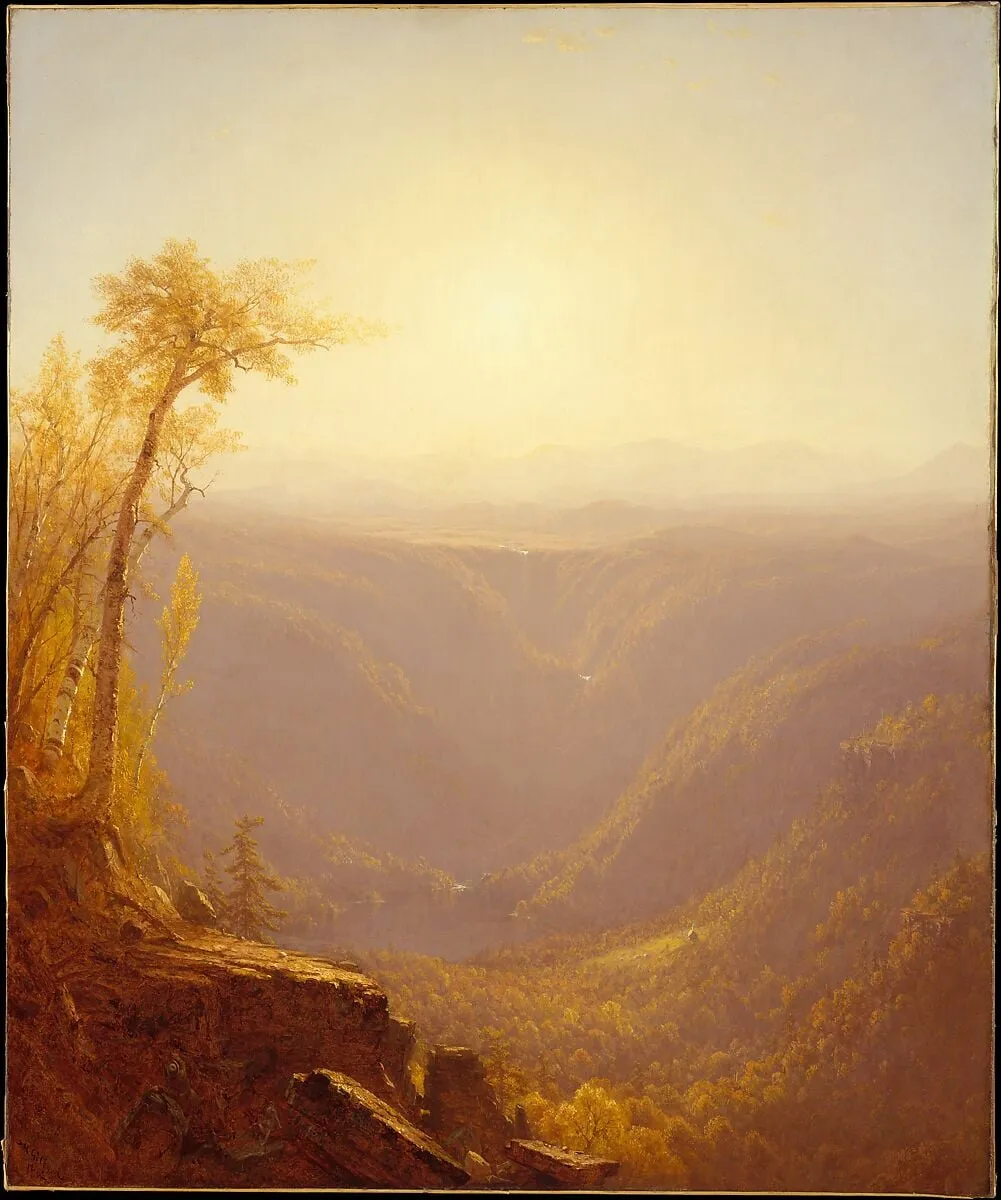
A Gorge in the Mountains (Kauterskill Clove) is an oil painting by the Hudson River School artist Sanford Robinson Gifford. It dates from 1862 and is held in the collection of the Metropolitan Museum of Art.
- Accession no.
- 15.30.62
- Credit line
- Bequest of Maria DeWitt Jesup, from the collection of her husband, Morris K. Jesup, 1914
About this work
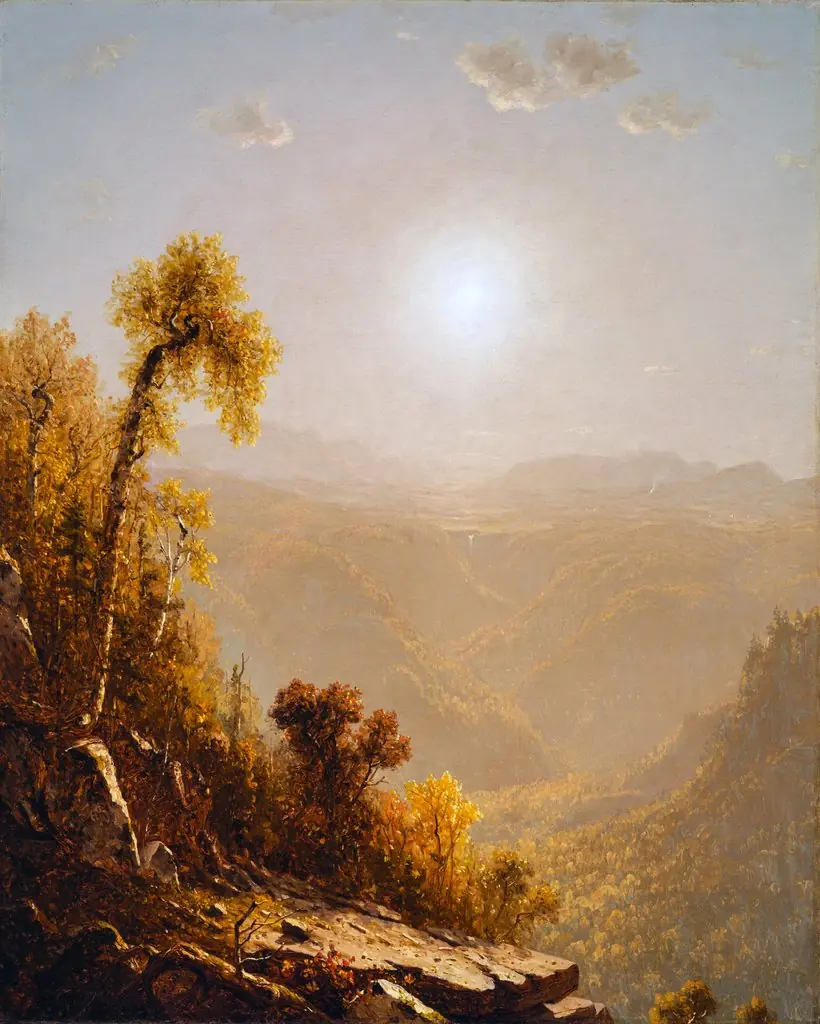
Nearly hidden in the russet cliffs at lower left, a hunter and his dog climb toward a precipice while circular light fills the central void.
Awash in bright sunlight, this 1862 canvas shows Kaaterskill Clove in the eastern Catskills, a glacier-carved gorge Sanford Robinson Gifford painted repeatedly from 1845 on. Nearly hidden in the russet cliffs at lower left, a hunter and his dog climb toward a precipice while circular light fills the central void. The Metropolitan Museum of Art received the work in 1914 through the bequest of Maria DeWitt Jesup.
Subject & Meaning
The painting depicts Kaaterskill Clove, a dramatic defile in the Catskill Mountains, illuminated by sunlight and featuring clouds, sky, and dense forest. As a work of the Hudson River School and Luminism, its iconography centers on the sublime power of nature, with the deep gorge and radiant light symbolizing the divine presence within the American wilderness. The focus on atmospheric effects and the vast landscape conveys a sense of awe and spiritual transcendence, characteristic of the movement's reverence for the natural world.
Technique & Style
The painting is executed in oil on canvas, the standard medium for Hudson River School works, and belongs to the Luminist sub-movement, which prioritized the refined depiction of light and atmosphere. Its dimensions, 121.9 by 101.3 centimeters, provide a substantial surface for the detailed rendering of the Catskill gorge. Formal stylistic qualities associated with Luminism, such as smooth brushwork and a focus on atmospheric effects, are implied by the movement's characteristics, though specific handling is not detailed in the available documentation. No information on the painting's condition was provided in the sources.
Overview
Sanford Robinson Gifford's 1862 oil painting, "A Gorge in the Mountains (Kauterskill Clove)," depicts a specific vista within the eastern Catskill Mountains. The canvas captures the glacier-carved Kaaterskill Clove, a site the artist had explored and sketched for nearly two decades. Bathed in a radiant, diffused light, the scene features a small hunter and his dog ascending a rocky path in the foreground, almost integrated into the russet landscape. This work exemplifies Gifford's distinctive approach to American landscape painting.
History & Provenance
The Metropolitan Museum of Art acquired "A Gorge in the Mountains (Kauterskill Clove)" in 1914 through the bequest of Maria DeWitt Jesup, who inherited it from her husband, Morris K. Jesup. The painting was exhibited in the 1876 New York Centennial Loan Exhibition, where it was initially titled "Kauterskill Falls." However, art historians later revised the title to more accurately reflect the eastward perspective of the clove itself, rather than solely focusing on the falls.
Context
Gifford completed this significant landscape in 1862, a period when he was actively serving as a national guardsman during the American Civil War. His duties stationed him in Washington, D.C., and Baltimore. Despite the national turmoil, Gifford continued to produce art that explored the tranquil grandeur of the American wilderness, offering a serene counterpoint to the conflict. This work reflects his ongoing engagement with the Catskill region, which he had been sketching since 1845.
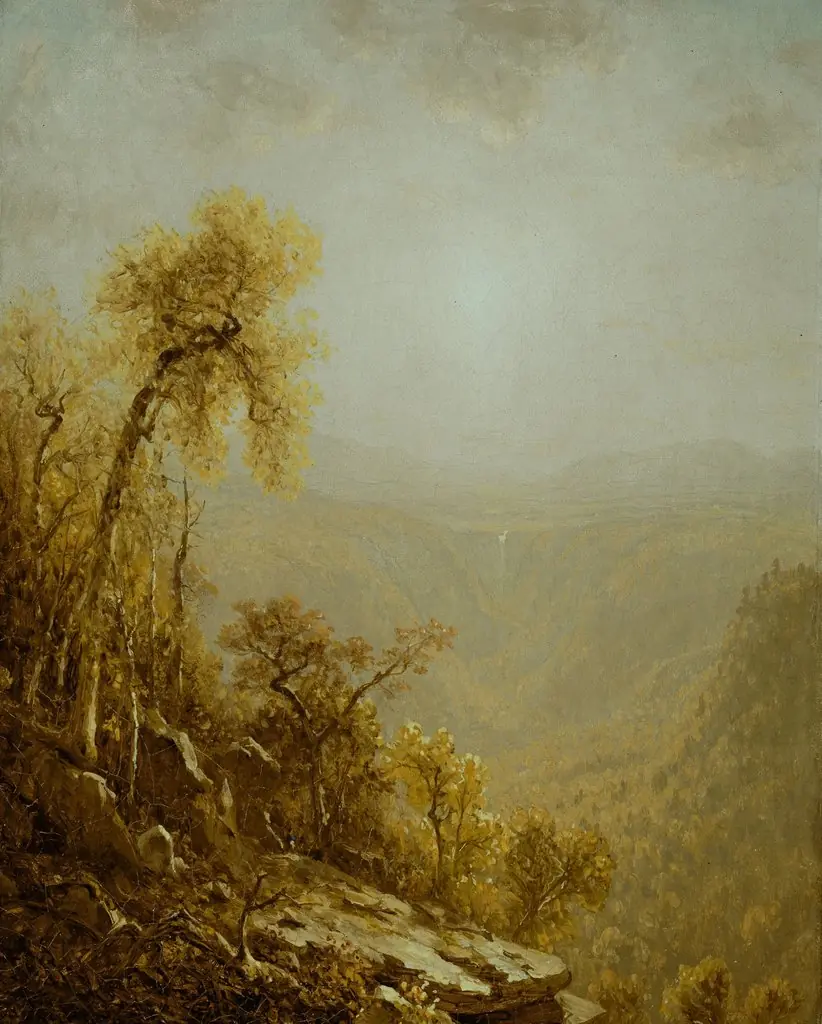
Artist & collection
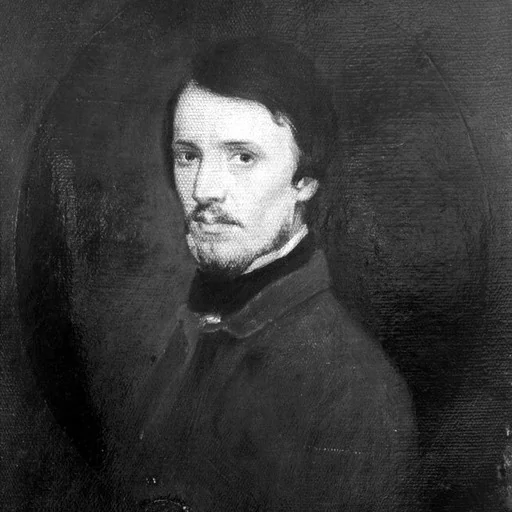
Artist
Sanford Robinson Gifford (July 10, 1823 – August 29, 1880) was an American landscape painter and a leading member of the second generation of Hudson River School artists.

 October in the Catskills
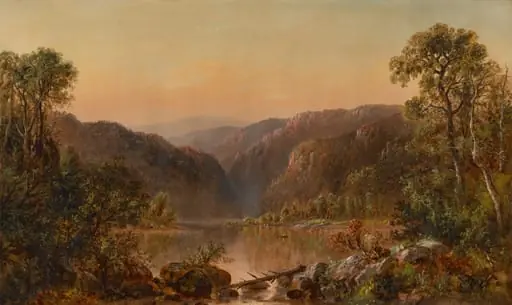 American Landscape
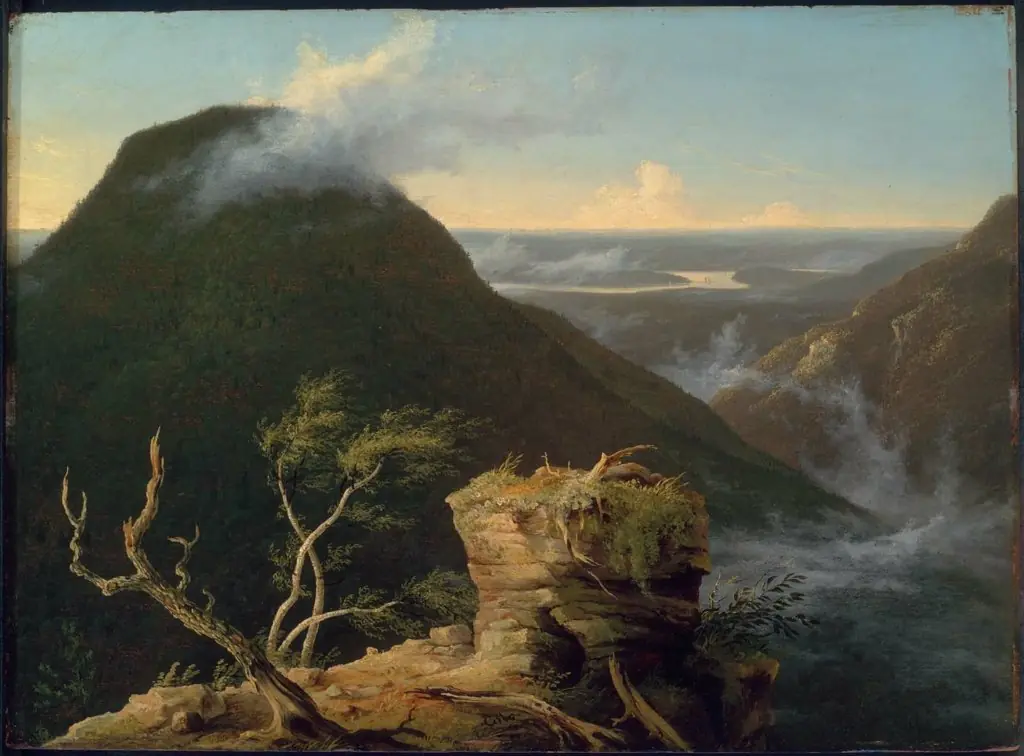 View of the Round-Top in the Catskill Mountains
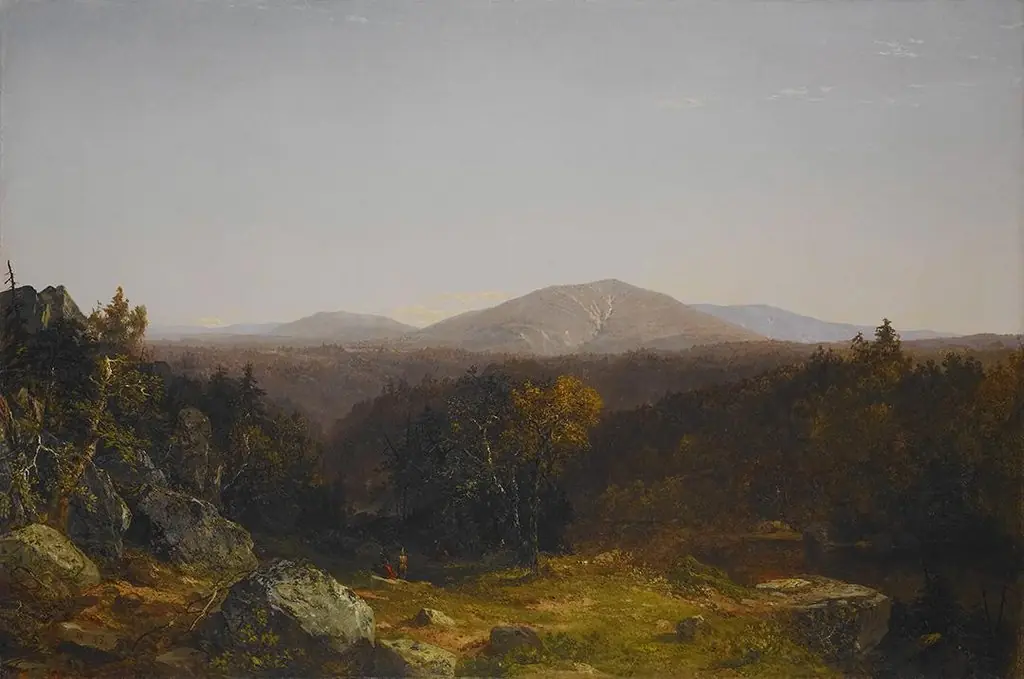 View of Mount Washington
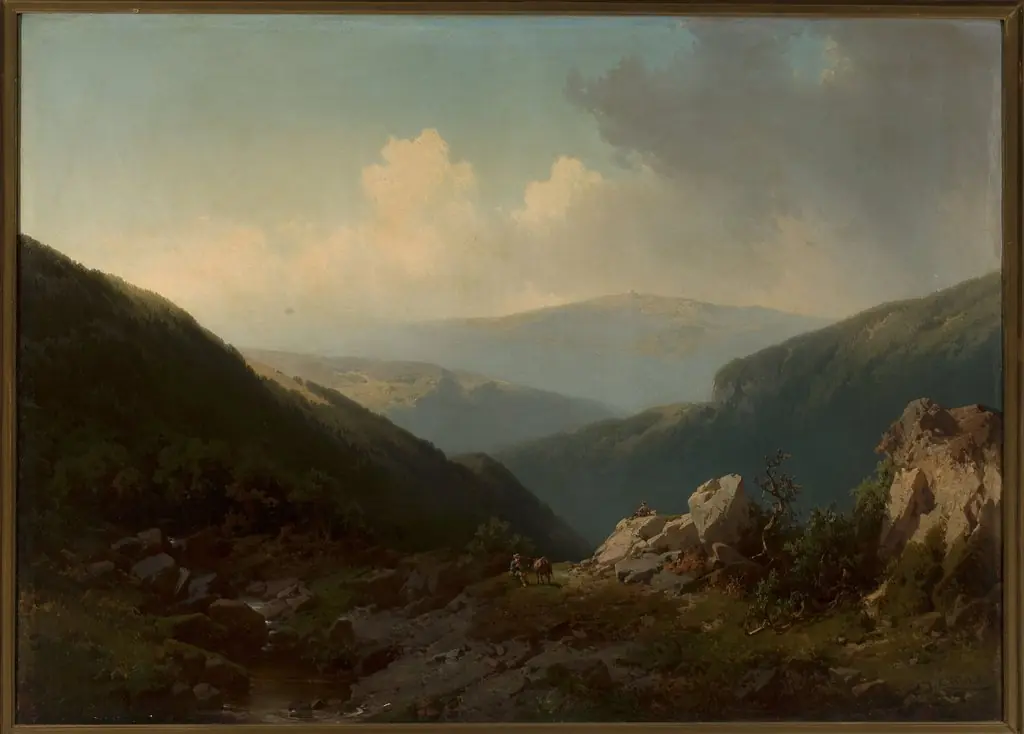 Mountain landscape
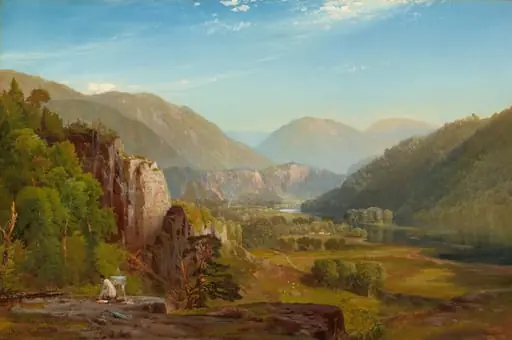 The Juniata, Evening
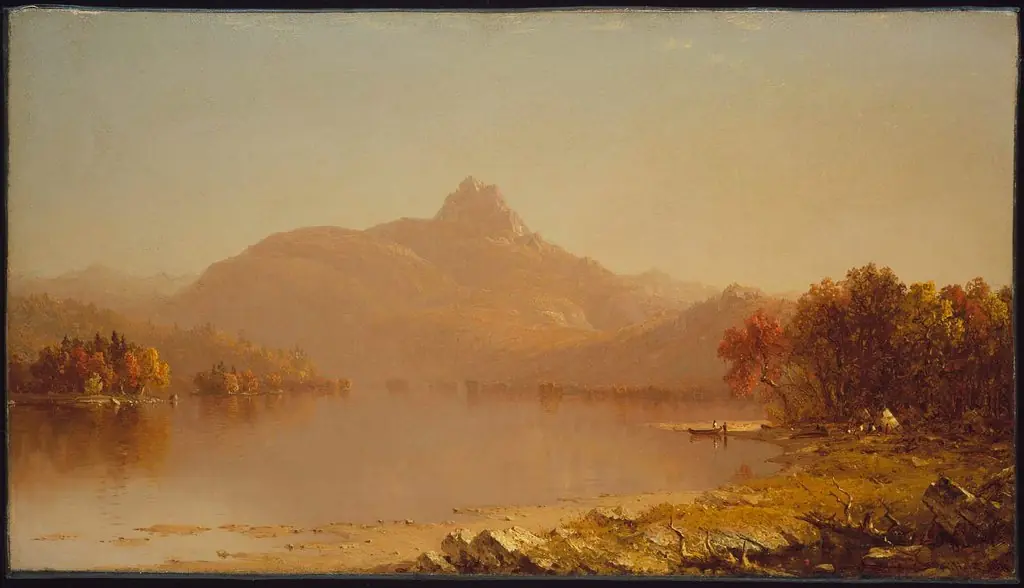 An October Afternoon
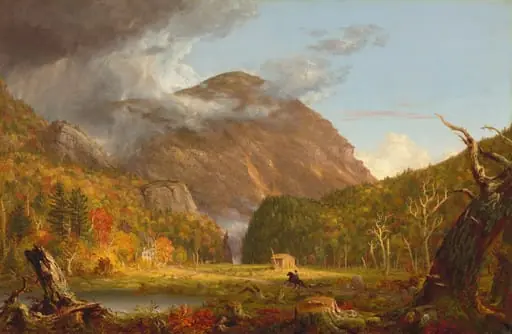 A View of the Mountain Pass Called the Notch of the White Mountains (Crawford Notch)
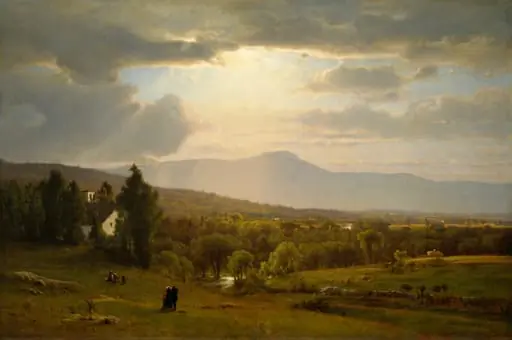 Catskill Mountains
- Kauterskill Clove, Catskill Mountains
 Lake George