Artwork
Portrait of a Young Man
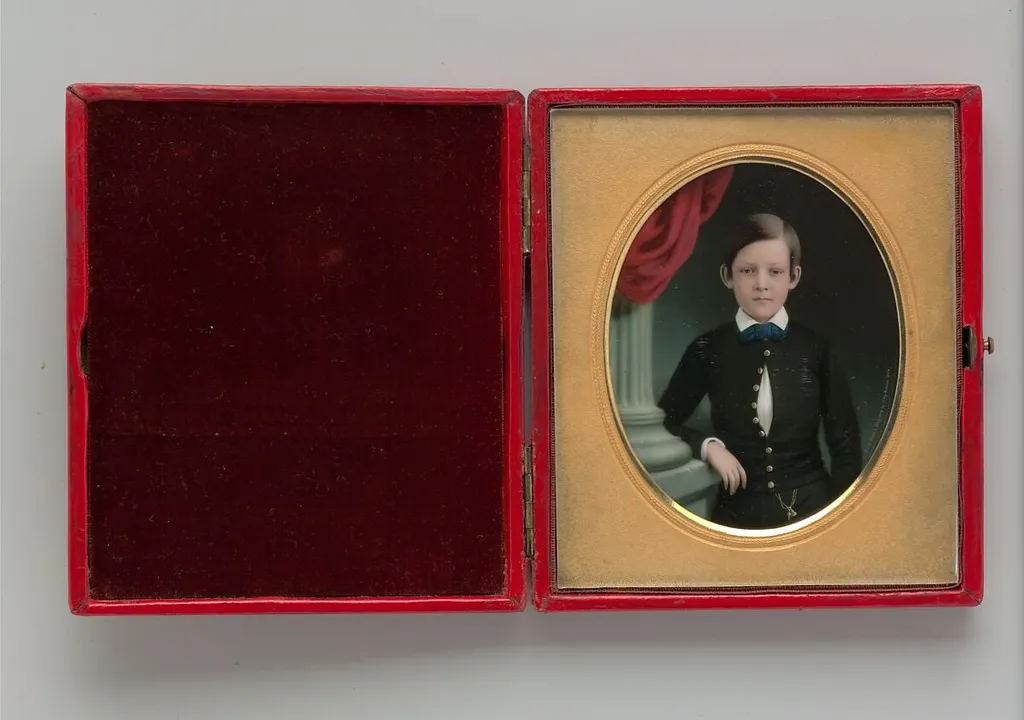
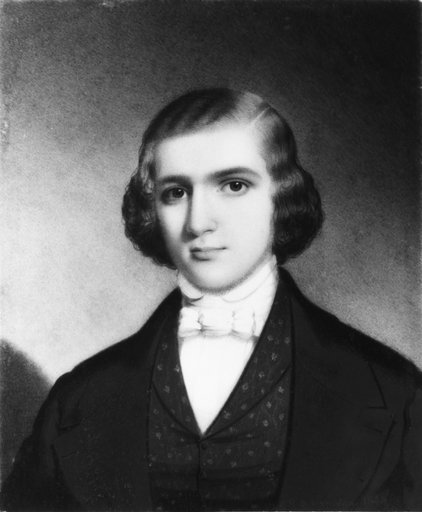
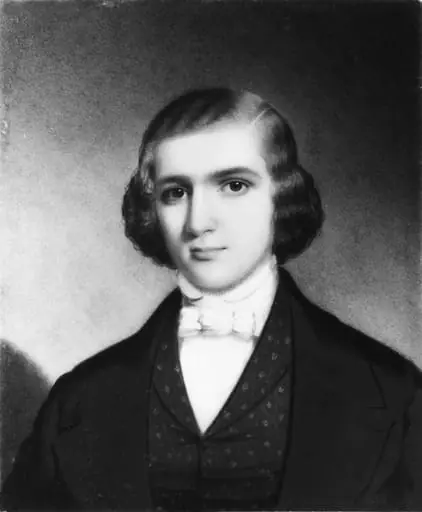
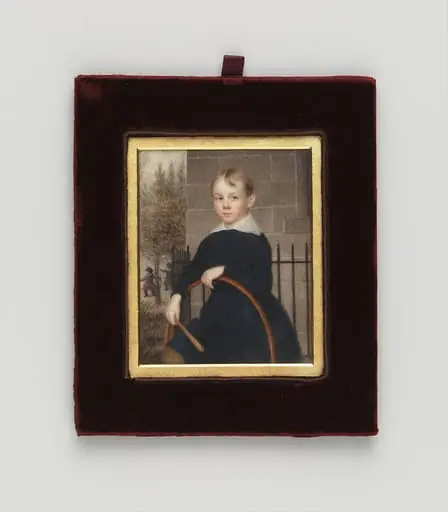
Portrait of a Young Man is a watercolor painting by the British Romanticist artist John Henry Brown. It dates from 1854 and is held in the collection of the Metropolitan Museum of Art.
About this work
Technique & Style
Stylistically, the work adheres to the conventions of mid-19th-century American portrait miniatures, with refined linear precision and subtle modeling of form.
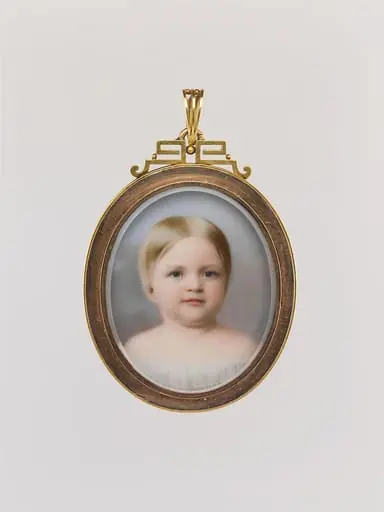
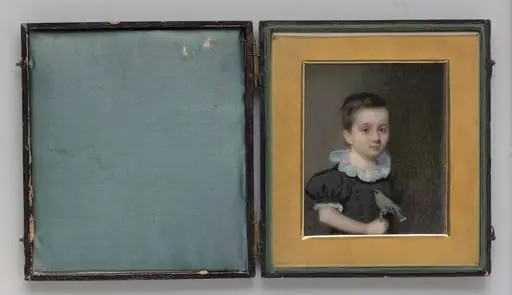
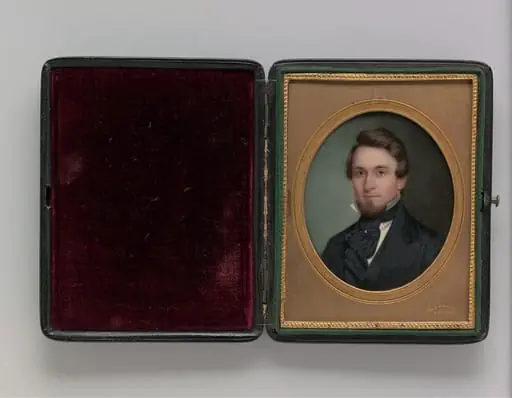
Executed in 1854, the portrait employs watercolor on a small ivory support, measuring 9.1 cm in height and 7.3 cm in width. The technique emphasizes delicate, translucent layering typical of miniature watercolor painting on ivory, allowing for fine gradations of tone and meticulous detail in rendering facial features and costume. Stylistically, the work adheres to the conventions of mid-19th-century American portrait miniatures, with refined linear precision and subtle modeling of form.
The composition centers on the sitter’s head and shoulders, presented in a controlled, symmetrical arrangement that underscores clarity and poise. The handling is restrained yet precise, reflecting the artist’s skill in capturing individual likeness and character within the constraints of the format.
History & Provenance
The Portrait of a Young Man was created by the artist John Henry Brown in 1854. Executed as a watercolor on ivory, this miniature portrait depicts a boy and measures 9.1 centimeters in height by 7.3 centimeters in width. The work is currently held within the collection of the Metropolitan Museum of Art, specifically located in The American Wing.
While the specific commission details and original ownership chain prior to the museum's acquisition are not detailed in the provided records, the piece is firmly attributed to Brown with an inception date established as January 1, 1854. The work remains a distinct example of mid-19th-century American portraiture within the museum's holdings.
Portrait of a Young Man is housed in the Metropolitan Museum of Art in New York, where it is recorded as part of The American Wing collection. The work is catalogued as a watercolor on ivory portrait dating to 1854, measuring 9.1 × 7.3 cm. Its classification within the museum’s inventory identifies it as a portrait of a boy, consistent with the metadata supplied by the institution and by the Wikidata entry. Exhibition records are not detailed in the available documentation, and no specific accession number is provided in the cited sources.
Overview
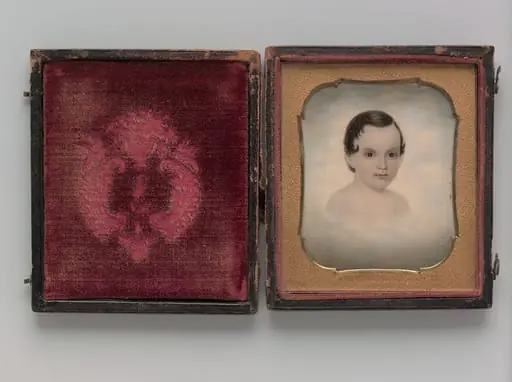
John Henry Brown's Portrait of a Young Man, created in 1854, is a watercolor miniature painted on ivory. This small-scale work captures a young boy, likely dressed for a formal occasion, gazing directly forward. The choice of ivory as a support was a distinctive technique during the mid-19th century, contributing to the artwork's luminous quality and its function as a personal keepsake.
Subject & Meaning
The portrait features a boy with youthful, rounded cheeks, dressed in a dark suit with a stiff collar and neatly parted hair. His direct gaze suggests a formal sitting, possibly commemorating a significant moment in his youth. Such detailed miniature portraits served as intimate mementos, often exchanged or carried by loved ones, preserving the likeness of the sitter in a portable format.
Context
During the 19th century, miniature portraits like this one were widely cherished as personal keepsakes. Before the widespread availability of photography, these small, portable artworks offered an accessible way to preserve the likeness of family members or loved ones. Often carried close or displayed in private settings, they represented an intimate form of portraiture, reflecting the sentimental values of the era.
Artist & collection