Artwork
A Study of Trap Rock (Buttermilk Falls)
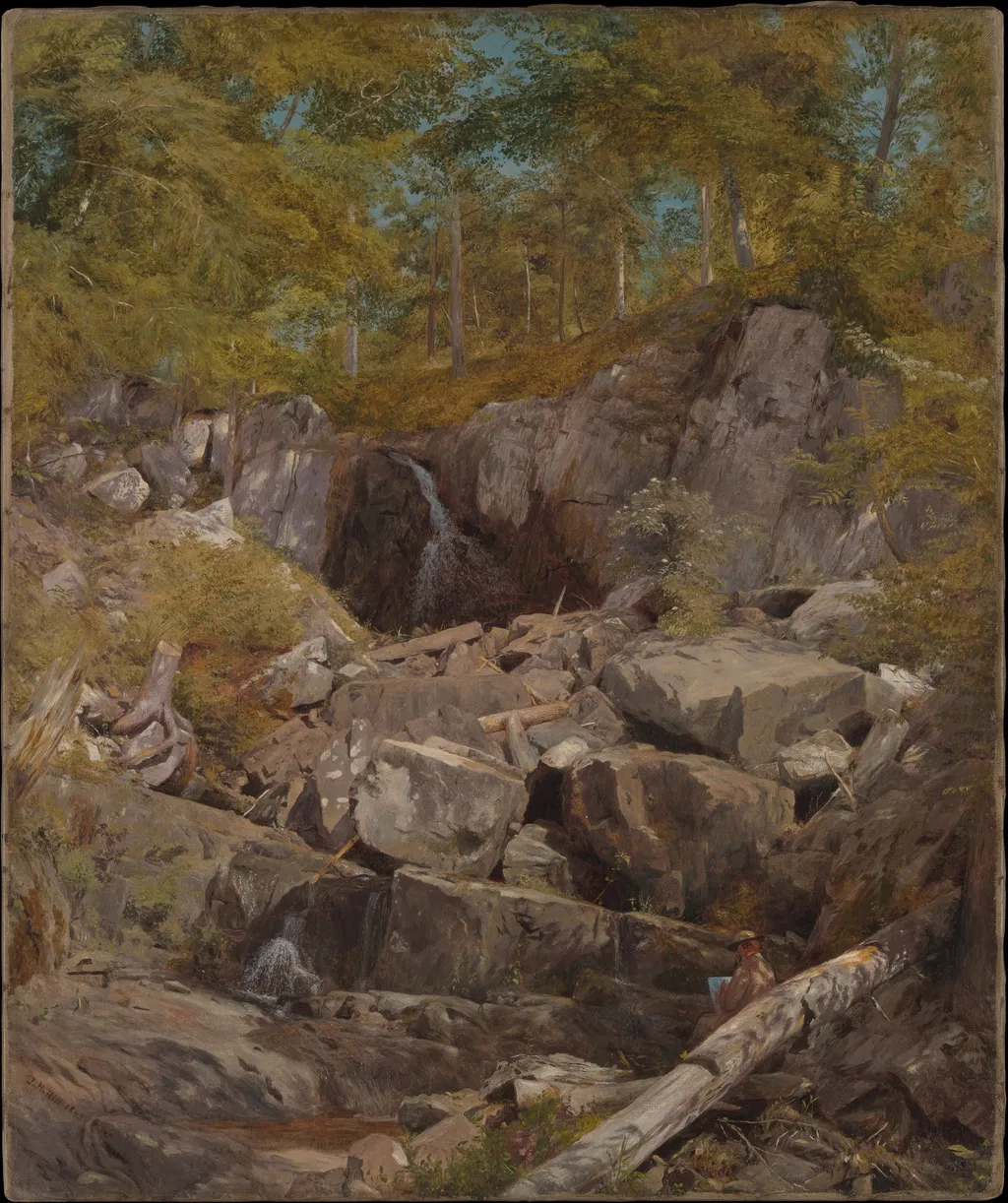
A Study of Trap Rock (Buttermilk Falls) is an oil painting by the Hudson River School artist John Henry Hill. It dates from 1863 and is held in the collection of the Metropolitan Museum of Art.
About this work
Subject & Meaning
The painting thus functions both as a topographical study and an aesthetic meditation on nature’s power.
John Henry Hill's 1863 oil painting A Study of Trap Rock (Buttermilk Falls) portrays a waterfall cascading over rugged trap rock within a wooded landscape, as documented by the Metropolitan Museum of Art. The work’s iconography centers on a prominent tree and a dramatic waterfall, elements that symbolize the untamed beauty and geological vigor of the American wilderness. By rendering these natural features with meticulous detail, Hill celebrates the sublime qualities of untouched scenery, reflecting the 19th‑century artistic interest in documenting and idealizing the American landscape. The painting thus functions both as a topographical study and an aesthetic meditation on nature’s power.
Technique & Style
A Study of Trap Rock (Buttermilk Falls) is an 1863 oil painting on canvas by John Henry Hill, classified as a painting in the Metropolitan Museum of Art. The work measures 50.8 × 61 cm and portrays a landscape featuring a tree and a waterfall. Executed in oil paint, the piece exemplifies mid‑nineteenth‑century American landscape technique, emphasizing naturalistic rendering of terrain and water.
No specific handling or conservation details are recorded, and the current condition is unspecified in the available documentation.
History & Provenance
John Henry Hill created A Study of Trap Rock (Buttermilk Falls) in 1863. Executed in oil paint on canvas, the artwork measures 50.8 by 61 centimeters. The painting depicts a landscape featuring a waterfall and a tree.
While the specific details of its initial commission and early ownership chain are not documented in the provided sources, the work's inception is firmly dated to 1863. It is currently held in the collection of the Metropolitan Museum of Art.
Overview
Painted in 1863, A Study of Trap Rock (Buttermilk Falls) is an oil on canvas work by the American artist John Henry Hill. Executed during the Civil War, the piece captures a specific geological formation near Buttermilk Falls in the Catskill Mountains, reflecting Hill's dedication to precise natural observation. The composition centers on a rugged hillside dominated by jagged trap rock boulders rendered in earthy browns and ochres.
A narrow cascade of water descends through the center of the frame, flanked by patches of moss and sparse vegetation. Tall trees with foliage transitioning between green and yellow frame the background, allowing glimpses of a pale blue sky. Unlike the grandiose, idealized landscapes of the Hudson River School, Hill's approach here is intimate and analytical, focusing on the textural reality of the rock and the immediate effects of light.
This work exemplifies Hill's shift toward detailed realism and his interest in the specific topography of the American landscape, marking a significant moment in his career as he moved away from academic conventions to document the natural world with scientific rigor.

Own this work as a print
Artist & collection

- Mountain Brook: A Study
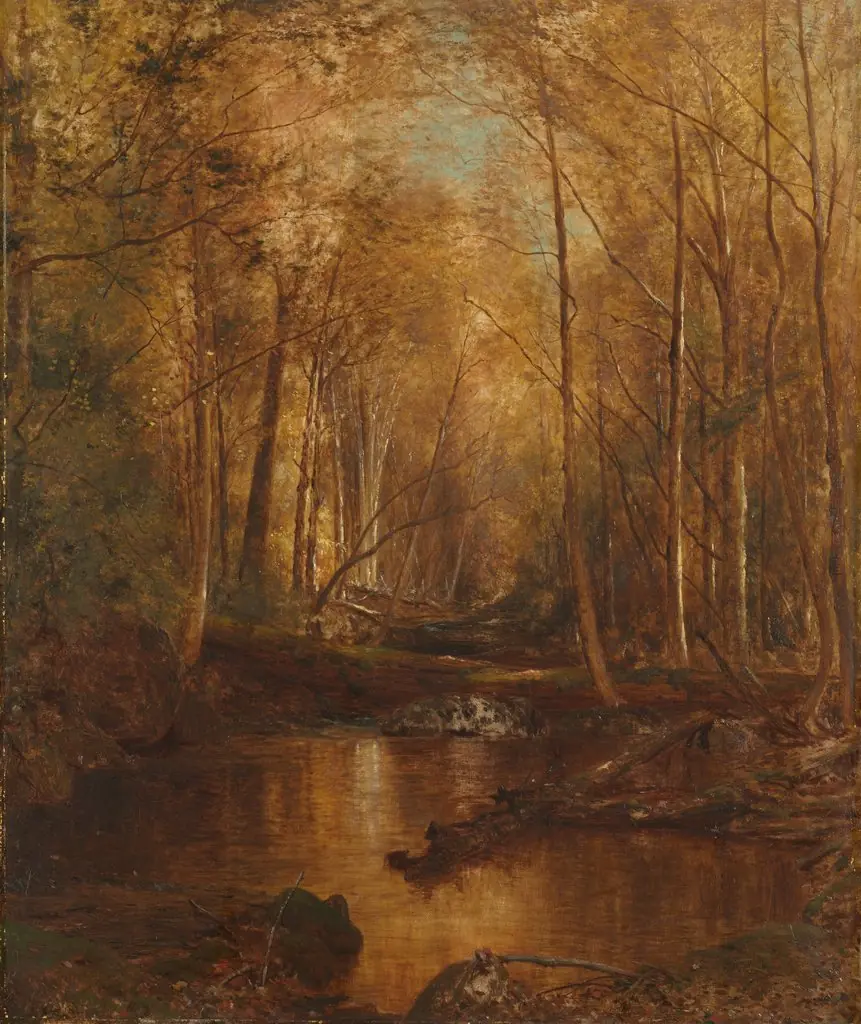 Autumn in the Catskills
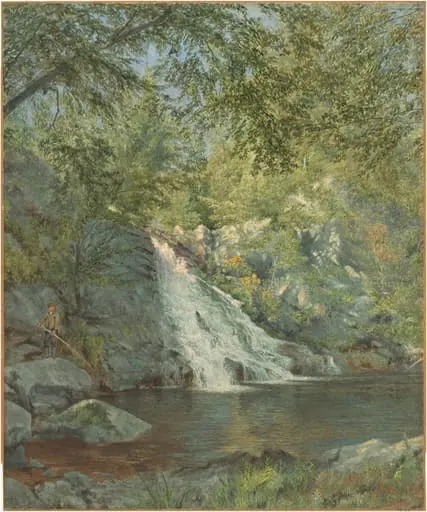 The Waterfall
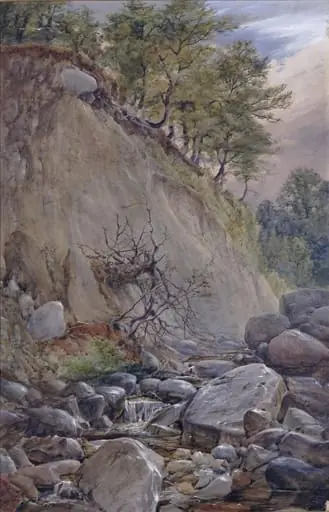 Bed of a mountain torrent, North Wales
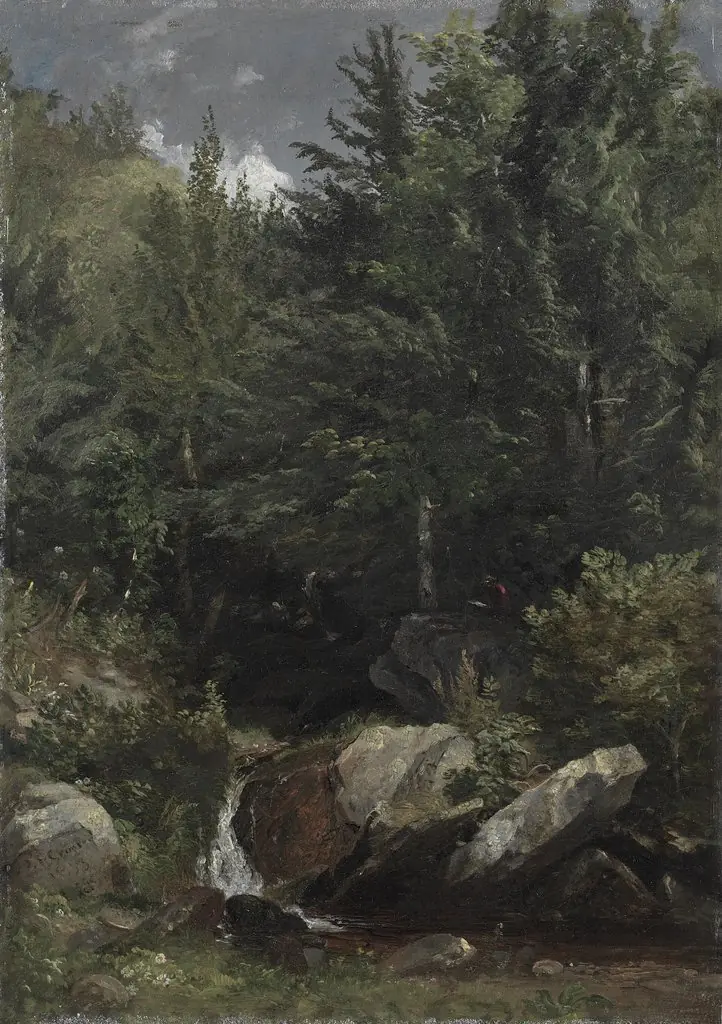 Trees and a Stream on a Hillside
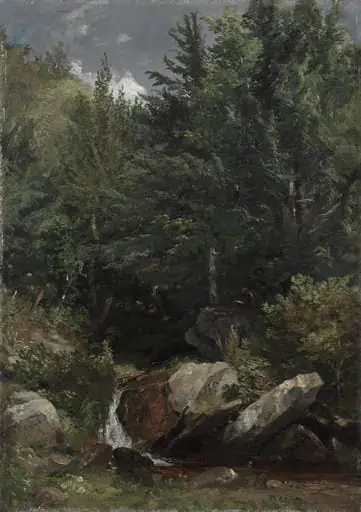 Trees and a Stream on a Hillside
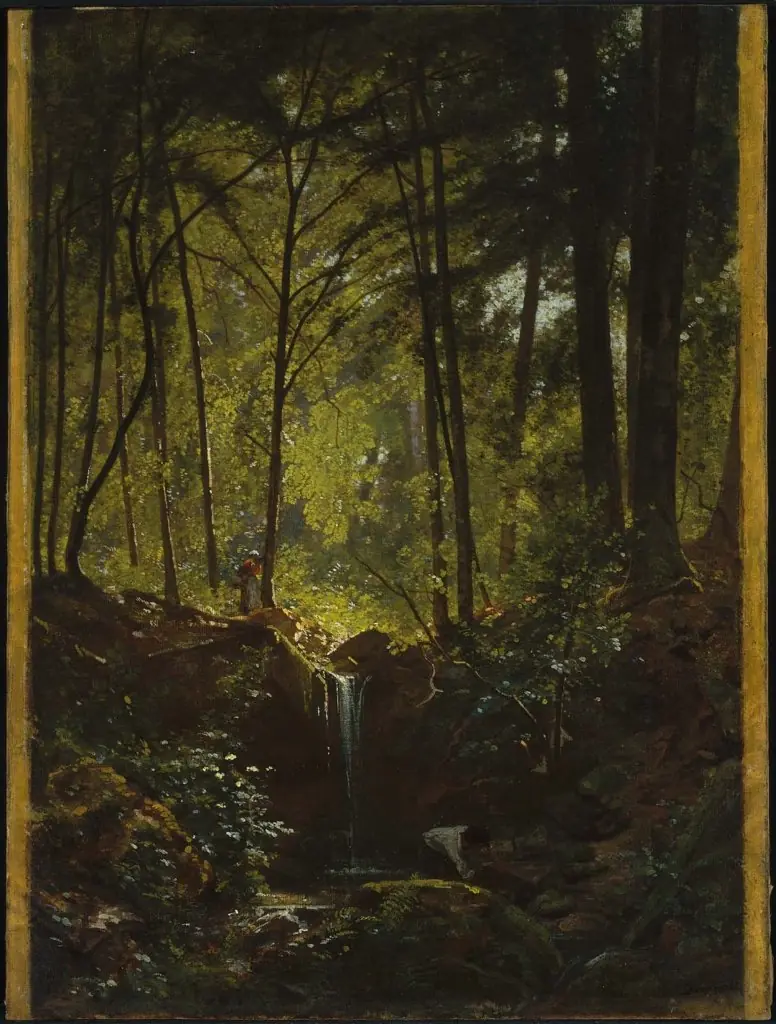 Stream in the Forest near Plombières
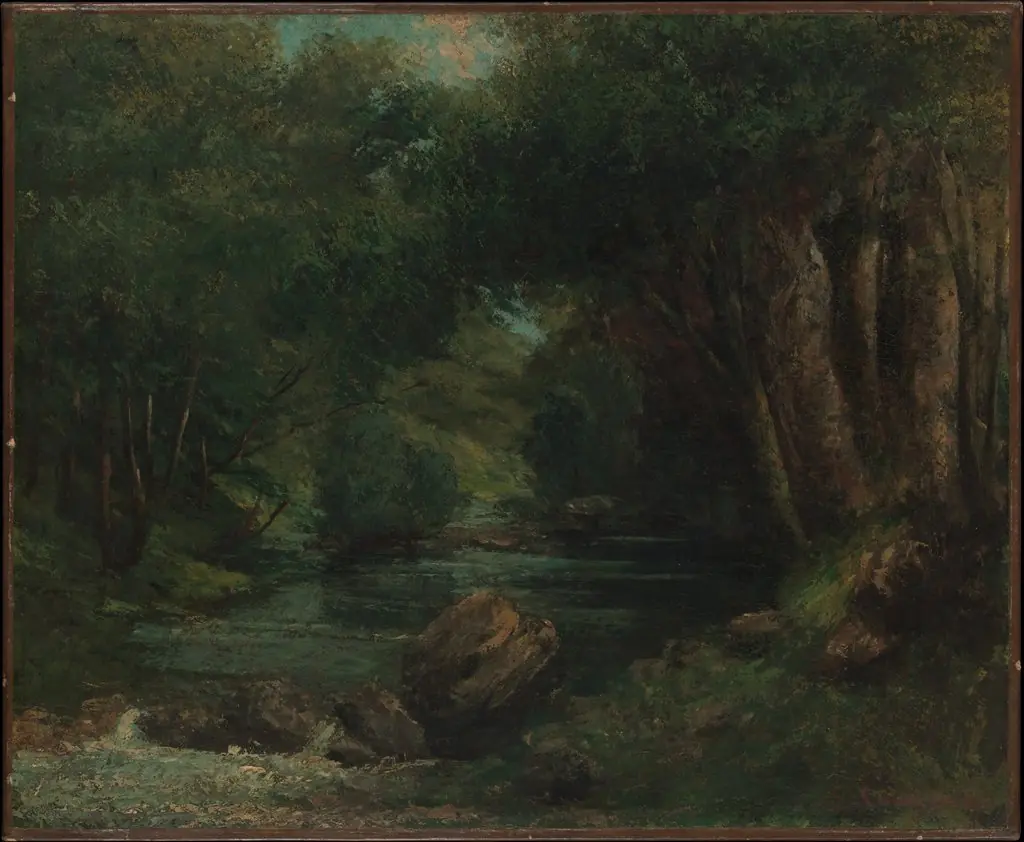 A Brook in the Forest
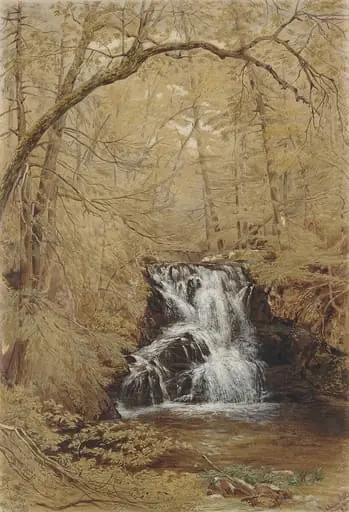 Indian Falls, Indian Brook, Cold Springs, New York
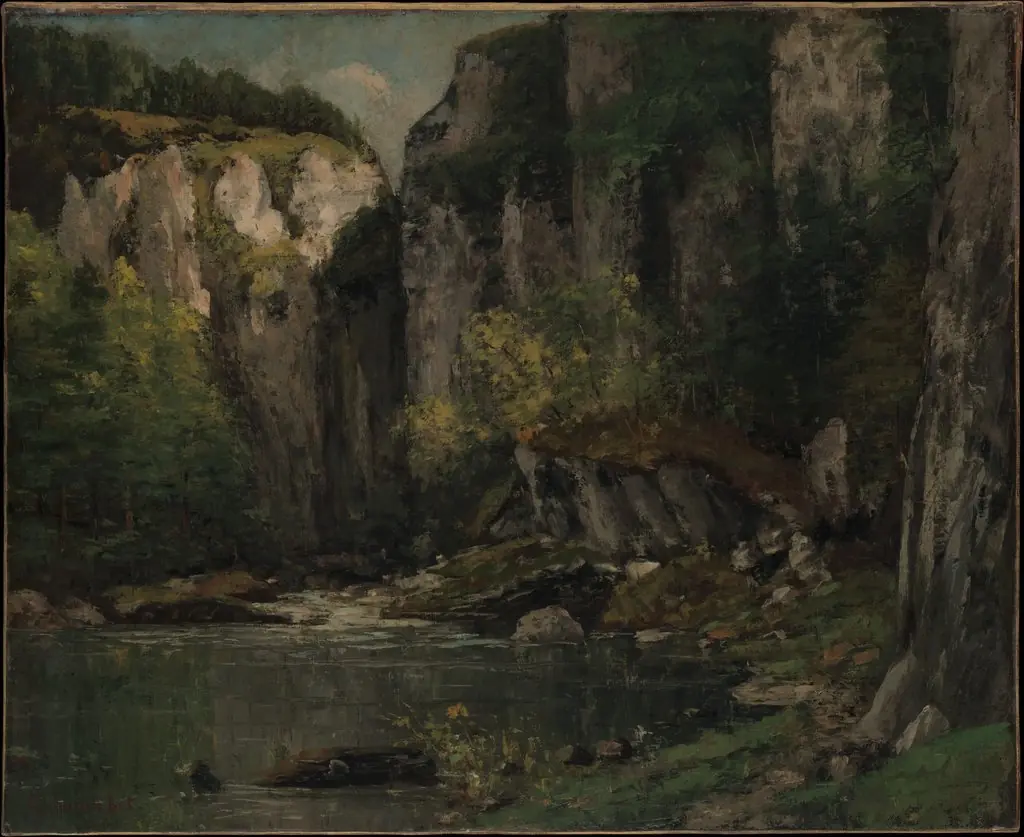 River and Rocks
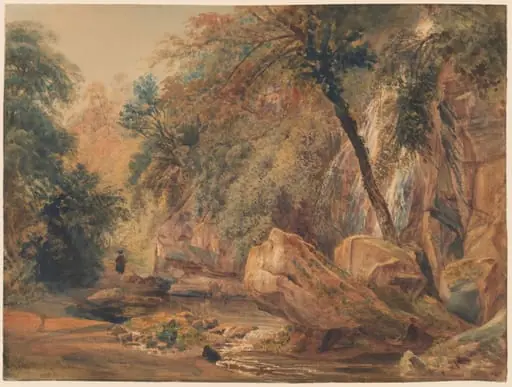 Waterfall in the Dingle at Badger Hall
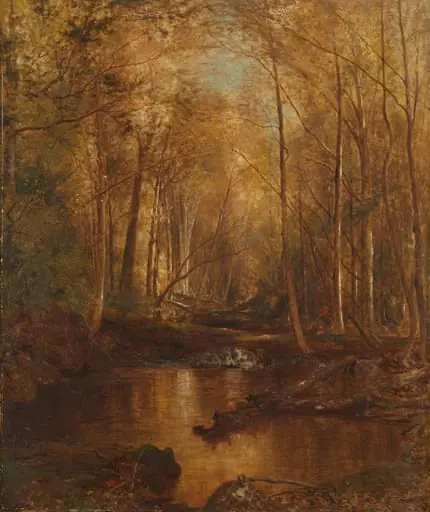 Autumn in the Catskills