Artwork
Trees and a Stream on a Hillside
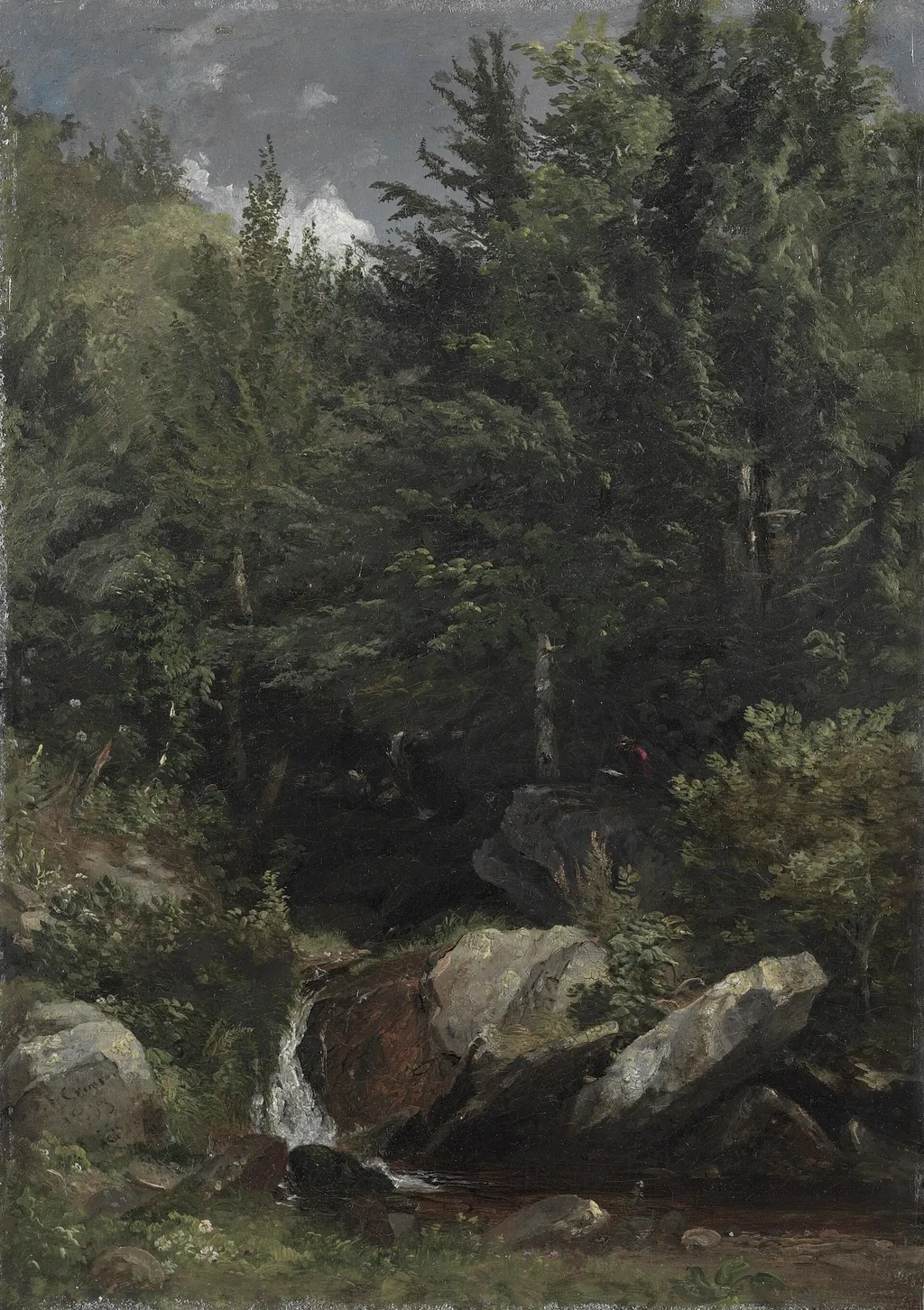
Trees and a Stream on a Hillside is an unspecified painting by the Hudson River School artist Jasper Francis Cropsey. It dates from 1853 and is held in the collection of the Cleveland Museum of Art.
About this work
History & Provenance
The work is currently held in the collection of the Cleveland Museum of Art, where it is cataloged under the accession number 1977.
Jasper Francis Cropsey created the painting Trees and a Stream on a Hillside in 1853 within the United States. The work is currently held in the collection of the Cleveland Museum of Art, where it is cataloged under the accession number 1977.118. The museum acquired the piece in 1977, establishing its modern ownership chain.
While the specific commission details or earlier ownership history prior to the museum's acquisition are not detailed in the available records, the work's inception date is firmly established as 1853.
Trees and a Stream on a Hillside is held in the collection of the Cleveland Museum of Art. The institution assigns the work the accession number 1977.118. While the painting was created in 1853, the provided records do not list specific exhibitions or loan history for this piece.
Overview
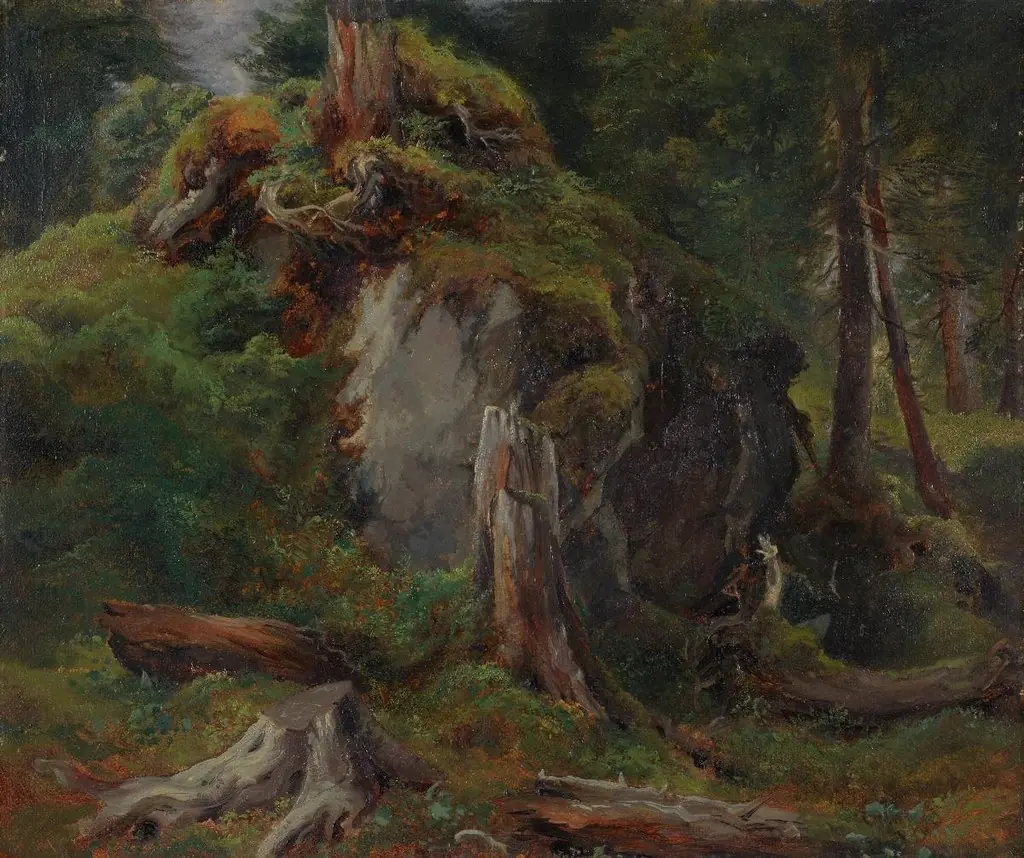
Jasper Francis Cropsey's Trees and a Stream on a Hillside, executed in 1853, exemplifies the mature style of the Hudson River School during the mid-19th century. The composition centers on a dense, vertical arrangement of evergreen trees that dominate the hillside, creating a sense of enclosed wilderness typical of the artist's focus on the American Northeast. In the lower right foreground, a stream navigates over rocky terrain, its movement contrasted by the stillness of the surrounding ferns and moss.
Cropsey employs a palette of deep greens and earthy browns, punctuated by dappled sunlight that filters through the canopy to illuminate specific areas of the forest floor. This work reflects the artist's commitment to precise botanical observation and the romantic idealization of the American landscape as a manifestation of divine presence. Painted during a period when Cropsey was establishing his reputation for detailed, atmospheric landscapes, the piece demonstrates his skill in balancing naturalistic detail with a harmonious, structured composition.
The painting stands as a representative example of his early career output, capturing the serene yet majestic character of the American woods before his later, more vibrant color experiments in European and American scenes.
Subject & Meaning
The artwork portrays a secluded forest setting dominated by towering evergreen trees that densely populate a sloping hillside. In the lower right, a small stream gently flows over rocks, its banks adorned with ferns and moss. The scene evokes a sense of tranquility and the untouched beauty of the wilderness, characteristic of mid-19th century American landscape art.
Technique & Style
Cropsey employed a distinctive technique to convey the texture and atmosphere of the forest. The trees are rendered with thick, visible brushstrokes, creating a palpable sense of their rugged bark and dense foliage. This tactile quality, combined with the depiction of a clear, light-catching stream and the interplay of dark greens and earthy browns with occasional sunlit areas, contributes to the painting's realistic yet evocative style.
Own this work as a print
Artist & collection
Artist
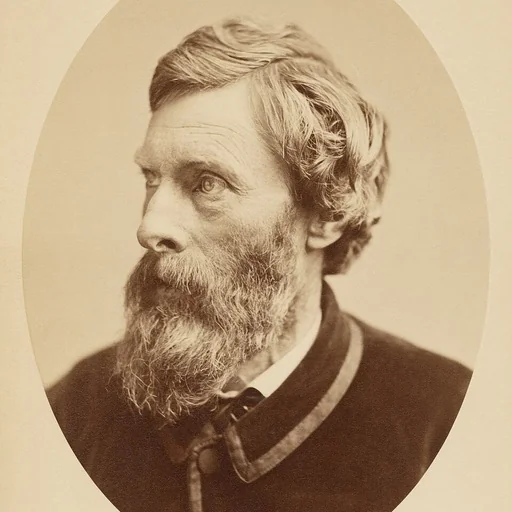
Jasper Francis Cropsey was an American architect and artist. He is best known for his Hudson River School landscape paintings.

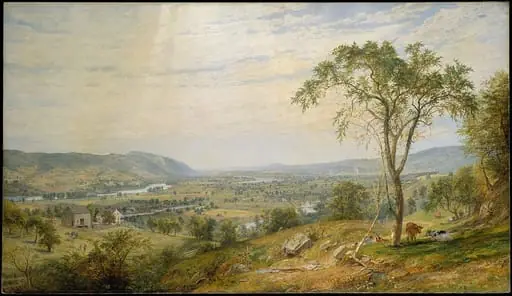
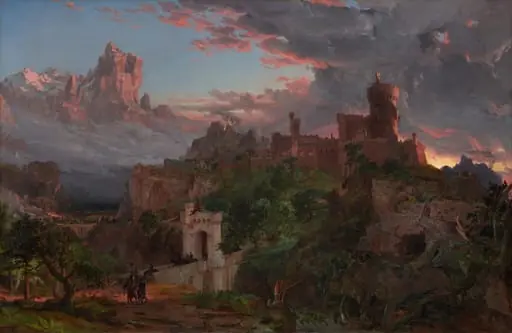
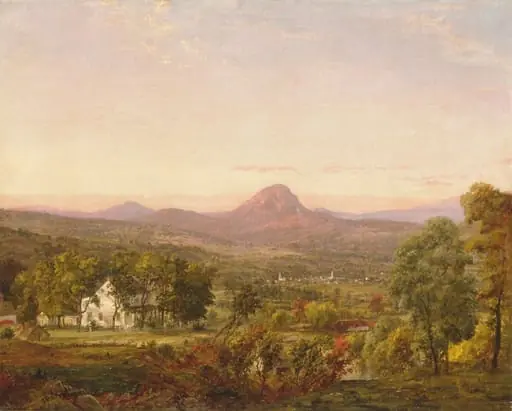
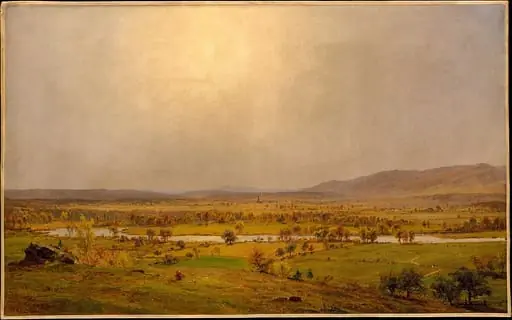
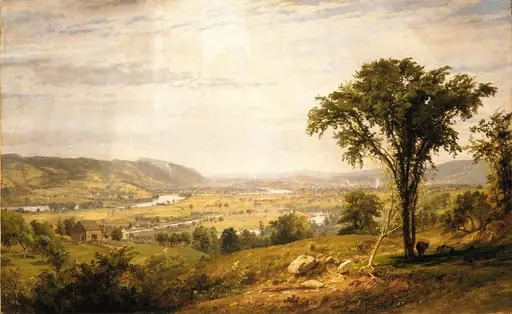
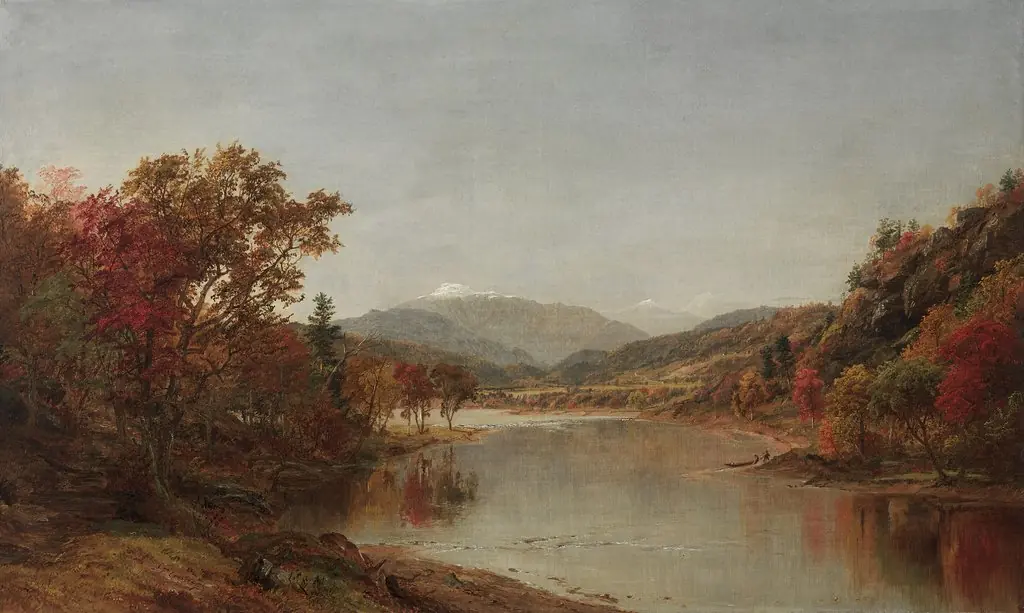
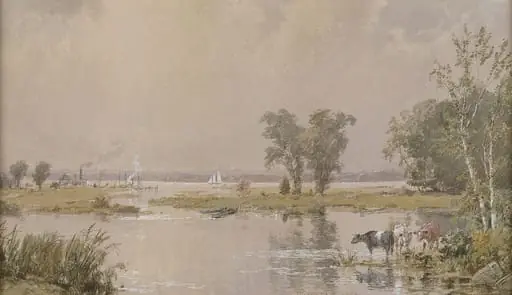
- Trees and a Stream on a Hillside
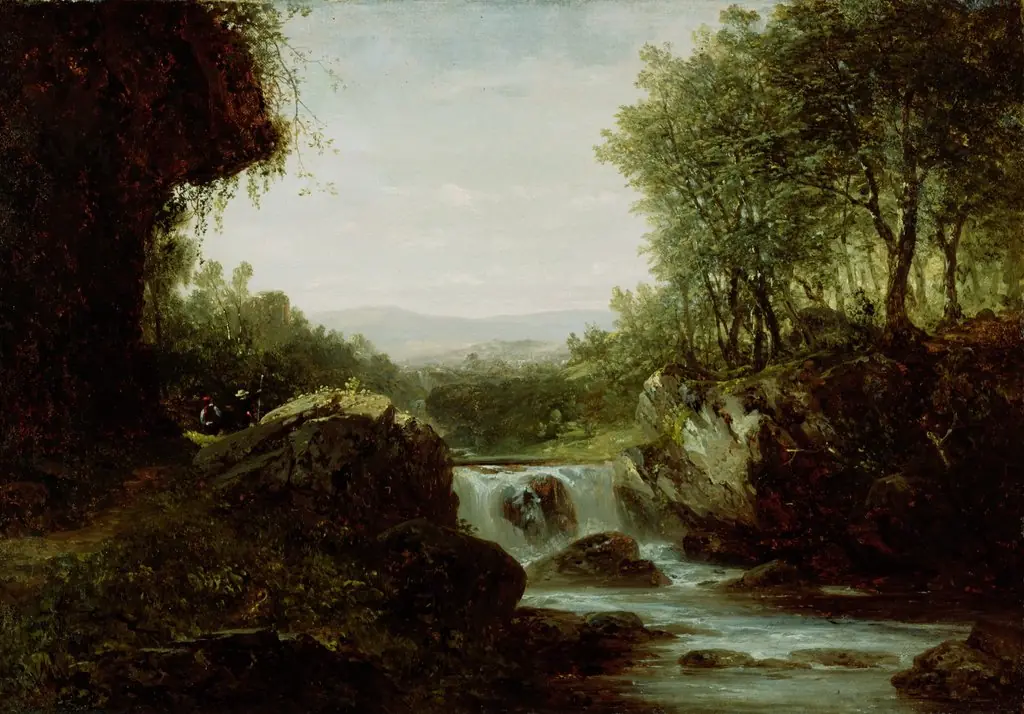 The Walking Tour
 A Brook in the Forest
 Landscape with Rocky Cliffs and a Waterfall
 Mount Pyszna in the Tatra Mountains
 Mountain Landscape with Waterfall
 Landscape near Painesville
 The Stream (Le Ruisseau du Puits-Noir; vallée de la Loue)
 A Study of Trap Rock (Buttermilk Falls)
 The Brook of Les Puits-Noir
 Rocher couvert de mousses et troncs d'arbres abattus
 The Brook of Les Puits-Noir