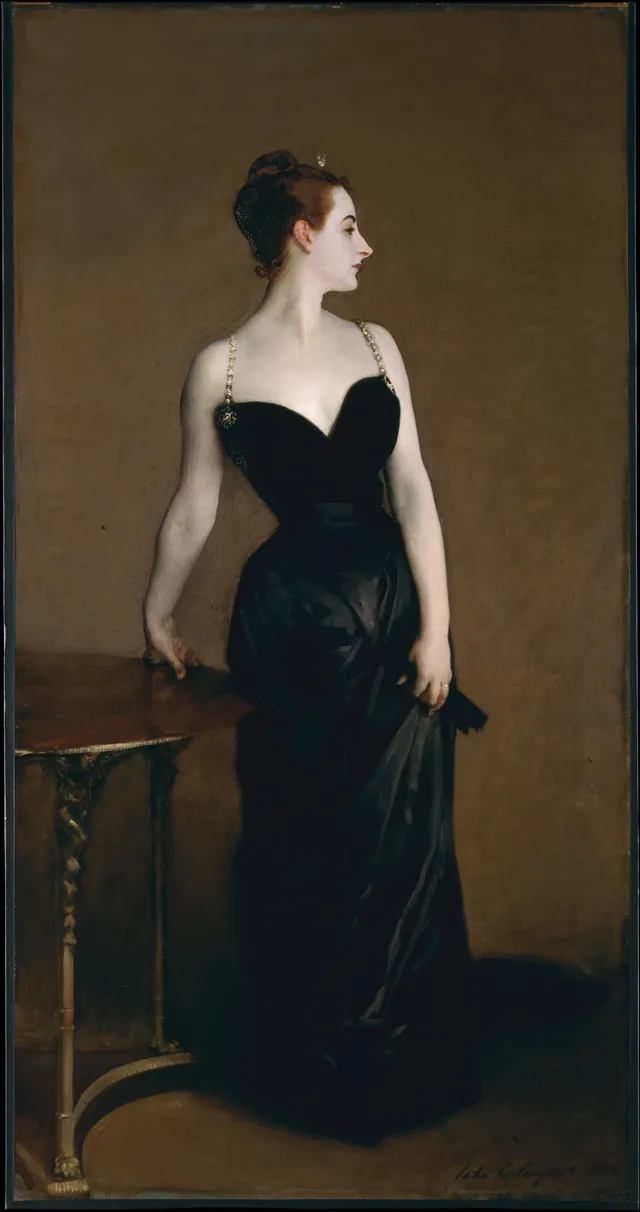
Portraiture Across Time
From diplomatic precision to society's shimmer: five centuries of faces deciding how they want to be seen.
What you'll explore
- Artist Anthony van Dyck
- Artist Jacques-Louis David
- Artist John Singer Sargent
- Artist Rembrandt van Rijn
- Movement Baroque
- Movement Dutch Golden Age
- Subject Family
- Artist Frans Hals
- Movement Impressionism
- Artist Jean Honoré Fragonard
- Subject King
- Movement Northern Renaissance
- Artist Ralph Earl
- Movement Realism
- Movement Rococo painting
The lessons
-
The Diplomatic Gaze
From the in-app quiz
-
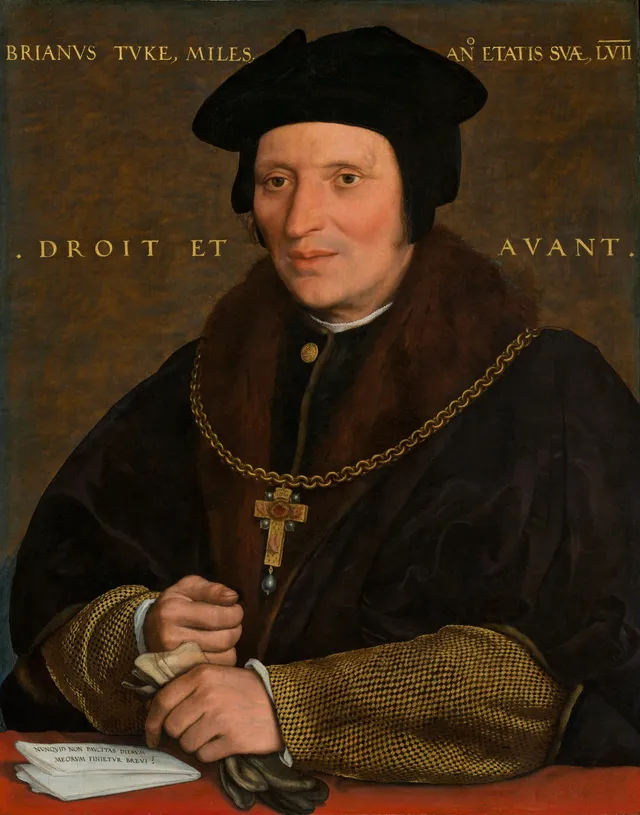
Look at the details in Holbein's portrait of Sir Brian Tuke. Which element most strongly signals his diplomatic role and intellectual station?
Sir Brian Tuke , Hans Holbein the Younger - The golden chain of office
- The open book and intense gaze Answer
- The military sword at his side
- The floral patterns on his doublet
Holbein uses the open book and Tuke's focused, intelligent gaze to emphasize his role as a scholar and diplomat, rather than a warrior or mere nobleman.
-
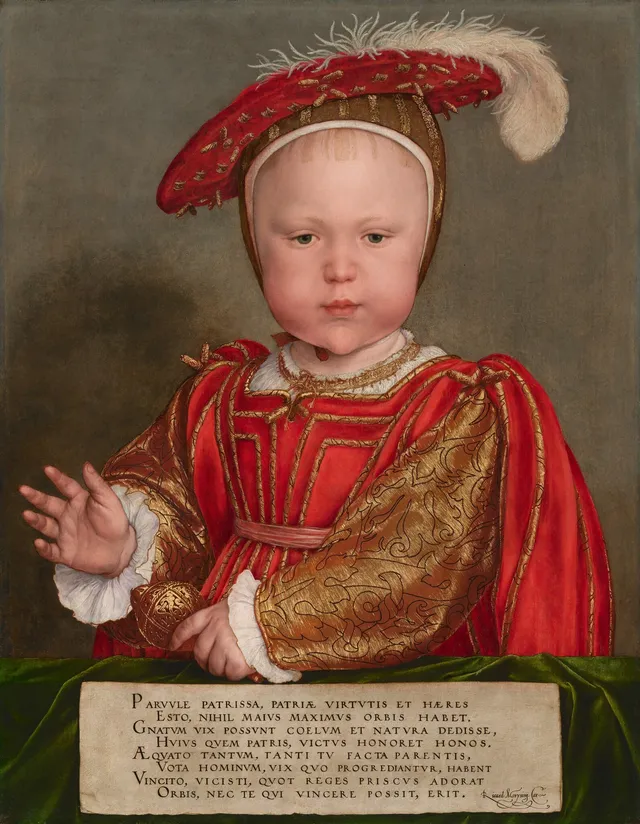
Which painting depicts a young monarch with the same unflinching, almost clinical realism seen in the adult portraits?
Holbein's portrait of Edward VI as a Child applies the same rigorous, realistic style to a young boy as he did to adult courtiers like Sir Brian Tuke.
-
-
The Mirror and the Crowd
From the in-app quiz
-
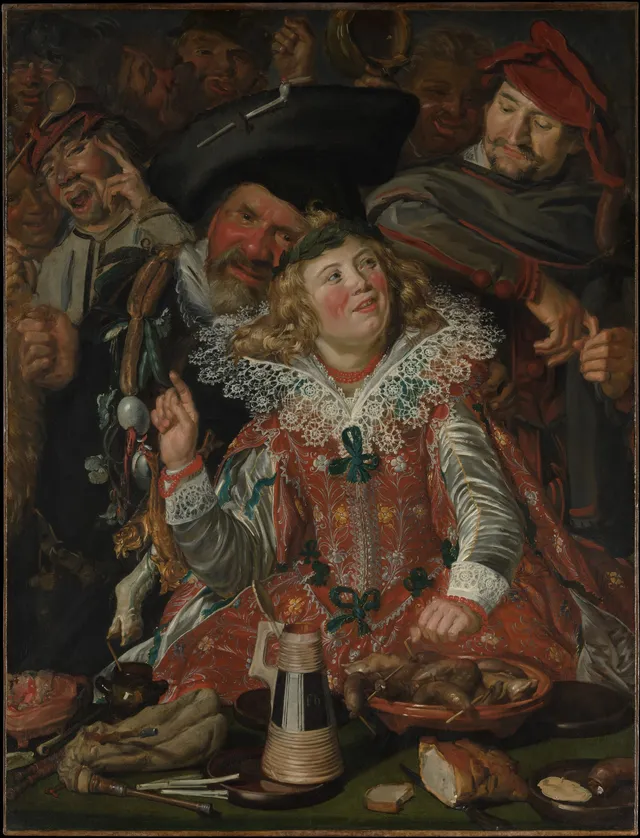
Which painting captures the fleeting moment of a laugh, contrasting with the quiet introspection often found in Rembrandt's self-portraits?
- Merrymakers at Shrovetide Answer
- Young Girl Reading
- The Emperor Napoleon in His Study at the Tuileries
You are right. Hals's Merrymakers at Shrovetide freezes a spontaneous moment of laughter, while Rembrandt's work typically invites a quieter, more introspective look.
-
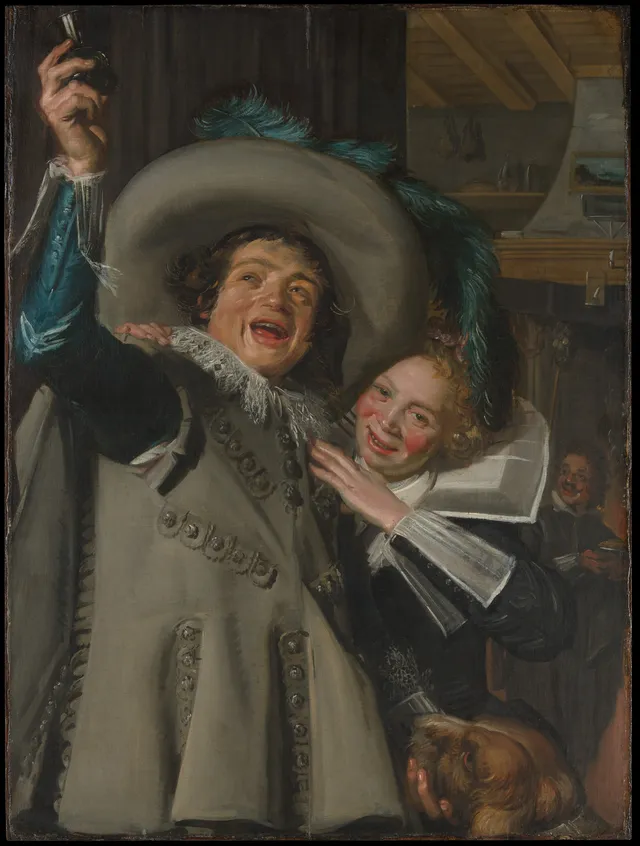
Which artist is best known for capturing the informal, lively expressions of the Dutch middle class in tavern scenes?
- Rembrandt van Rijn
- Frans Hals Answer
- Jacques-Louis David
Correct. Frans Hals mastered the art of painting the Dutch middle class in their natural, energetic environments, often within tavern settings.
-
-
Baroque Swagger and Royal Power
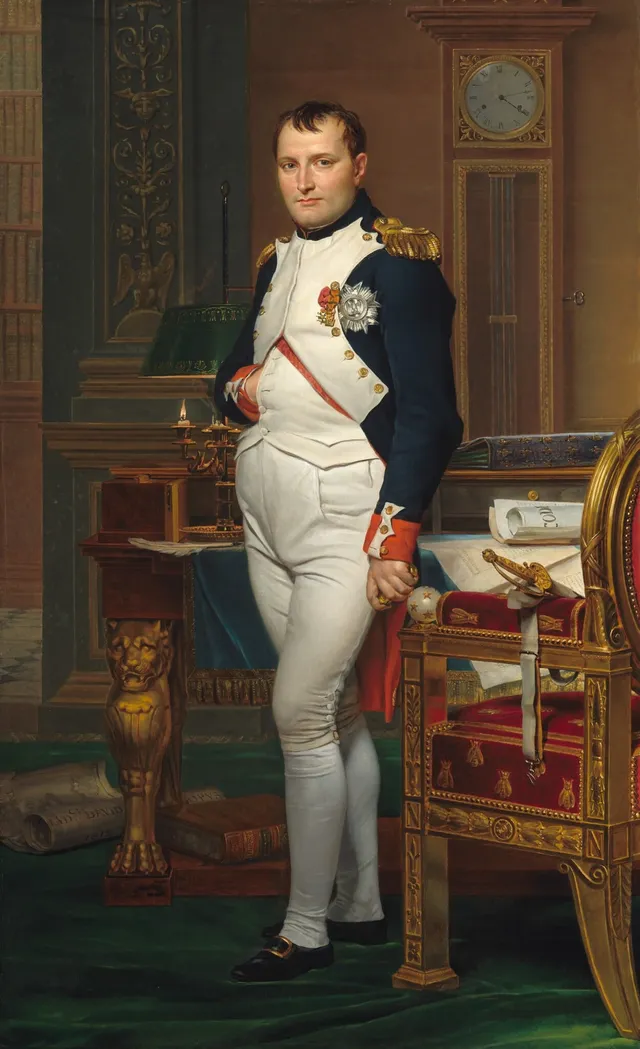 The Emperor Napoleon in His Study at the Tuileries Jacques-Louis David
 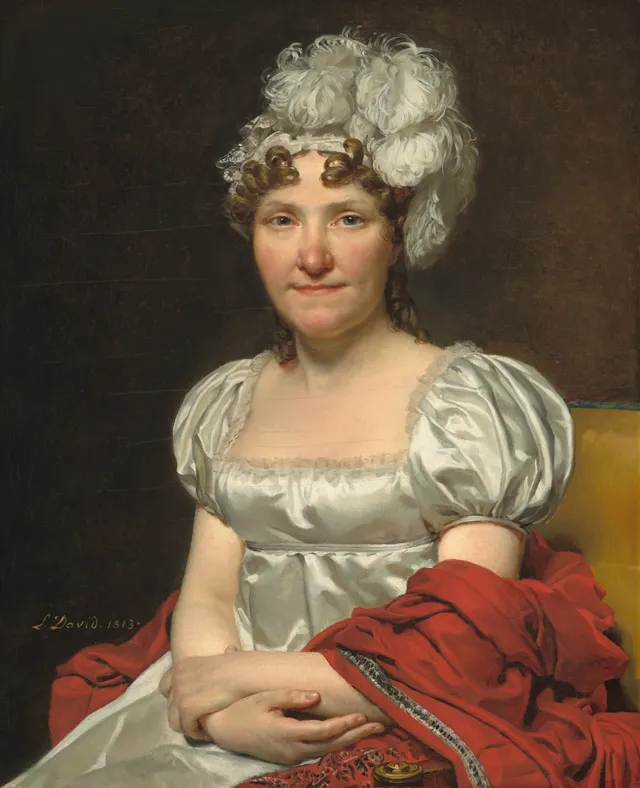 Madame David Jacques-Louis David
 From the in-app quiz
-
In 'The Emperor Napoleon in His Study at the Tuileries,' what specific detail on the mantelpiece suggests the Emperor's tireless work ethic?
The Emperor Napoleon in His Study at the Tuileries , Jacques-Louis David - A sword resting on a velvet cushion
- A clock showing four in the morning Answer
- A map of the French Empire
- A stack of unopened letters
You spotted the clock perfectly. Its position just past four in the morning, alongside a spent candle, tells the story of a ruler who works late into the night.
-
Which painting in this list features a subject in a dynamic, theatrical pose that embodies the grandeur typical of the Baroque era?
Correct. 'Merrymakers at Shrovetide' by Frans Hals captures that distinct Baroque energy, with figures caught in lively, theatrical motion.
-
-
Rococo Charm and Revolutionary Truth
From the in-app quiz
-
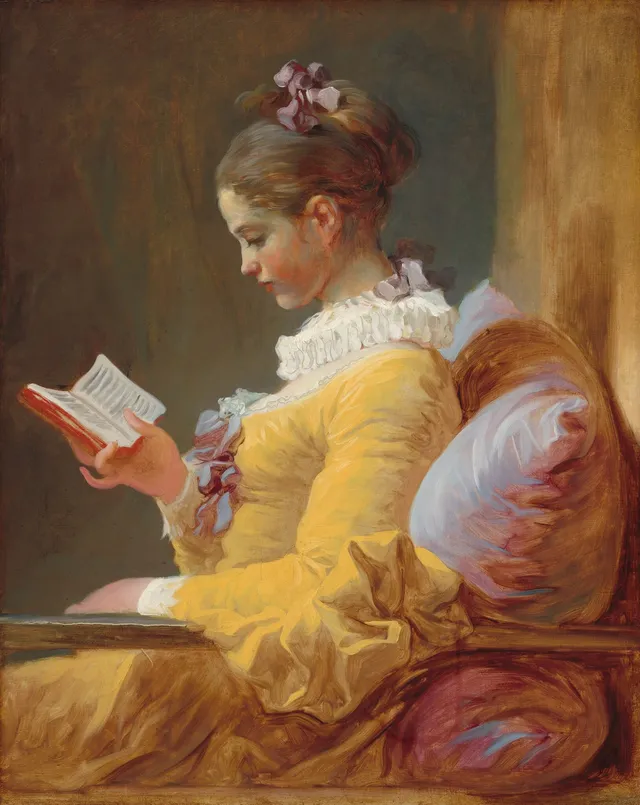
Which painting reflects the soft, dreamy atmosphere of the pre-revolutionary court, contrasting sharply with David's severe clarity?
- Madame David by Jacques-Louis David
- Young Girl Reading by Jean Honoré Fragonard Answer
- The Emperor Napoleon in His Study
Fragonard's 'Young Girl Reading' captures the playful, intimate spirit of the pre-revolutionary court with its soft light and dreamy mood, while David's work embraces a starker, classical severity.
-
Which movement is characterized by the playful, decorative, and intimate style seen in Fragonard's portraits?
- Baroque painting
- Rococo painting Answer
- Neoclassical painting
Rococo painting is defined by its light, decorative, and intimate qualities, perfectly exemplified by the soft atmosphere in Fragonard's work.
-
-
The American Face and the Society Gaze
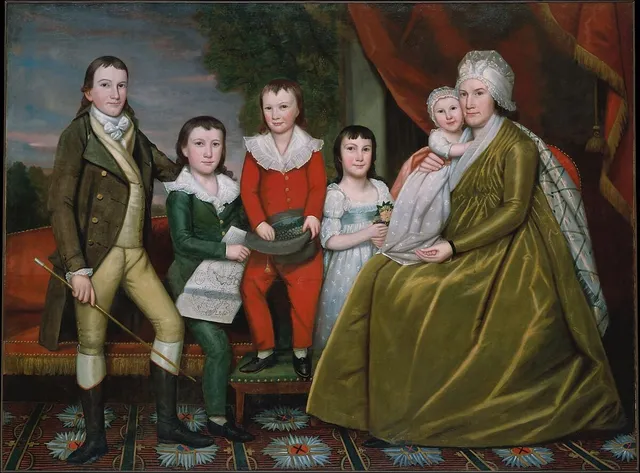 Mrs. Noah Smith and Her Children Ralph Earl
 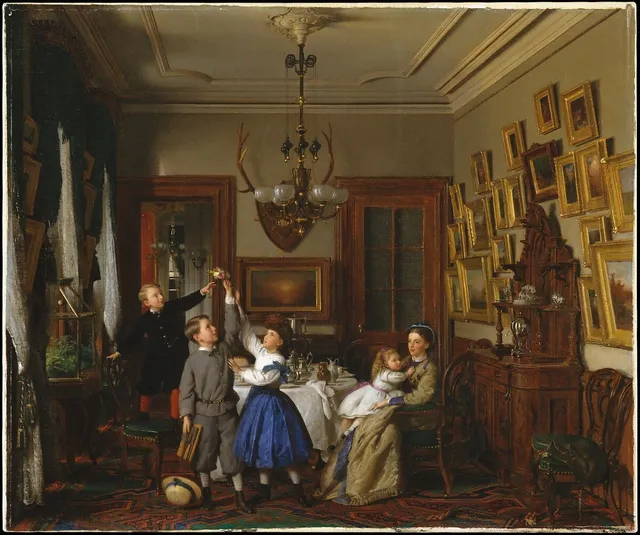 The Contest for the Bouquet: The Family of Robert Gordon in Their New York Dining-Room Seymour Joseph Guy
 From the in-app quiz
-
How does the depiction of Mrs. Noah Smith in Ralph Earl's painting differ from the polished, international style seen in John Singer Sargent's work?
Mrs. Noah Smith and Her Children , Ralph Earl - She is presented with a direct, unpolished realism rooted in domestic life. Answer
- She is shown wearing elaborate courtly garments typical of French aristocracy.
- She appears as a distant, idealized figure floating in a dreamlike landscape.
Earl captures the specific textures and direct gaze of the Smith family, grounding them in everyday reality rather than the shimmering, calculated elegance of Sargent's society portraits.
-
Which painting captures a domestic American scene with a directness that contrasts with European courtly traditions?
Ralph Earl's "Mrs. Noah Smith and Her Children" presents a grounded, unidealized view of American family life, standing in stark contrast to the formal traditions of European court portraits.
-
-
The Modern Self: From Realism to Impression
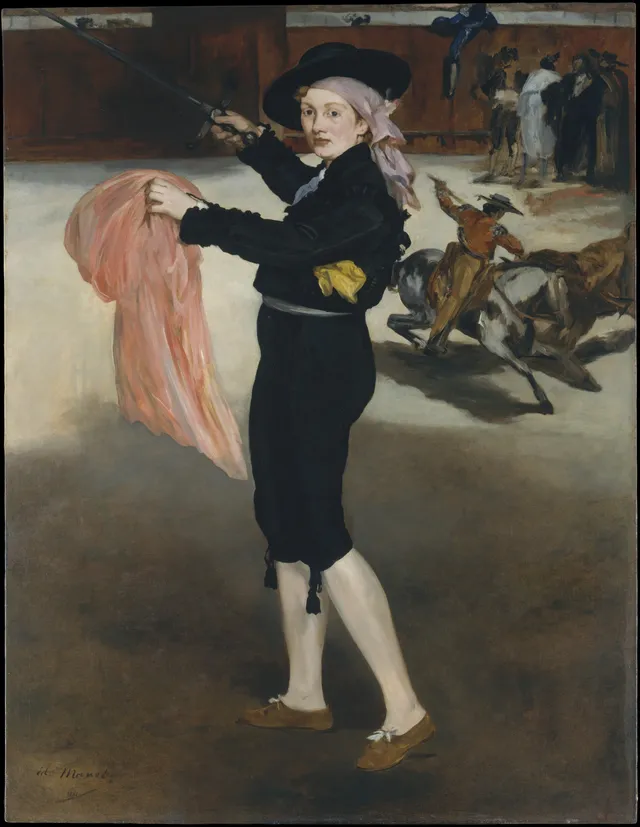 Mademoiselle V. . . in the Costume of an Espada Édouard Manet
 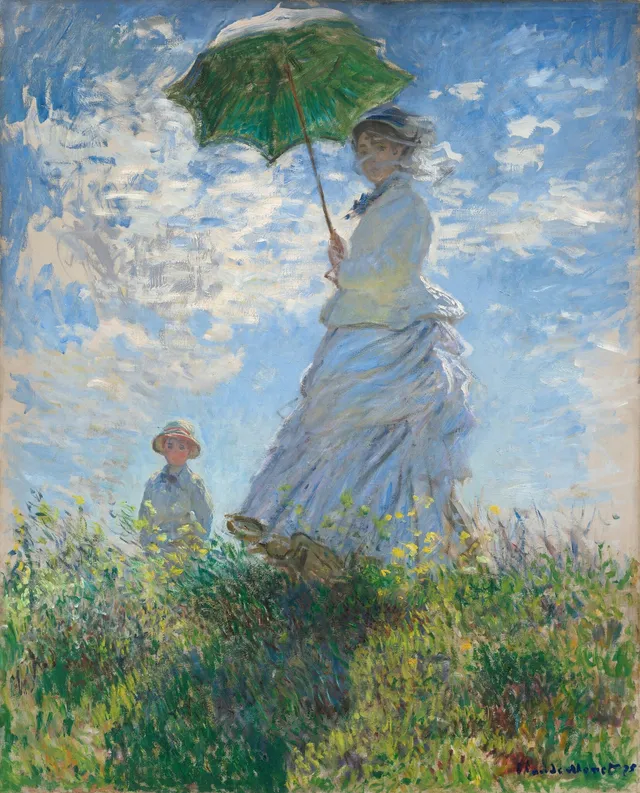 Woman with a Parasol - Madame Monet and Her Son Claude Monet
 From the in-app quiz
-
Look closely at the brushwork and composition in Manet's work. How does this detail challenge the traditions of formal portraiture?
Mademoiselle V. . . in the Costume of an Espada , Édouard Manet - It uses soft, blended tones to create a dreamlike, atmospheric background.
- It features bold, visible strokes and a flat, dark background that emphasizes the figure as a staged cut-out. Answer
- It captures the subject in mid-stride with wind blowing through their hair.
- It relies on intricate, microscopic detail to show the texture of the fabric.
Manet's use of bold strokes and a flat background rejects the soft, deep space of traditional portraiture, focusing instead on the modern reality of the paint itself.
-
Which painting demonstrates the Impressionist focus on capturing a moment of light and movement rather than a static, formal likeness?
Monet's 'Woman with a Parasol' captures the fleeting effects of wind and sunlight on a moving figure, a hallmark of the Impressionist style.
-