Artwork
Study for "The Ascension"
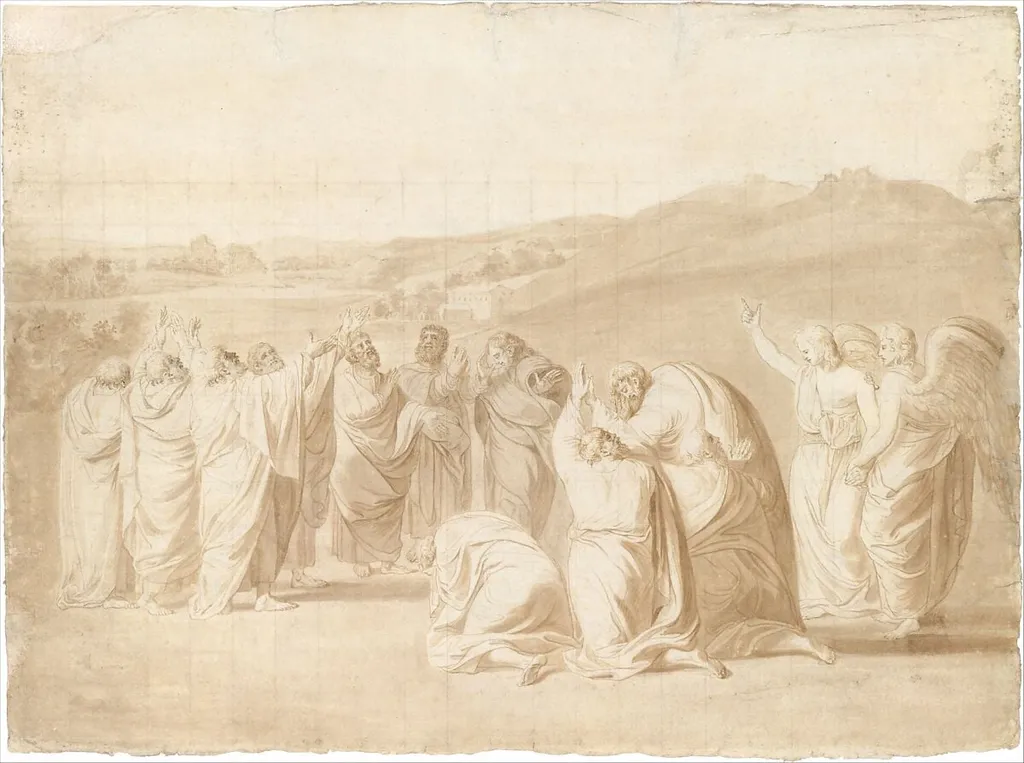
Study for "The Ascension" is a watercolor work on paper by the Rococo painting artist John Singleton Copley. It dates from 1774 and is held in the collection of the Metropolitan Museum of Art.
- Accession no.
- 60.44.16
- Credit line
- Harris Brisbane Dick Fund, 1960
About this work
Subject & Meaning
The study depicts a celestial ascent scene in which a winged angel and several robed male figures appear.
The study depicts a celestial ascent scene in which a winged angel and several robed male figures appear. The figures are arranged in ascending tiers that suggest movement toward a higher plane, consistent with the preparatory purpose of the sheet for Copley’s intended painting titled The Ascension. The presence of both angelic and apostolic figures indicates a narrative drawn from Christian scripture, likely the New Testament episode of Christ’s ascension into heaven witnessed by the apostles.
The use of bistre washes and selective watercolor heightens the ethereal quality of the scene, emphasizing the transition from earthly space to the divine realm.
Technique & Style
Executed in 1774, this preparatory study utilizes a complex mixture of drawing and painting media on off-white laid paper. The artist employed graphite and black chalk for the underlying structure, enhancing the composition with pen and ink lines. Bistre washes provide tonal modeling, while watercolor is applied to specific areas, creating a layered effect typical of Copley's religious sketches.
The work depicts figures including an angel, an apostle, and a man, rendered with a focus on form and light through the interplay of these varied materials.
History & Provenance
John Singleton Copley created this study for "The Ascension" in 1774. Executed on off-white laid paper, the work utilizes a combination of bistre washes, pen and ink, black chalk, graphite, and watercolor to depict religious figures including an angel and apostles. The drawing is currently held in the collection of the Metropolitan Museum of Art, where it is classified under the American Wing.
The work is held in the collection of the Metropolitan Museum of Art, specifically within the institution's American Wing. It carries the accession number 60.44.16. The provided sources confirm the museum's ownership and the specific inventory identifier assigned to this 1774 study, but they do not contain records of any public exhibitions in which the piece has been displayed.
Context
The drawing Study for "The Ascension" (1774) by John Singleton Copley exemplifies his early experimentation with religious themes in the American context, blending European compositional traditions with emerging colonial sensibilities. Executed in bistre washes, pen, ink, black chalk, and graphite on laid paper, the study anticipates the grandeur of his later altarpieces while reflecting Enlightenment-era theological discourse. Its depiction of celestial figures aligns with 18th-century American Anglican iconography, positioning Copley at the intersection of transatlantic artistic exchange and nascent national identity.
Scholarship emphasizes its role as a pivotal preparatory work that bridges colonial portraiture and historical painting, underscoring Copley's significance as a foundational figure in American art history.
Overview
John Singleton Copley’s 1774 preparatory drawing, titled Study for “The Ascension,” is executed on off‑white laid paper. The composition combines ink washes, pen and ink, black chalk, graphite and touches of watercolor to render a biblical tableau of an angelic figure interacting with a human participant, likely an apostle. The work functions as a study for a larger, unfinished history painting.
![The Adoration of the Magi [recto]](https://artifactworldgallery.com/img/donato-creti--the-adoration-of-the-magi-recto--2cfd5d76b55e821e-w320.webp)
Artist & collection
Artist
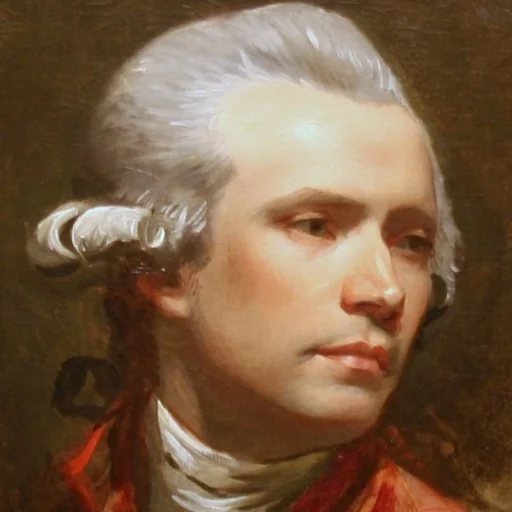
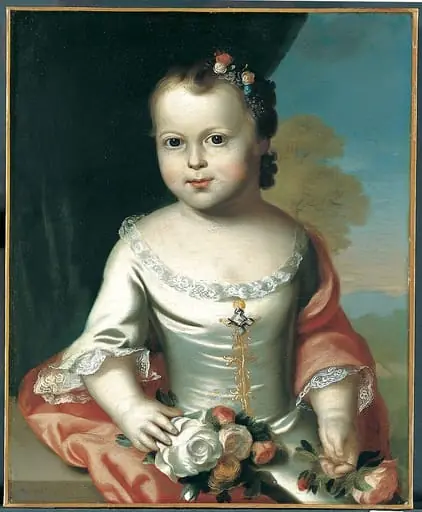
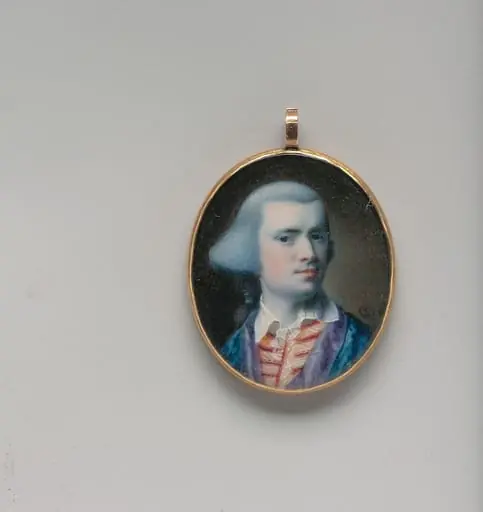
John Singleton Copley (July 3, 1738 – September 9, 1815) was an American-born British painter active in both the Thirteen Colonies and England.

- The Adoration of the Magi [recto]
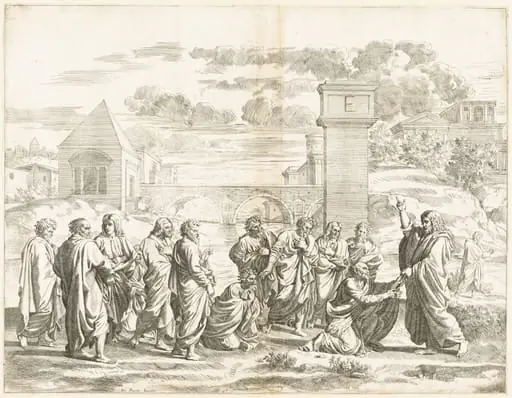 Ordination
![Joseph and His Brother in Egypt [verso]](https://artifactworldgallery.com/img/joseph-and-his-brother-in-egypt-verso--86cfb4fbb2662a76-w320.webp) Joseph and His Brother in Egypt [verso]
Joseph and His Brother in Egypt [verso]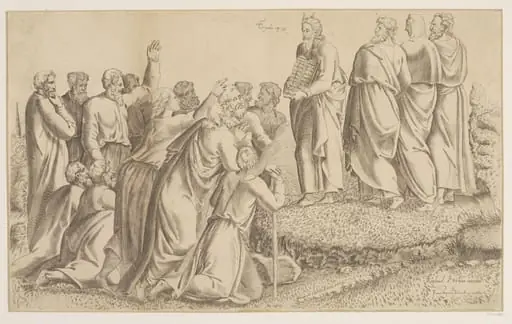 Untitled
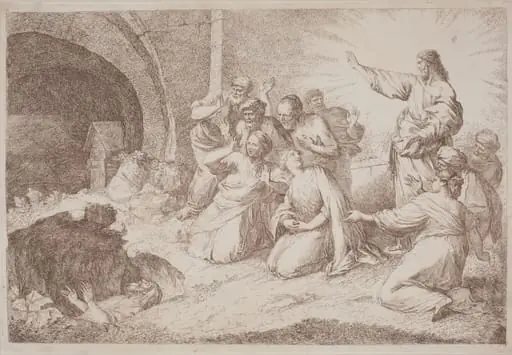 The Raising of Lazarus
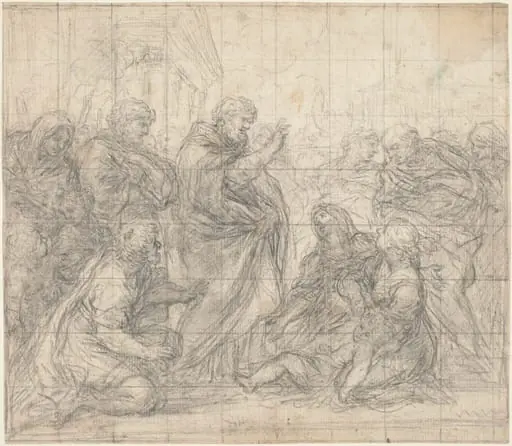 Saint Zenobius Resuscitating a Child
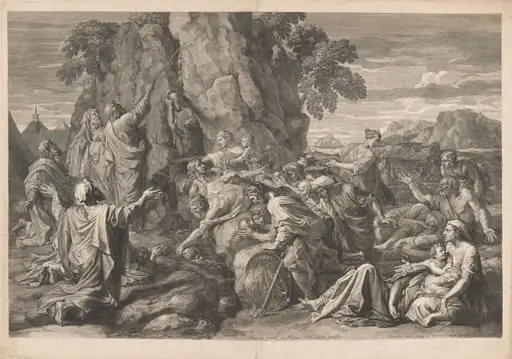 Moses Striking the Rock
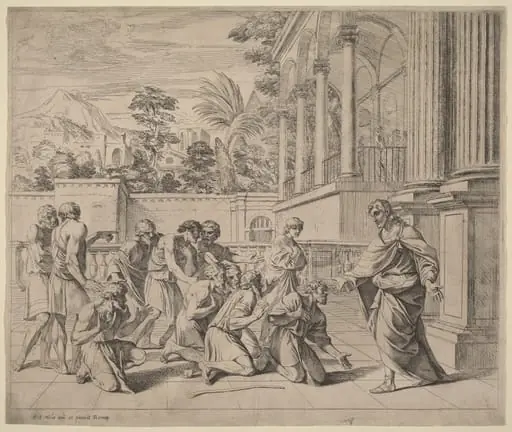 Joseph Identifying Himself to His Brothers
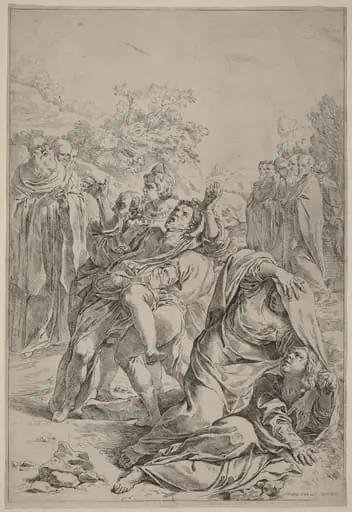 Saint Benedict Healing the Possessed
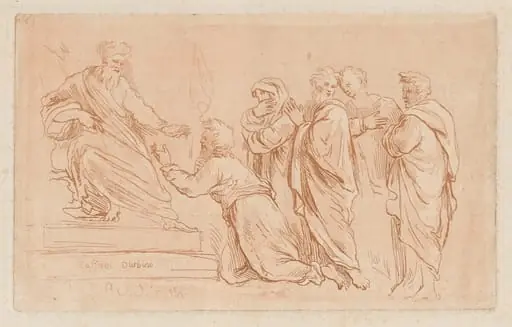 Adonias Imploring the Grace of Solomon or Jeroboam Kneeling before Rehoboam
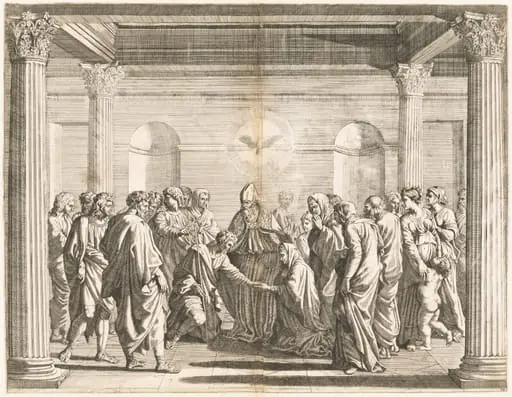 Marriage
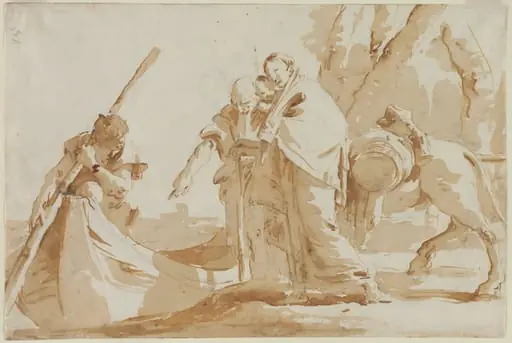 Flight into Egypt: The Embarkment of the Holy Family