Artwork
Portrait of a Lady
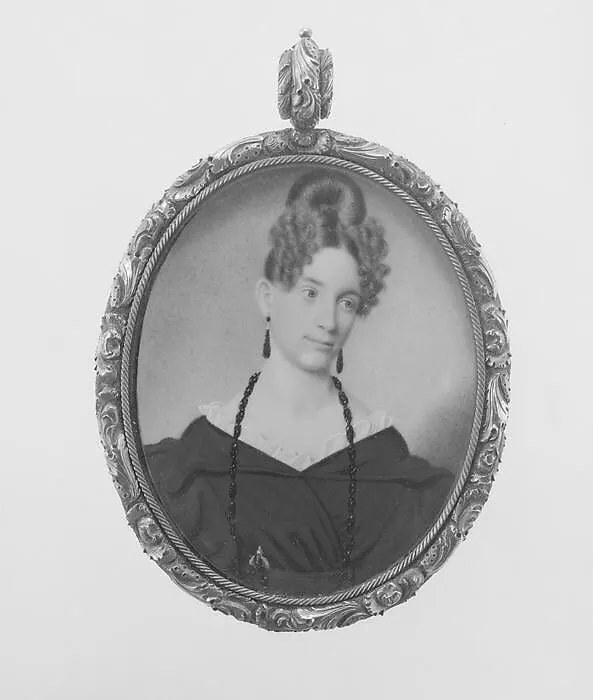
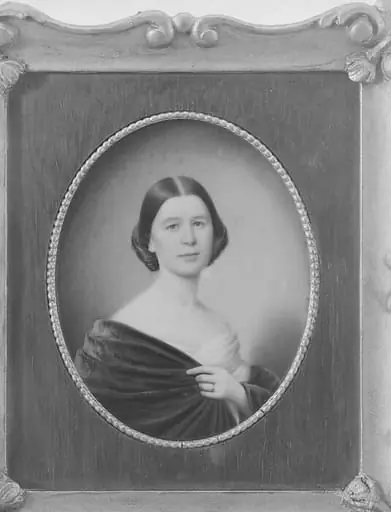
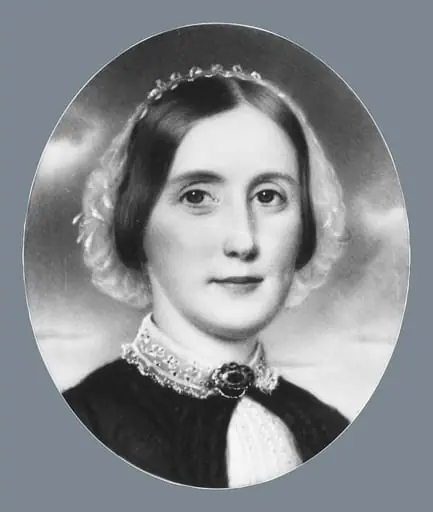
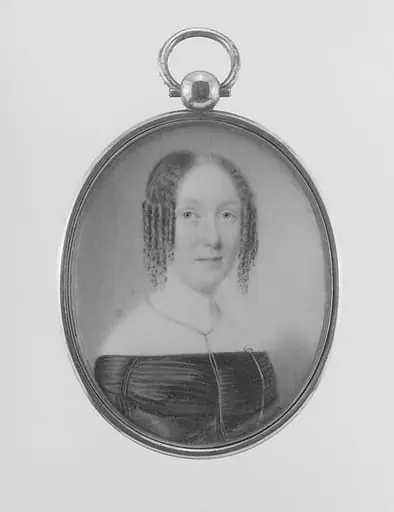
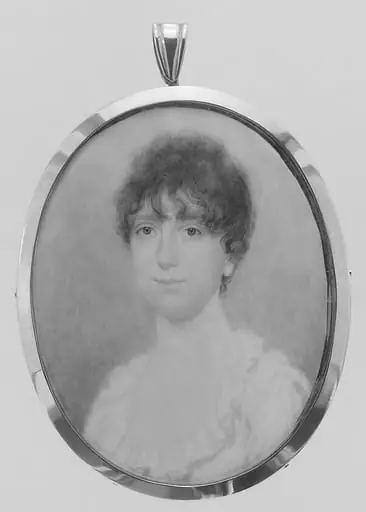
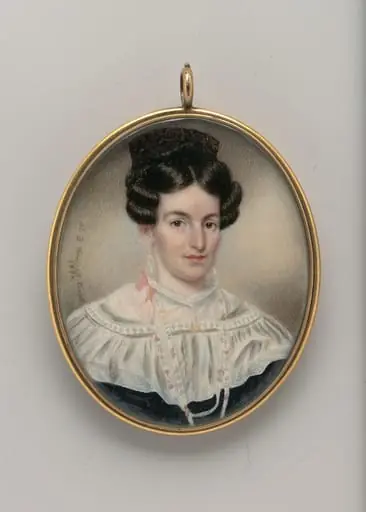
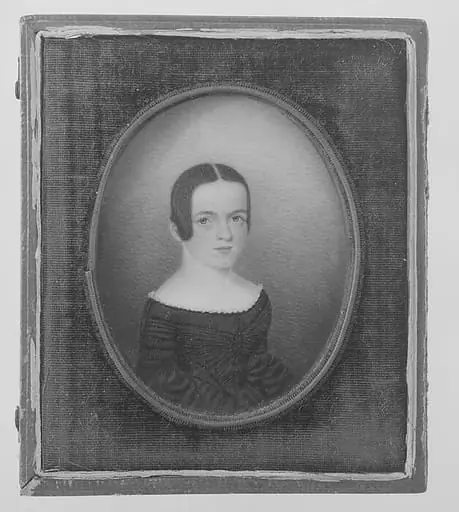
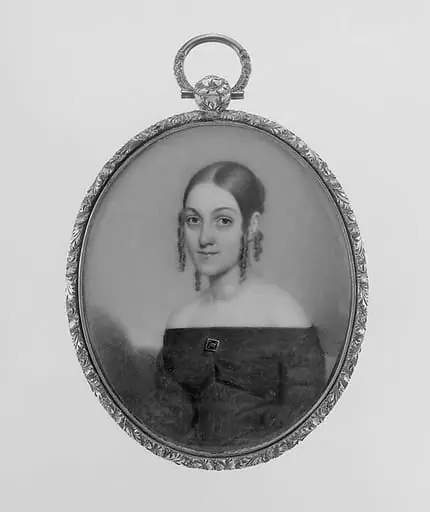
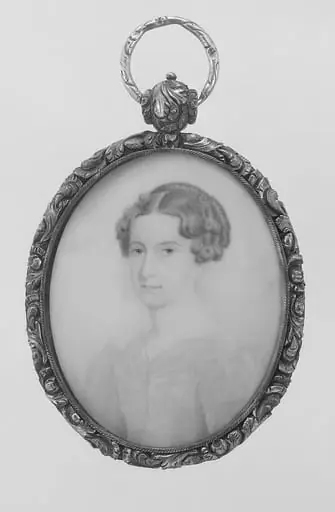
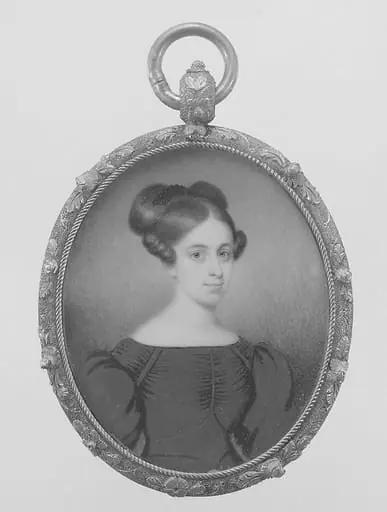
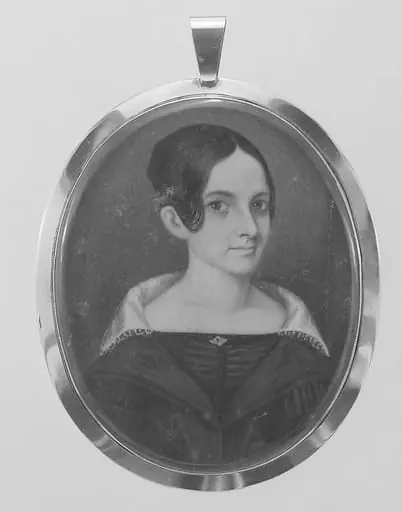
Portrait of a Lady is a watercolor painting by the American Folk Art artist John Wood Dodge. It dates from 1835 and is held in the collection of the Metropolitan Museum of Art.
About this work
Technique & Style
The work is executed in watercolor on a thin ivory support, a technique typical of early-19th-century portrait miniatures that allowed delicate color modulation and fine detail. Measuring approximately 7.1 × 5.6 cm, the compact format emphasizes intimate presentation. The artist renders the sitter's facial features and attire with precise brushwork, while the muted palette and subtle tonal gradations create a soft, luminous surface.
As a portrait in The American Wing's collection, the piece functions as a formal study of a woman, reflecting the genre's focus on individualized representation within the constraints of the medium.
History & Provenance
No records indicate a specific commission or subsequent ownership transfers beyond its inclusion in the Met's holdings.
Portrait of a Lady is a watercolor on ivory painted by John Wood Dodge in 1835. The work portrays a woman and is categorized as a portrait within the American Wing of the Metropolitan Museum of Art, where it has been part of the museum's collection since its acquisition. Its creation date is recorded as 1835.
The painting measures 7.1 × 5.6 cm. No records indicate a specific commission or subsequent ownership transfers beyond its inclusion in the Met's holdings.
Legacy
Portrait of a Lady, painted by John Wood Dodge in 1835, is housed in the Metropolitan Museum of Art and featured in the museum's American Wing, where it is cited as an exemplar of early American portraiture. Its inclusion in a major public collection has allowed scholars to study the work as representative of the genre's development in the United States, reinforcing Dodge's reputation as a notable portraitist of the period.
Overview
John Wood Dodge's Portrait of a Lady, created around 1835, is a watercolor on ivory painting. This work presents an unnamed woman, rendered with a direct gaze. The choice of medium, typically associated with miniature art, allowed for a distinctive luminosity in the depiction of the sitter, setting it apart from more conventional portraiture of the era.
Subject & Meaning
The painting features a woman dressed in dark attire, her hair neatly styled and pulled back. She engages the viewer with a direct, steady gaze, creating an immediate connection. Her composed expression and formal presentation suggest a conventional portraiture style common during the period, focusing on the sitter's presence and character rather than narrative elements.
Artist & collection