Artwork
Lander Monument, Truro
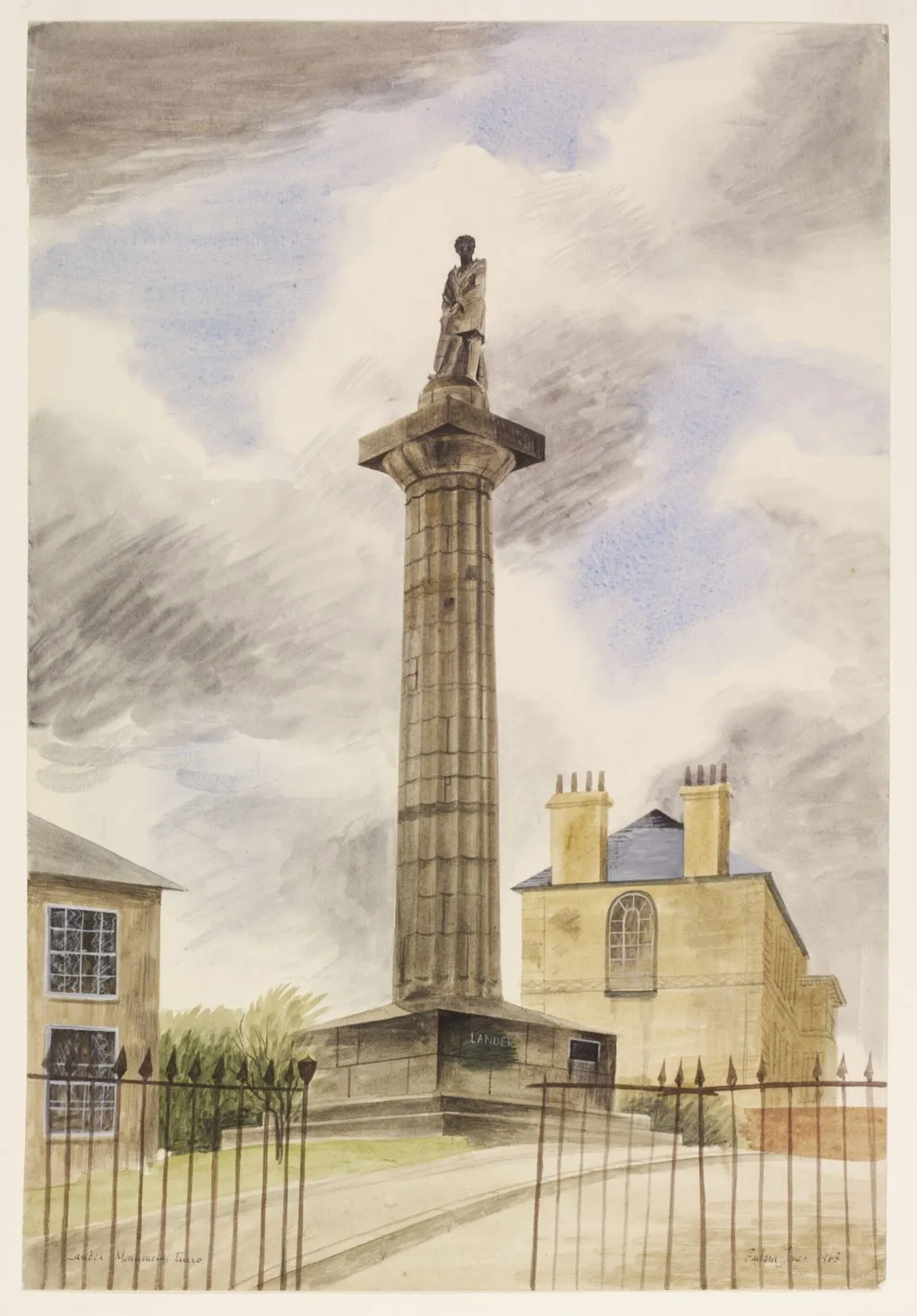
Lander Monument, Truro is a watercolor work on paper by the British Romanticist artist Barbara Jones. It dates from 1943 and is held in the collection of the Victoria and Albert Museum.
About this work
Overview
Executed in delicate washes, the painting reflects the project’s mission to preserve quiet, often overlooked landmarks through intimate, observational art.
Barbara Jones created this watercolour in 1943 as part of the Recording Britain project, a wartime effort to visually archive structures at risk from conflict or urban change. The work captures the Lander Monument in Truro, a slender stone column crowned by a statue of the explorer Richard Lander. Executed in delicate washes, the painting reflects the project’s mission to preserve quiet, often overlooked landmarks through intimate, observational art.
Subject & Meaning
The monument honors Richard Lander, a 19th-century Cornish explorer known for his expeditions in West Africa. Jones presents it not as a grand civic symbol, but as a quiet fixture in a modest urban setting. The surrounding buildings and fence ground the structure in everyday life, suggesting its role as a local touchstone rather than a national icon. The subdued palette and atmospheric haze invite contemplation over heroism.
Technique & Style
Jones employed transparent watercolour washes to achieve a soft, atmospheric effect, allowing the sky and architecture to merge in gentle gradients. Subtle chiaroscuro defines the monument’s form without harsh lines, lending it volume and presence amid the hazy backdrop. The black iron fence in the foreground adds structural contrast, while the delicate rendering of the statue’s coat and the chimney’s smoke suggests quiet movement within stillness.
History & Provenance
Commissioned by the Pilgrim Trust under the direction of Sir Kenneth Clark, the Recording Britain project enlisted artists to document vulnerable sites between 1940 and 1943. Jones’s watercolour was one of over 1,500 works produced, now held in the Victoria and Albert Museum. It reflects a broader cultural effort to safeguard visual records of England’s architectural heritage during a time of uncertainty and loss.
Context
During the Second World War, many historic buildings faced threats from bombing and neglect. Recording Britain emerged as a response to this fragility, prioritizing rural and urban landmarks that embodied regional identity. Jones’s depiction of the Lander Monument aligns with the project’s focus on unassuming, locally significant structures, contrasting with grander war-time propaganda imagery.
Legacy
The painting endures as part of a vital archive that shaped postwar attitudes toward heritage preservation. Jones’s quiet, observational approach influenced later documentary art practices, emphasizing the emotional weight of ordinary places. Today, the work remains a testament to how art can sustain collective memory when physical structures are imperiled.
Artist & collection
Artist
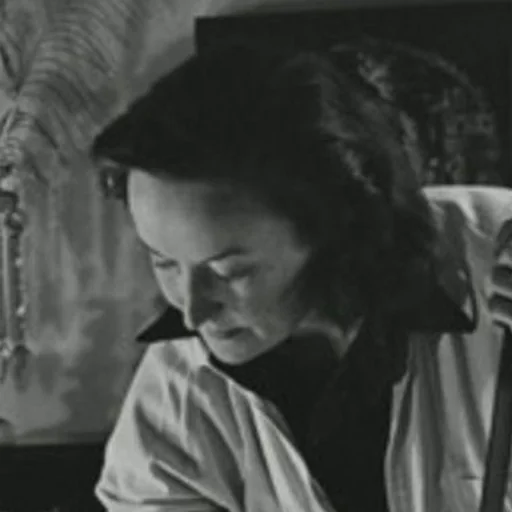
Barbara Mildred Jones (25 December 1912 – 28 August 1978) was an English artist, writer and mural painter. She is known for curating the exhibition Black Eyes and Lemonade (1951) and her book The Unsophisticated Arts (1951).

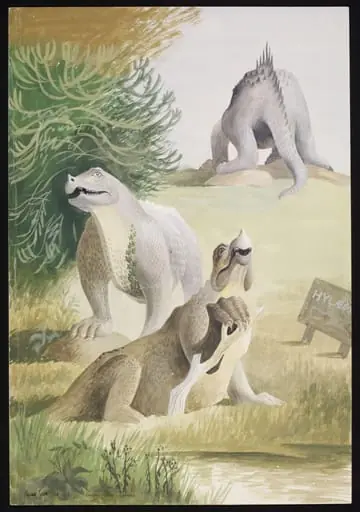 Crystal Palace Gardens, Sydenham, Kent
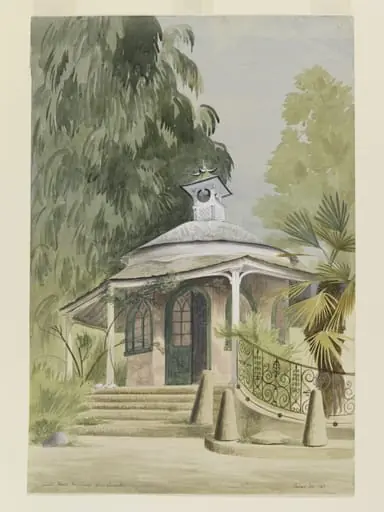 Summer House, Marlborough House, Falmouth
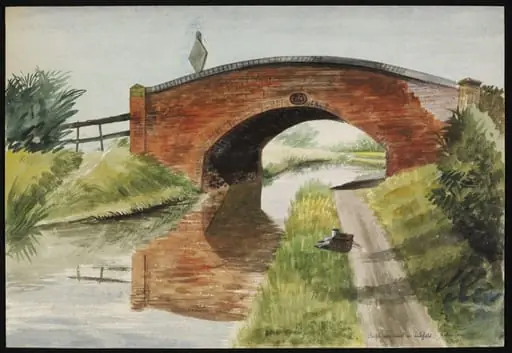 Bridge over Canal, near Litchfield
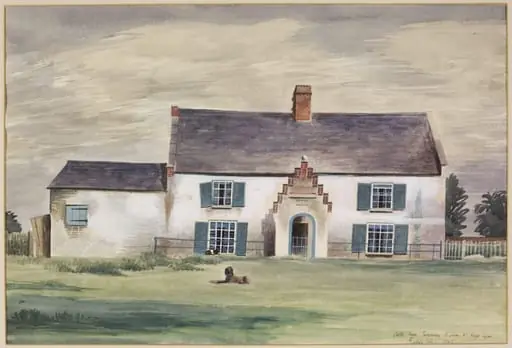 Castle Farm, Terrington St John, near King's Lynn
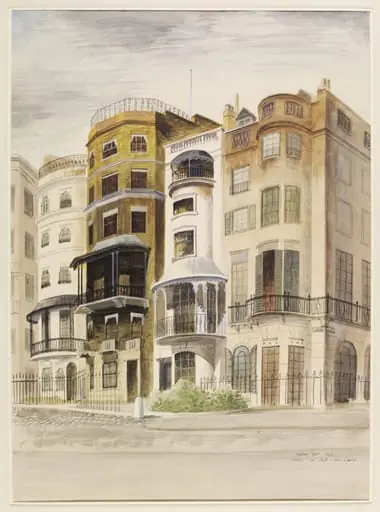 93 to 97 Park Lane, W.1.
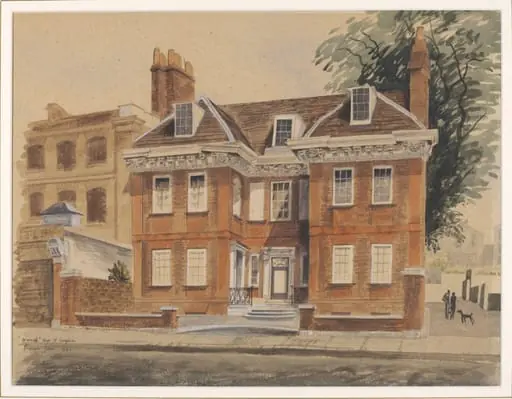 "Wrencote," High Street, Croydon
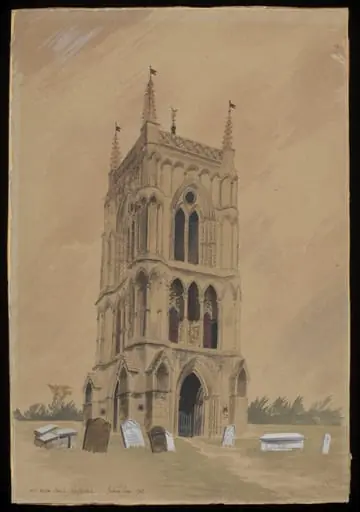 The bell tower, St. Mary's Church, West Walton near Wisbech
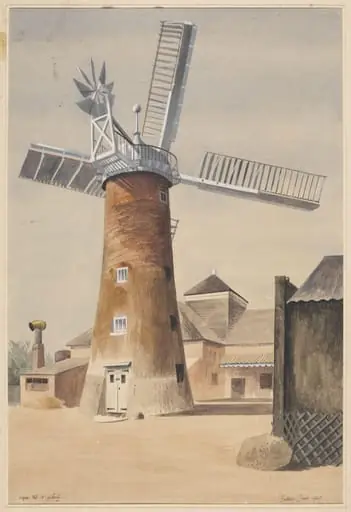 The Mill, Walpole Highway, near Wisbech
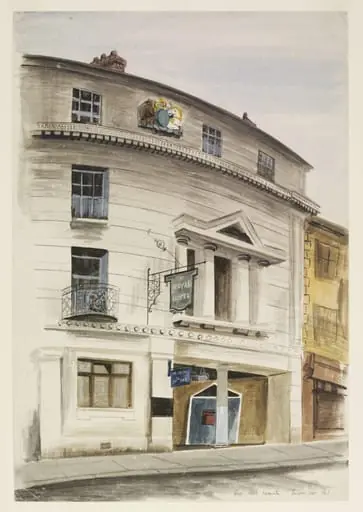 Royal Hotel, Falmouth
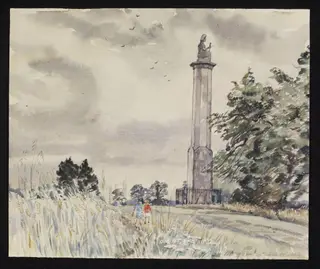 Maud Heath's Monument, Bremhill
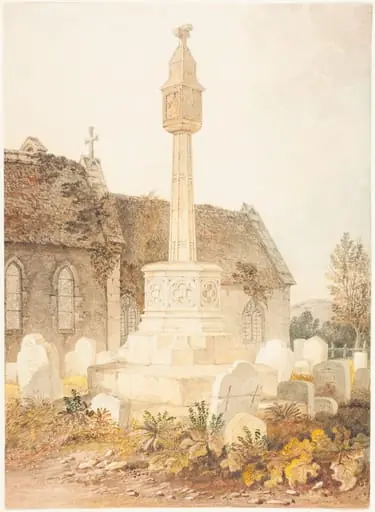 Monument in a Church Cemetery
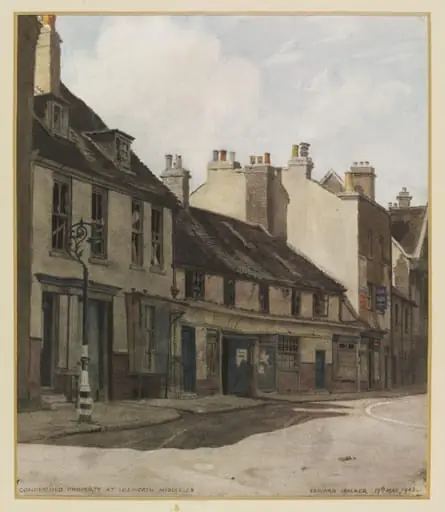 Condemned Property at Isleworth
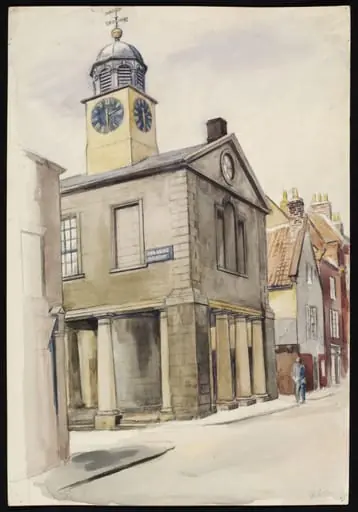 Town Hall, Whitby
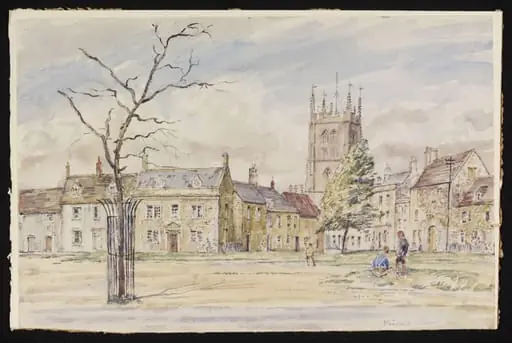 The Green and Church, Calne
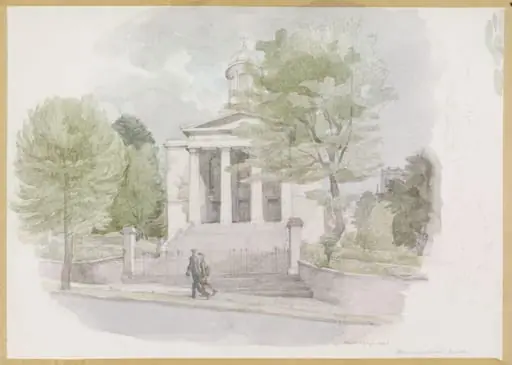 St. George's Church, Bristol
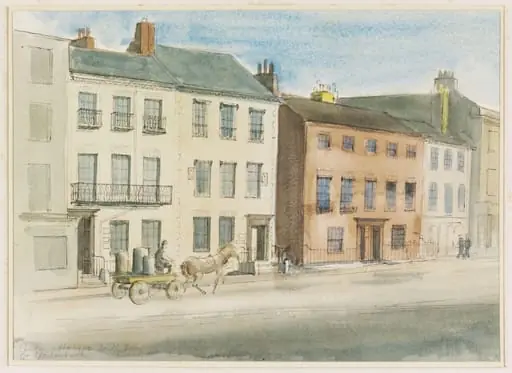 18th Century Houses, South Quay, Great Yarmouth
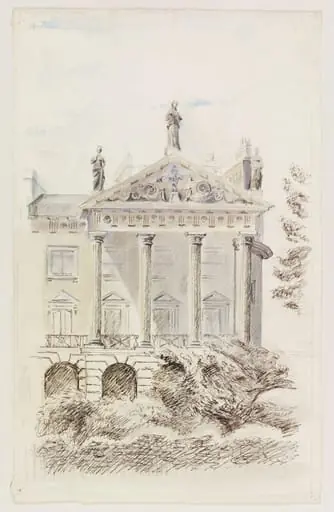 Sussex Terrace, Regent's Park
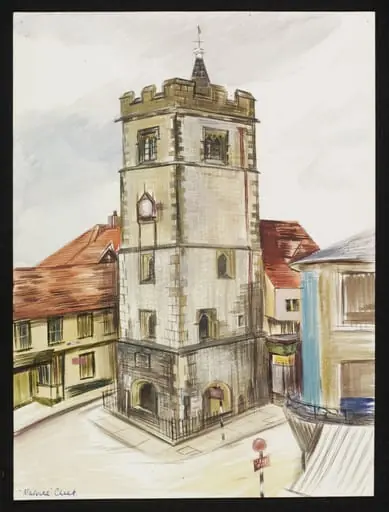 The Clock Tower, St. Albans
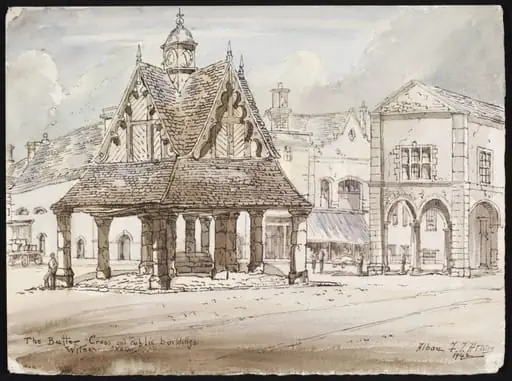 The Butter Cross and Public Buildings, Witney
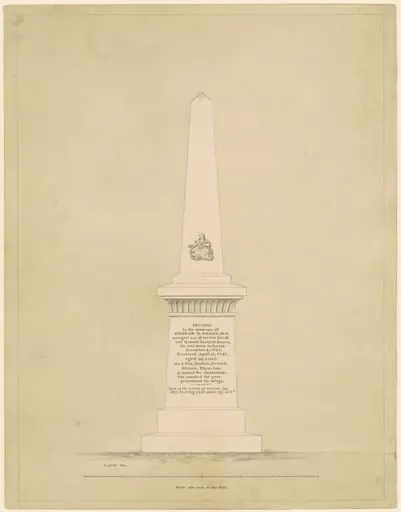
- Design for a Monument in Memory of George B. Doane