Artwork
The Virgin Nursing the Child
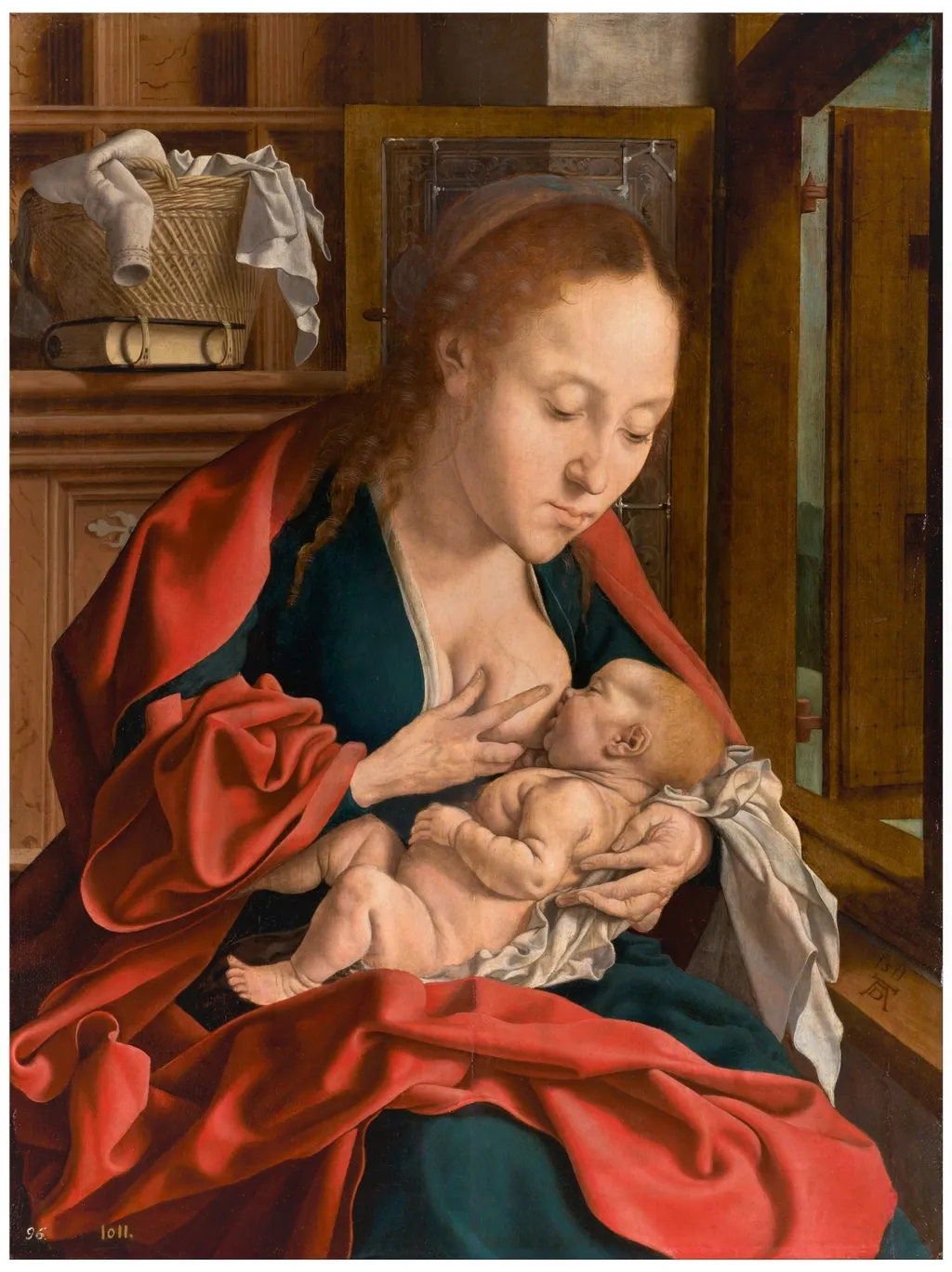
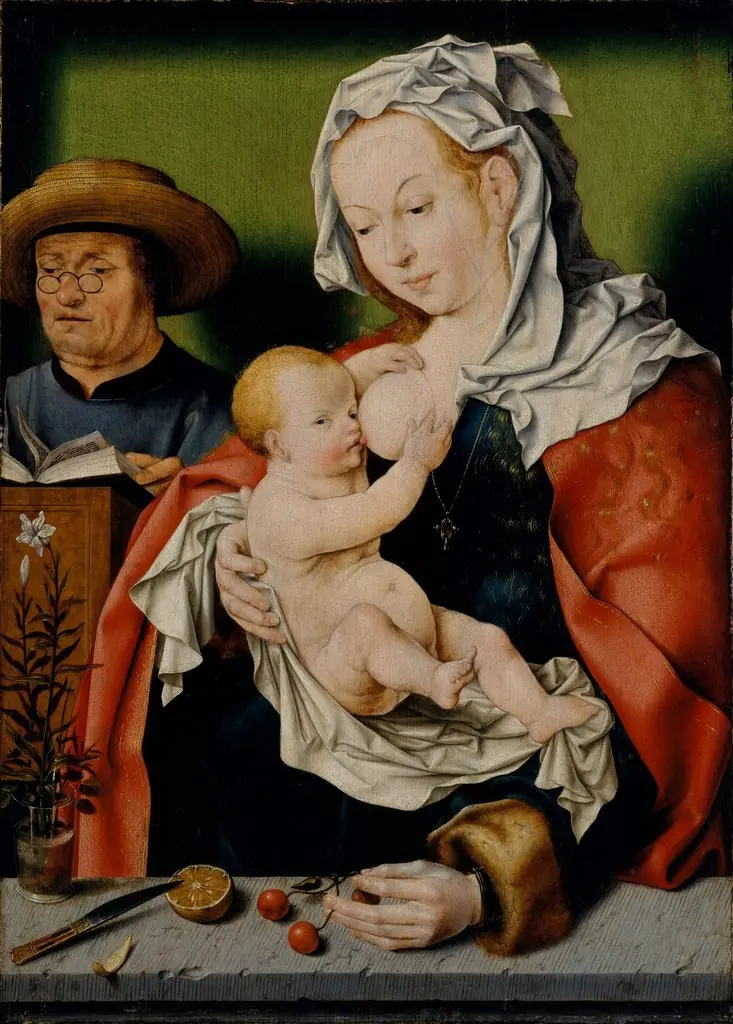
The Virgin Nursing the Child is an unspecified painting by the Northern Renaissance artist Marinus van Reymerswaele. It dates from 1525 and is held in the collection of the Museo del Prado.
About this work
Subject & Meaning
The presence of a book and basketry references contemporary devotional practices and the preparation of nourishment, reinforcing themes of spiritual sustenance.
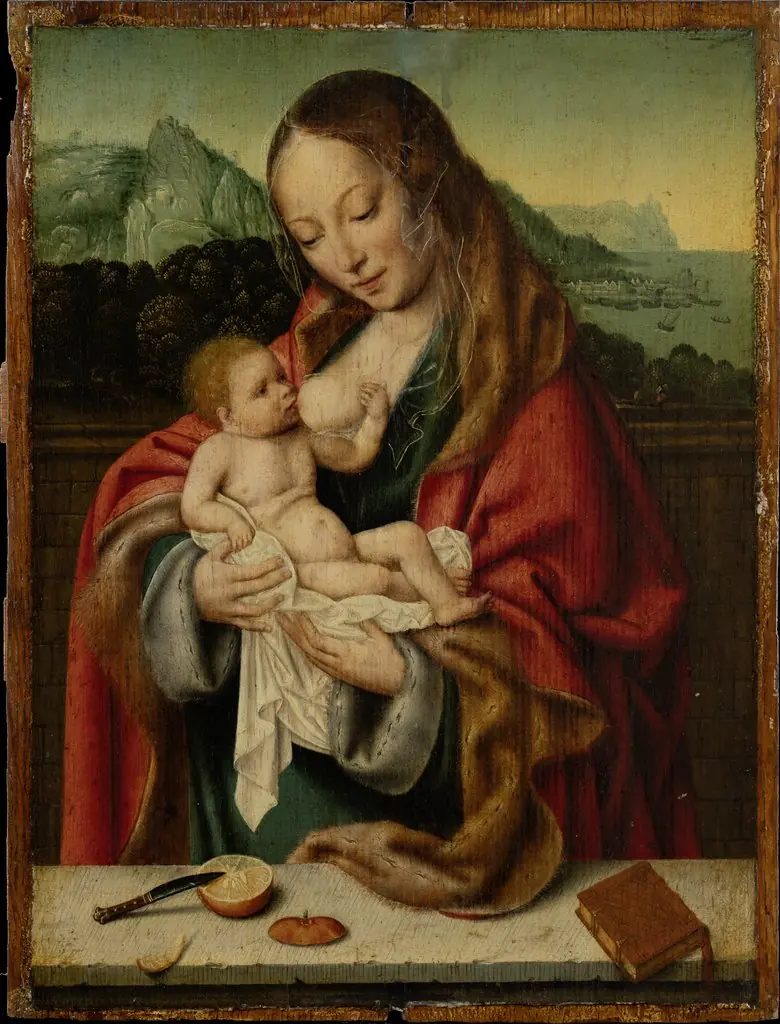
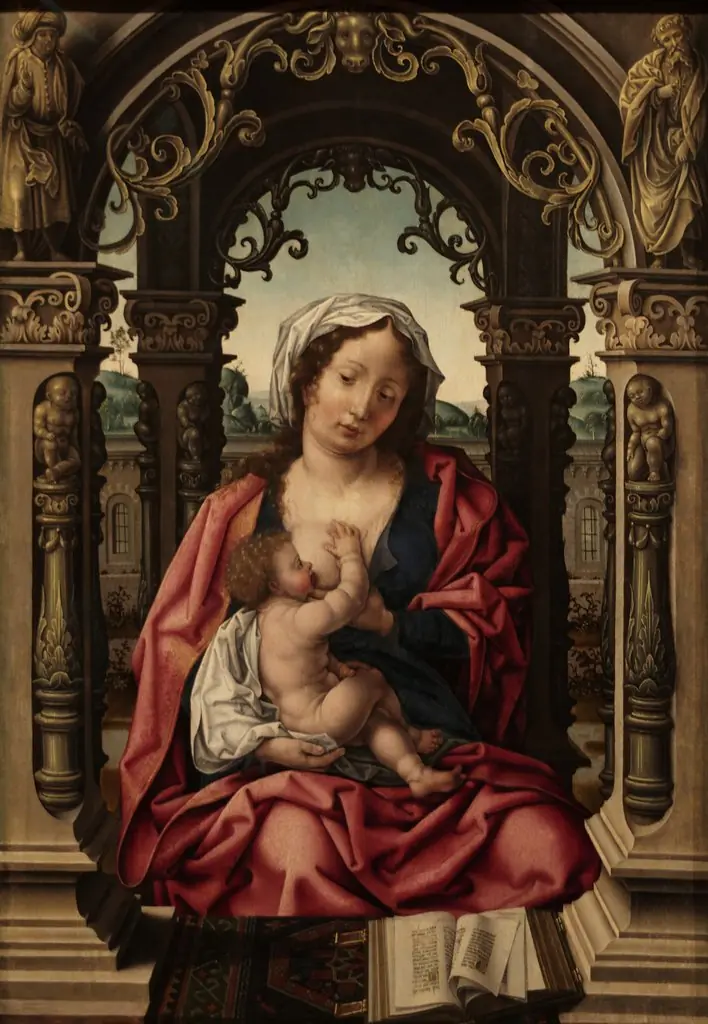
The painting shows the Virgin seated with the infant Christ, emphasizing the intimate act of nursing. This Nursing Madonna motif underscores maternal tenderness and the sacred humanity of Mary, linking domestic care with divine nourishment. The presence of a book and basketry references contemporary devotional practices and the preparation of nourishment, reinforcing themes of spiritual sustenance.
Technique & Style
Marinus van Reymerswaele executed The Virgin Nursing the Child in the medium of painting. The artwork is a religious composition measuring 61 by 46 centimeters. The main subject is the Nursing Madonna, and the formal arrangement incorporates secondary elements depicting a book and basketry.
History & Provenance
The Virgin Nursing the Child was painted by Marinus van Reymerswaele in 1525. It was created as a religious work depicting the Nursing Madonna, accompanied by attributes such as basketry and a book.
The painting later entered the collection of Ferdinand VII of Spain, who owned it before it was transferred to the Spanish royal holdings. It is now held at the Museo del Prado within the Royal Palace of Madrid, where it remains part of the museum's collection of religious art.
The work is held in the collection of the Museo del Prado in Madrid. Its inventory number is P00963. The painting entered the Spanish royal collection through ownership by Ferdinand VII of Spain and has been displayed in exhibitions at the Prado since its acquisition.
Overview
Marinus van Reymerswaele, a Dutch painter of the Northern Renaissance, executed The Virgin Nursing the Child around 1525. The work is an oil painting that now belongs to the Museo del Prado’s collection, illustrating the artist’s engagement with devotional subjects alongside his more secular genre pieces.
Context
The painting aligns with a broader 16th‑century Northern European tradition of domesticating sacred scenes, placing holy figures in familiar, interior settings. By incorporating everyday items such as a basket and a book, the work bridges devotional contemplation with the viewer’s own household experience, a common approach among Netherlandish artists of the period.
Own this work as a print
Artist & collection
Artist
Marinus van Reymerswaele or Marinus van Reymerswale (c. 1490 – c. 1546) was a Dutch Renaissance painter mainly known for his genre scenes and religious compositions. After studying in Leuven and training and working as…