Artwork
Venus and Adonis
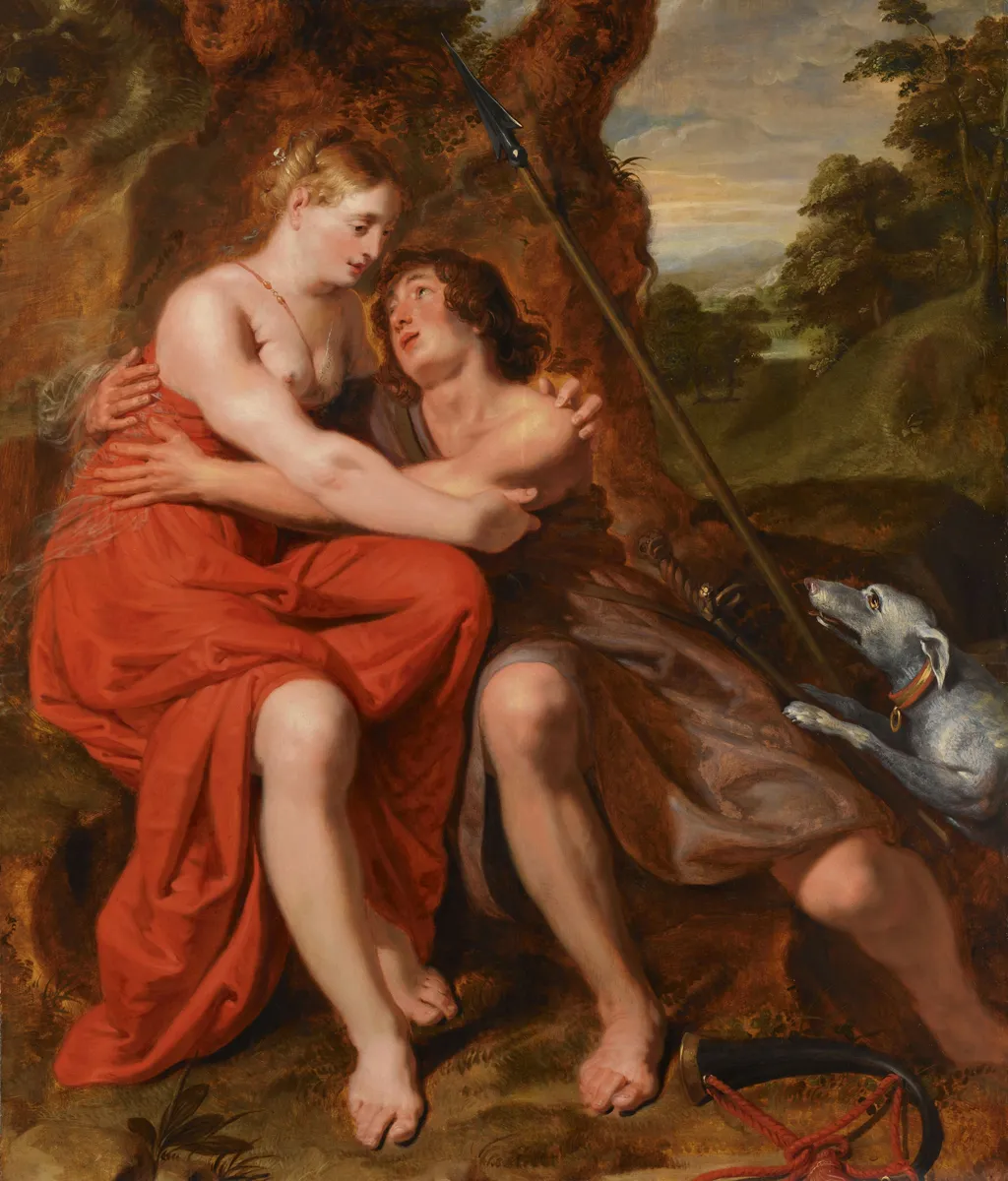
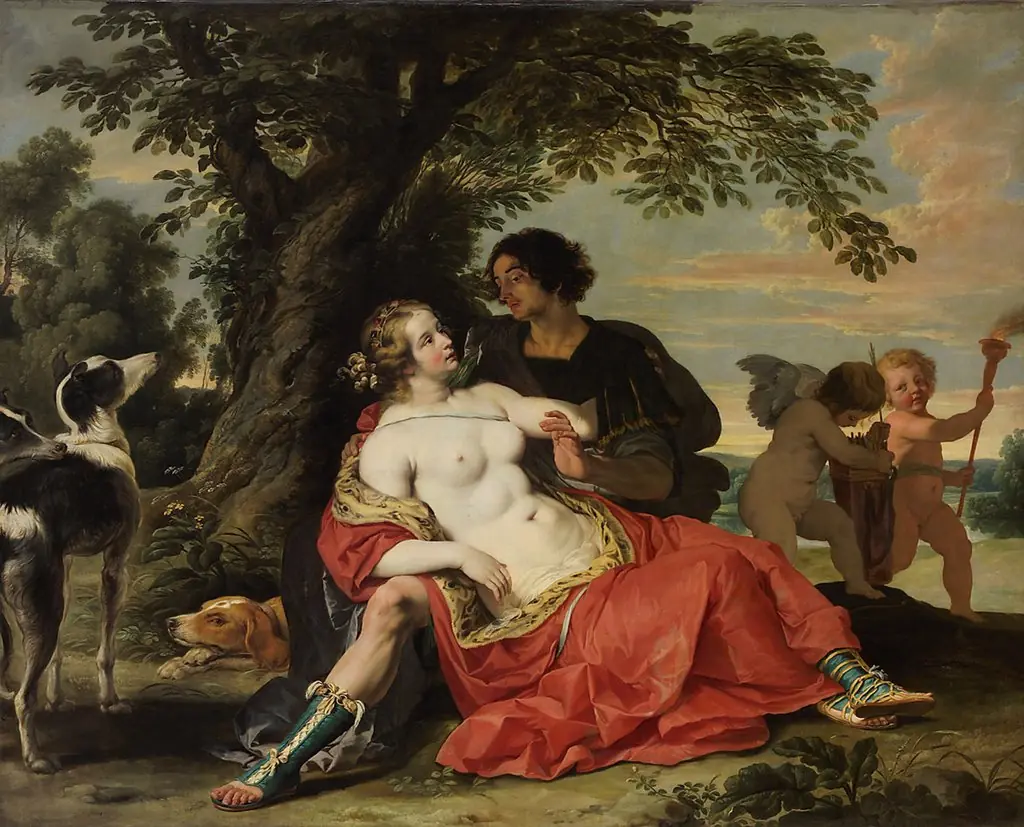
Venus and Adonis is an oil painting by Joost de Pape. It dates from 1629 and is held in the collection of the Rijksmuseum.
About this work
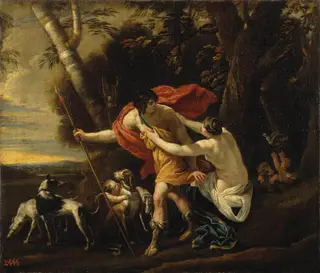
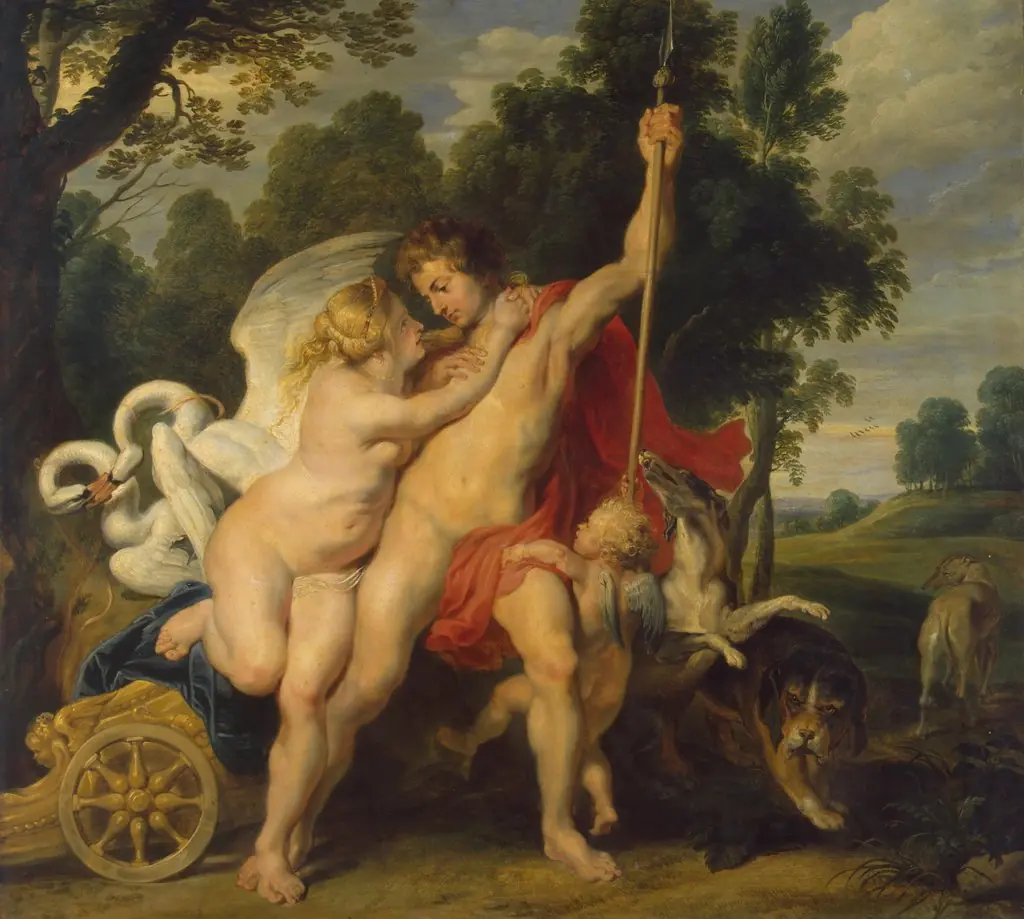
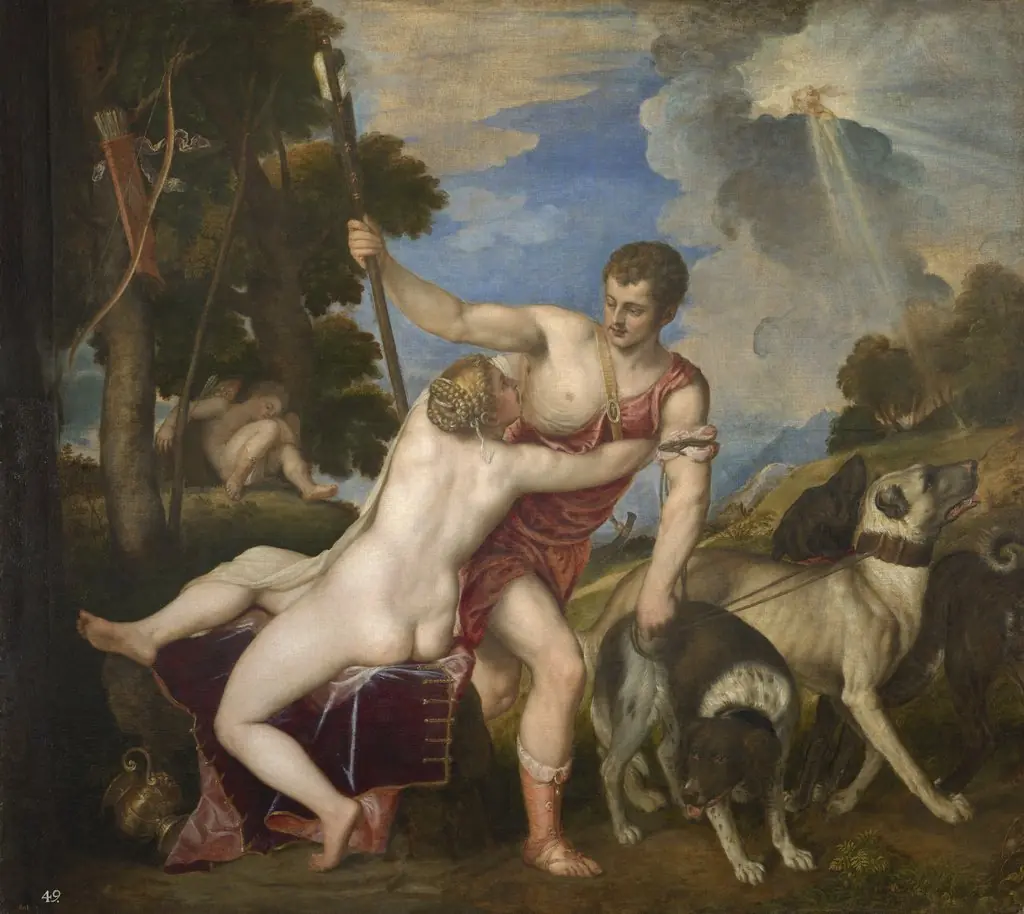
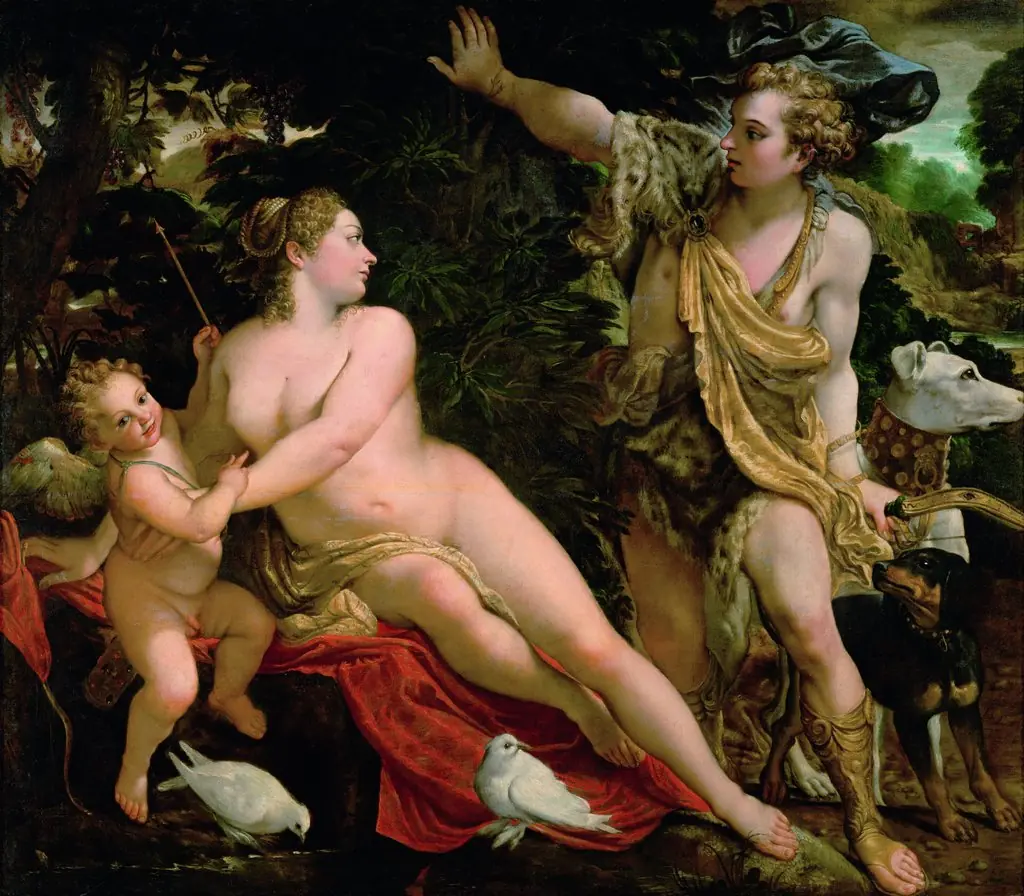
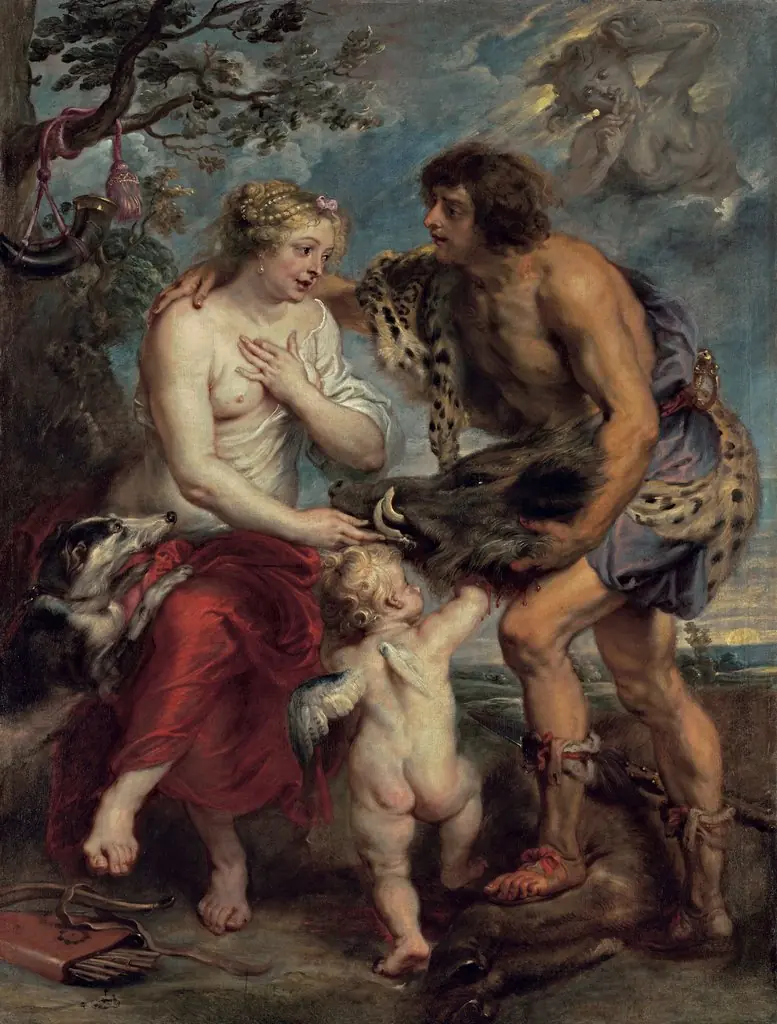
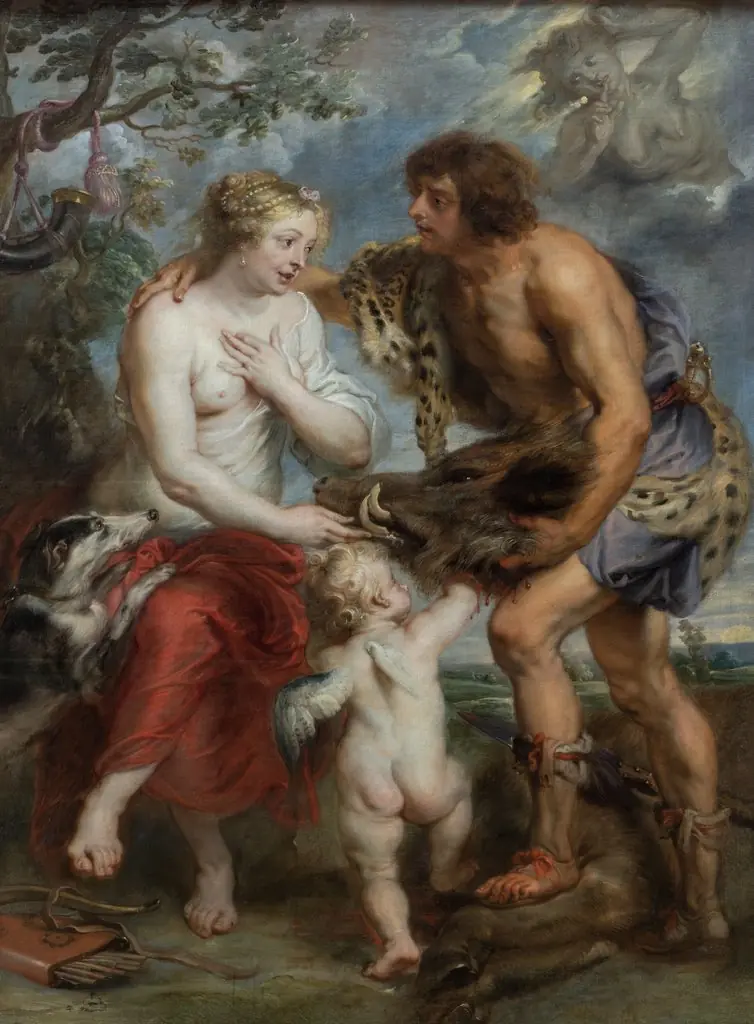
At the foot of a broad-leaved tree, Venus and Adonis share a final embrace before the hunt. Joost de Pape painted the scene in 1629 on a large oak panel, with Adonis's spear, hound, and hunting horn at the ready. It is a rare surviving mythological work by a Flemish painter who would soon leave for Rome.
Subject & Meaning
Iconographic details such as the hunting dog, spear, and parforce horn allude to Adonis's role as a hunter and foreshadow his tragic death during a boar hunt.
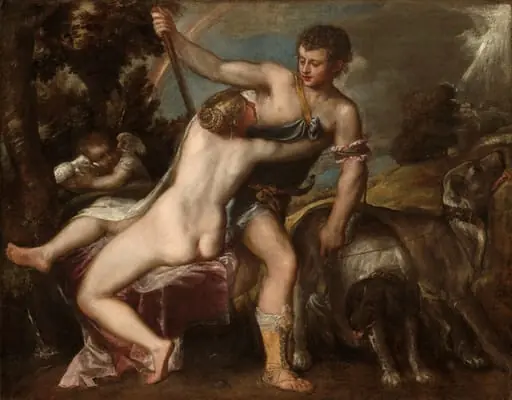
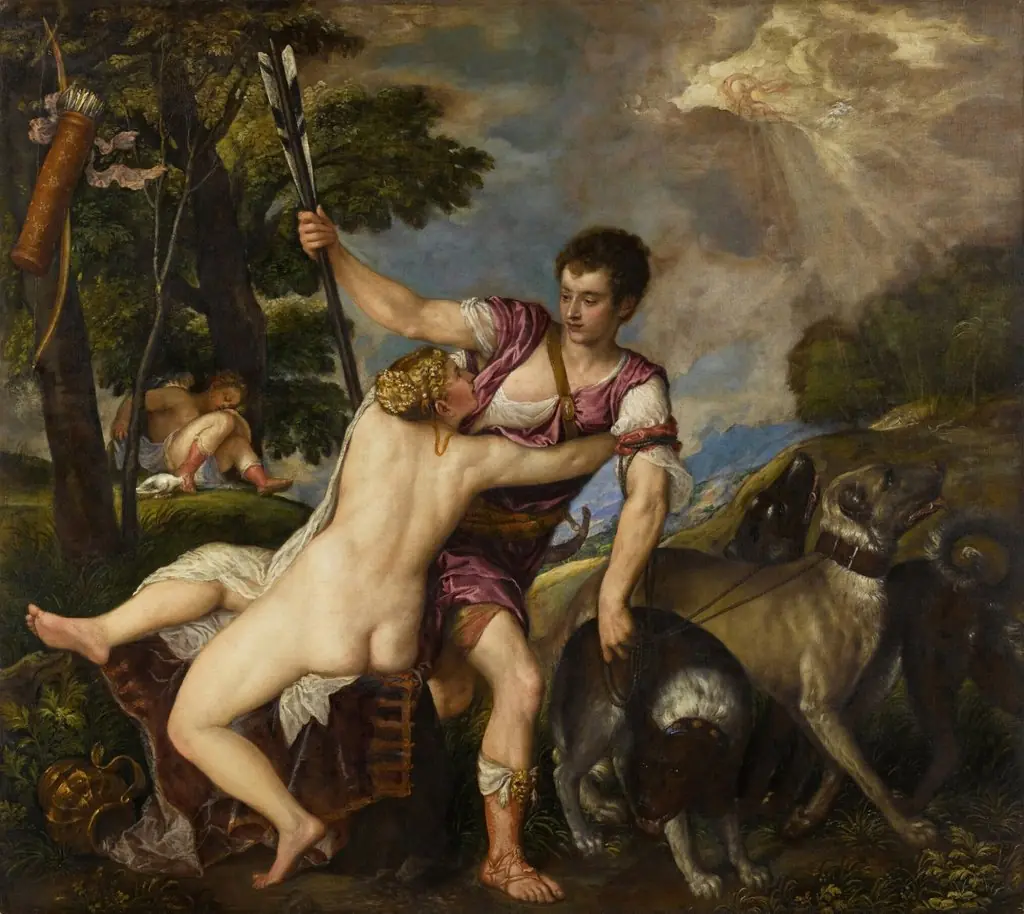
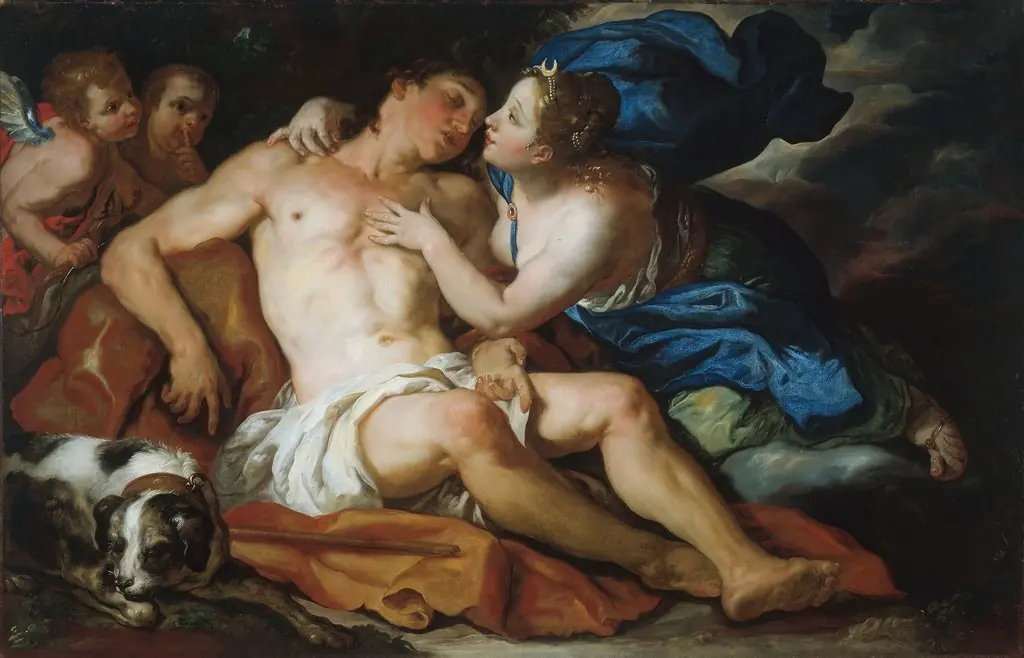
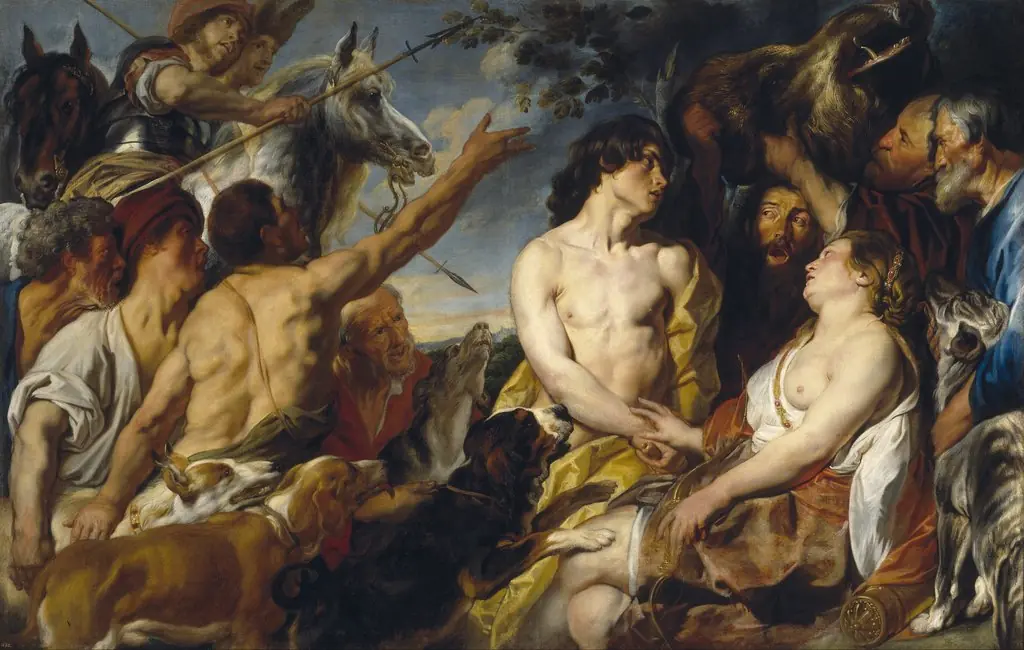
This painting by Joost de Pape depicts the mythological lovers Venus and Adonis, a subject drawn from Ovid's Metamorphoses. The composition shows the couple in an intimate lovers' embrace, with Venus (Aphrodite) seated and gazing into Adonis's eyes while he partially turns toward her. Iconographic details such as the hunting dog, spear, and parforce horn allude to Adonis's role as a hunter and foreshadow his tragic death during a boar hunt.
Venus's toplessness and the intimate pose emphasize the romantic and sensual nature of their relationship. The rural setting with a broad-leaved tree and sky reinforces the pastoral, mythological context, capturing a pivotal moment from classical mythology that blends love with the symbolic imminence of danger.
Technique & Style
The work is executed in oil paint on a panel support, measuring 123.3 × 104.9 cm. Created in 1629 in Antwerp, the painting is a mythological scene based on Ovid's Metamorphoses. The handling reflects a polished, detailed technique typical of the period, with careful attention to elements such as the figures' embrace, the hunting dog, and the landscape. The formal composition centers on the interacting couple, set against a rural backdrop with a broad-leaved tree and cloudy sky.
Overview
Joost de Pape's Venus and Adonis, painted in 1629, depicts a poignant moment from Ovid's Metamorphoses. This oil on panel work captures the goddess Venus embracing Adonis before his fateful hunt, an event that will lead to his death. Now housed in the Rijksmuseum, Amsterdam, the painting is a significant example of the artist's early output, created during his formative years in Antwerp, and remains the most thoroughly documented piece from his relatively short career.
History & Provenance
Joost de Pape, a Flemish artist, was recorded as an apprentice in the Antwerp Guild of Saint Luke in 1618/19. He created Venus and Adonis in 1629, while still in his early teens. This substantial mythological panel remains the most thoroughly documented work from his relatively brief career, which saw him later relocate to Rome, where he died in 1646. The painting became part of the Rijksmuseum collection in 1922, identified by the inventory number SK-A-2961.
Own this work as a print
Artist & collection
Artist
Joos de Pape, also recorded as Josse, Joost, or Joducus, was born in Oudenaarde around 1606 or 1607, the son of Simon de Pape I.