Artwork
Venus and Adonis
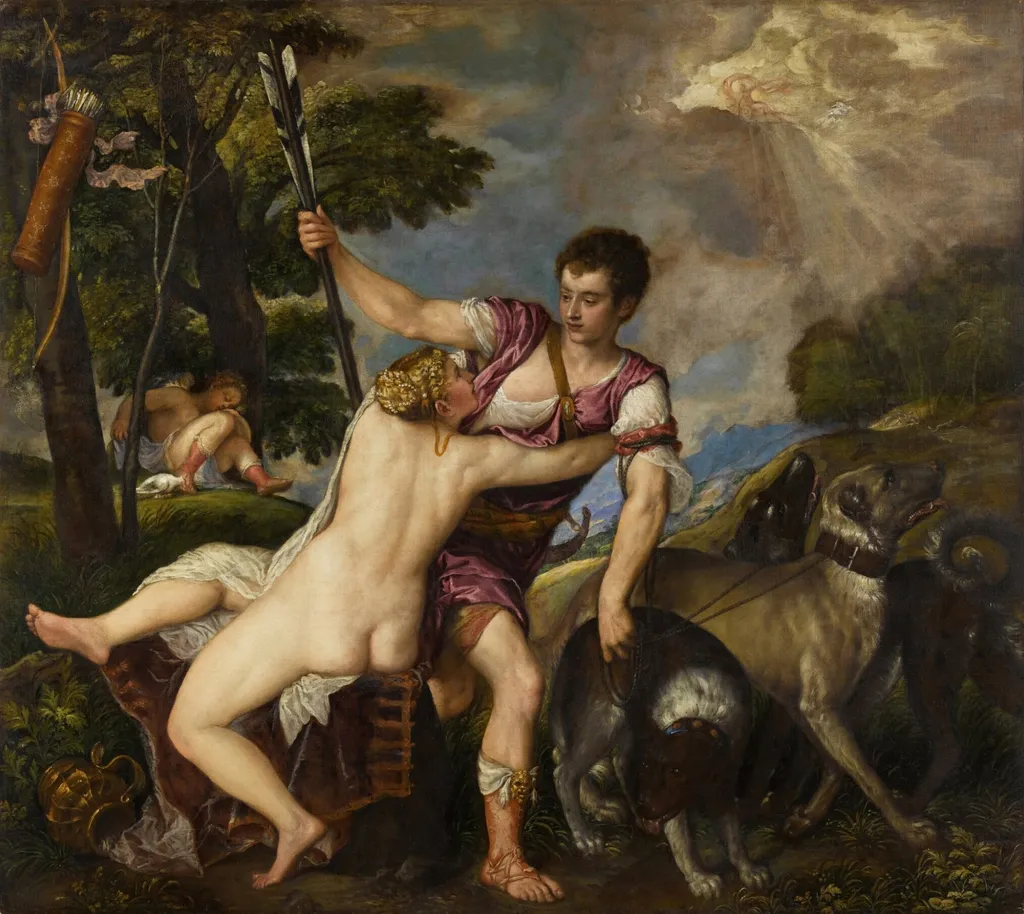
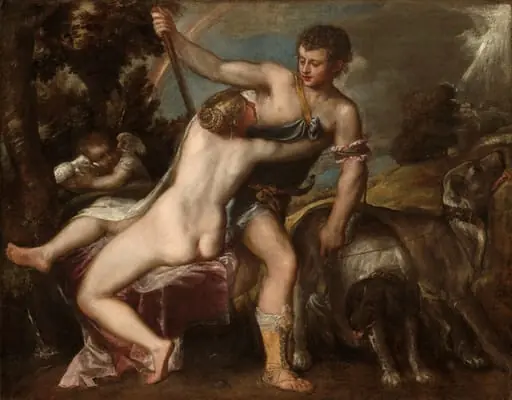
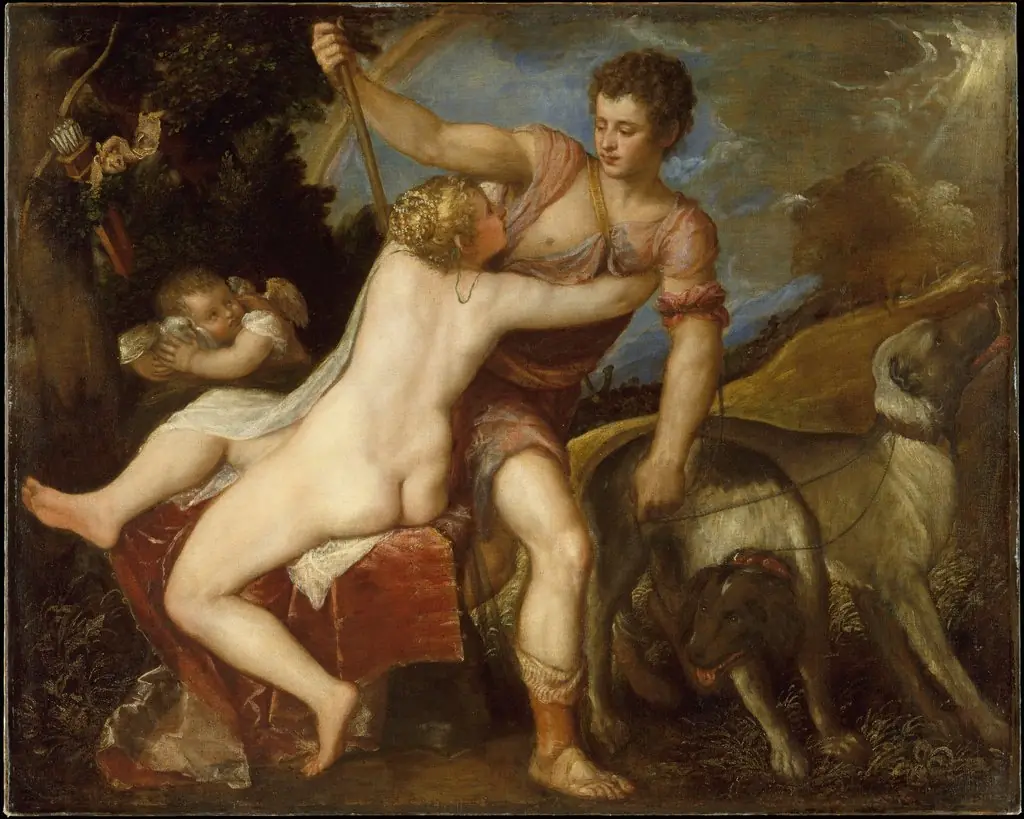
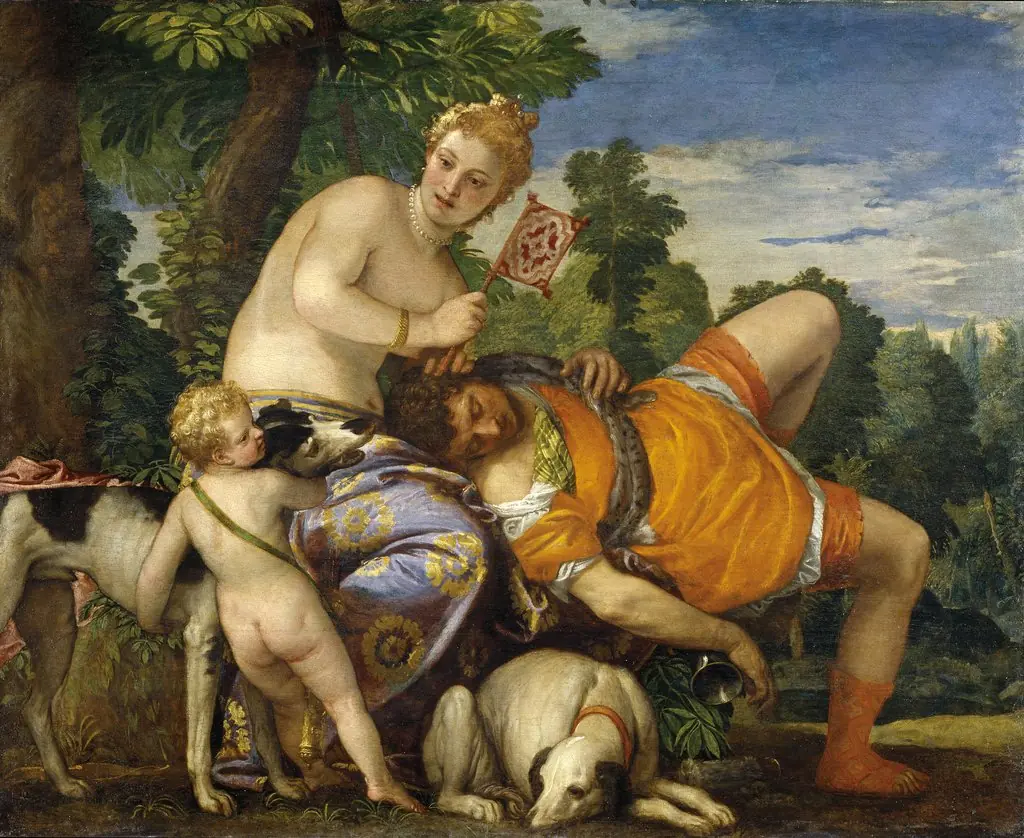
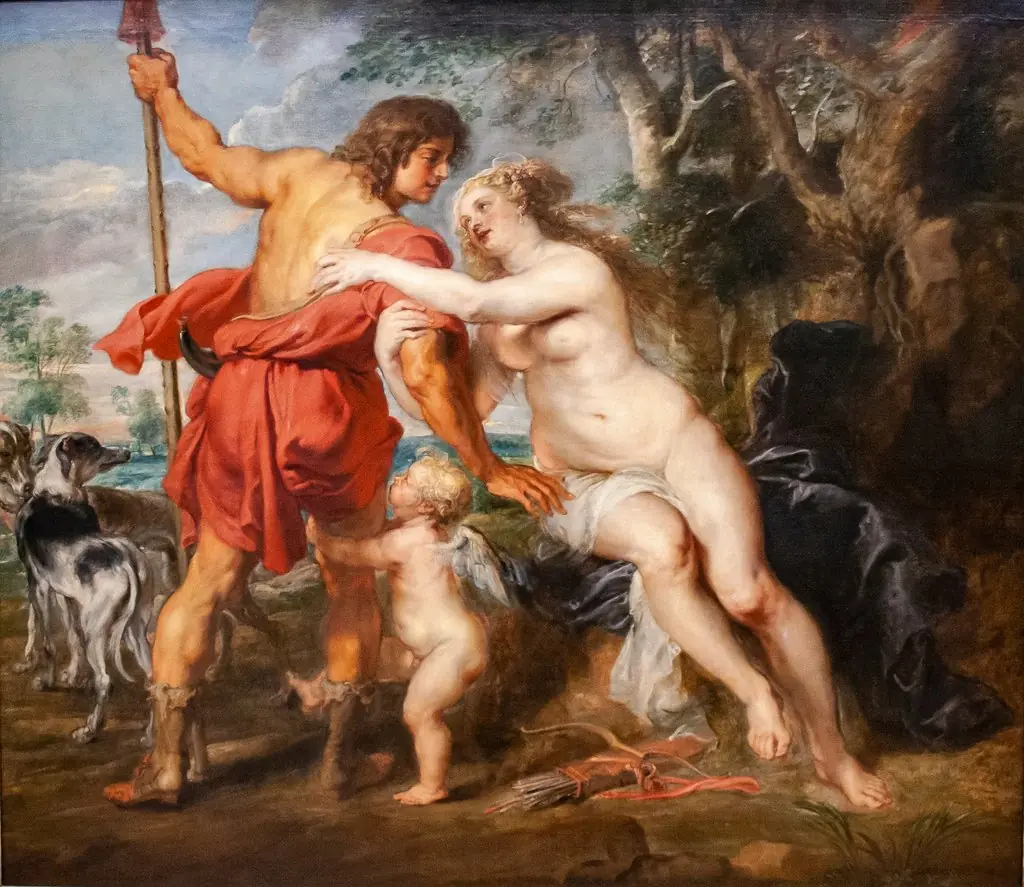
Venus and Adonis is an oil painting by the Mannerist artist Titian. It dates from 1557 and is held in the collection of the Ashmolean Museum.
About this work
Subject & Meaning
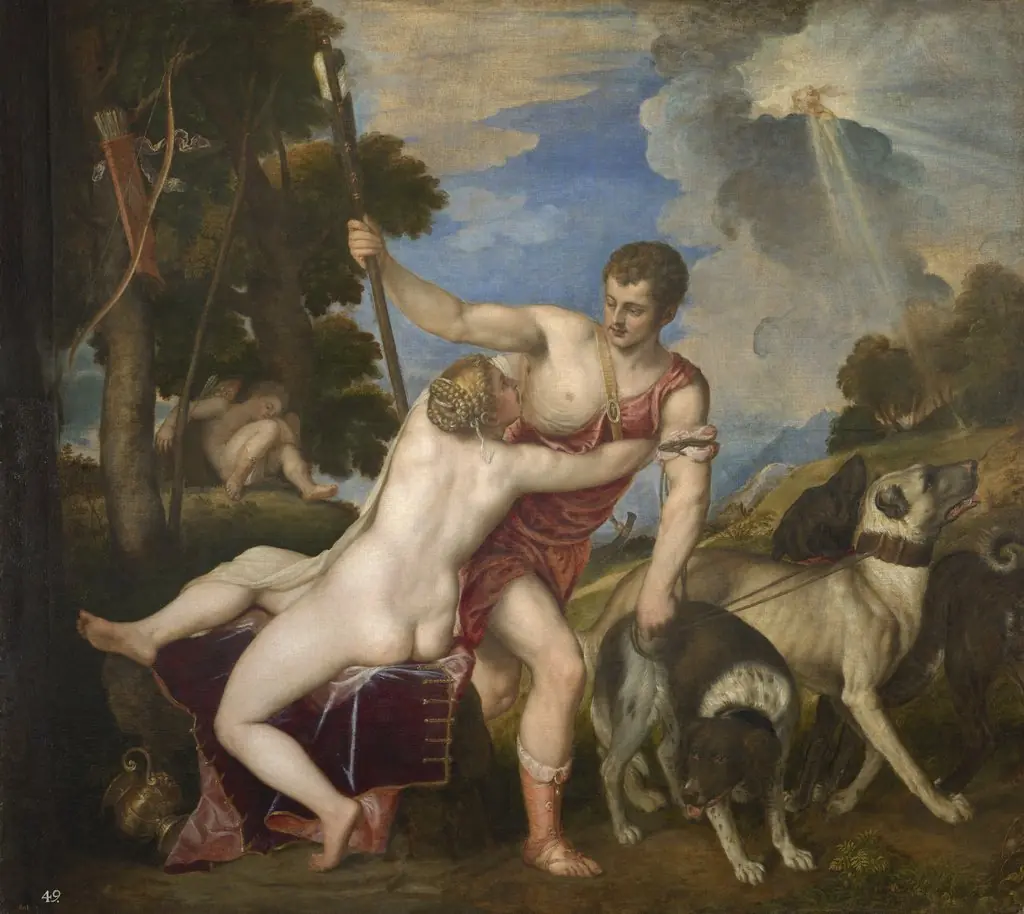
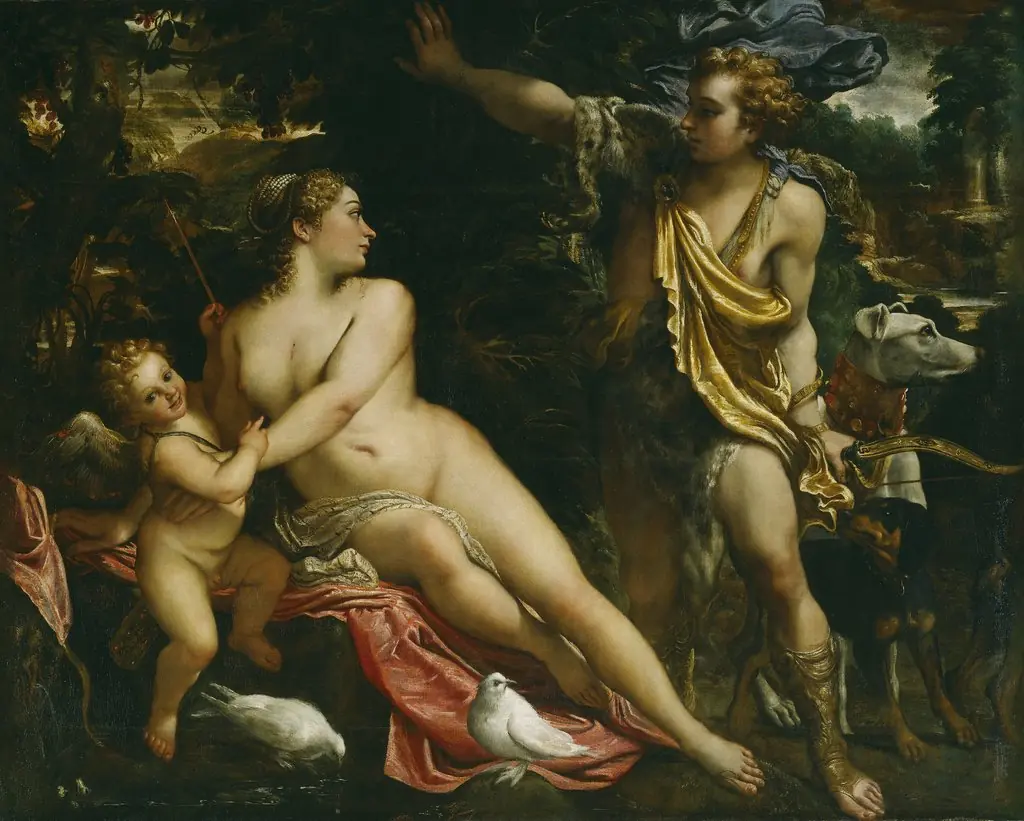
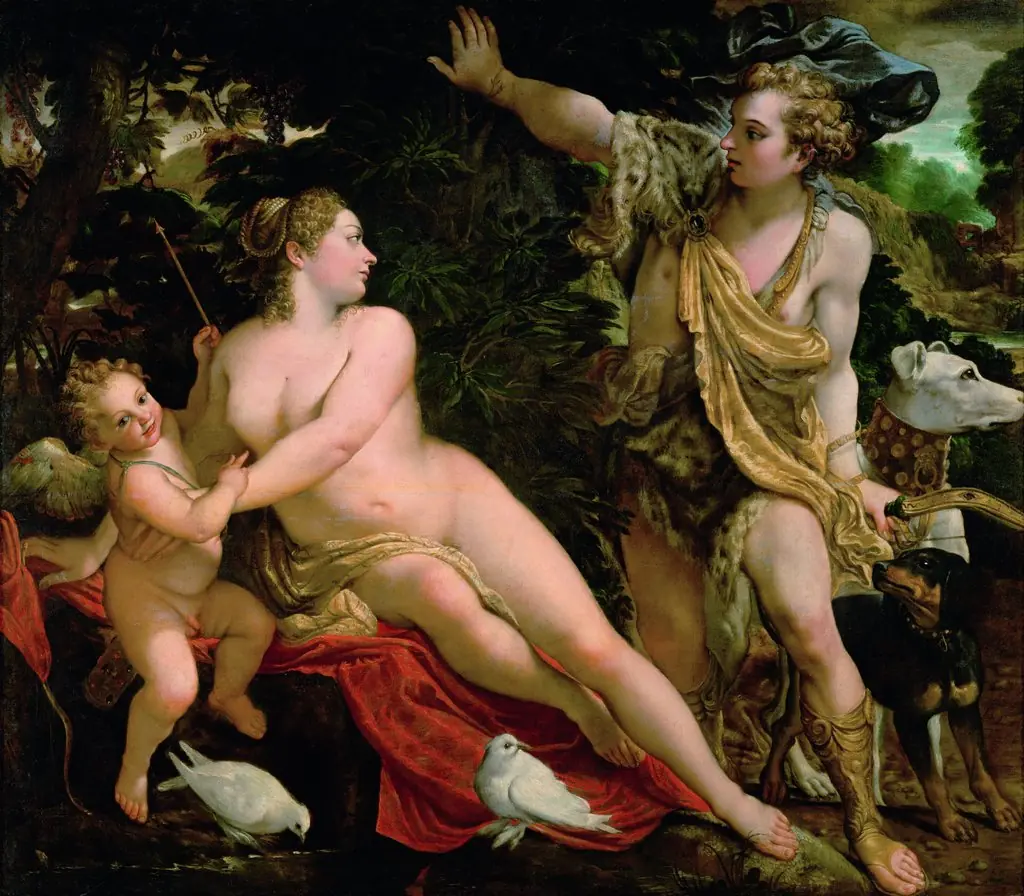
Titian's painting depicts the mythological couple Venus and Adonis at the moment of parting, drawn primarily from Ovid's Metamorphoses (Book X).
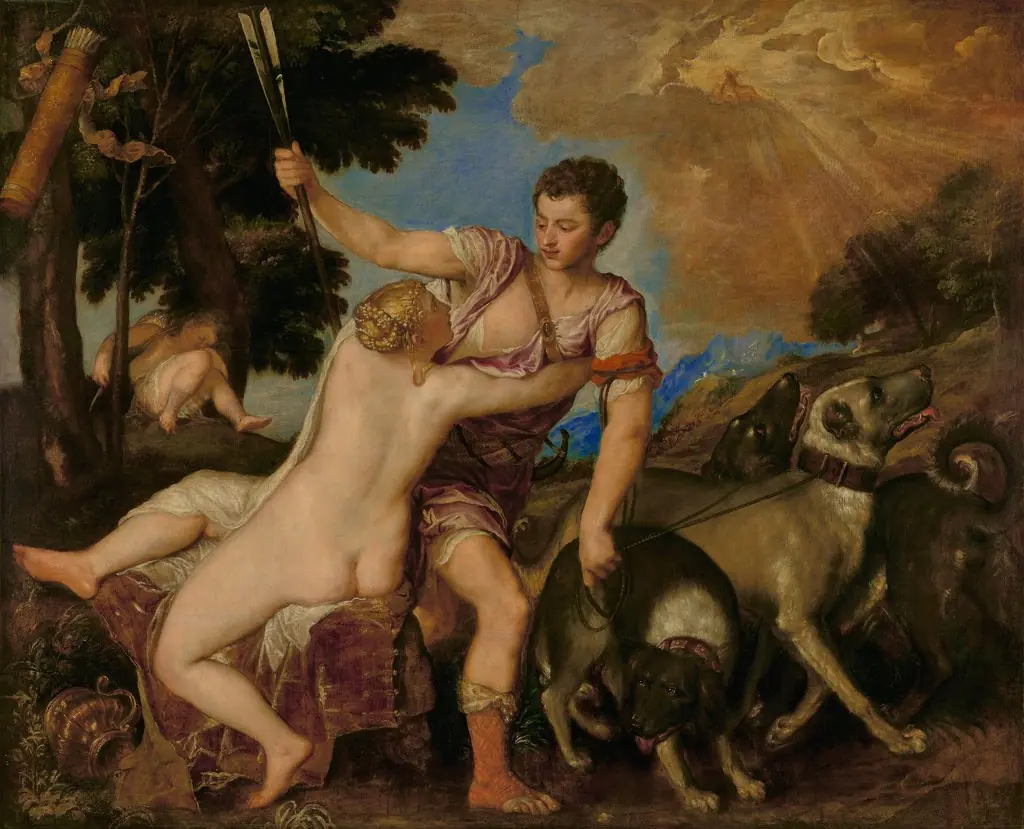
Titian's painting depicts the mythological couple Venus and Adonis at the moment of parting, drawn primarily from Ovid's Metamorphoses (Book X). The goddess sits nude on a richly draped cloth, attempting to restrain her young lover as he rises to depart for the hunt, an inversion of Ovid's narrative in which Venus is the one who leaves first. Adonis carries a hunting spear and the leashes of his hounds are wound around his arm, signaling his intent.
Behind them, Cupid sleeps beneath a tree with his bow and quiver hung up, a visual indication that this is not a moment for love. Above, a figure drives a chariot through the sky, read as Venus herself later in the story, or as Apollo/Sol heralding the dawn. The sleeping Cupid and the dawn setting together foreshadow Adonis's fatal encounter with a wild boar.
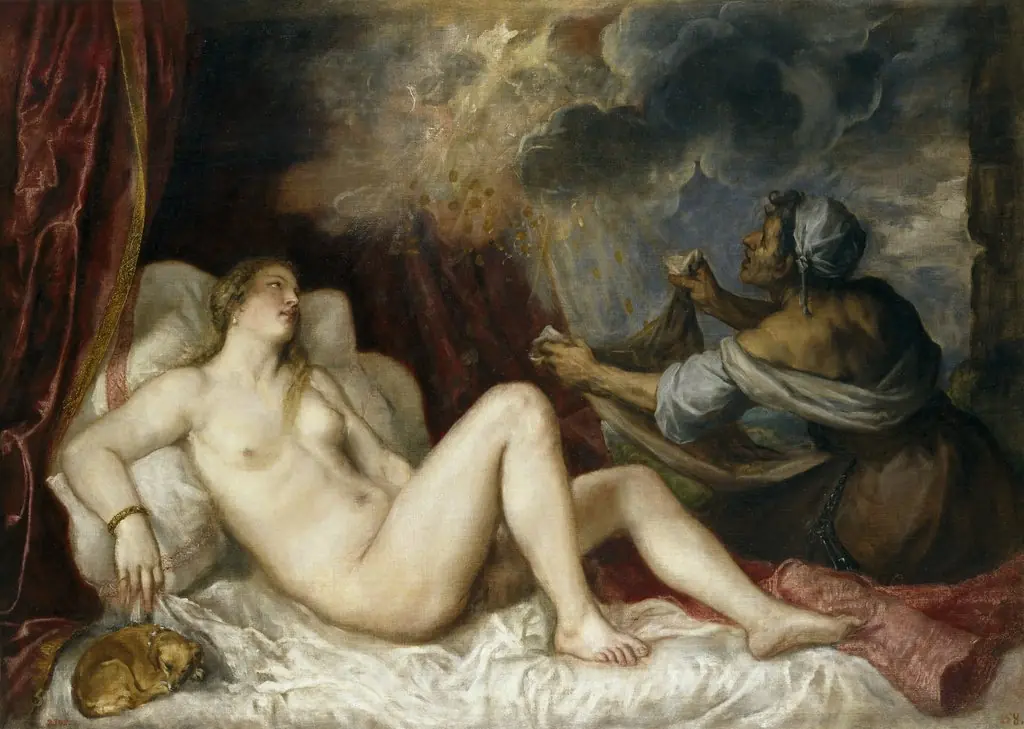
The composition belongs to Titian's "poesie" series for Philip II of Spain, conceived as a pendant to Danae, offering contrasting frontal and rear views of a nude Venus.
Technique & Style
Executed in oil on canvas, this version of Venus and Adonis measures approximately 177.2 by 199.2 centimeters. Stylistically, it belongs to the "Prado" type composition, distinguished from the tighter "Farnese" variants by a wider format that retains the sky and a chariot figure, likely representing dawn. The work depicts Venus seated on a rock draped with a rich, gold-braided cloth, attempting to physically restrain Adonis, who pulls away while carrying a feathered spear.
Three hunting dogs accompany the hunter, and Cupid is shown asleep nearby, signaling a pause for love. The painting is noted for its erotic realism, particularly in the rendering of Venus's anatomy from behind, where the distension of flesh caused by her seated posture is meticulously detailed to create a lifelike presence. While the Prado variant features a visible seam from joined canvas pieces, this specific Oxford-associated work is recognized as a high-quality iteration of the composition popularized in the mid-16th century.
History & Provenance
This specific canvas, dated to approximately 1557 or 1560, is attributed to Titian and his workshop. It belongs to the "Prado" compositional type, distinct from the "Farnese" variant. Some scholars have hypothesized that this work might be the original version dispatched to King Philip II of Spain in 1554, which was reportedly damaged by a fold during transport and subsequently replaced by the painting now held in Madrid; however, this theory faces significant objection.
The painting disappeared from historical record for nearly two centuries before re-emerging in modern times. Its documented ownership chain includes Eugene of Savoy, Princess Maria Anna Victoria of Savoy, and the Princes of Carignano, followed by collectors such as Gaillard de Gagny, Michael Bryan, and Benjamin West. Later owners included the Miles family baronets and the Heyl and Reemtsma families.
Currently part of a private collection, the work was loaned to the Ashmolean Museum in Oxford between 2006 and 2012.
Context
Titian's Venus and Adonis occupies a central place in the history of mythological painting, spawning approximately thirty versions by the artist, his workshop, and followers. Scholars generally distinguish two primary compositional types: the 'Prado' type, characterized by a dawn setting and sleeping Cupid, and the 'Farnese' type, which features a tighter crop and an awake Cupid. The work is celebrated for its innovative narrative departure from Ovid, depicting Adonis actively pulling away from a physically restraining Venus, a gesture that synthesizes the story's beginning and end.
Art historians debate which surviving version constitutes the prime original, though the Madrid Prado painting is widely accepted as the earliest, created for the 'poesie' series commissioned by Philip II. Contemporary critics like Lodovico Dolce praised the work's erotic realism and anatomical dexterity, noting its powerful emotional impact on viewers and its successful competition with sculpture through the depiction of the sitter's rear view.
Legacy
Titian's Venus and Adonis exerted considerable influence through its wide replication. Around thirty versions are thought to date from the sixteenth century, a proliferation attributed in part to the painting's erotic nudity. Harold Wethey classified the variants into two compositional types, the "Prado" and "Farnese" (also termed "three-dog" and "two-dog"), and the Prado type became the more frequently copied.
The work's reception was shaped by contemporary critics: Lodovico Dolce praised its lifelike rendering of Venus's seated flesh, noting the painting's powerful sensual effect on male viewers. Titian himself framed the composition as part of his "poesie" series for Philip II of Spain, designed to be viewed alongside Danae to offer contrasting views of the nude. The motif of Venus physically restraining Adonis as he departs for the hunt was Titian's own invention, transferring the sense of loss at Adonis's death into a single charged moment, and it was both criticized and imitated.
Overview
Titian's "Venus and Adonis" is an oil painting, a subject he and his workshop revisited in numerous compositions throughout the 16th century. Approximately thirty versions of this scene exist from that period, reflecting its considerable popularity. Art historical discourse continues regarding which, if any, of these works represents the original creation, and the extent of Titian's personal involvement in each surviving canvas remains a subject of scholarly debate.
Own this work as a print
Artist & collection
Artist
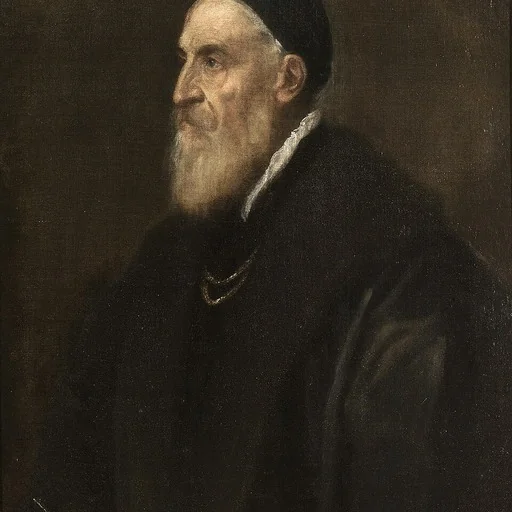
Tiziano Vecellio (Italian:; c. 1488/1490 – 27 August 1576), Latinized as Titianus, hence known in English as Titian ( TISH-ən), was an Italian Renaissance painter. The most important artist of Renaissance Venetian…