Artwork
Satyrs and nymphs
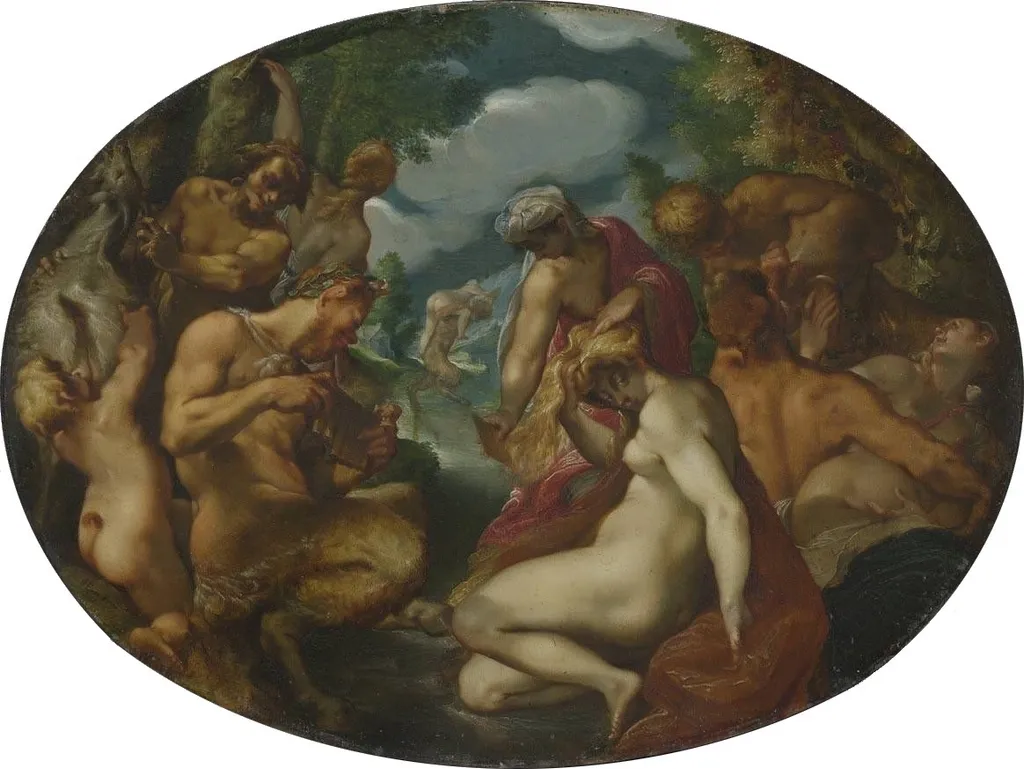
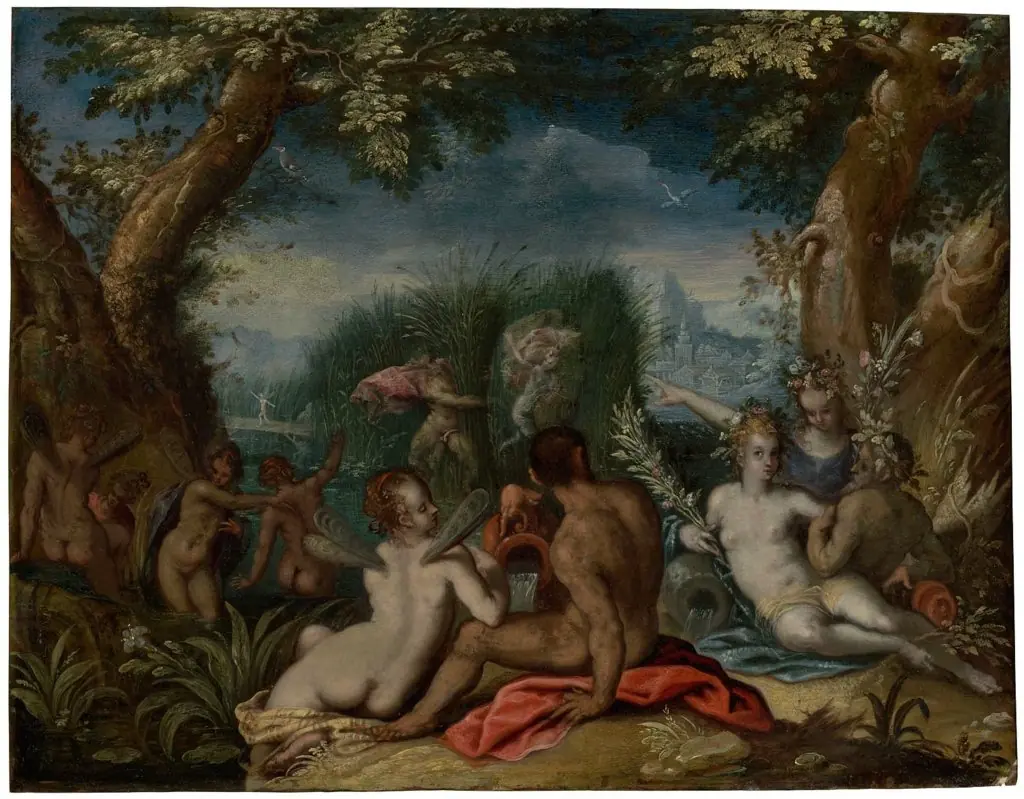
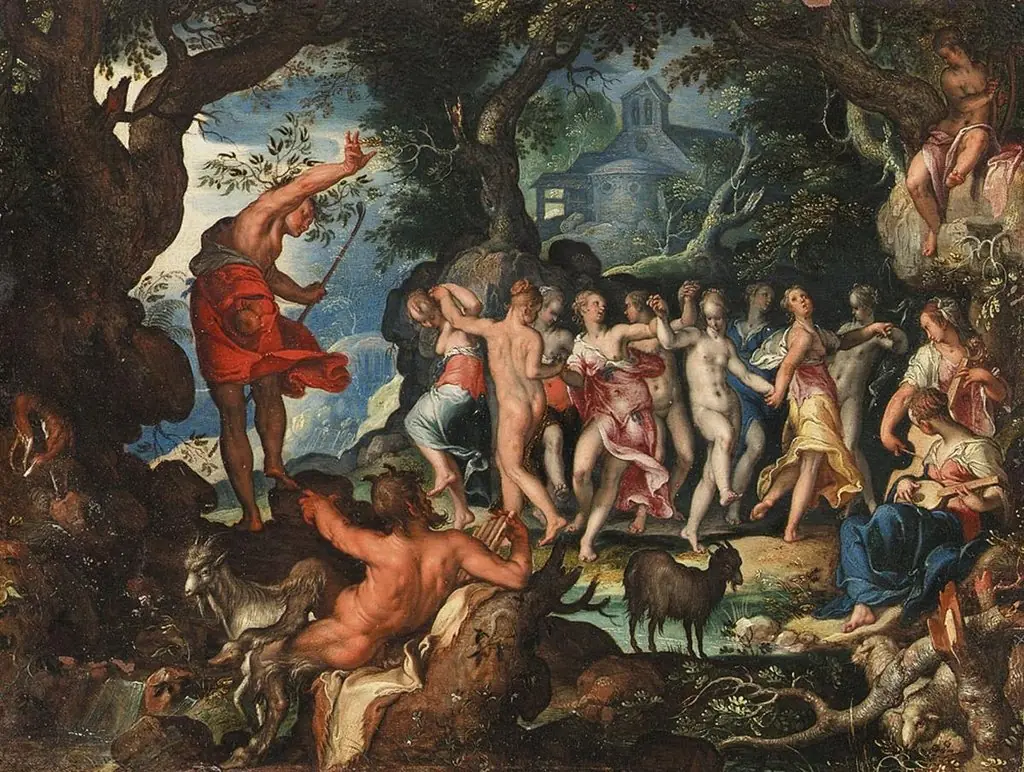
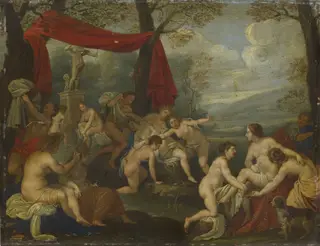
Satyrs and nymphs is an oil painting by the Early Baroque Italian artist Joseph Heintz the Elder. It dates from 1600 and is held in the collection of the Bavarian State Painting Collections.
About this work
Technique & Style
Classified within the genre of mythological painting, the piece depicts figures of nymphs and satyrs, reflecting the subject matter common to Heintz's oeuvre.
Joseph Heintz the Elder executed Satyrs and nymphs in 1599 as an oil painting on a copper support. The work measures 24.4 cm in height and 32.5 cm in width, a format typical for small-scale mythological scenes of the period. The choice of copper as a ground likely contributed to the luminosity and fine detail characteristic of the artist's handling.
Classified within the genre of mythological painting, the piece depicts figures of nymphs and satyrs, reflecting the subject matter common to Heintz's oeuvre. The painting is currently held by the Bavarian State Painting Collections at the Alte Pinakothek.
Context
The mythological painting entered the Bavarian State Painting Collections in the early twentieth century and remains on display at the Alte Pinakothek in Munich, where it is studied as a representative example of late Renaissance mythological art in southern Germany. Art historians note its sophisticated composition and the artist's role in bridging Mannerist traditions with Baroque dynamism, situating it within Joseph Heintz the Elder's broader oeuvre of mythological scenes that reflect Counter-Reformation sensibilities. Contemporary scholarship emphasizes its technical mastery of oil on copper and its influence on subsequent Southern German painters of the early seventeenth century.
Legacy
The work has influenced later mythological painting through its dynamic composition and treatment of the figures, a legacy noted in art historical surveys of Baroque mythological art. Its reputation rests on the mastery of its execution on copper and its inclusion in the Bavarian State Painting Collections at the Alte Pinakothek, where it remains on view. The painting's legacy continues to be cited in studies of 17th-century mythological painting and its technical innovations.
Overview
Joseph Heintz the Elder’s work titled Satyrs and Nymphs, executed around 1600, is a copper painting that portrays a mythological encounter between a satyr and a nymph. The piece is part of the collection of the Alte Pinakothek in Munich, where it is displayed among other works of the early Baroque period.
Subject & Meaning
The composition gathers several nude figures within a wooded riverside setting. A central female figure reclines on a lion’s skin, while a satyr and other attendants occupy various poses, some seated, others standing or wading in the water. The scene evokes classical themes of nature, desire, and the interplay between the wild and the divine.
History & Provenance
Created at the turn of the 17th century, the copper painting entered the Alte Pinakothek’s holdings through the museum’s early acquisitions of Southern German art. Its attribution to Heintz the Elder has been confirmed by stylistic analysis and documentation linking the work to his workshop in Augsburg.
Artist & collection