Artwork
Diana entdeckt das Vergehen der Callisto
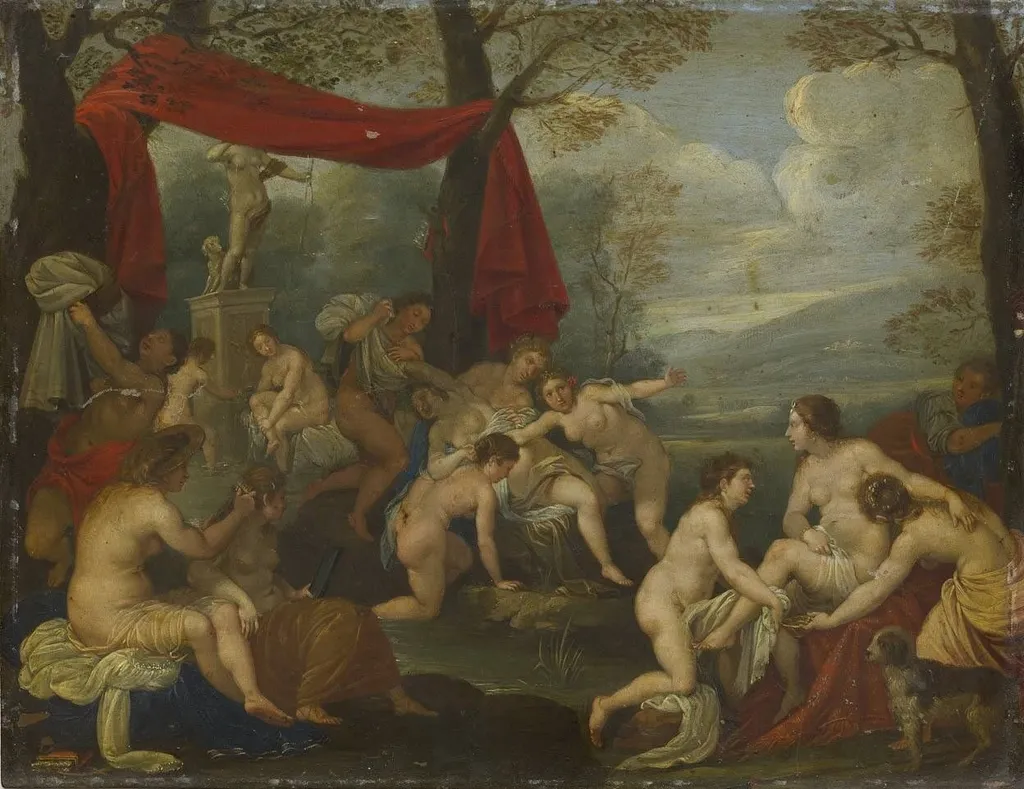
Diana entdeckt das Vergehen der Callisto is an unspecified painting by the Early Baroque Italian artist Unknown. It dates from 1620 and is held in the collection of the Bavarian State Painting Collections.
About this work
Subject & Meaning
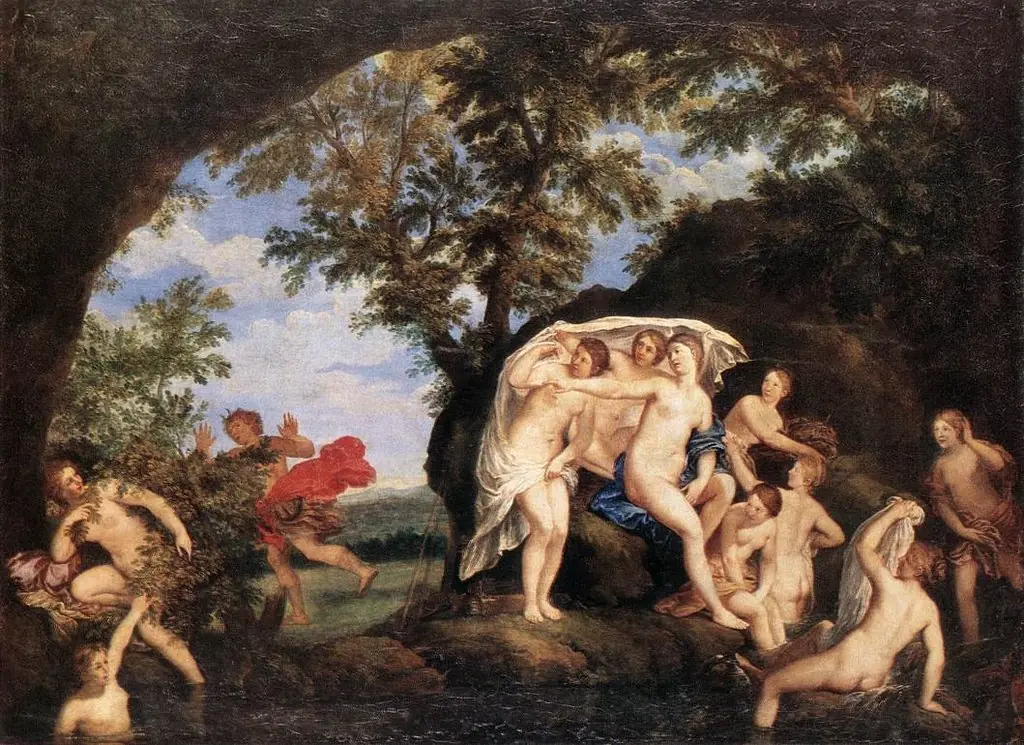
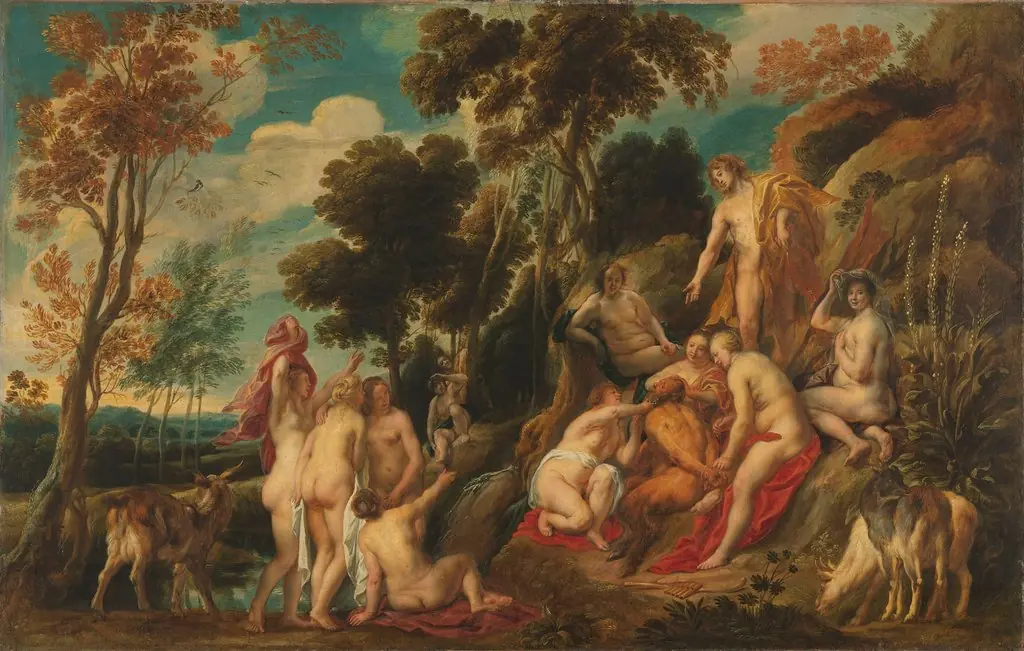
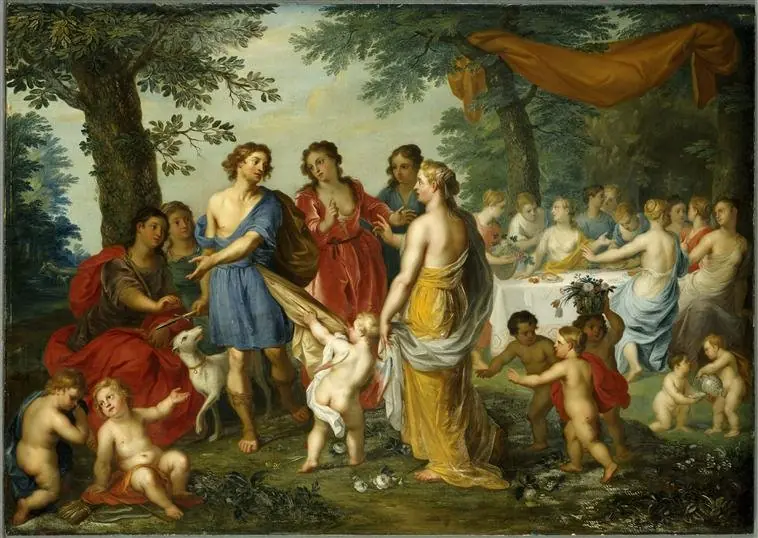
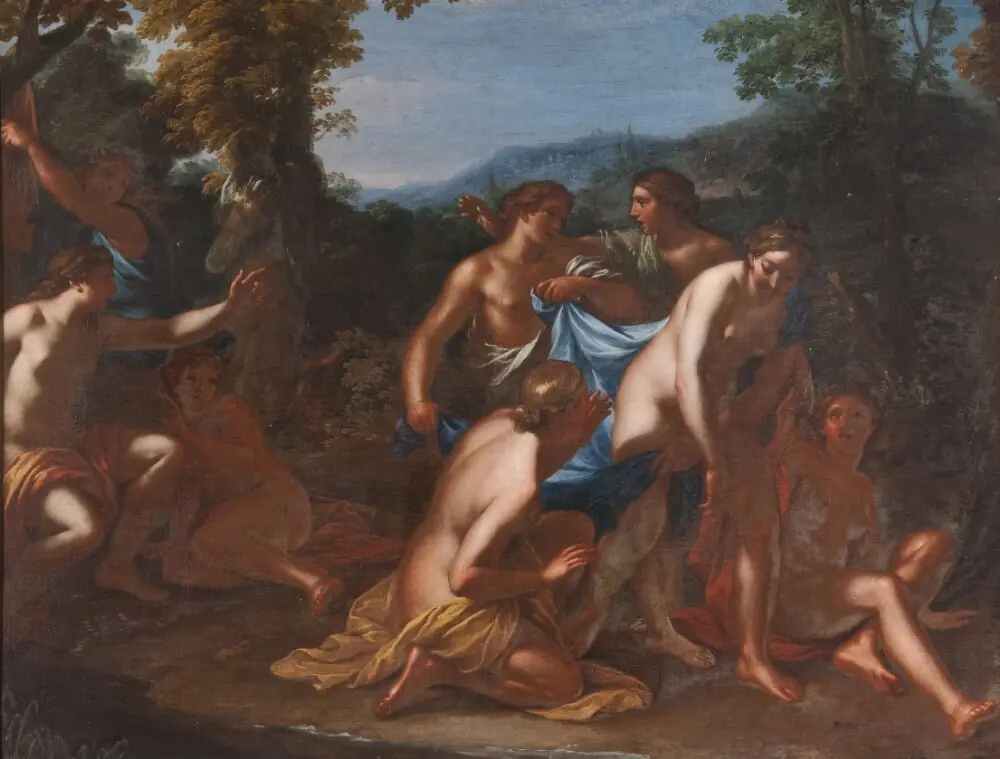
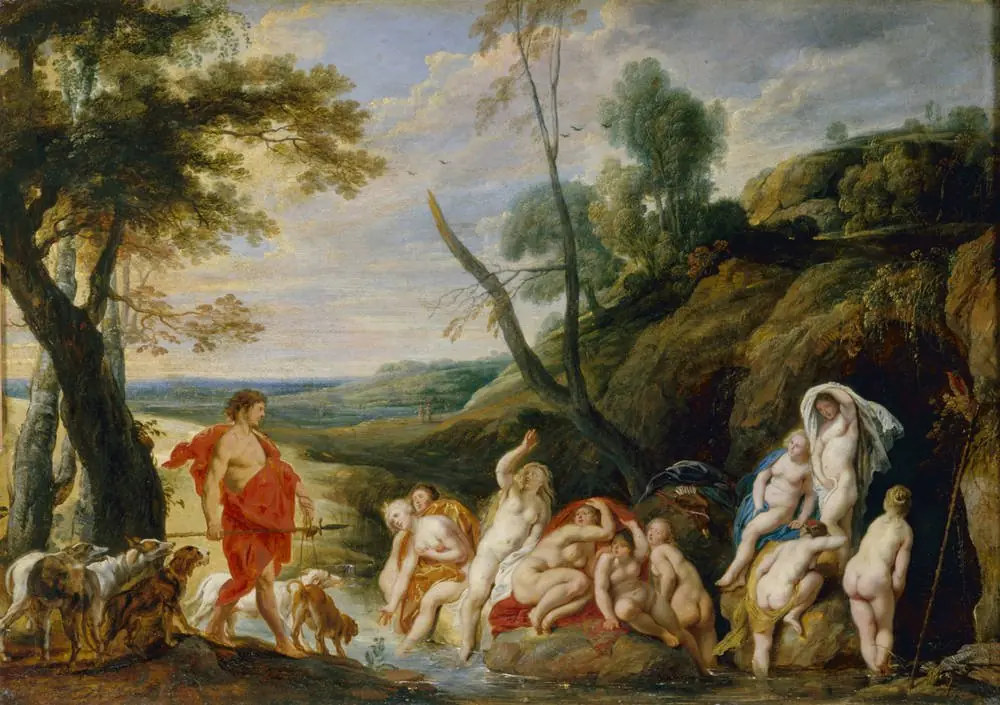
The painting portrays the Roman goddess Diana in the moment she discovers the loss of her nymph Callisto's virginity, a scene drawn from classical mythology that illustrates themes of divine retribution and the fragility of purity. In the composition, Diana is shown turning away from the weeping Callisto, her gesture of accusation underscored by the presence of her hunting dogs and a crescent-shaped moon, symbols that reinforce her identity as the huntress and lunar deity. The work thus embodies the tension between celestial authority and human vulnerability, reflecting Baroque-era interests in dramatic narrative and emotional immediacy.
The iconography combines attributes of the hunt, bow, quiver, and canine companions, with the symbolic moon, linking the figure to both lunar cycles and the chastity associated with Artemisian cults. This synthesis of narrative and symbolic detail underscores the painting's moral lesson about the consequences of broken vows while highlighting the interplay between divine power and mortal fate.
History & Provenance
The artwork is currently held by the Bavarian State Painting Collections and is located at the Alte Pinakothek.
The painting Diana entdeckt das Vergehen der Callisto was created in 1620. It is classified as a mythological work depicting the goddess Diana. The artwork is currently held by the Bavarian State Painting Collections and is located at the Alte Pinakothek.
Specific details regarding the original commission, the artist's identity, or the chain of ownership prior to its arrival at the museum are not provided in the available records.
Overview
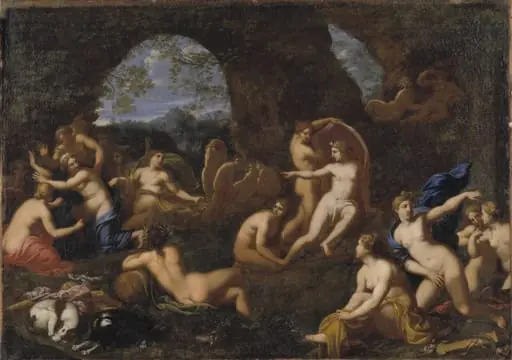
The work depicts an outdoor gathering of partially clothed figures, arranged in a relaxed composition that includes lounging, playing, and conversing. A central statue occupies a raised pedestal in the background, its raised arm suggesting the holding of an object. The palette balances warm flesh tones with cooler blues and greens, while a vivid red drapery adds a focal accent.
Technique & Style
Rendered with a careful modulation of skin tones against a cooler landscape, the painting employs chiaroscuro to model the figures and create depth. The use of a single bright red cloth provides visual contrast, while the smooth rendering of the statue suggests a classical sculptural influence within a Romantic pictorial setting.
Artist & collection