Artwork
Horse Stable
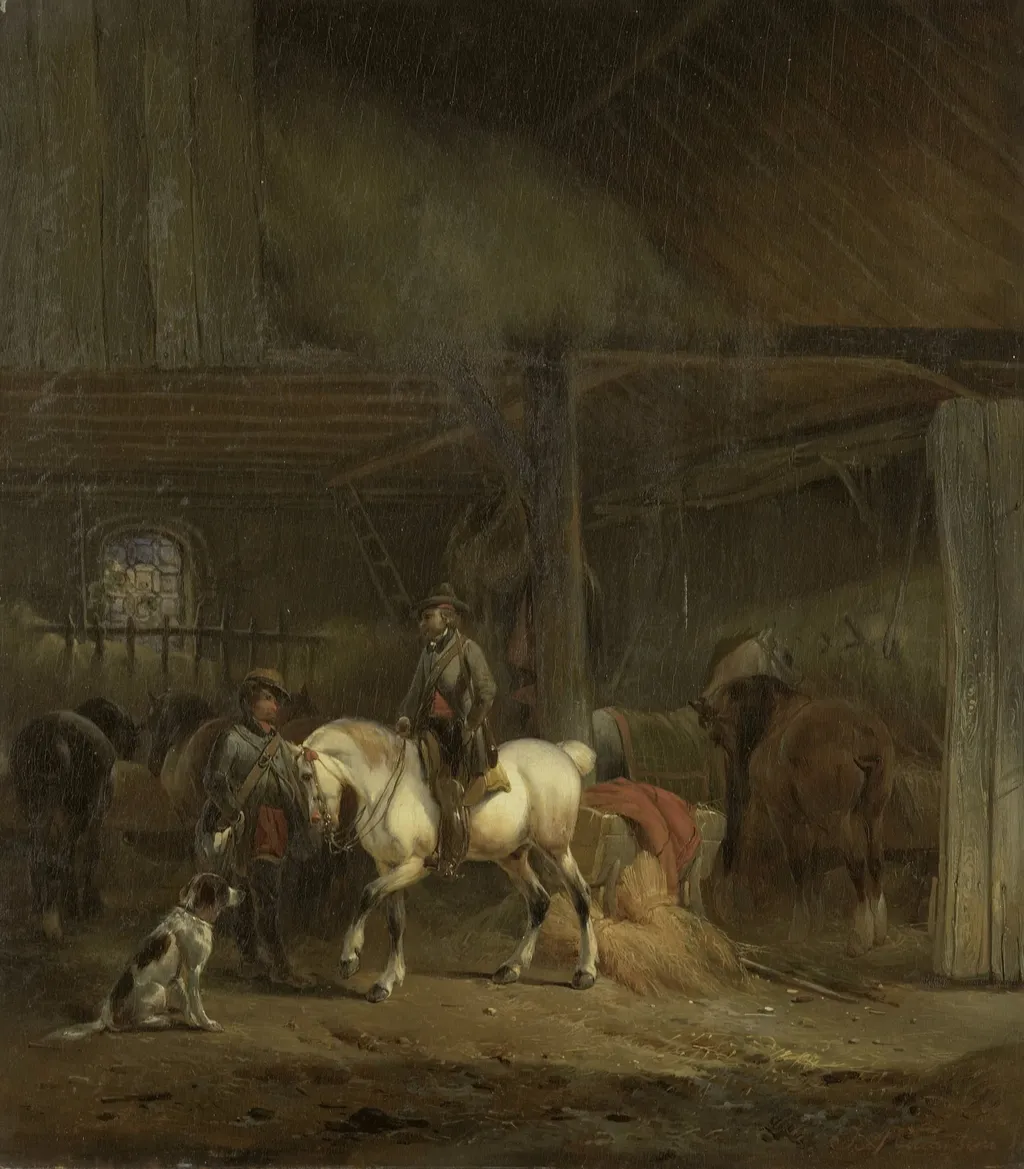
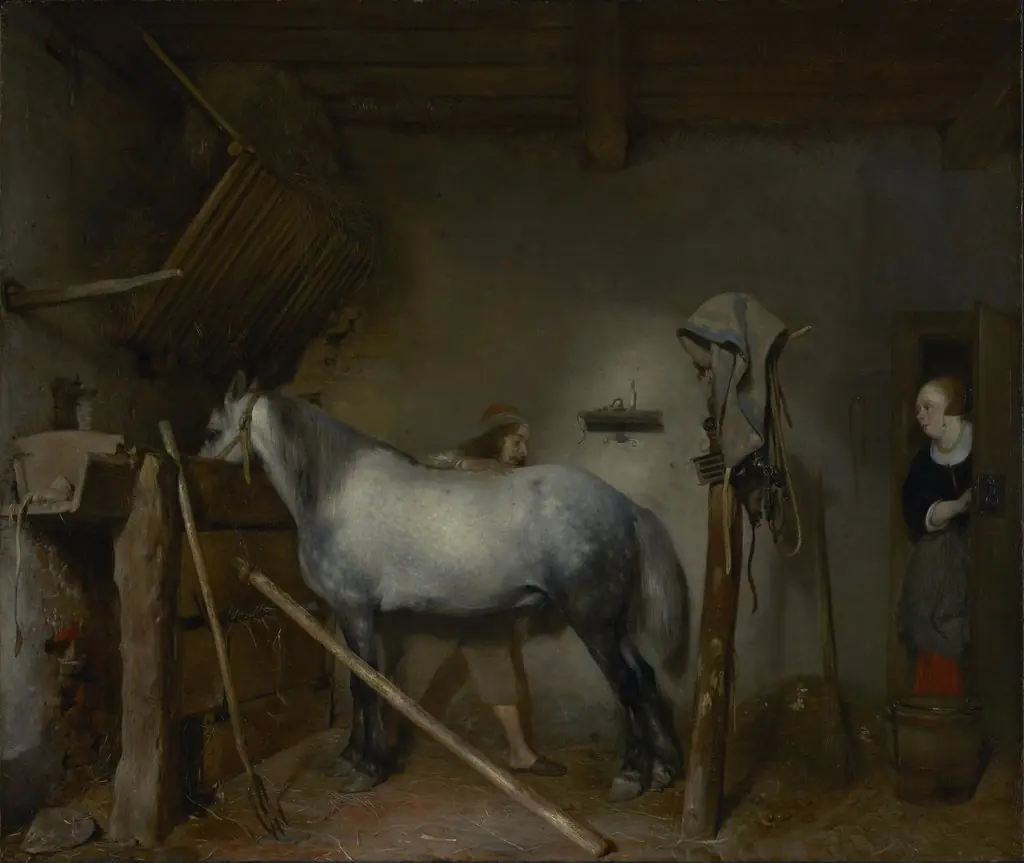
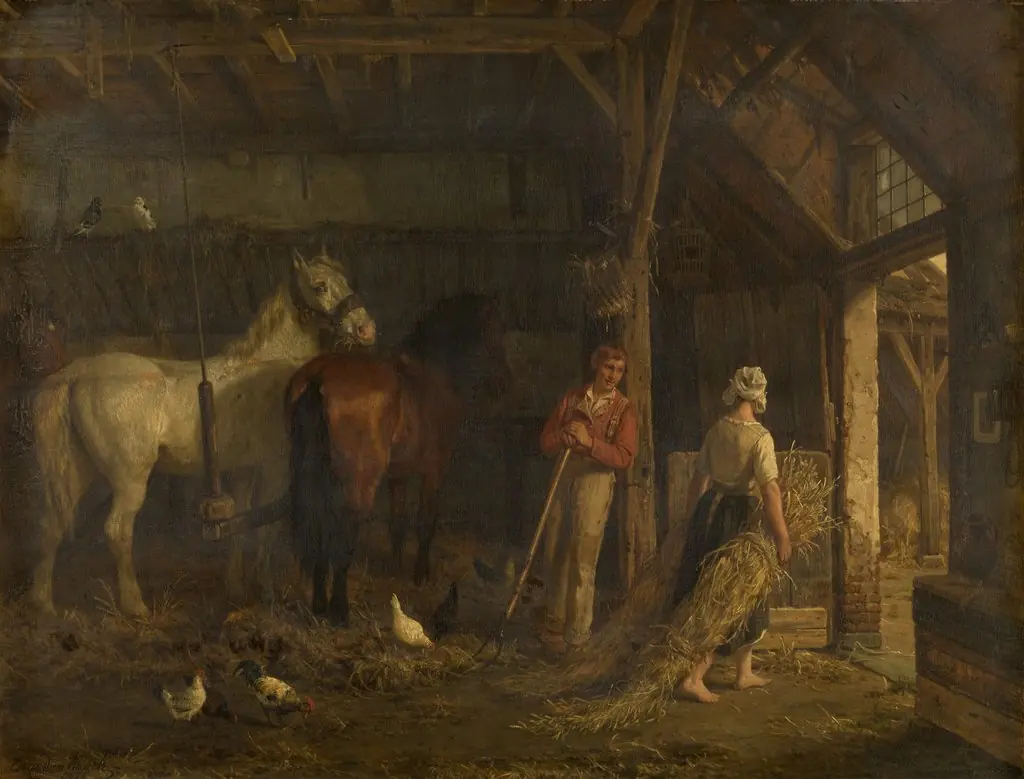
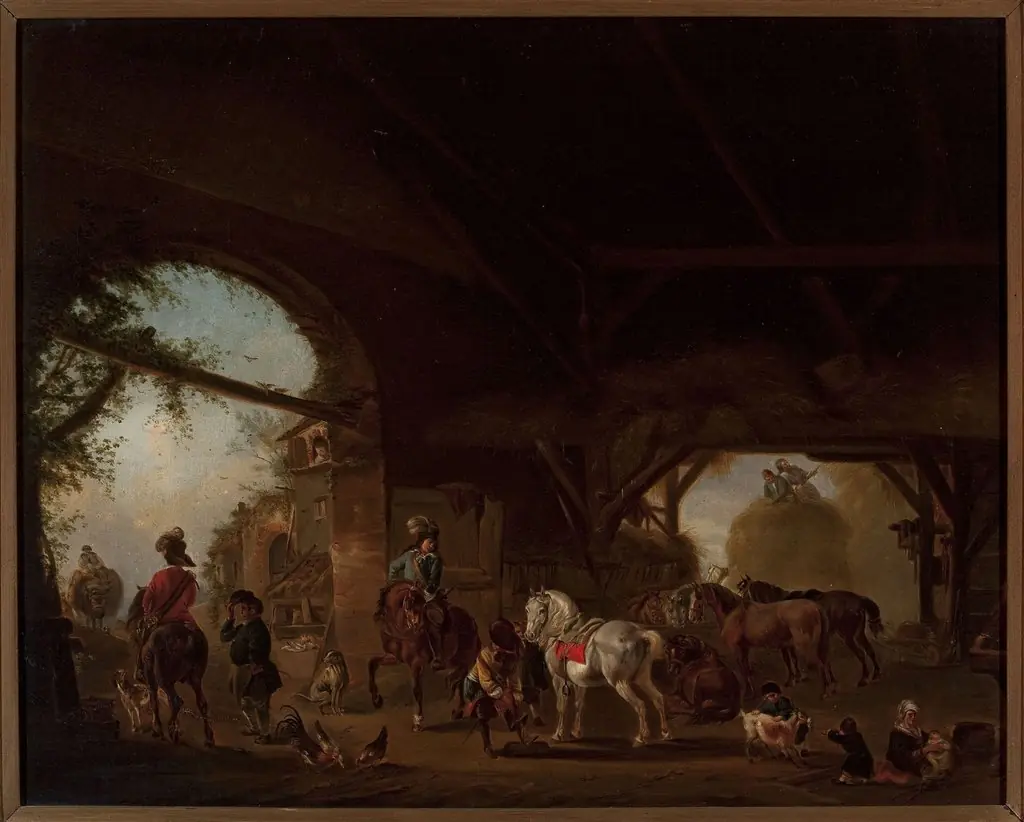
Horse Stable is an unspecified painting by the Barbizon school artist Joseph Moerenhout. It dates from 1830 and is held in the collection of the Rijksmuseum.
About this work
Subject & Meaning
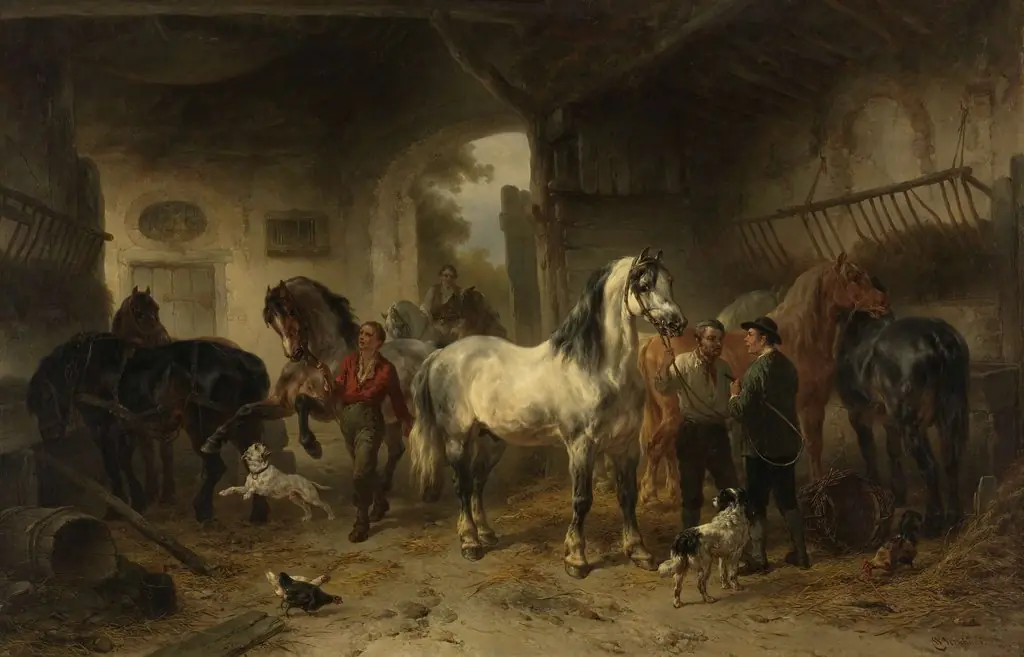
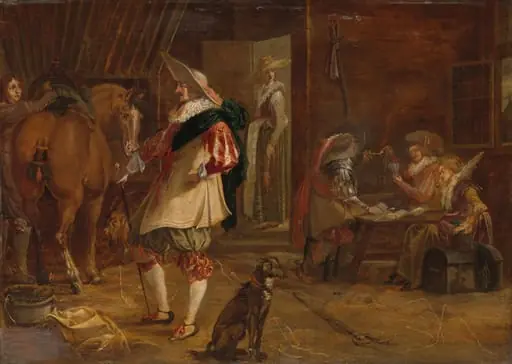
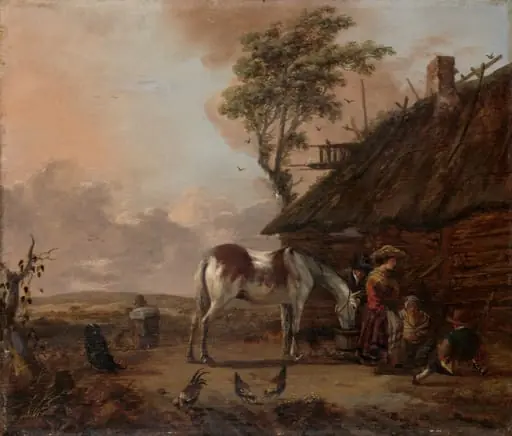
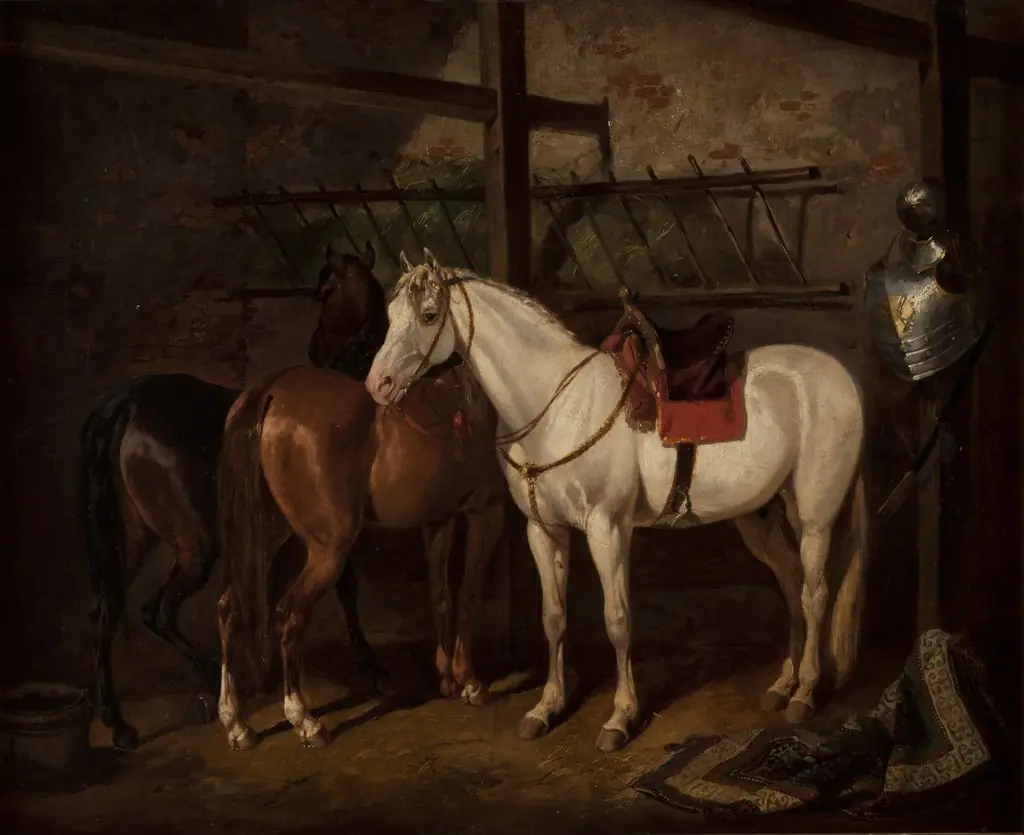
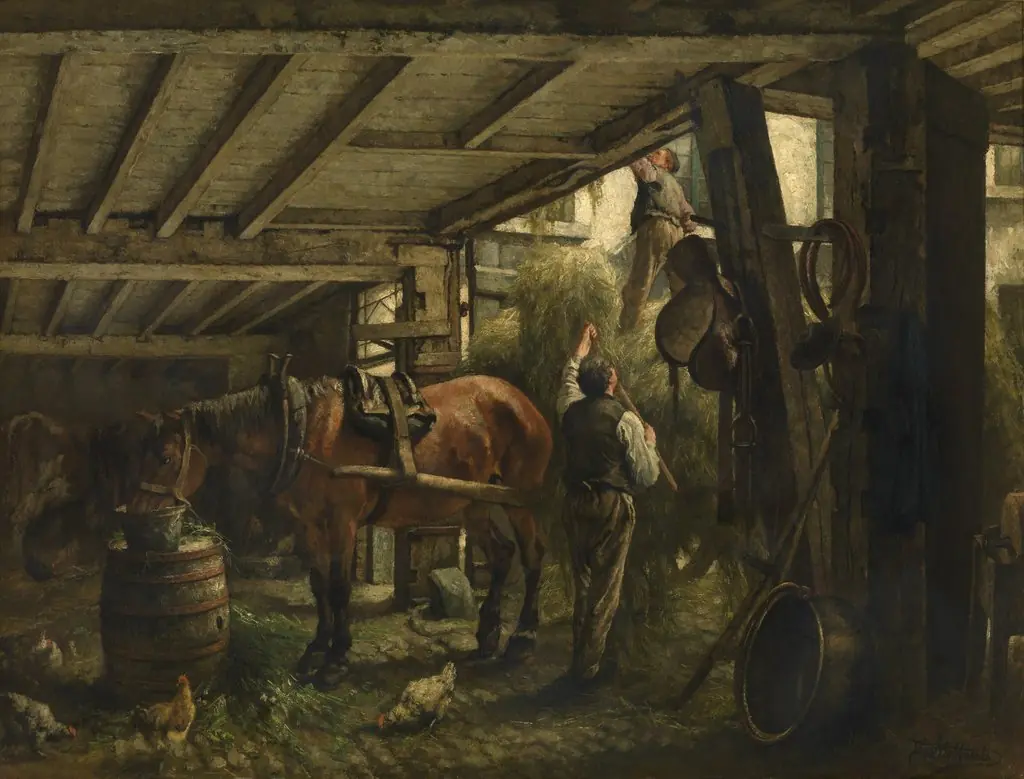
Joseph Moerenhout's Horse Stable depicts an interior stable scene, a subject consistent with his broader oeuvre of romantic-realist tableaux where horses play a central role. The work belongs to a tradition of animal painting that frequently includes rural settings such as blacksmith shops, veterinary scenes, and country inns alongside stables.
While specific symbolic interpretations for this individual painting are not detailed in available records, the artist's general focus on equestrian subjects suggests a representation of daily rural life and the significance of horses in 19th-century transport and labor. The depiction aligns with Moerenhout's specialization in genre art and landscapes populated by travelers, carters, and animals, reflecting the Antwerp school's rich tradition of animal painting.
Context
His collaborations with Dutch landscapists like Andreas Schelfhout and Louis Meijer further highlight cross-border exchanges during the mid-19th century.
Joseph Moerenhout’s Horse Stable exemplifies his lifelong engagement with equine subjects, a specialization rooted in Antwerp’s 19th-century animal-painting tradition. Trained under Hendrik Van der Poorten and later Horace Vernet, Moerenhout synthesized Flemish realism with Romantic dynamism, positioning his work between genre scenes and landscape painting. His regular participation in Belgian and Dutch salons, including Antwerp’s triennial exhibitions and Amsterdam’s Levende Meesters, secured his reputation as a key figure in the Low Countries’ artistic circles, where his depictions of stables, hunts, and military encampments were critically received as both technically accomplished and narratively vivid.
Scholarship situates Moerenhout within a lineage extending from Balthasar-Paul Ommeganck through Van der Poorten, emphasizing his role in perpetuating Antwerp’s animalier tradition. His collaborations with Dutch landscapists like Andreas Schelfhout and Louis Meijer further highlight cross-border exchanges during the mid-19th century. While individual critical responses to Horse Stable remain undocumented, the work’s inclusion in Moerenhout’s broader oeuvre, praised for its meticulous anatomy and atmospheric settings, reflects the era’s demand for paintings balancing documentary precision with Romantic sentiment.
Overview
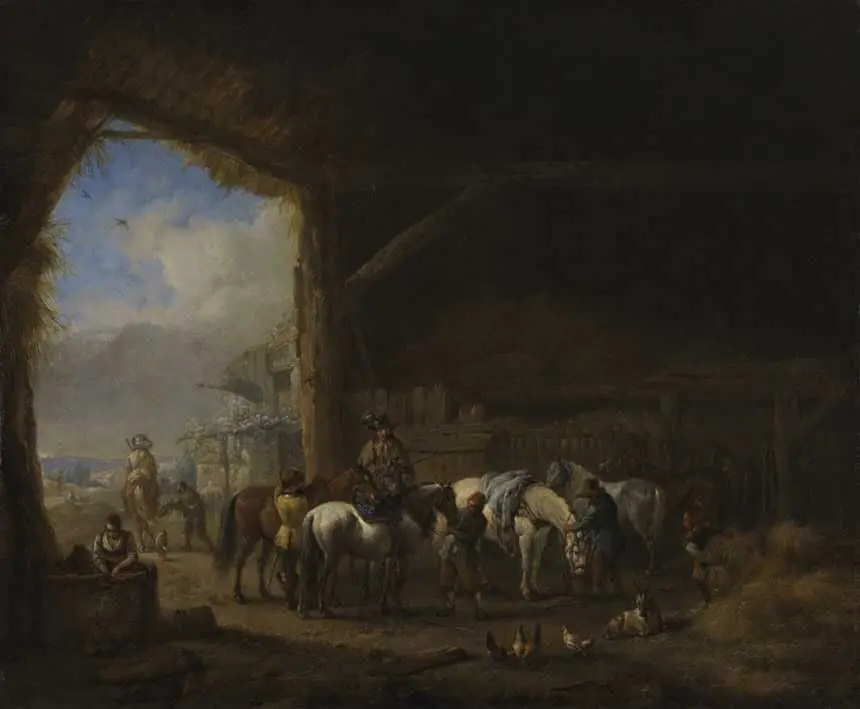
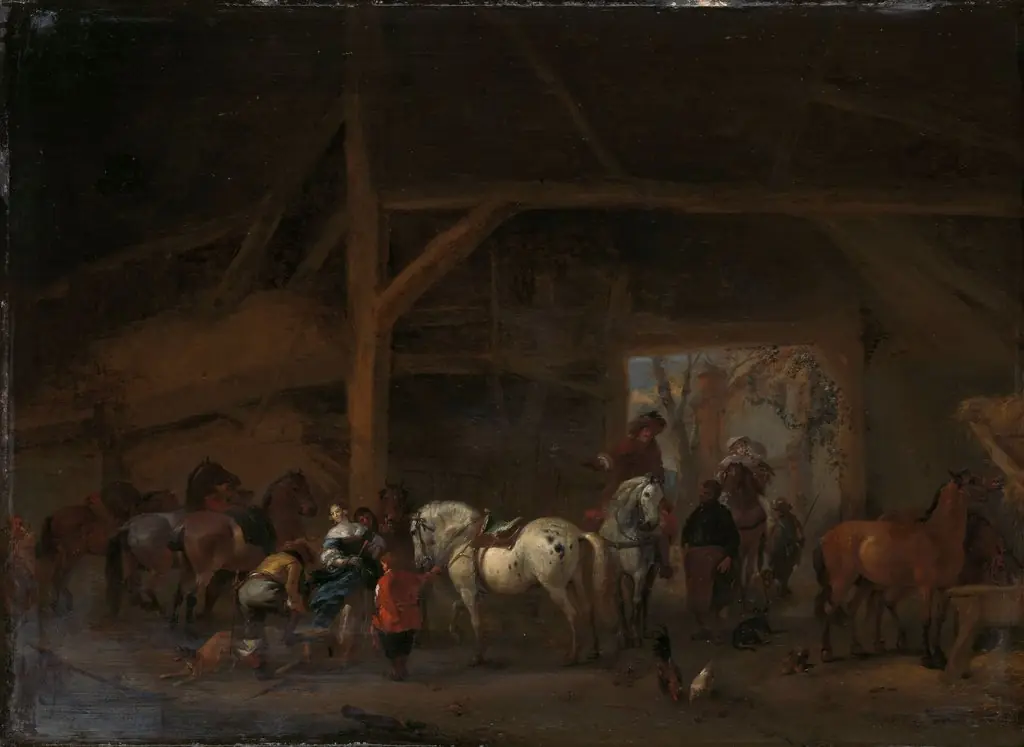
The work, titled Horse Stable, is a modestly sized oil painting that captures a dimly lit interior where several hunters are fitting saddles and tack onto their horses. A hound stands near the doorway on the left, observing the activity. The composition lacks theatrical gestures, presenting the scene as a quiet, unembellished moment of preparation.
Technique & Style
Rendered in a muted palette, the artist employs soft chiaroscuro to convey the low light of the stable, allowing the figures and animals to emerge from shadow with restrained detail. Brushwork is economical, avoiding overt flourish; the overall effect is one of immediacy, as if the viewer has caught a fleeting glimpse of the scene.
History & Provenance
The canvas bears no signature, and the artist’s identity remains unknown, a circumstance that contributes to its documentary character. Its provenance is not fully documented, though it aligns with the type of genre scenes collected by institutions such as the Rijksmuseum, which have historically valued depictions of ordinary Dutch life.
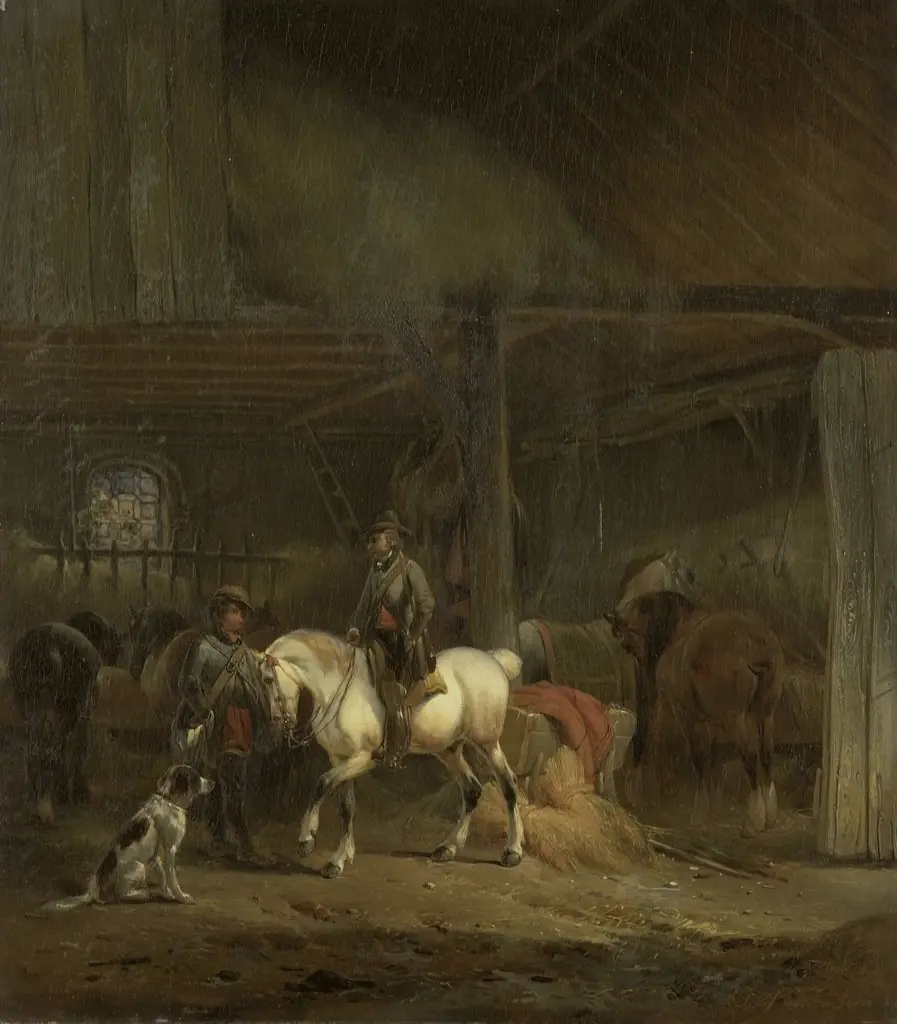
Own this work as a print
Artist & collection