Artwork
Saint Dominic of Guzmán
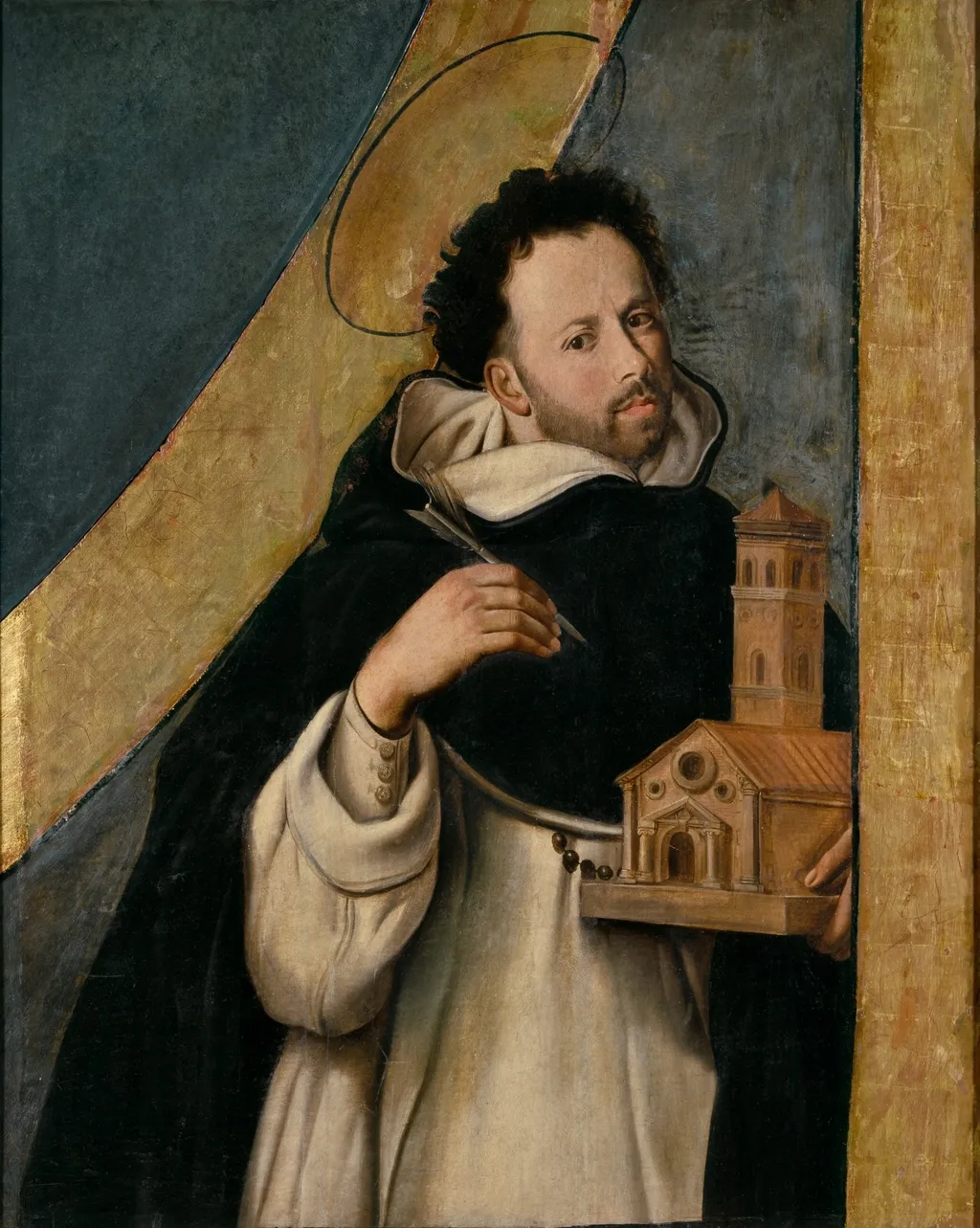
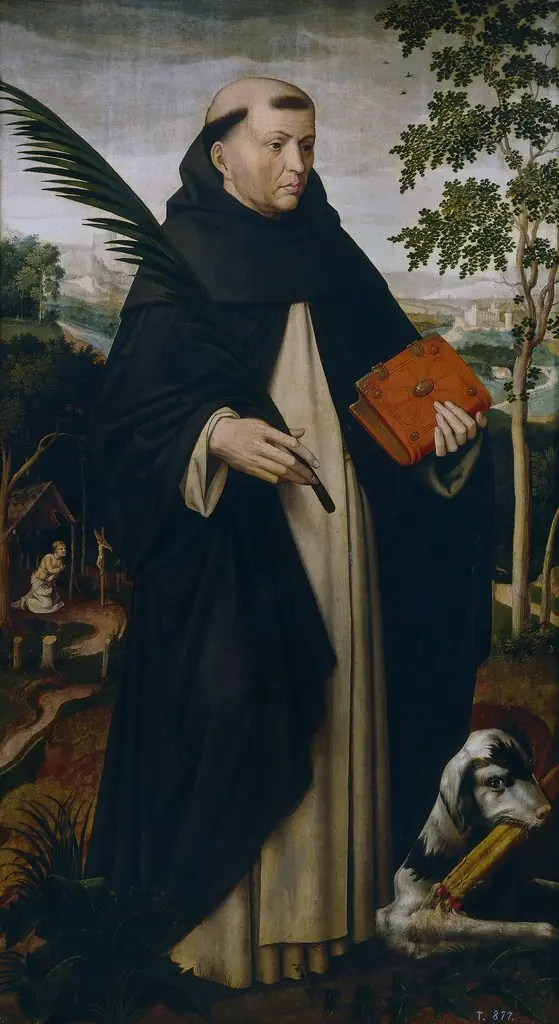
Saint Dominic of Guzmán is an oil painting by the Early Baroque Italian artist Juan Bautista Maíno. It dates from 1612 and is held in the collection of the Museo del Prado.
About this work
Subject & Meaning
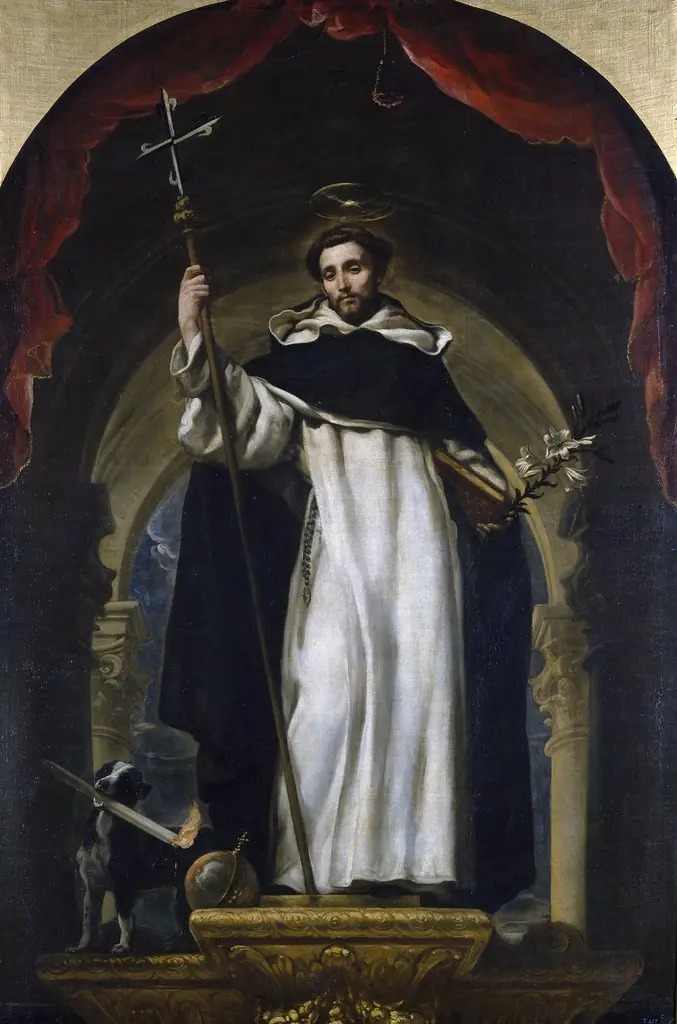
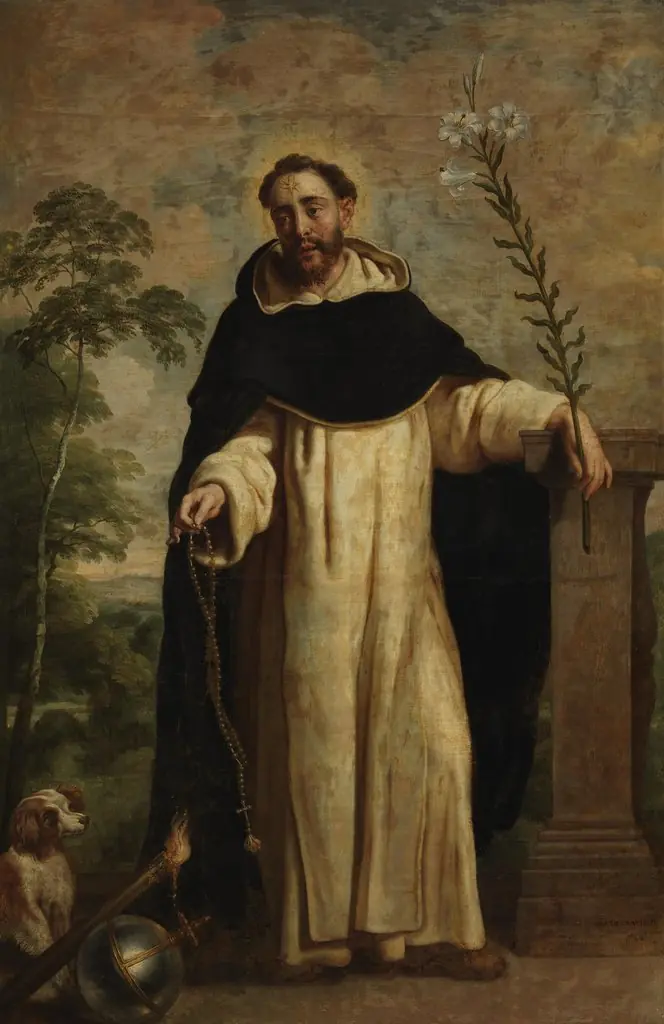
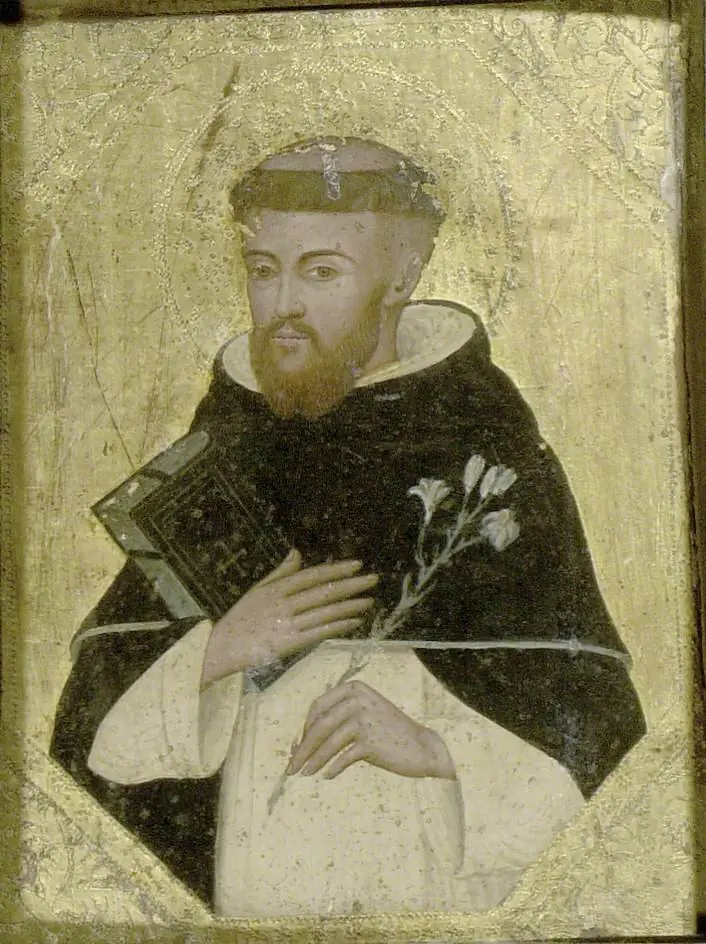
The painting depicts Saint Dominic of Guzmán, founder of the Dominican Order, shown with iconographic attributes associated with his life and spirituality.
The painting depicts Saint Dominic of Guzmán, founder of the Dominican Order, shown with iconographic attributes associated with his life and spirituality. He is presented in a three-quarter pose, wearing the black-and-white habit of his order, and holds a closed book, likely signifying his learned theological writings and preaching mission. A rosary is draped over his left hand, underscoring his promotion of the Dominican devotion to the rosary, a central element of his order’s spirituality.
These symbols together emphasize Dominic’s roles as a preacher, scholar, and founder, consolidating the painting’s religious and hagiographic purpose within early 17th-century Spanish Counter-Reformation art.
Technique & Style
Created in 1612 by Juan Bautista Maíno, the work is executed in oil paint on a panel support. The painting depicts Saint Dominic holding a pen and a rosary, fitting within the religious art genre. Its physical dimensions measure 118 cm in height and 92 cm in width. The piece is currently held in the collection of the Museo del Prado.
History & Provenance
Juan Bautista Maíno created the oil painting Saint Dominic of Guzmán in 1612. Executed on a panel measuring 118 cm in height and 92 cm in width, the work depicts the religious figure holding a pen and a rosary. The painting is currently held in the collection of the Museo del Prado, where it remains located.
Saint Dominic of Guzmán has been in the collection of the Museo del Prado in Madrid. The work is catalogued as an oil-on-panel painting completed in 1612 by Juan Bautista Maíno, measuring 118 cm in height by 92 cm in width. No specific accession number, inventory entry, or documented exhibition history is provided in the available sources.
Context
Scholarship on this work emphasizes its significance within the religious art tradition of early seventeenth-century Spain and situates it within the artist's mature period following his time in Rome. It is understood to reflect the Dominican theological emphasis on the rosary and penitential practice, aligning with the subject's historical context as founder of the order. The painting's creation during Maíno's active years in Madrid connects to the broader Spanish Baroque movement, particularly the influence of Counter-Reformation ideals on devotional imagery.
The work is housed in the Museo del Prado collection and is recognized as a key example of religious painting from this era, contributing to scholarly understanding of devotional art's role in Counter-Reformation visual culture.
Overview
Saint Dominic of Guzmán is a 1612 oil painting by Juan Bautista Maíno, portraying the founder of the Dominican Order in a contemplative pose, accompanied by symbolic objects.
Legacy
While specific influence or notable exhibitions of this piece are not highlighted, it contributes to the broader understanding of Maíno’s oeuvre and 17th-century Spanish religious art.
Own this work as a print
Artist & collection