Artwork
Magdalena penitente en la gruta de Sainte-Baume
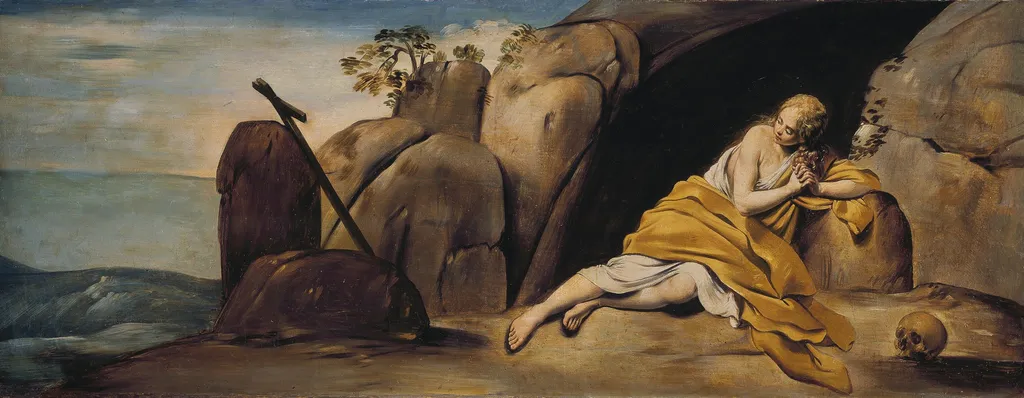
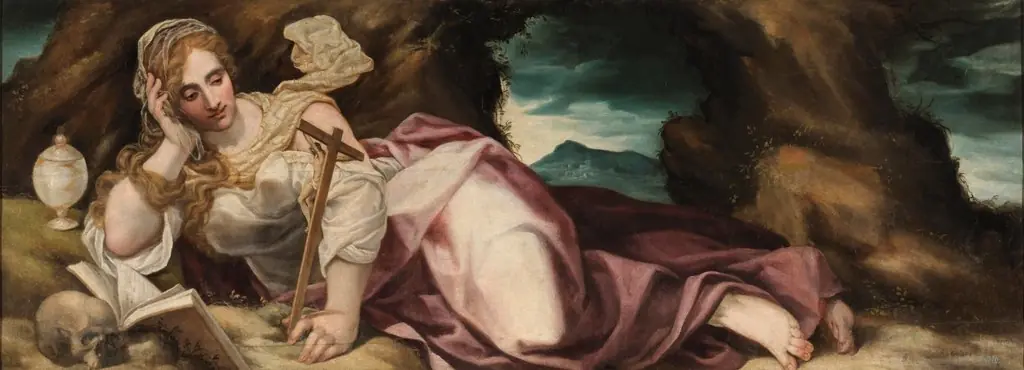
Magdalena penitente en la gruta de Sainte-Baume is an oil painting by the Early Baroque Italian artist Juan Bautista Maíno. It dates from 1612 and is held in the collection of the Museo del Prado.
About this work
Subject & Meaning
The inclusion of a cross alongside these objects underscores the theme of the mortification of the flesh, illustrating her spiritual dedication and penance.
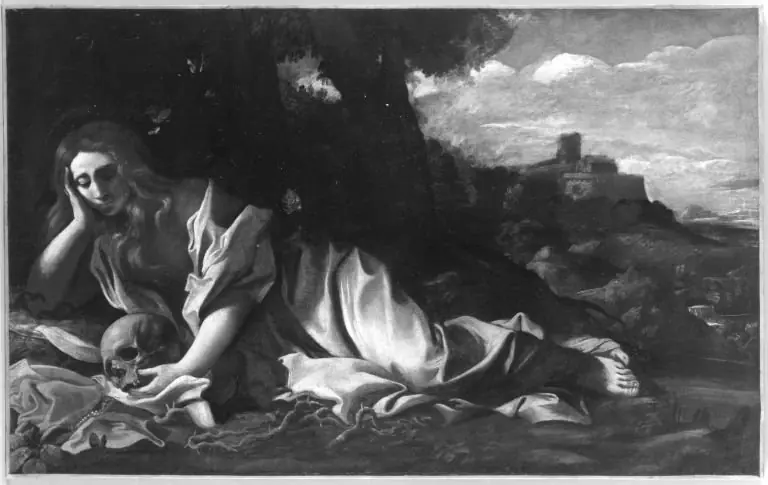
Juan Bautista Maíno's work portrays the Penitent Magdalene, a central figure in religious art known for her repentance. The composition focuses on Mary Magdalene within the grotto of Sainte-Baume, emphasizing her withdrawal from the world. Key iconographic elements include her distinctive waist-length hair and the presence of a human skull, which serve as traditional symbols of mortality and the transient nature of life.
The inclusion of a cross alongside these objects underscores the theme of the mortification of the flesh, illustrating her spiritual dedication and penance. By combining these specific attributes, the painting visually narrates the saint's transformation and deep contemplation of faith.
Technique & Style
Created by Juan Bautista Maíno, this religious painting is executed in oil paint on a panel support. The work presents a waist-length depiction of the Penitent Magdalene within the grotto of Sainte-Baume. Formal elements include the figure's long hair alongside symbolic attributes such as a human skull and a cross, which allude to the mortification of the flesh. The composition measures 60.6 cm in height and 154.8 cm in width.
History & Provenance
Juan Bautista Maíno executed the oil painting Magdalena penitente en la gruta de Sainte-Baume on a wooden panel. While internal records assign the work to 1612, other documentation indicates an inception period spanning from 1612 to 1613. The piece depicts the Penitent Magdalene within a grotto setting, incorporating iconographic elements such as a human skull and a cross to symbolize the mortification of the flesh. The artwork currently resides in the collection of the Museo del Prado.
Overview
Juan Bautista Maíno's 1612 oil painting, "Magdalena penitente en la gruta de Sainte-Baume," depicts Mary Magdalene in a moment of profound contemplation. This religious work, now housed at the Museo del Prado, presents the saint kneeling within a rocky landscape, engaged in penitence. The composition highlights her spiritual devotion through symbolic elements and a dramatic visual treatment, characteristic of the period's religious art, inviting viewers to reflect on themes of faith and mortality.
Artist & collection