Artwork
Santa Catalina
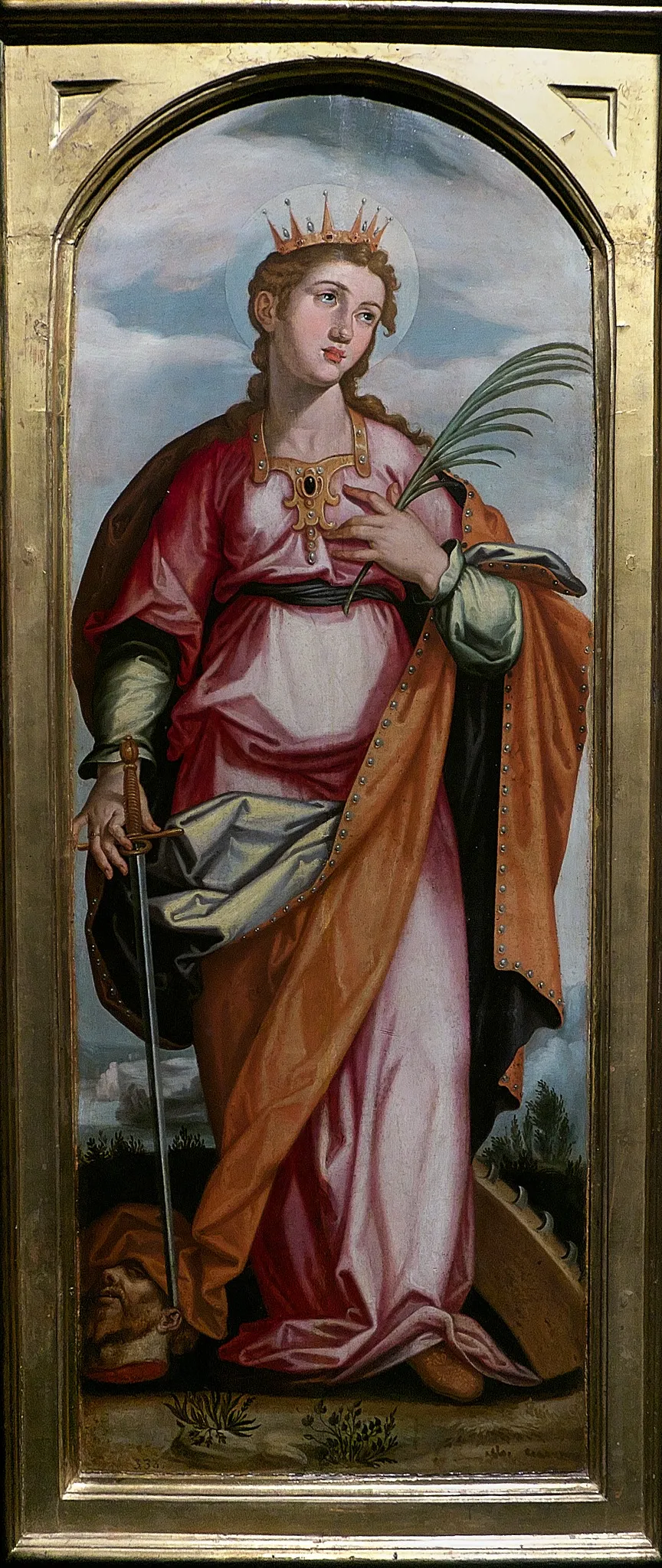
Santa Catalina is an oil painting by the Early Baroque Italian artist Francisco Pacheco. It dates from 1608 and is held in the collection of the Museo del Prado.
About this work
Subject & Meaning
These elements combine to create a traditional representation of the saint, emphasizing both her noble birth and her suffering for the faith.
Francisco Pacheco's 1608 oil painting on panel depicts Catherine of Alexandria, a central figure in Christian hagiography. The work functions as a religious icon, identifying the saint through specific attributes associated with her martyrdom and royal status. Visual symbols include a sword, representing the instrument of her execution, and a cogwheel, referencing the spiked wheel that miraculously shattered during her attempted torture.
A crown is also present, signifying her lineage as a princess and her status as a bride of Christ. These elements combine to create a traditional representation of the saint, emphasizing both her noble birth and her suffering for the faith.
Technique & Style
The painting is executed in oil on a wooden panel, a common support for Spanish religious works of the early 17th century. Pacheco’s handling is restrained and linear, emphasizing clarity and precision rather than painterly texture. The composition is vertically oriented, with Saint Catherine positioned centrally beneath a Gothic arch, her gaze directed upward in quiet contemplation.
The palette is subdued, dominated by muted earth tones punctuated by the metallic sheen of her crown and the metallic accents of her sword. The cogwheel, an attribute of her martyrdom, is rendered with sharp, almost graphic definition. The figure’s drapery folds are carefully delineated, contributing to a sense of sculptural solidity and hierarchical order.
History & Provenance
The painting titled Santa Catalina, created by Francisco Pacheco in 1608, depicts Catherine of Alexandria and features a sword, crown, and cogwheel. Executed in oil paint on panel, it measures 103.5 cm in height and 43.5 cm in width. The work belongs to the religious genre and was produced as part of Pacheco's broader devotional output. It entered the collection of the Museo del Prado, where it remains on display.
The painting is part of the Museo del Prado collection and is accessioned under the museum's inventory system, though the specific accession number is not provided in the sources. It has been exhibited in at least one institutional presentation at the Museo del Prado, consistent with its status as a held work in their collection. The work was created in 1608 and is classified as a religious painting depicting Saint Catherine of Alexandria, showing attributes such as a sword, crown, and cogwheel.
Context
The painting Santa Catalina by Francisco Pacheco (1608) belongs to the Sevillian school’s late-Mannerist tradition, where religious narrative is rendered with careful linear precision and subdued coloration. Scholarship situates the work within Pacheco’s role as both painter and theorist; his Arte de la Pintura (published posthumously in 1649) codified the Sevillian approach to religious imagery, emphasizing decorum and anatomical correctness, principles evident in the disciplined figuration of the saint and the restrained palette.
Within the broader context of Counter-Reformation art, Pacheco’s depiction of Saint Catherine of Alexandria, martyrdom iconography reduced to a single, hieratic figure, reflects the period’s preference for legible, edifying compositions. The Prado’s holding of the work anchors its place in canonical Spanish painting, where Pacheco’s pupils, including Diego Velázquez, internalized these conventions before evolving toward a more naturalistic idiom.
Overview
Created in 1608 by the Sevillian painter Francisco Pacheco, this oil on canvas presents a devotional image of Saint Catherine of Alexandria. The composition places the saint in a serene, sky‑filled setting, her calm gaze directed forward, while a kneeling figure at her feet emphasizes her elevated status.
Artist & collection
Artist
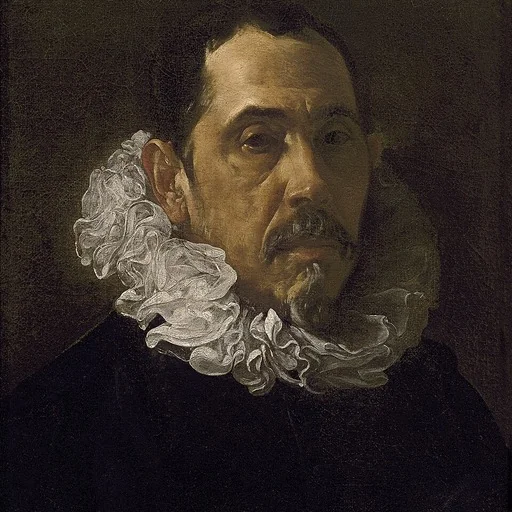
Francisco Pérez del Río (bap. 3 November 1564 – 27 November 1644), known by his pseudonym Francisco Pacheco, was a Spanish painter, best known as the teacher of Alonso Cano and Diego Velázquez, as well as the latter's…

- St Adalbert (obverse); Mary from the scene of the Annunciation (reverse). Wing of the altar retable from Snoza
 Saint Lawrence
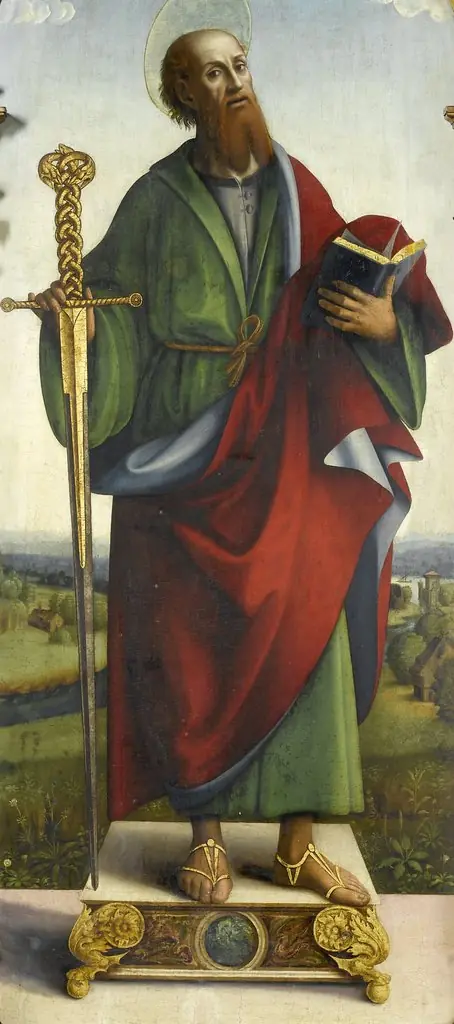 Saint Paul
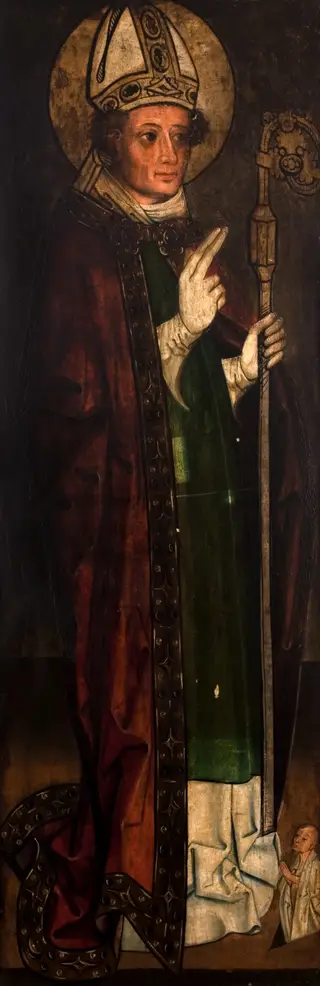 St Stanislaus (obverse); Archangel Gabriel from the Scene of the Annunciation (reverse). Wing of the altar retable from Snoza
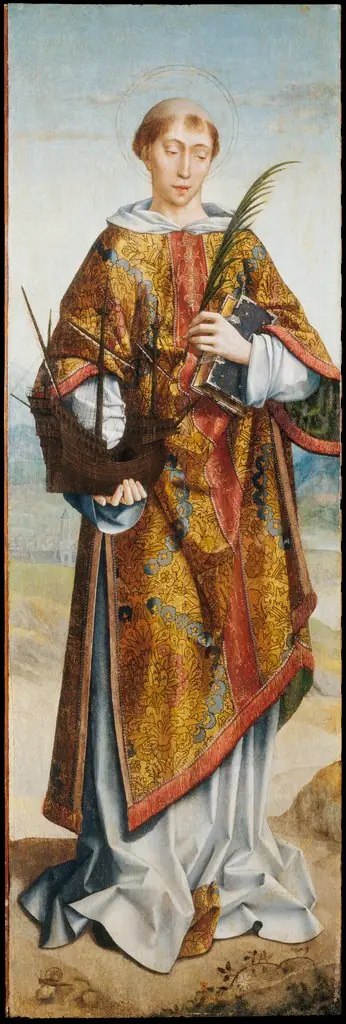 Saint Vincent, Patron Saint of Lisbon
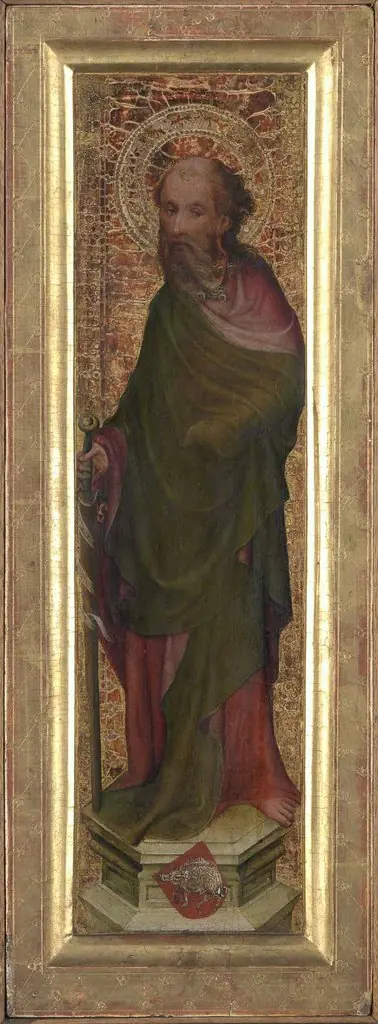 Hl. Paulus Rückseite: Hl. Reinoldus
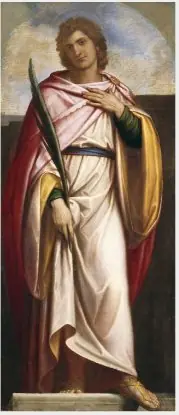 Saint John the Evangelist
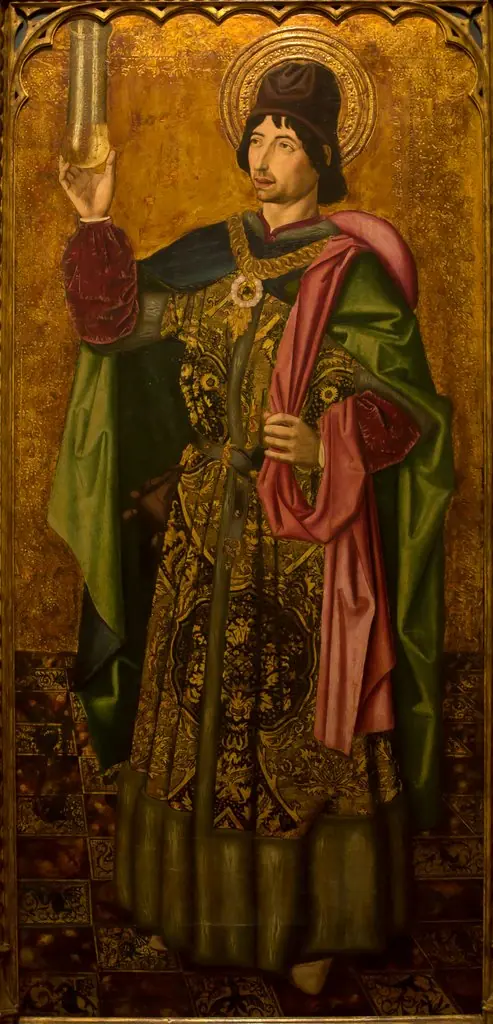 Saint Damian
 Saint Valentine
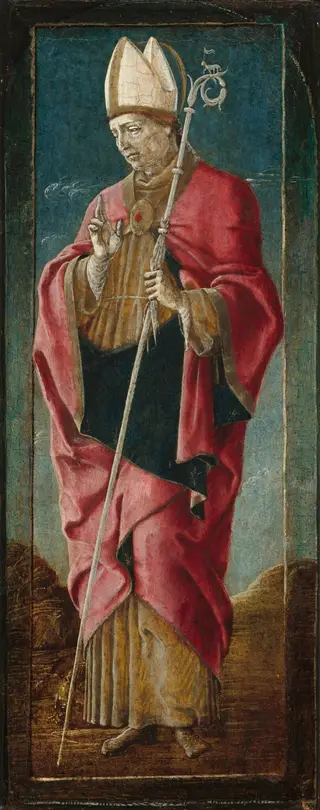 Saint Louis of Toulouse
 Bishop Saint from an Augustinian altarpiece
 Blessing Christ