Artwork
Head of a Woman
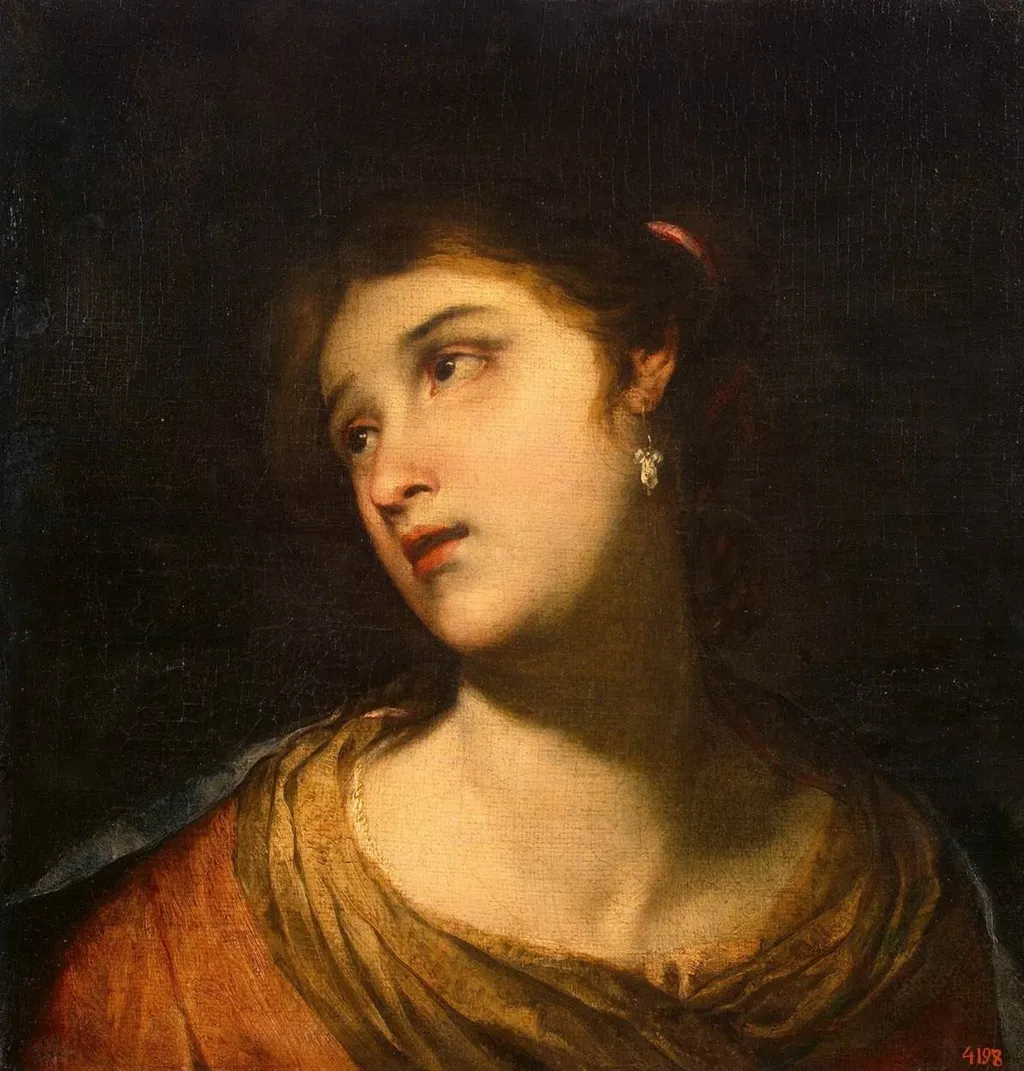
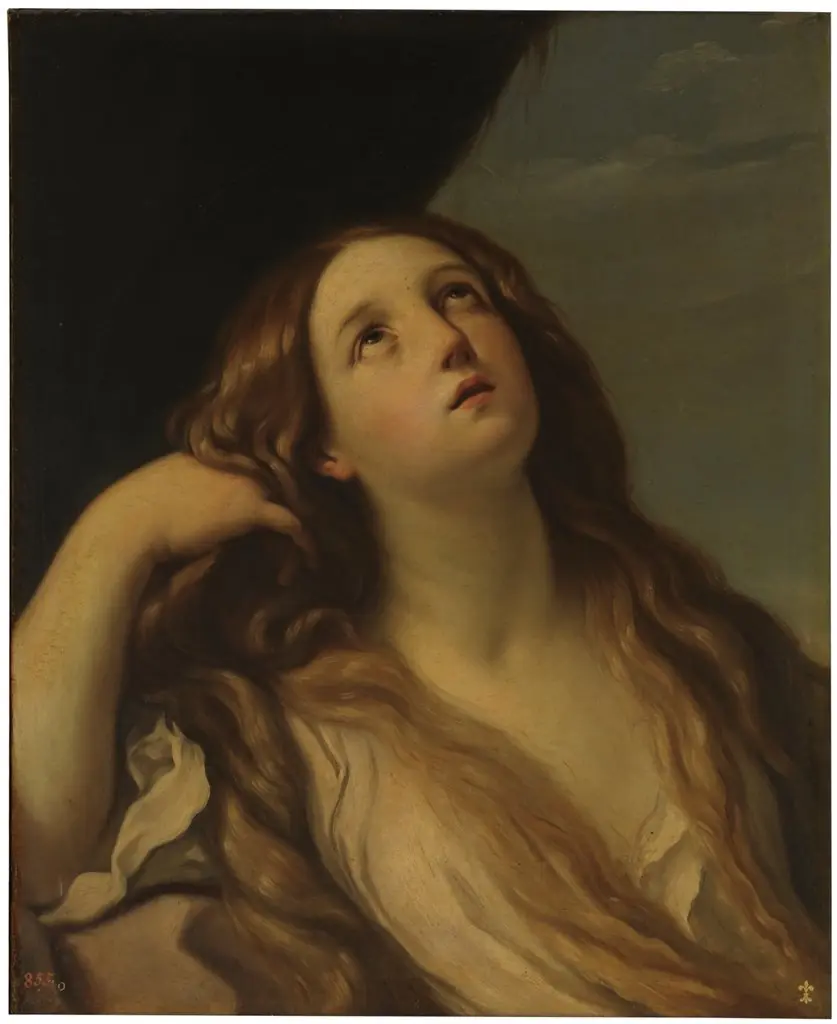
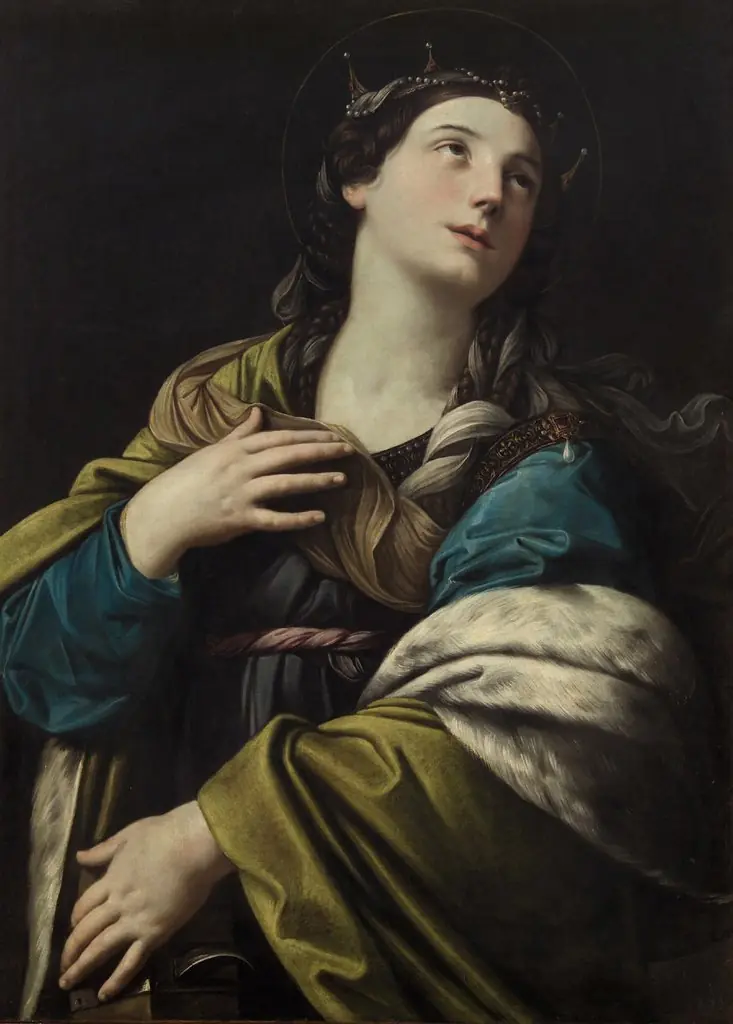
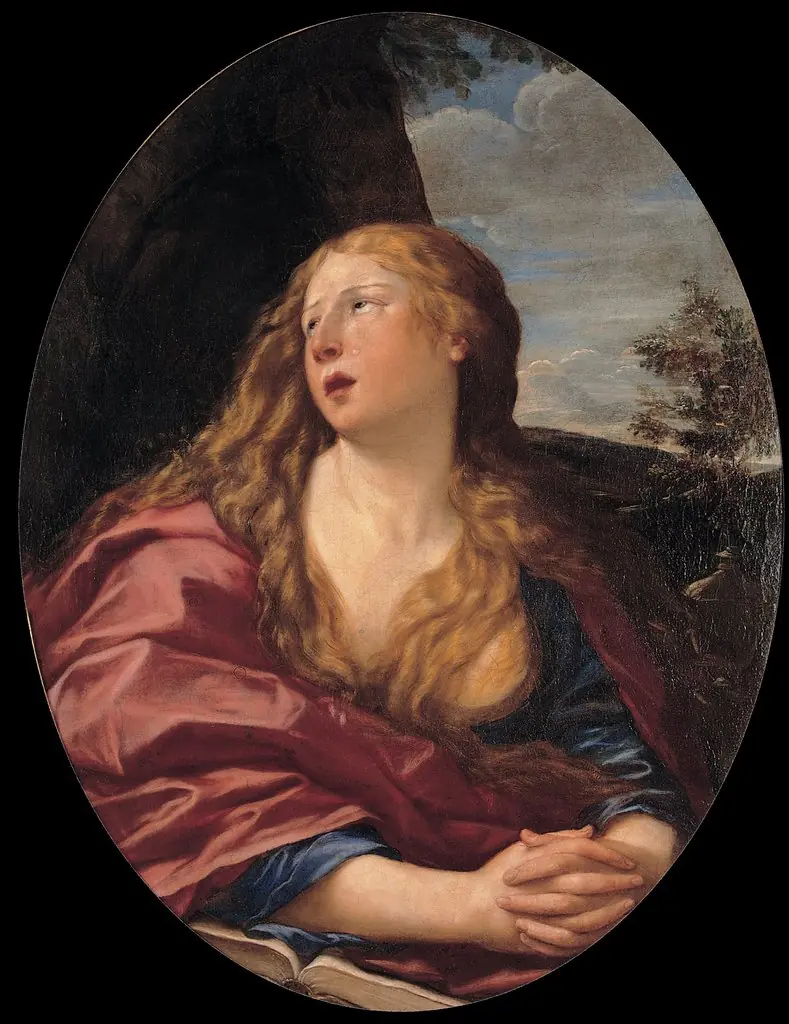
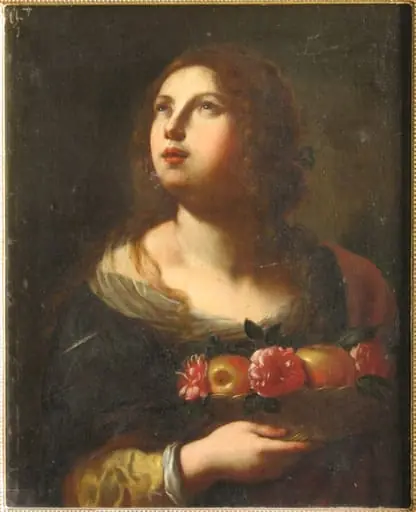
Head of a Woman is an oil painting by the Spanish Baroque Tenebrist artist Juan de Valdés Leal. It dates from 1658 and is held in the collection of the Hermitage Museum.
About this work
Overview
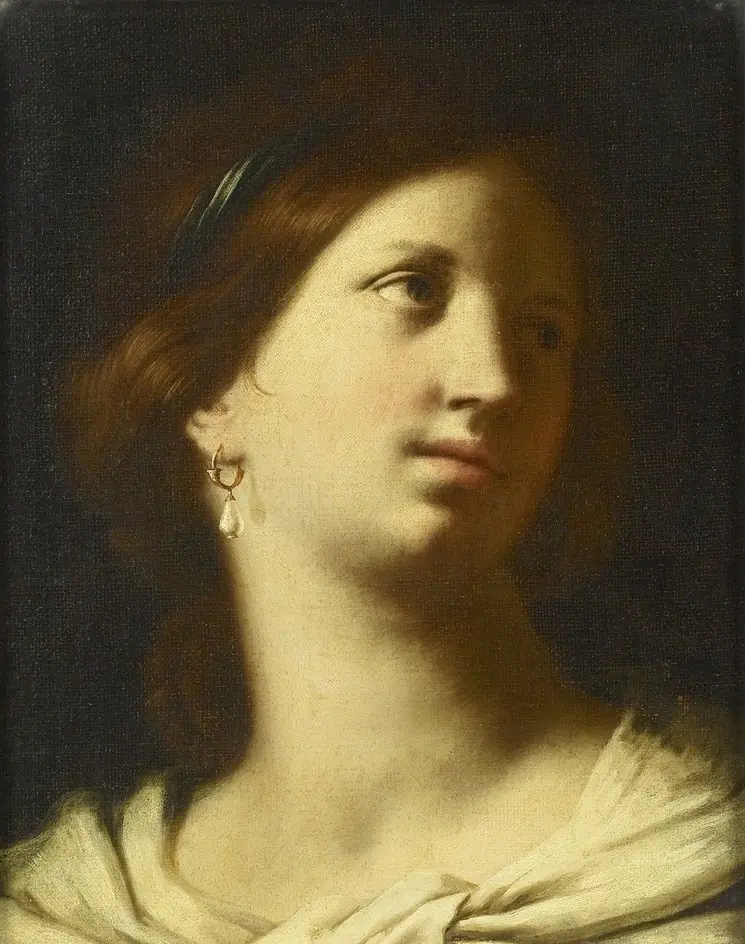
Juan de Valdés Leal’s oil painting Head of a Woman, executed in 1658, is part of the collection at the State Hermitage Museum. The work presents a half‑length portrait of a woman whose head and shoulders are turned slightly away from the viewer, set against an unadorned dark backdrop that isolates the figure.
Subject & Meaning
The sitter is depicted with her hair gathered back and secured by a modest red ribbon, wearing a simple gold earring. Her attire consists of a dark red outer garment layered over a lighter dress, suggesting modest elegance without overt symbolism. The composition focuses on the individual’s presence rather than narrative content.
Technique & Style
Valdés Leal employs chiaroscuro, contrasting deep shadows with illuminated flesh to model the face in three dimensions. Soft gradations under the cheek and chin create a gentle modeling of the skin, while the dark background amplifies the luminous quality of the portrait’s central figure. The brushwork remains restrained, emphasizing tonal harmony over decorative detail.
History & Provenance
Painted in the mid‑seventeenth century, the portrait entered the State Hermitage Museum’s holdings, where it remains on display. Its provenance prior to acquisition by the Hermitage is not extensively documented, but the work reflects the artist’s activity in Spain during the later Baroque period.
Context
Created during a period when Spanish portraiture emphasized realism and moral seriousness, the painting aligns with Valdés Leal’s broader oeuvre, which often combined sober representation with dramatic lighting. The work exemplifies the Baroque interest in capturing the inner character of subjects through controlled light and compositional restraint.
Artist & collection