Artwork
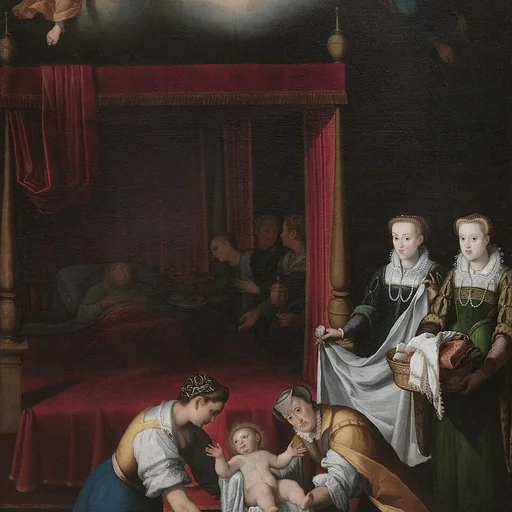
El nacimiento de Cristo
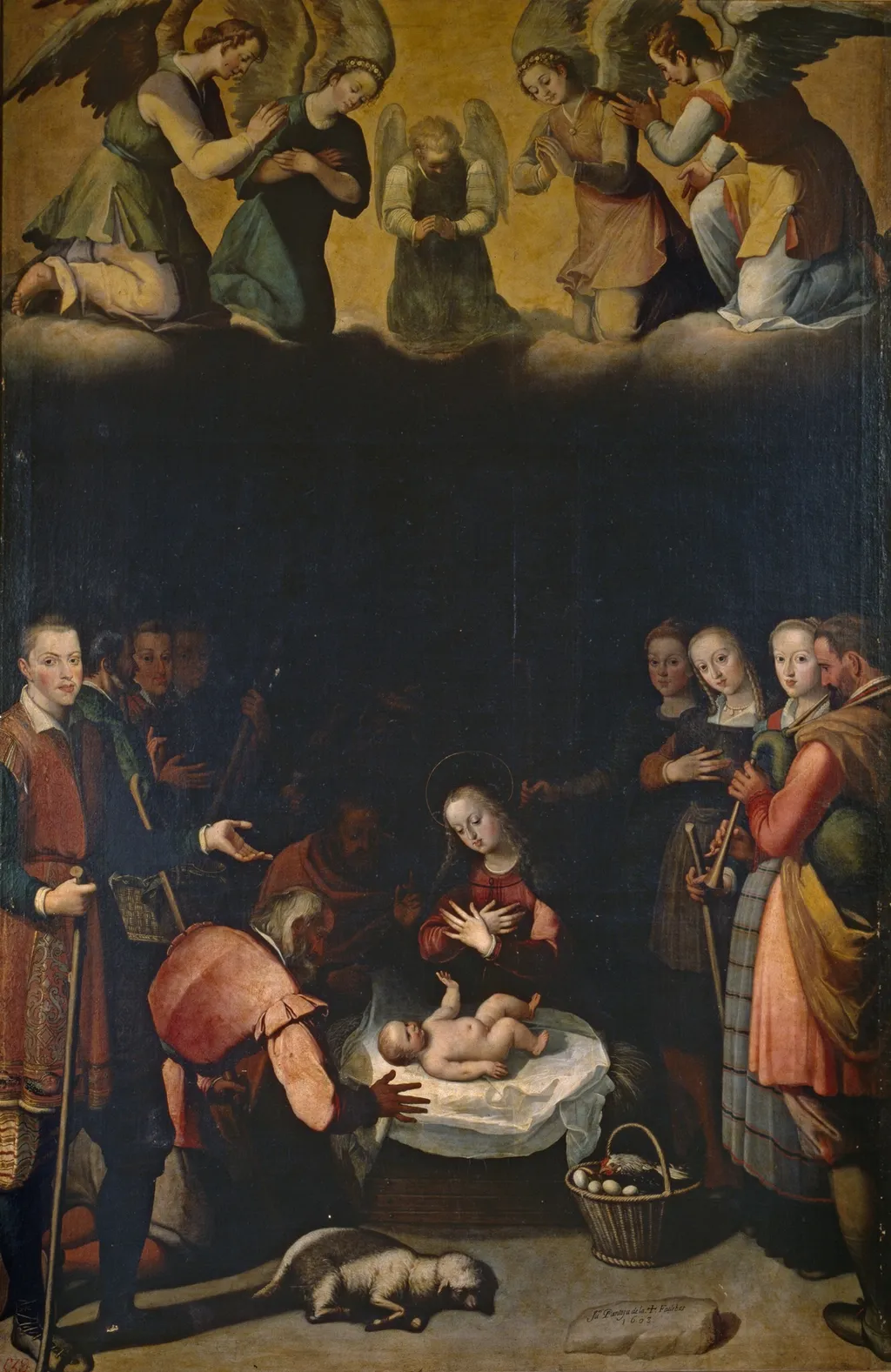
El nacimiento de Cristo is an oil painting by the Early Baroque Italian artist Juan Pantoja de la Cruz. It dates from 1603 and is held in the collection of the Museo del Prado.
About this work
Subject & Meaning
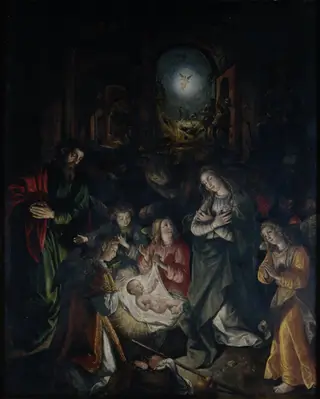
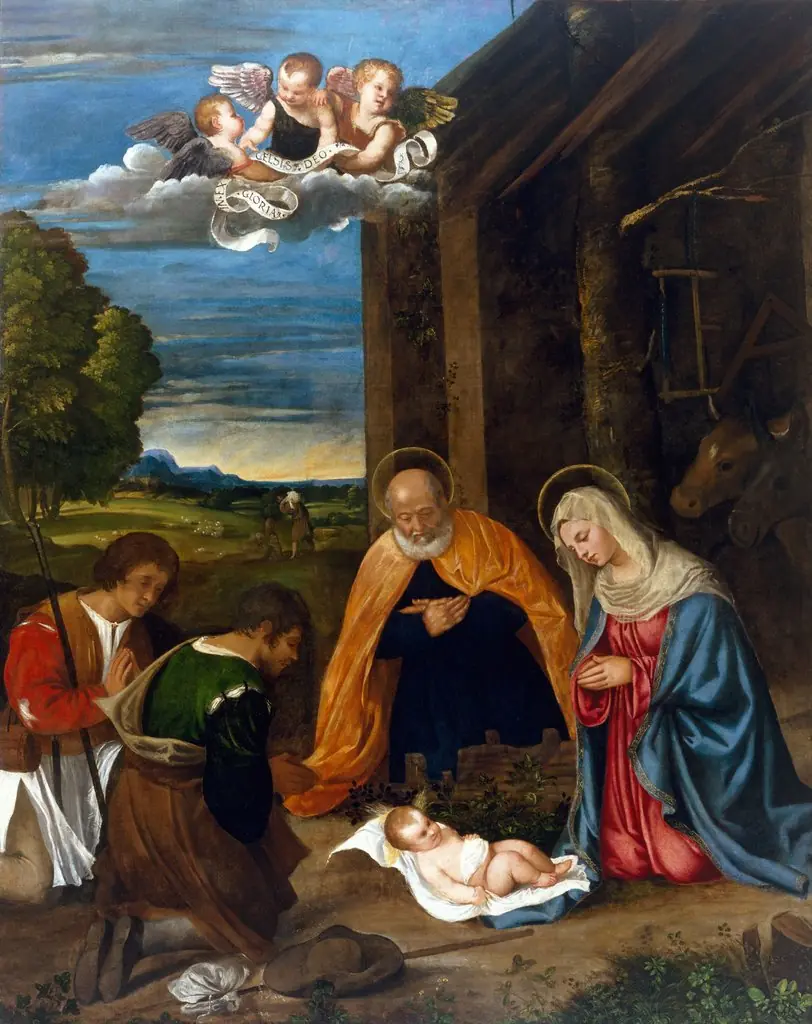
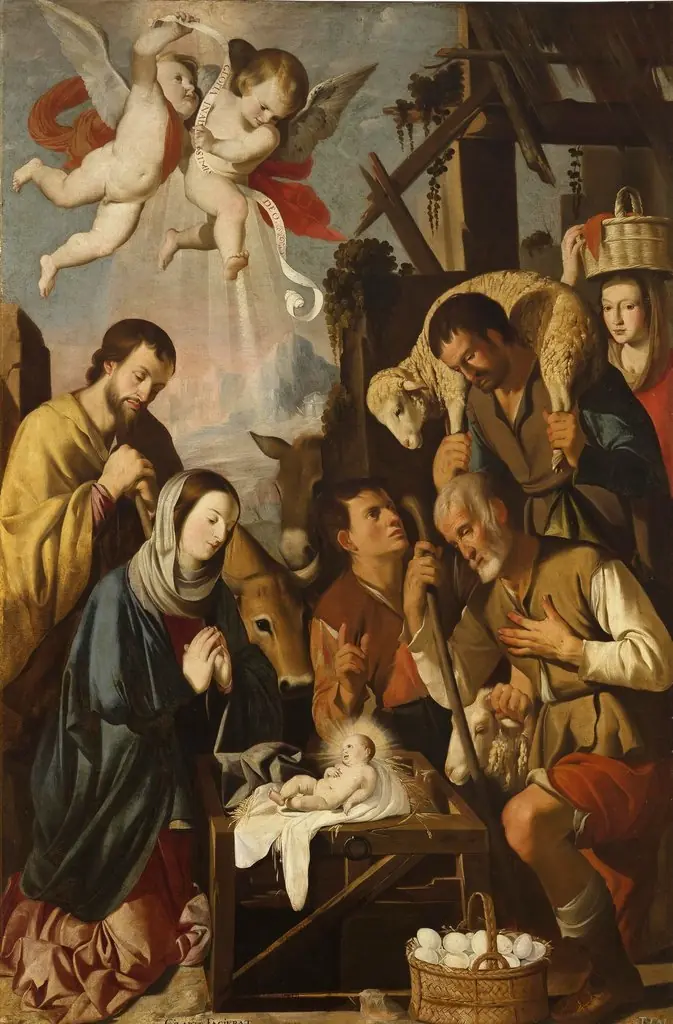
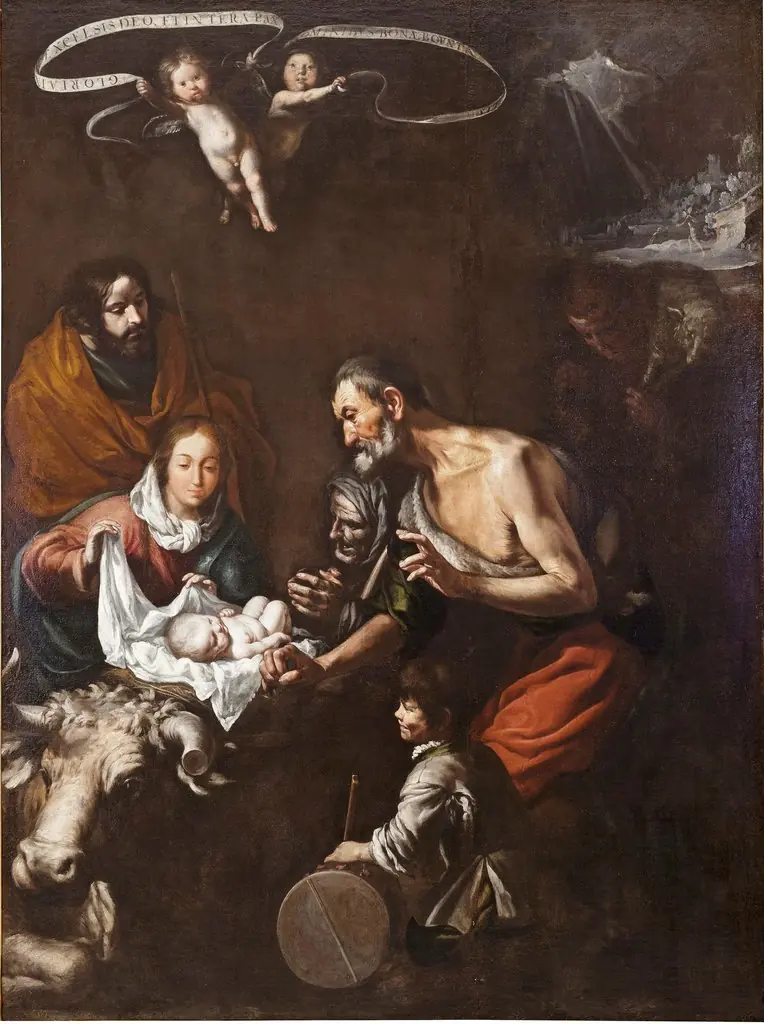
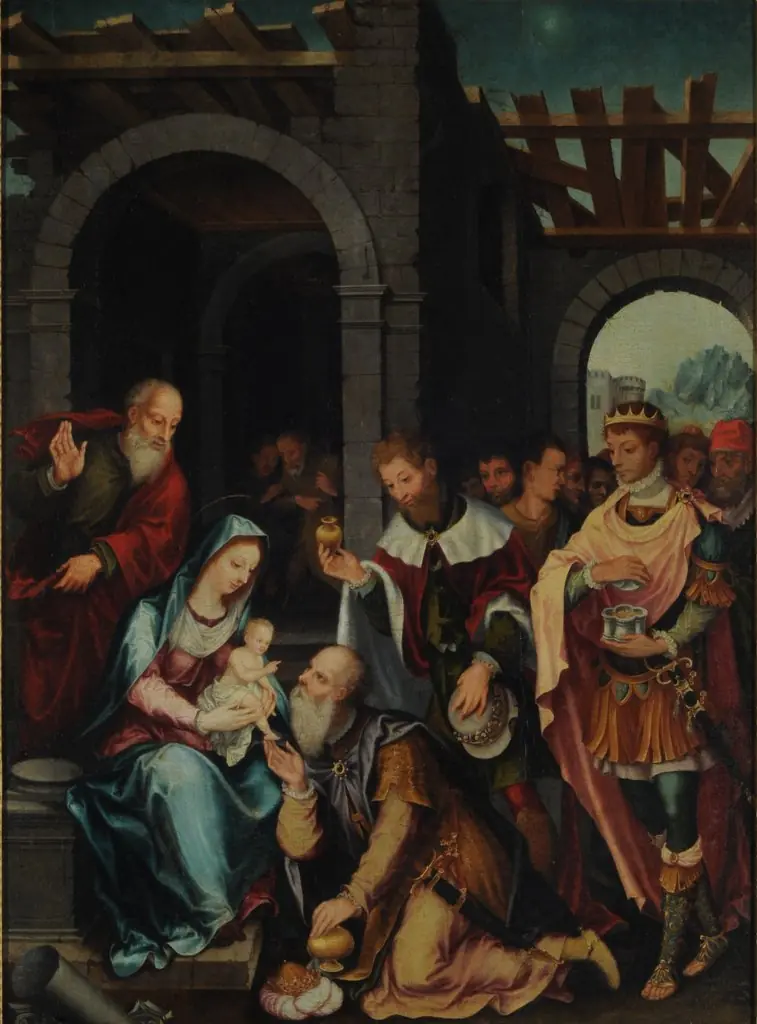
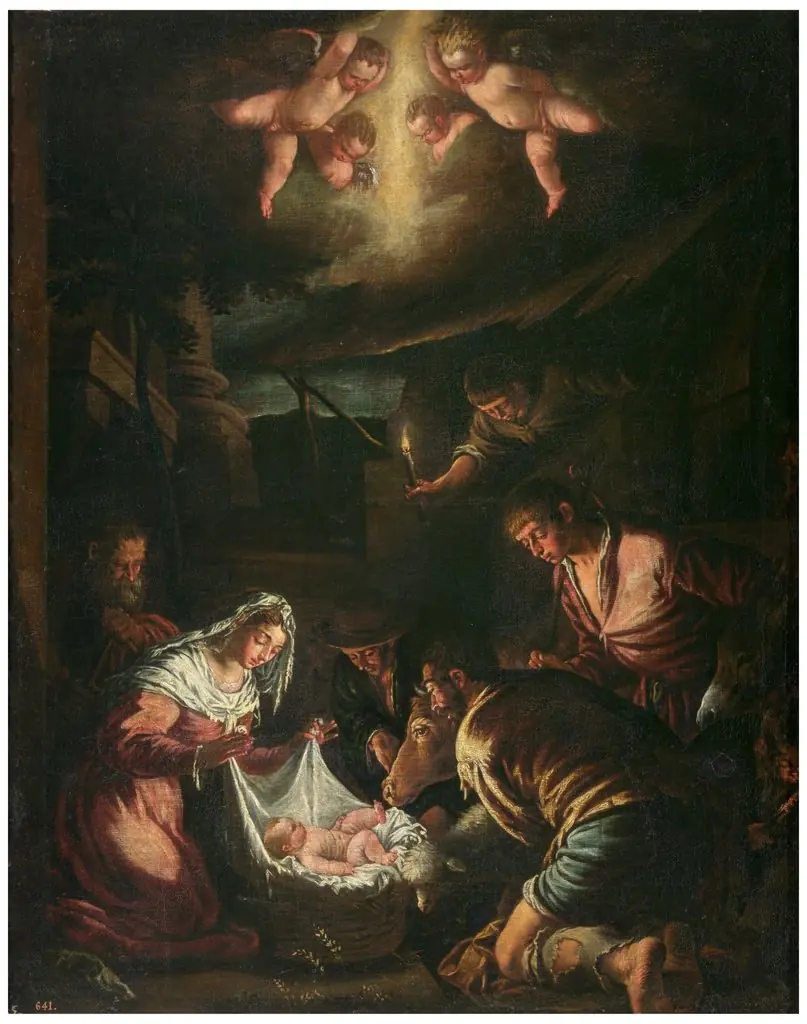
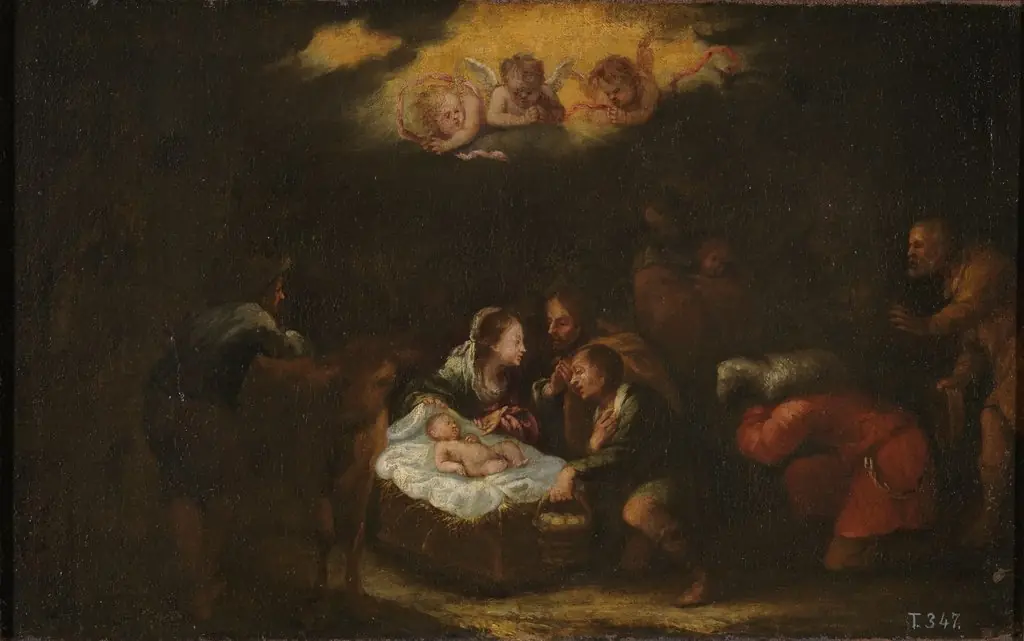
The work depicts the Nativity of Jesus, showing the infant Christ in a manger attended by the Virgin Mary and Saint Joseph.
The work depicts the Nativity of Jesus, showing the infant Christ in a manger attended by the Virgin Mary and Saint Joseph. The scene is rendered in a restrained, courtly manner typical of Juan Pantoja de la Cruz’s mature style, with careful attention to surface textures and a muted palette.
A humble basket of eggs placed beside the manger functions as a symbolic reference to the Incarnation, since eggs are associated with rebirth and the Eucharist in Christian iconography. The composition’s emphasis on still-life details underscores the sacred event’s grounding in everyday life, aligning with Counter-Reformation devotional aims to make sacred narratives tangible.
Technique & Style
El nacimiento de Cristo is executed in oil paint on canvas, a standard support for large-scale Spanish religious commissions of the early seventeenth century. The work is a religious painting by Juan Pantoja de la Cruz, dated 1603, and is held by the Museo del Prado. Its physical dimensions are recorded as 260 cm in height by 172 cm in width, giving the composition a pronounced vertical orientation suited to its devotional subject.
History & Provenance
Juan Pantoja de la Cruz painted El nacimiento de Cristo in 1603, an oil on canvas work measuring 260 by 172 centimeters. The painting entered the collection of the Museo del Prado, where it remains on display. Its creation was commissioned as a religious composition, reflecting Counter-Reformation artistic priorities. The work is catalogued in the Museo del Prado's records with an inception date of 1603-01-01.
The painting is part of the Museo del Prado collection in Madrid. It is cataloged under the museum's inventory, though the specific accession number is not provided in the sources. The work has been displayed in exhibitions at the Museo del Prado, including a 2011 showcase of Spanish religious art, as documented in the museum's exhibition history.
Context
El nacimiento de Cristo, painted by Juan Pantoja de la Cruz in 1603, exemplifies Counter-Reformation religious art through its devotional focus on the infant Christ and symbolic use of the egg as fertility reference. The work's formal composition and naturalistic rendering reflect broader artistic trends in early 17th-century Spanish painting, positioning it within Pantoja de la Cruz's established oeuvre of devotional imagery for elite patrons. Its placement in the Museo del Prado collection underscores its significance as a representative example of Spanish Renaissance religious painting.
Legacy
El nacimiento de Cristo by Juan Pantoja de la Cruz exerted quiet influence through its devotional clarity and technical precision within early Baroque religious painting, remaining part of the Museo del Prado's collection as a testament to Spanish Counter-Reformation visual language, though it never became a widely reproduced image or cited in major art historical narratives of the 17th century.
Overview
Created in 1603, El nacimiento de Cristo is an oil painting that presents a traditional nativity tableau. The Virgin Mary, clothed in red and blue, cradles the infant Jesus on a white linen, while shepherds and angels gather around them. The composition is set against a deep, shadowed backdrop, with a gentle golden illumination that highlights the central figures.
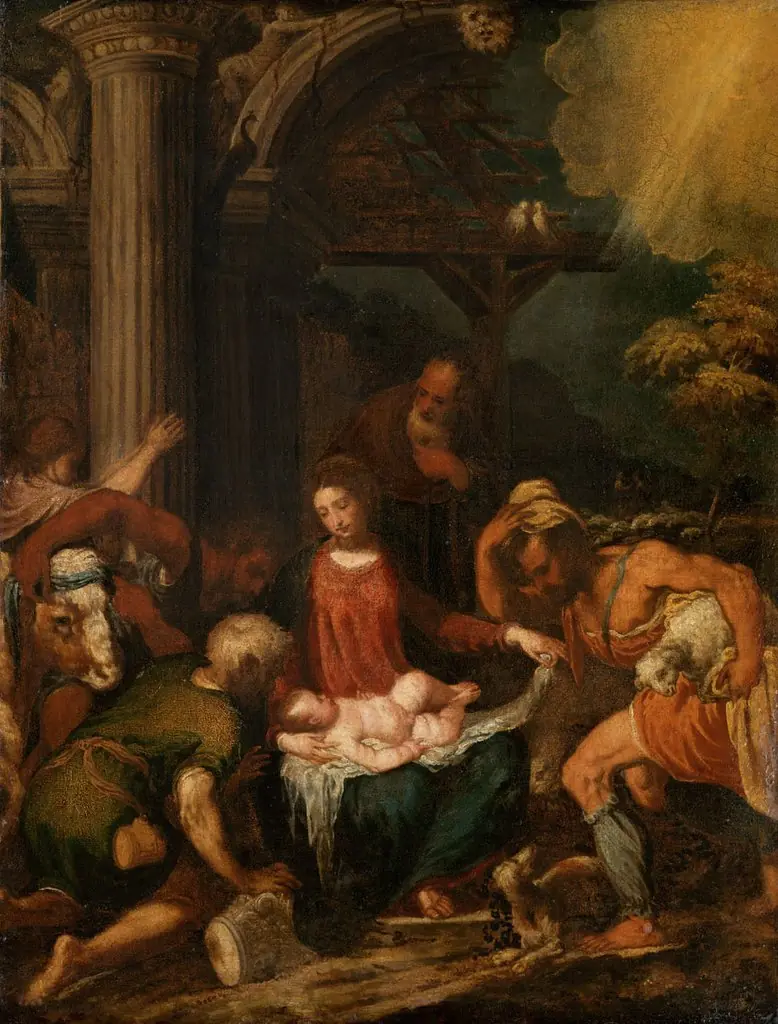
Own this work as a print
Artist & collection
Artist
Juan Pantoja de La Cruz (1553 – 26 October 1608) was a Spanish painter, one of the best representatives of the Spanish school of court painters.

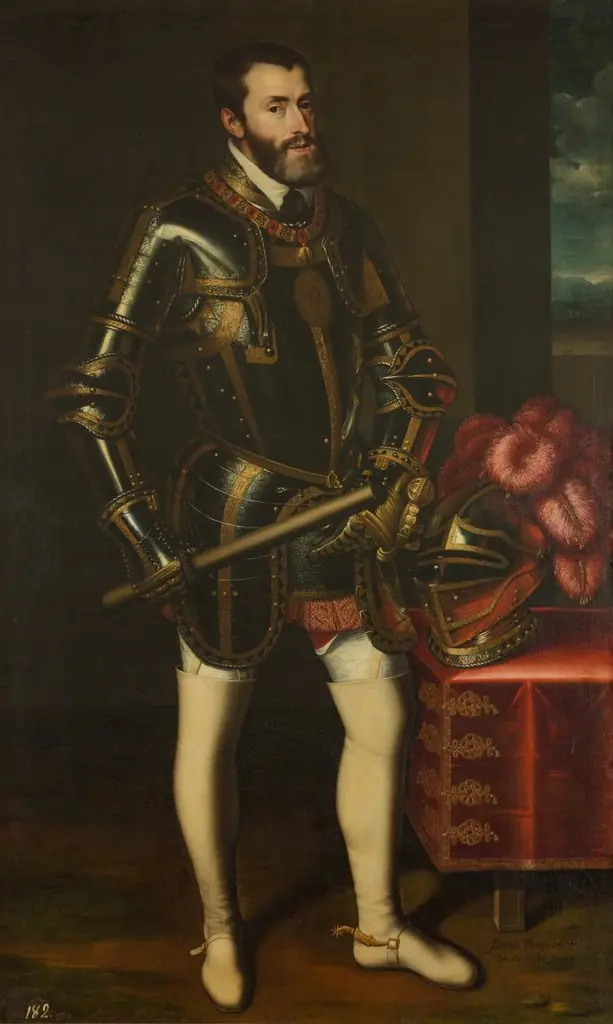 The Emperor Charles V
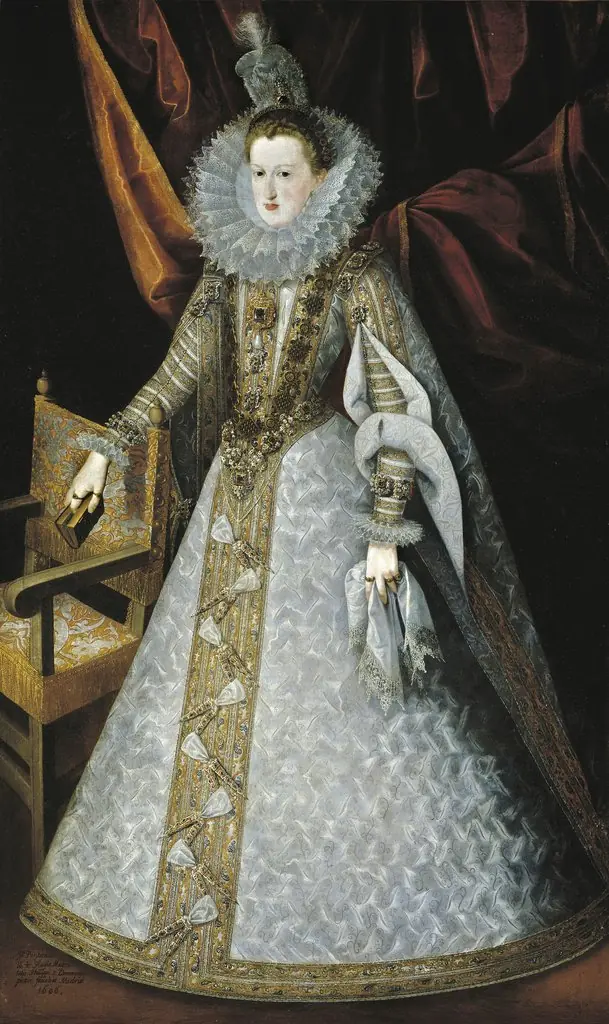 Margaret of Austria
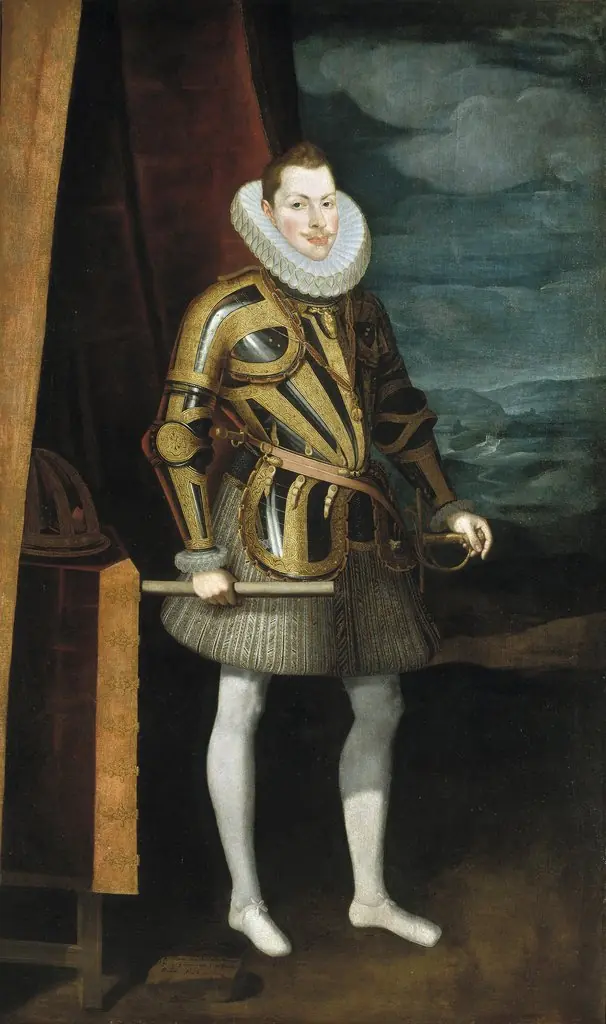 Philip III
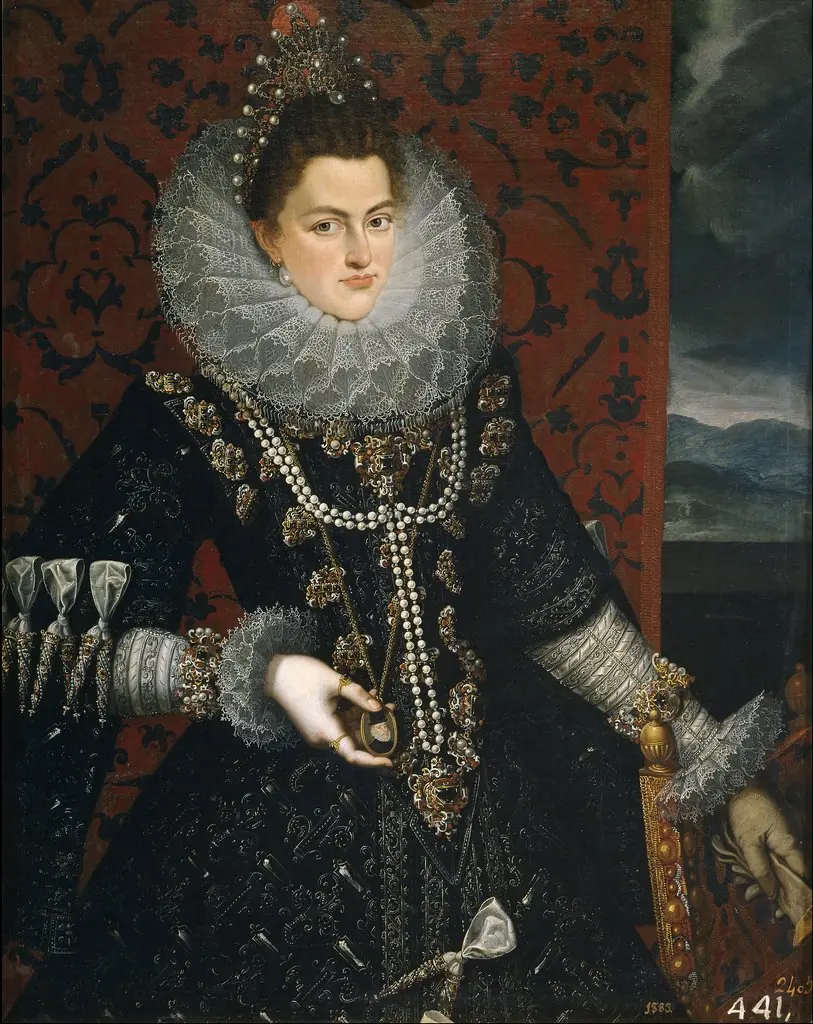 The Infanta Isabel Clara Eugenia
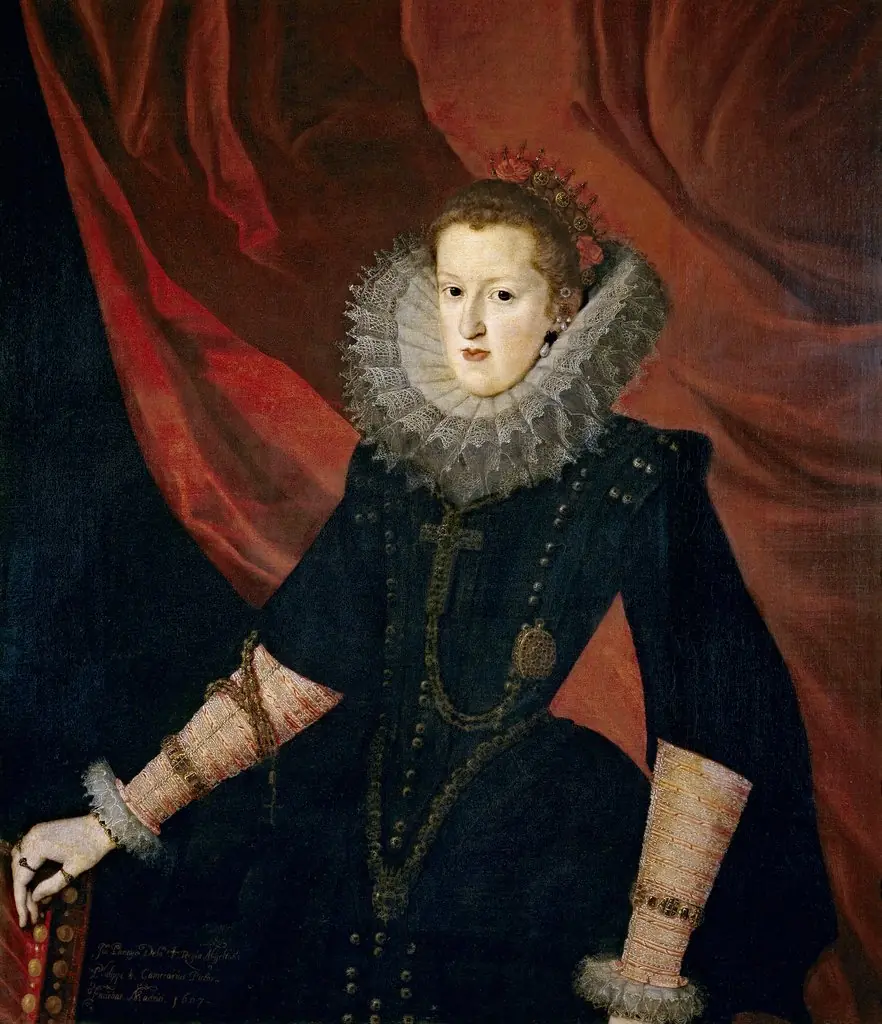 Margaret of Austria
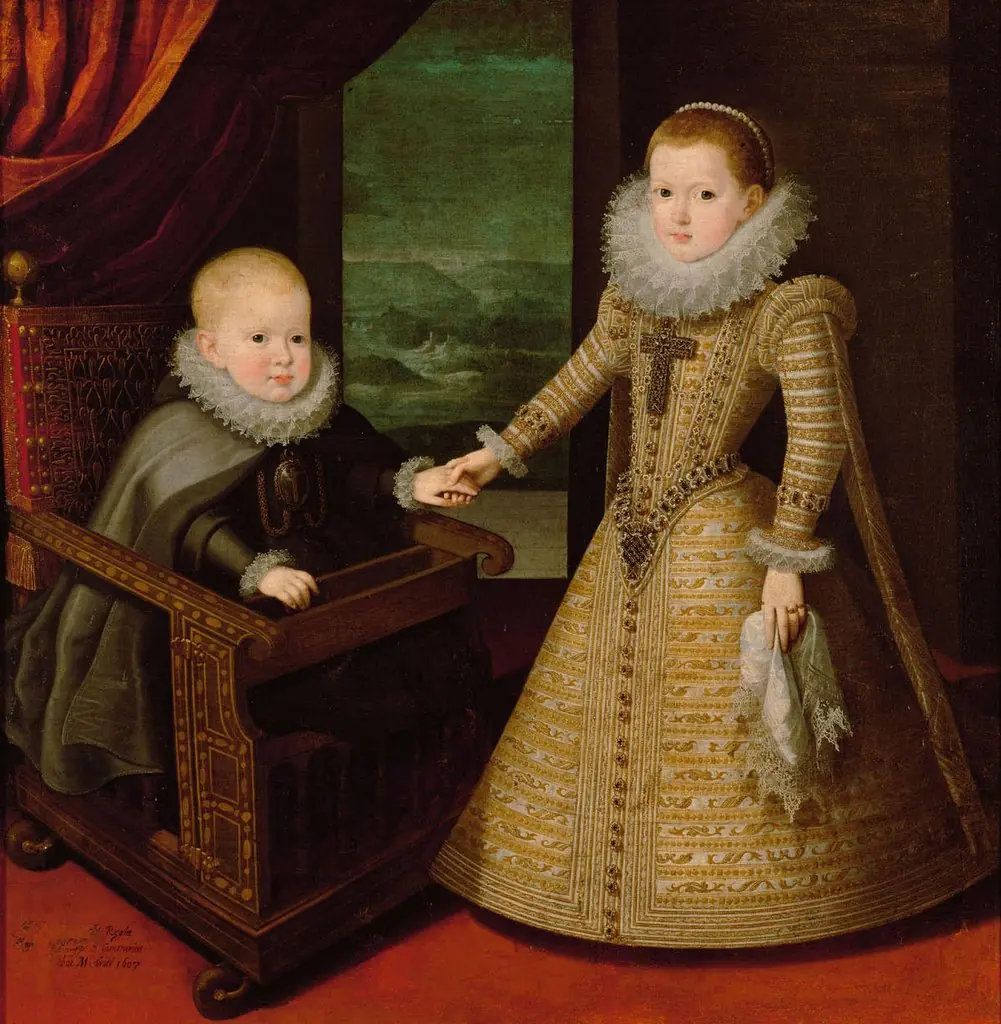 König Philipp IV. von Spanien (1605-1665) in geistlichem Gewand und seiner Schwester Infantin Anna (1601-1666), Bildnis in ganzer Figur
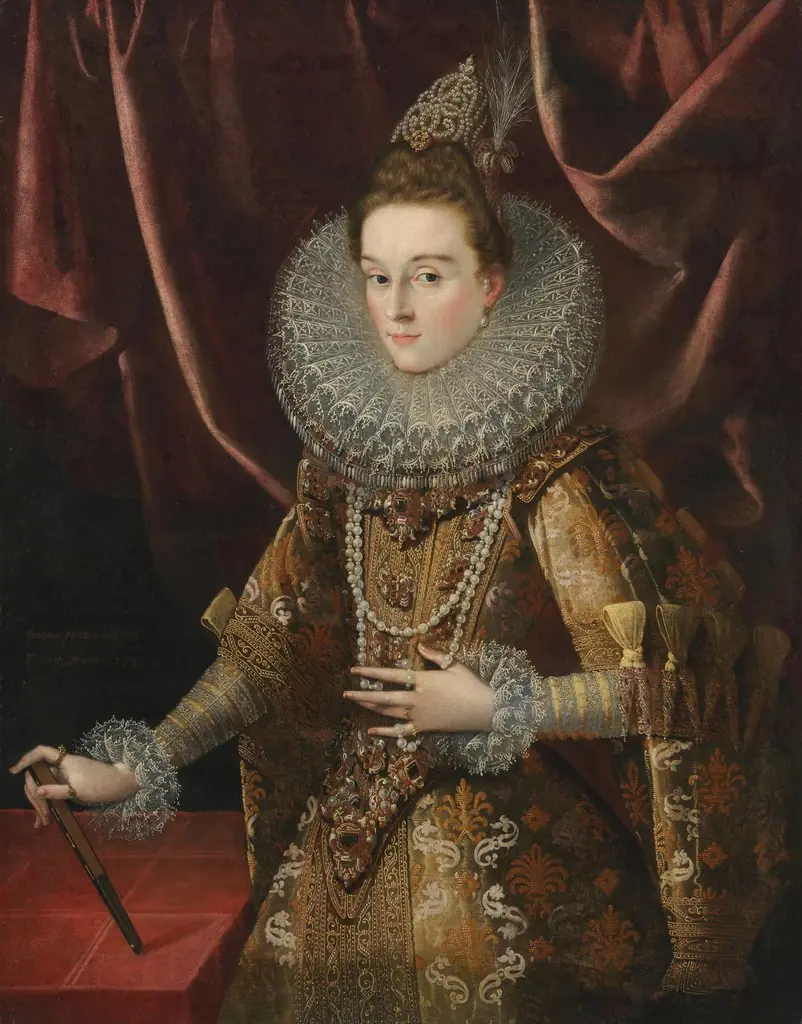 Isabella Clara Eugenia by Juan Pantoja de la Cruz
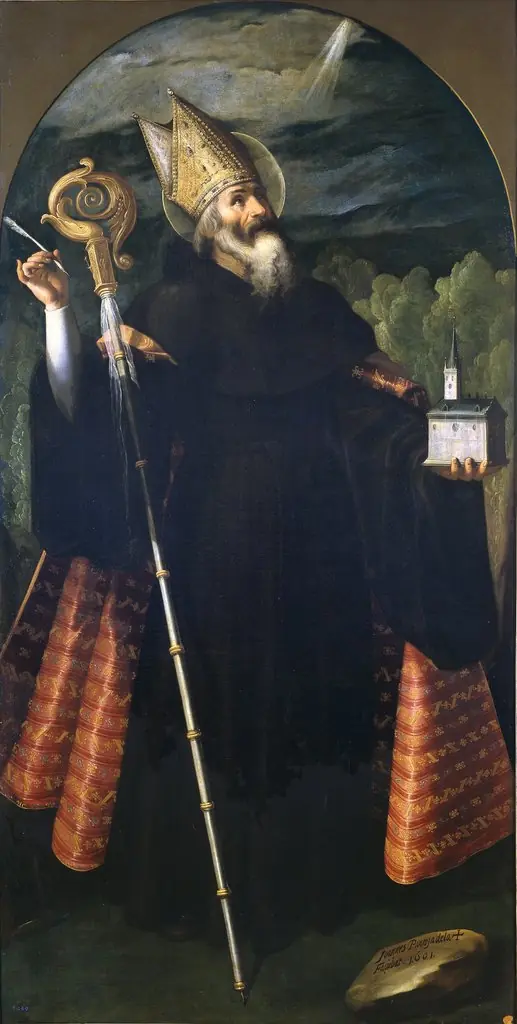 Saint Augustine