Artwork
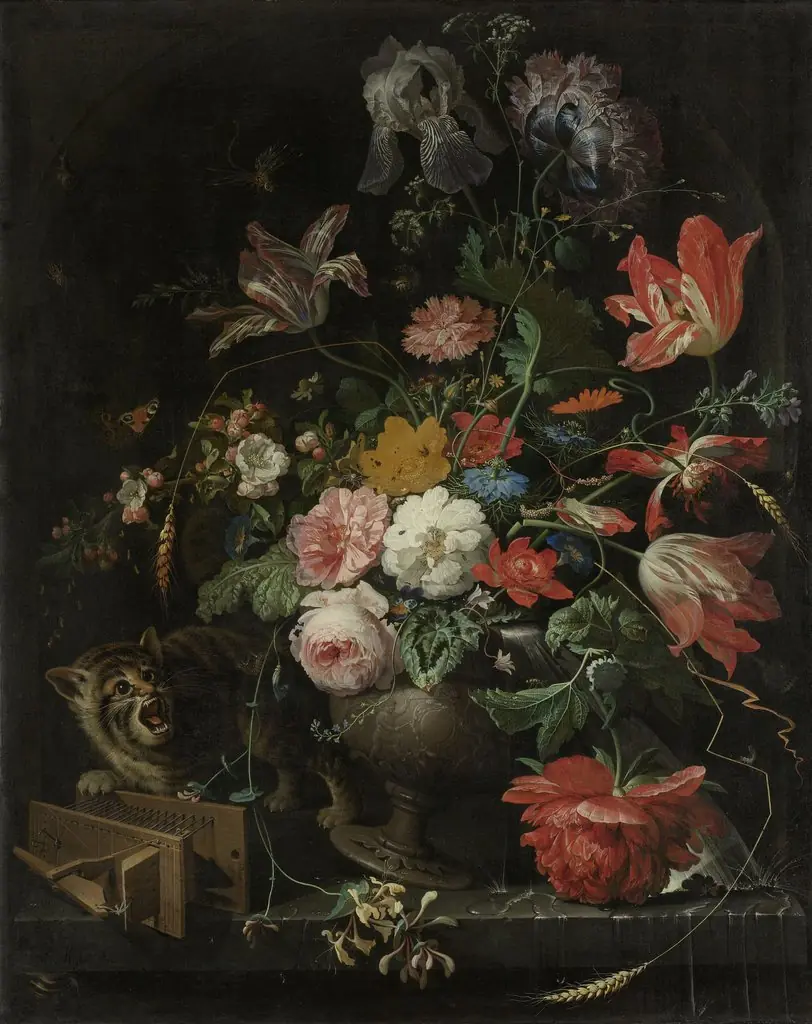
Flower piece with cat and mousetrap
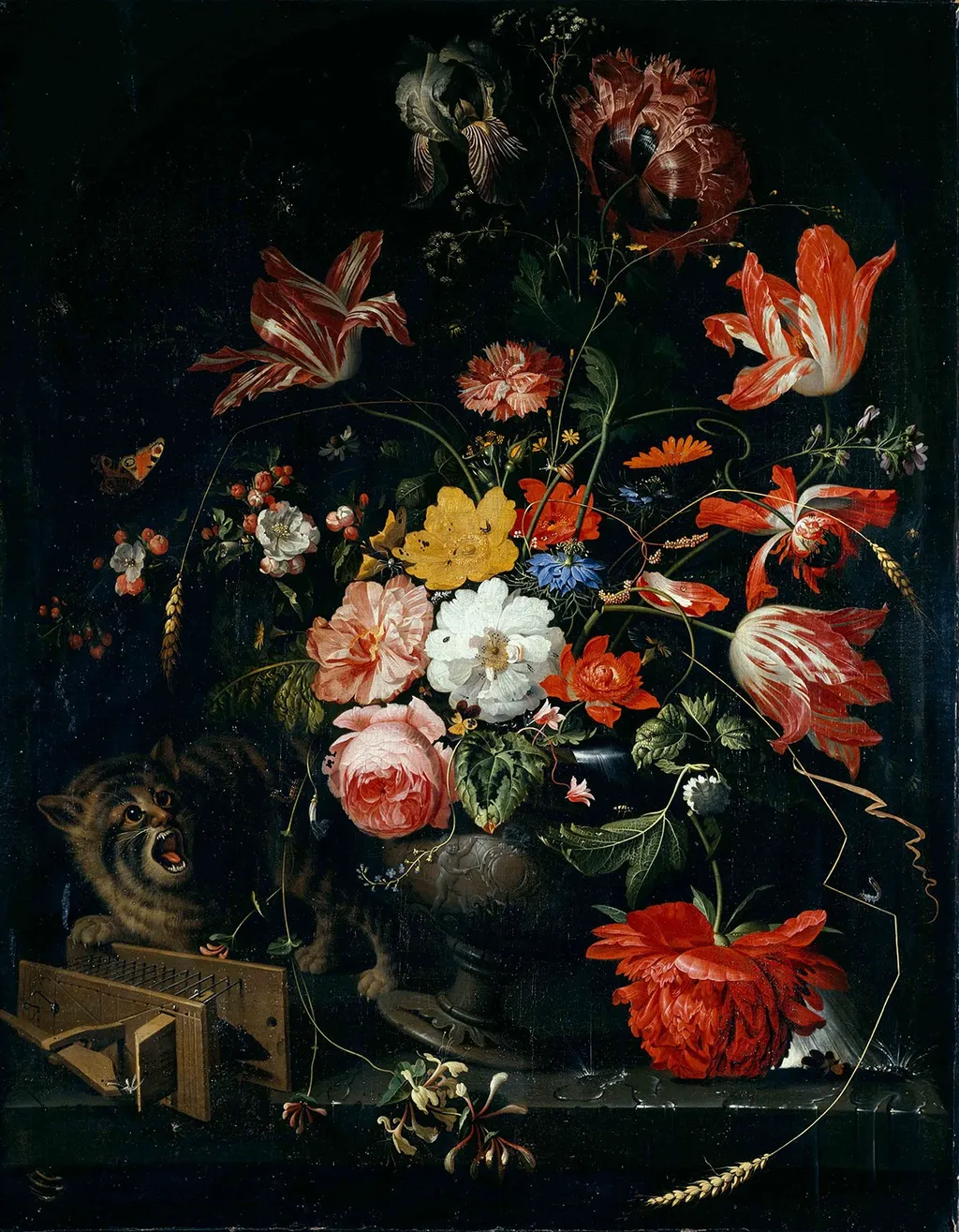
Flower piece with cat and mousetrap is an oil painting by the Dutch Golden Age artist Abraham Mignon. It dates from 1670 and is held in the collection of the Museum of Fine Arts of Lyon.
About this work
Overview
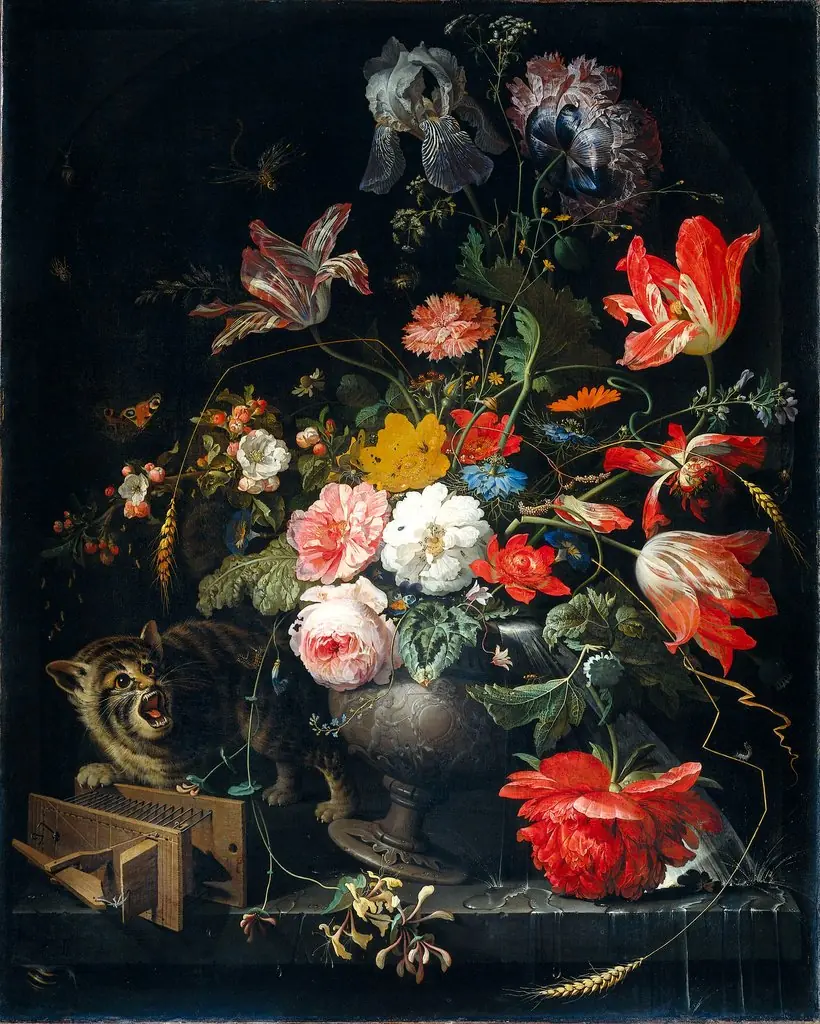
The composition centers on a vase of blooming flowers beside a poised cat and a mechanical mousetrap, rendered with meticulous attention to texture and light.
Painted in 1670 by Abraham Mignon, this oil-on-canvas still life combines botanical precision with quiet narrative tension. Mignon, trained in Germany and active in Utrecht, specialized in intricate floral arrangements infused with subtle symbolism. The composition centers on a vase of blooming flowers beside a poised cat and a mechanical mousetrap, rendered with meticulous attention to texture and light.
The work resides in the Museum of Fine Arts of Lyon, reflecting the Dutch Golden Age’s fascination with nature’s transience.
Subject & Meaning
The painting juxtaposes beauty and danger: lush flowers symbolize fleeting life, while the cat’s alert posture and the mousetrap suggest impending violence. The cat, mouth slightly open, appears poised to strike, introducing an element of suspense. These objects function as memento mori, reminders of mortality and the fragility of earthly pleasures.
The interplay between the organic and the mechanical underscores a moral tension common in Dutch still lifes of the period.
Technique & Style
Mignon employed fine brushwork to capture the delicate petals of tulips and roses, the glossy sheen of leaves, and the fine fur of the cat. Dark, unmodulated backgrounds heighten the luminosity of the foreground, a technique inherited from Jan Davidszoon de Heem. The mousetrap’s metallic spring and wooden frame are rendered with exacting realism, emphasizing tactile presence. Shadows are carefully modeled to enhance volume, creating an illusion of depth and physicality that invites close observation.
History & Provenance
Created during Mignon’s mature period in Utrecht, the painting reflects his training under German artists and his absorption of Flemish still life traditions. It entered the collection of the Museum of Fine Arts of Lyon in the 19th century, likely through acquisition from a private European collection. Its survival in good condition offers insight into the circulation of Dutch still lifes beyond the Netherlands during the early modern period.
Context
In 17th-century Dutch society, still lifes often conveyed moral or religious messages through symbolic objects. Flower paintings, popular among wealthy patrons, were not merely decorative but served as meditations on decay and divine order. The inclusion of a mousetrap and a predatory cat aligns with broader cultural anxieties about intrusion and control in domestic spaces, mirroring the era’s interest in natural philosophy and the hidden workings of the world.
Legacy
Mignon’s work influenced later still life painters through his synthesis of naturalism and allegory. While less widely known than contemporaries like de Heem, his precise technique and thematic depth contributed to the evolution of Dutch floral painting. Today, the painting remains a quiet example of how everyday objects could be imbued with layered meaning, preserving a moment of suspended tension that continues to engage viewers through its realism and restraint.
Artist & collection
Artist
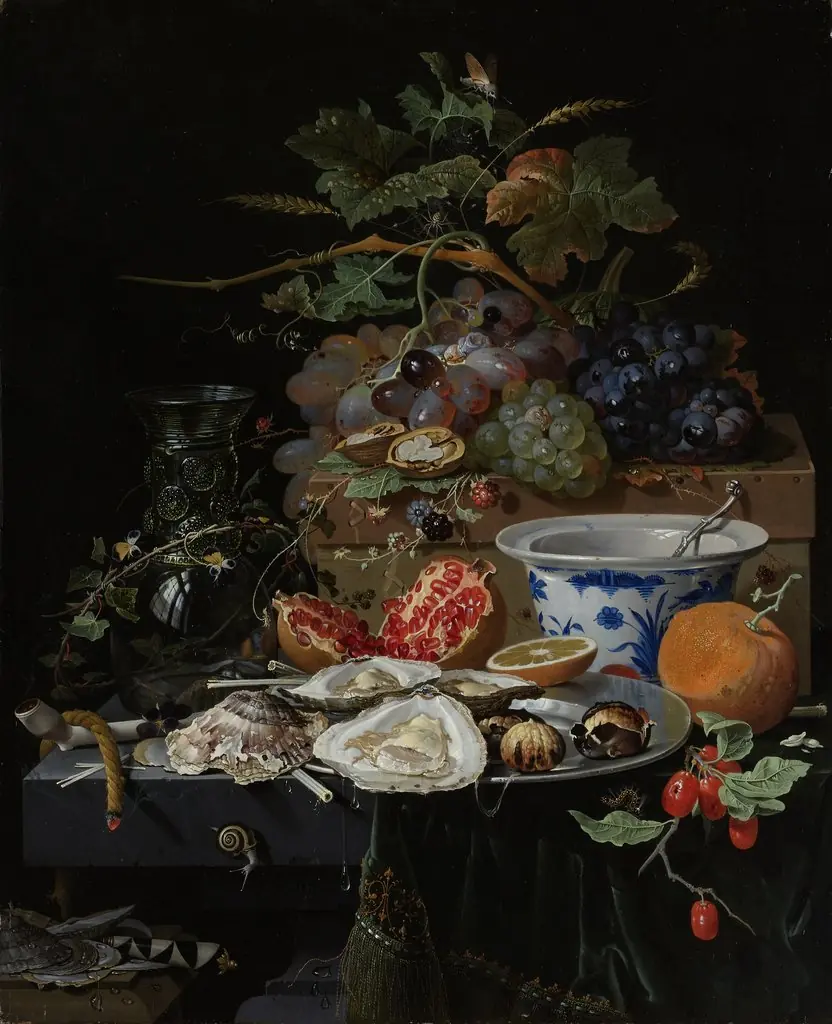
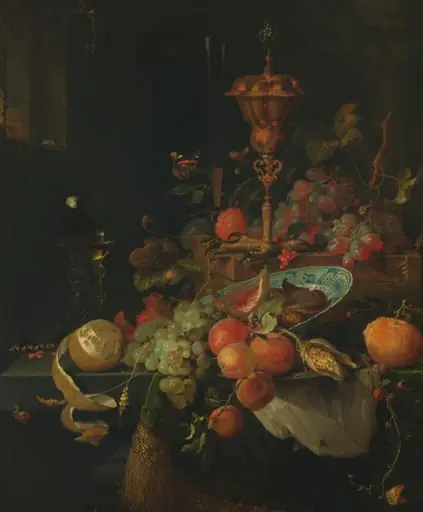
Abraham Mignon or Minjon (21 June 1640 – 27 March 1679) was a Dutch still life painter.

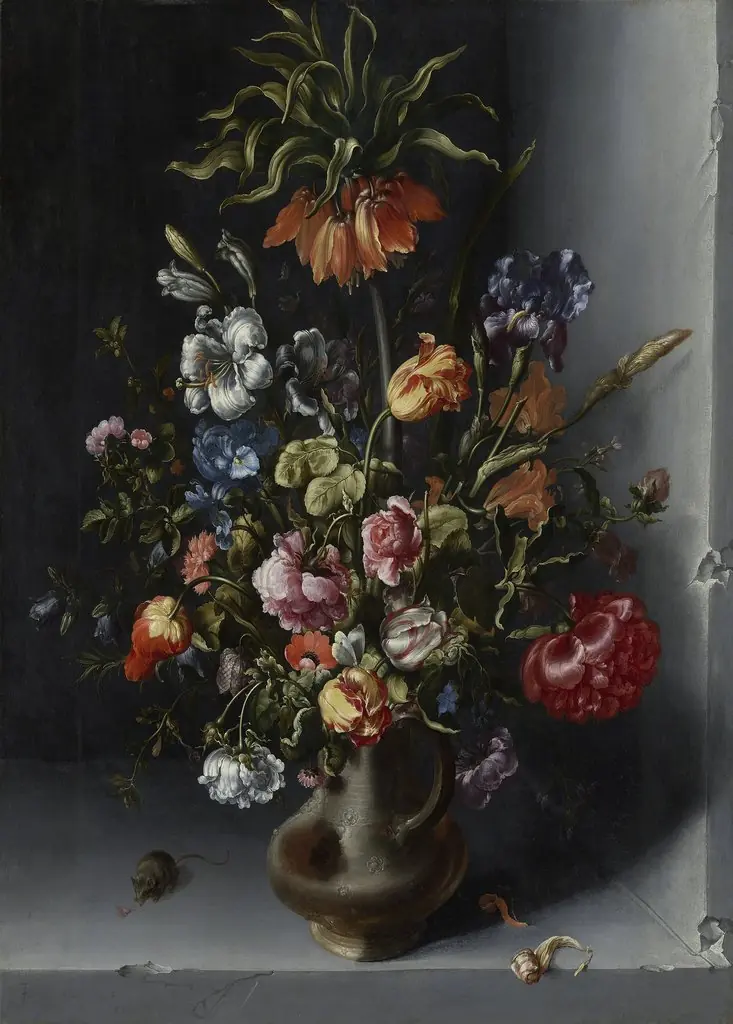 Flower piece with fritillaria in a niche
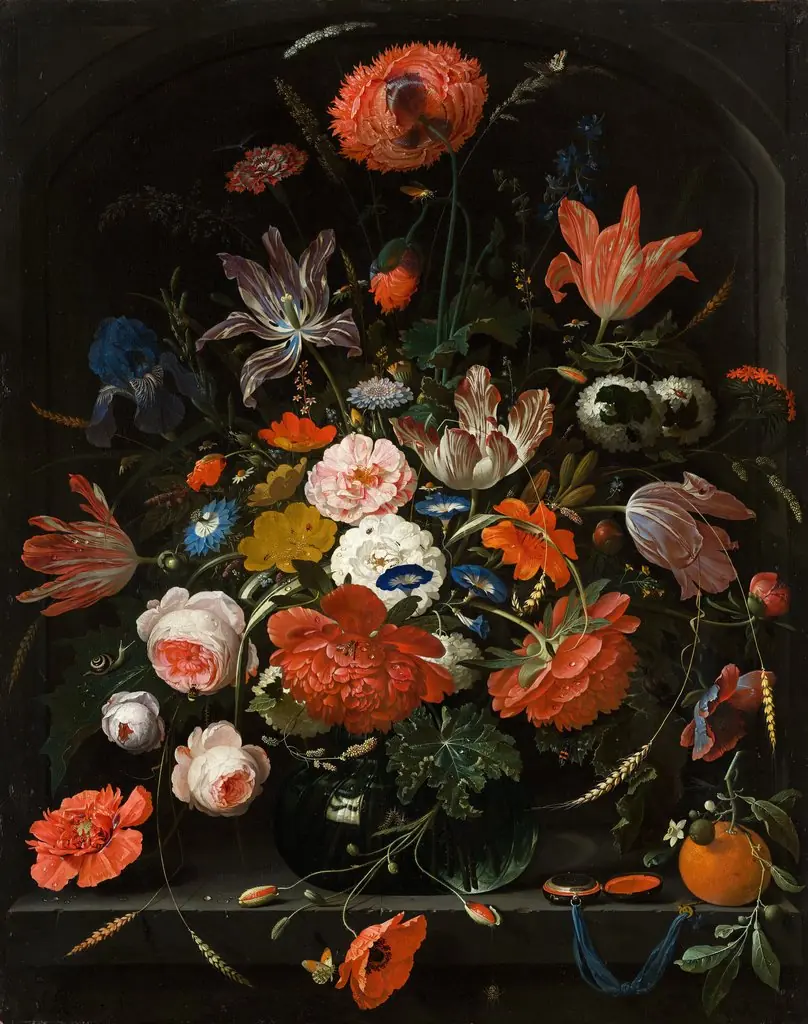 Flowers in a Glass Vase
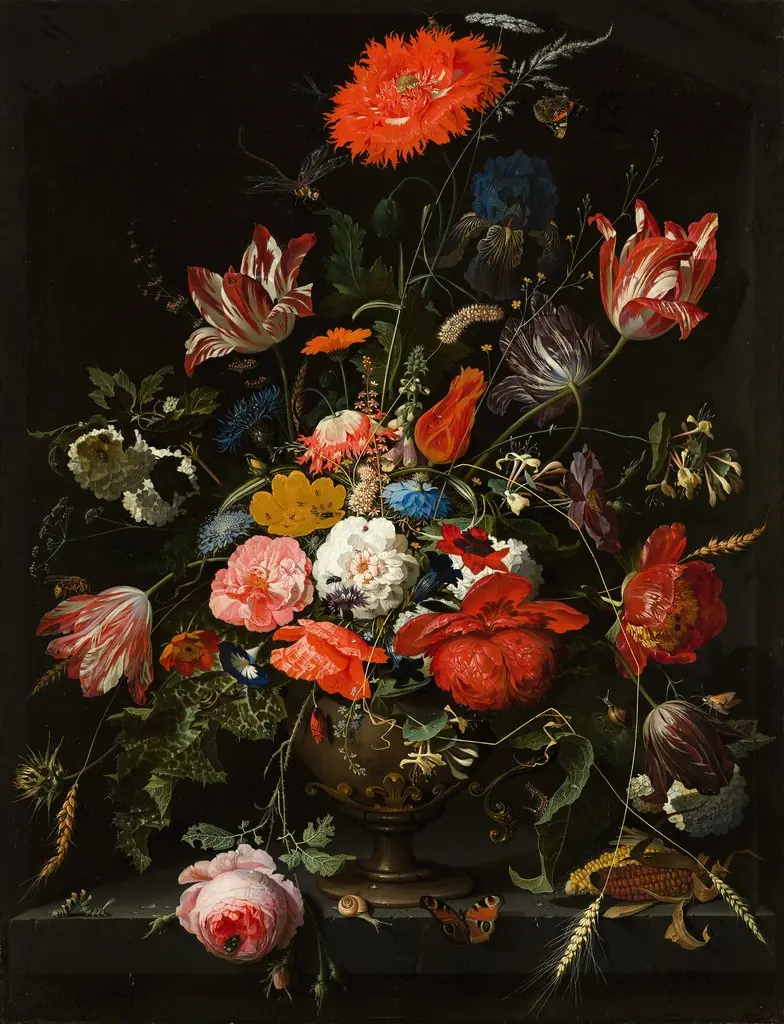 Flowers in a metal vase in a niche
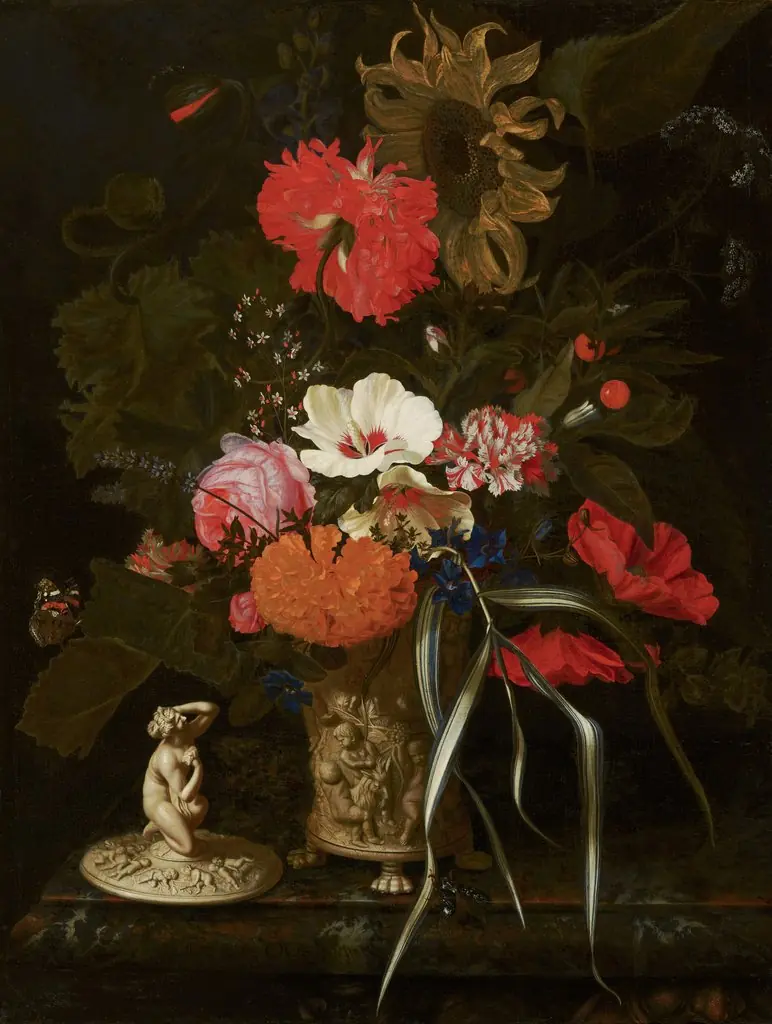 Flowers in an Ornamental Vase
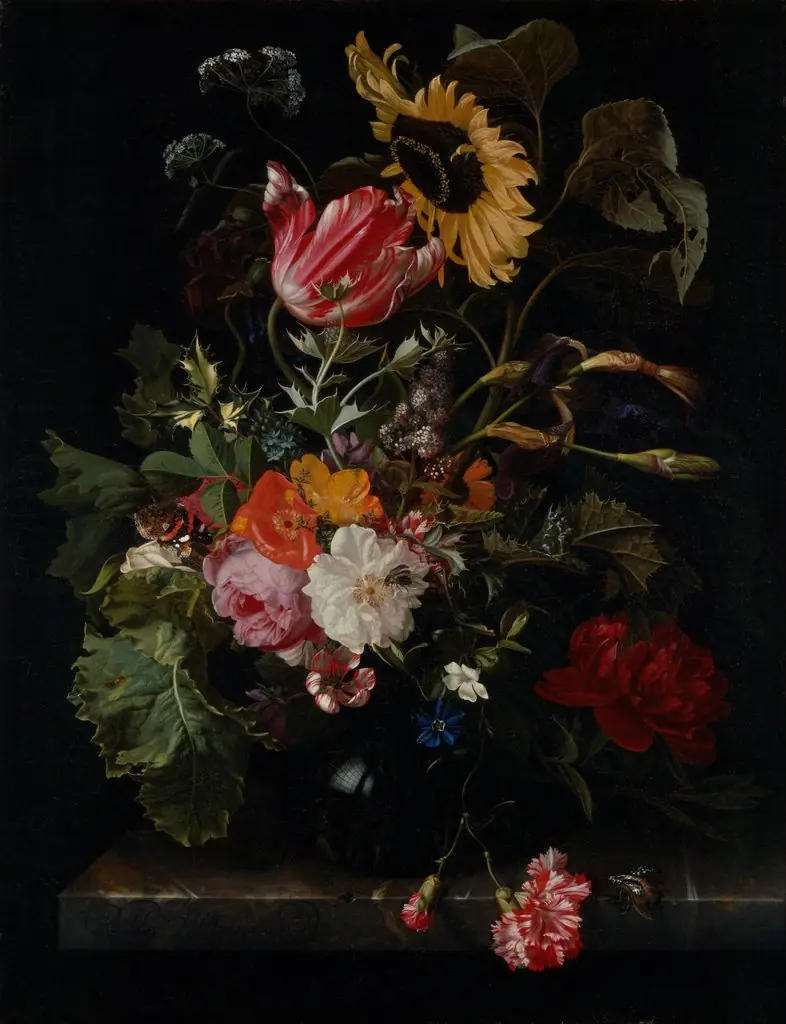 Bouquet of Flowers in a Vase
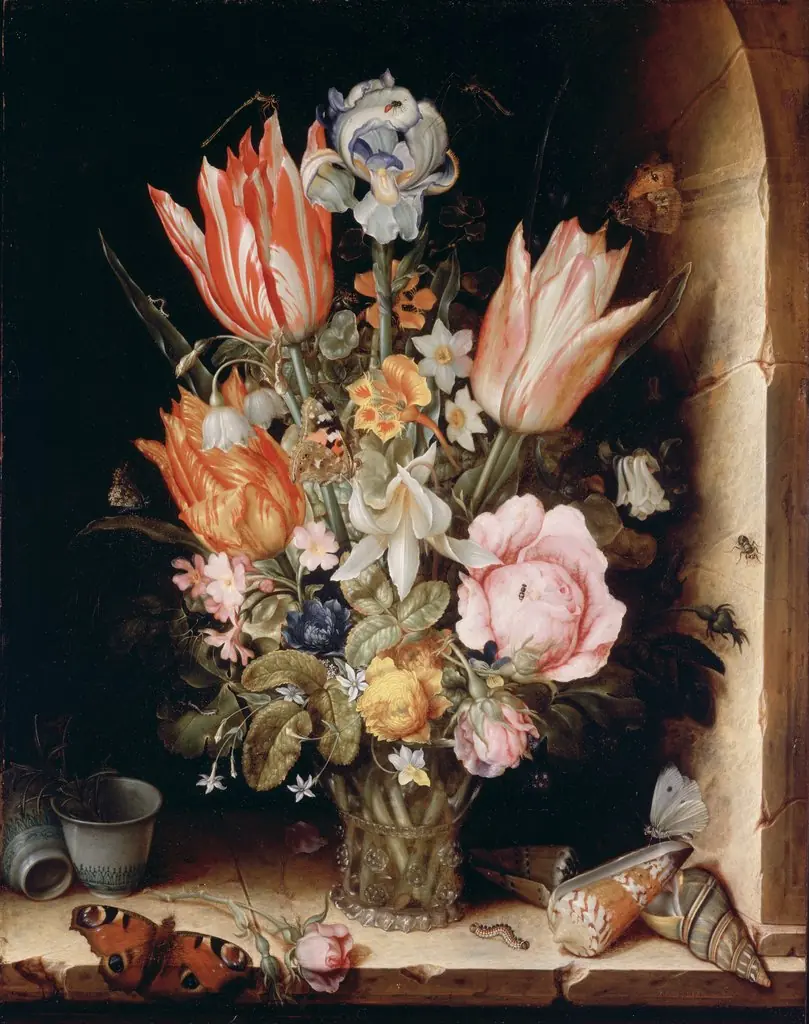 Still Life with Flowers in a Vase
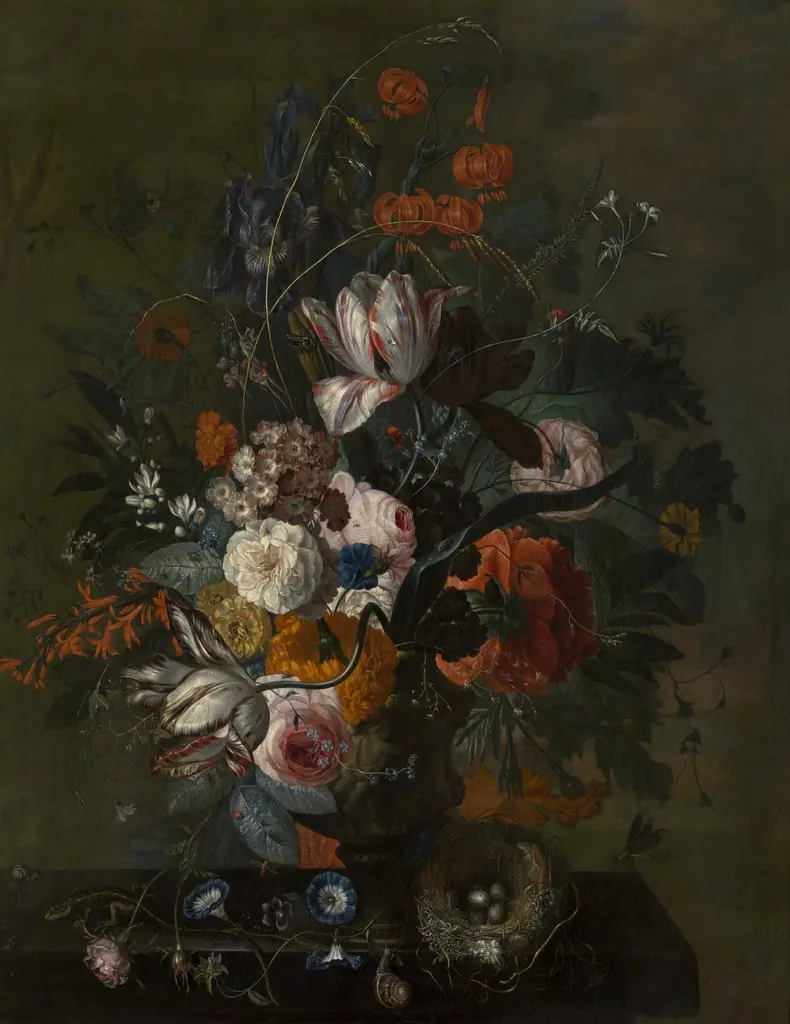 Still Life of flowers in a terracotta vase on a stone plinth
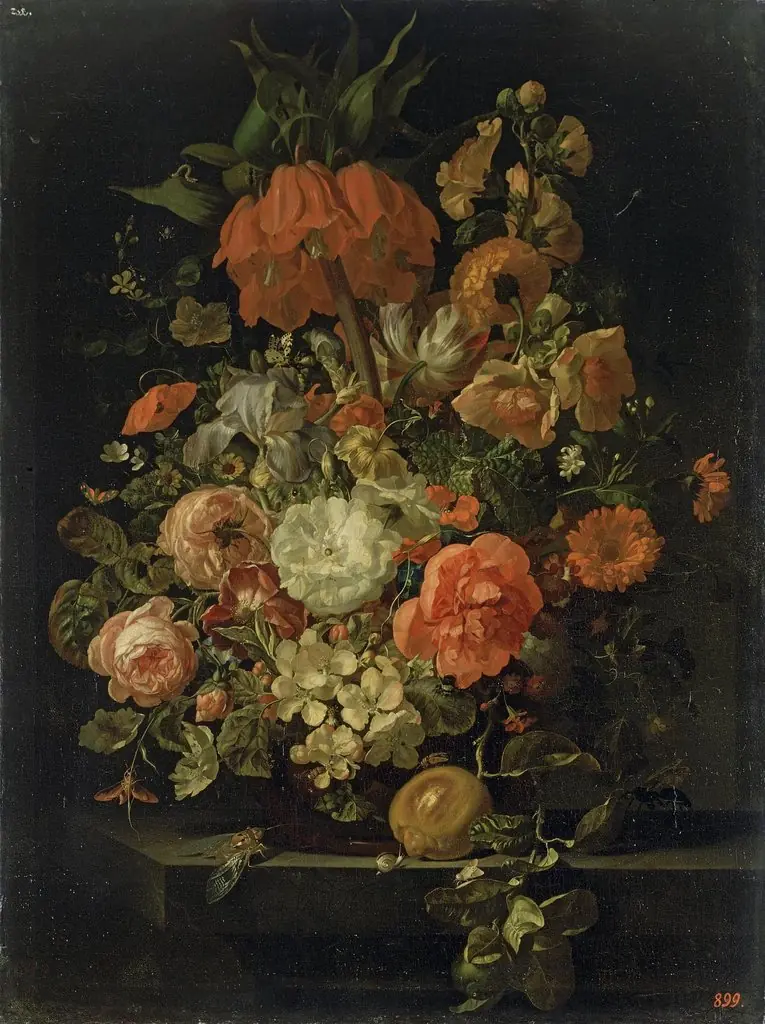 Flowers
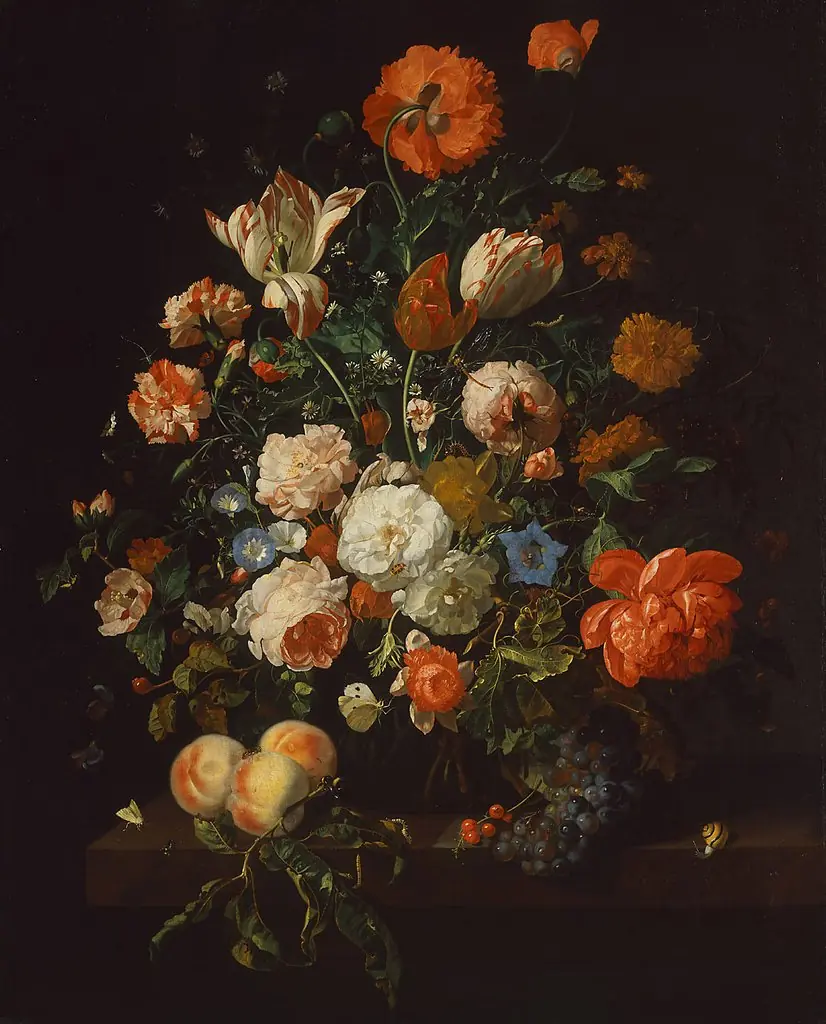 Vase with Flowers
- Bouquet with cat and mousetrap