Artwork
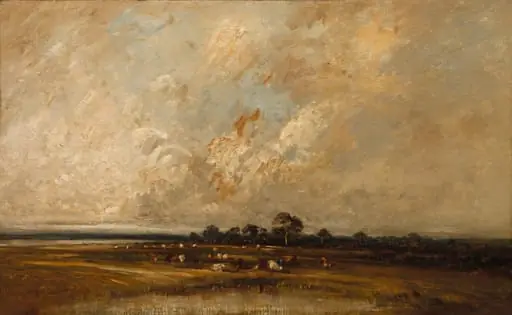
Marshland
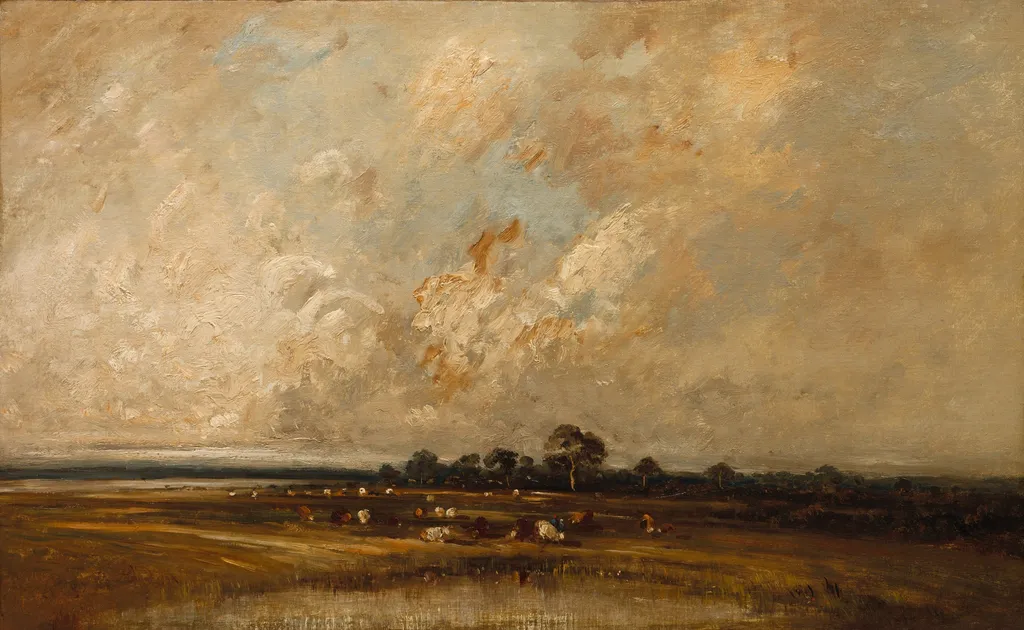
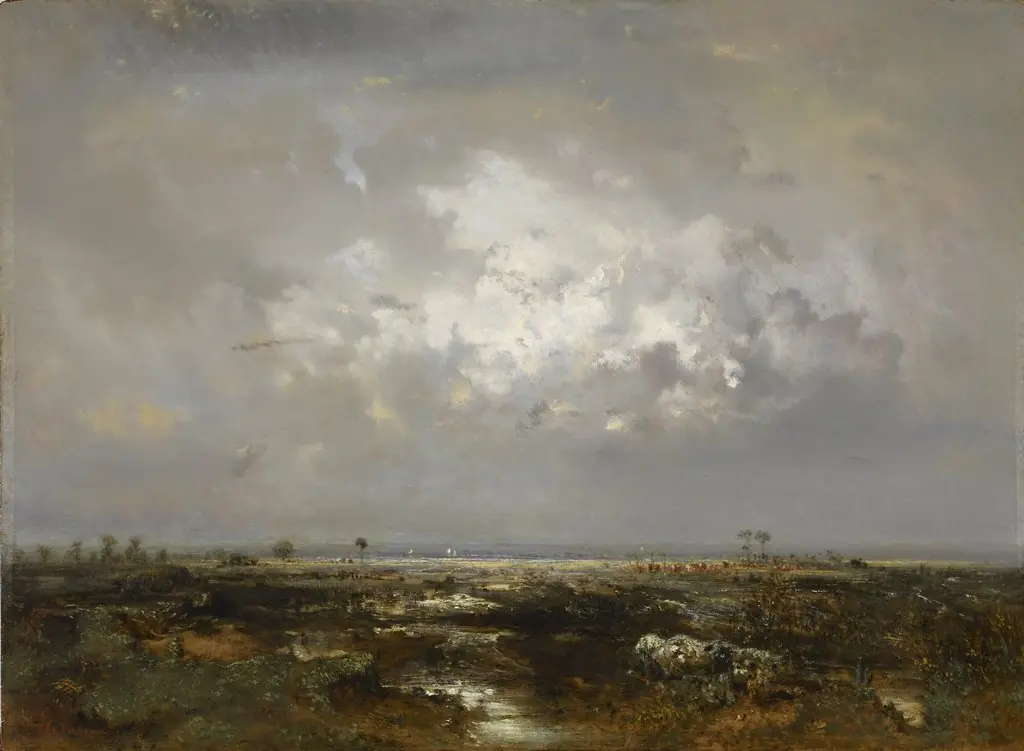
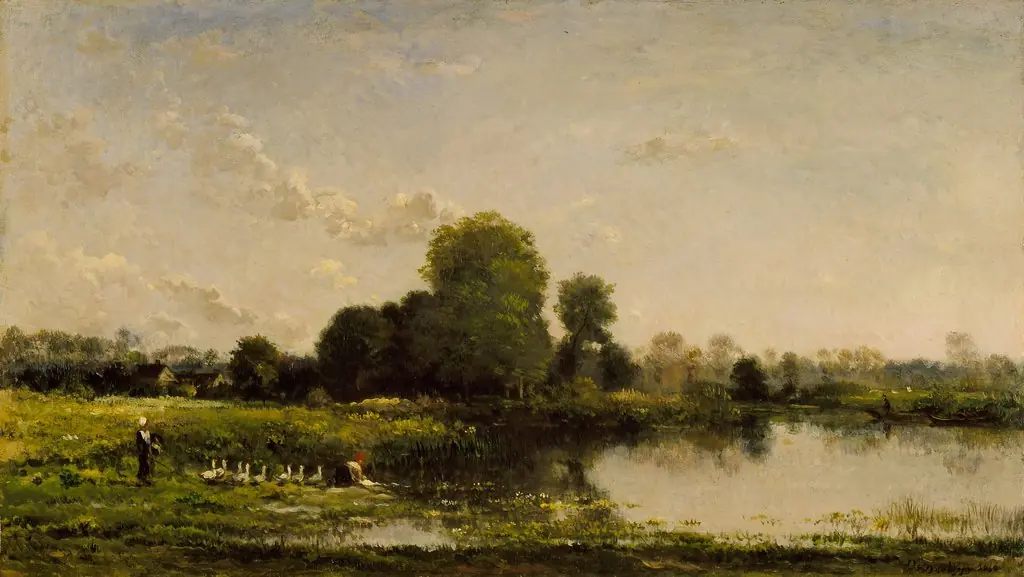
Marshland is an oil painting by the Barbizon school artist Jules Dupré. It dates from 1870 and is held in the collection of the Cleveland Museum of Art.
About this work
Subject & Meaning
The absence of human figures focuses attention on nature's quiet endurance, a recurring theme in mid-nineteenth-century French landscape painting.
The scene depicts a low-lying wetland under an overcast sky, where still water and sparse vegetation suggest a quiet, marginal landscape.
Dupré's handling emphasizes muted greys and browns, with subtle reflections in the water and touches of green along the horizon, evoking a sense of stillness and solitude. The absence of human figures focuses attention on nature's quiet endurance, a recurring theme in mid-nineteenth-century French landscape painting.
In this context, the marshland can be read as a meditation on the ephemeral and the resilient, capturing a transitional space between solid ground and open water.
Technique & Style
Jules Dupré executed Marshland in 1870 as an oil painting on canvas, a standard medium and support for his landscape works. The piece measures 46.4 cm in height and 74.2 cm in width, reflecting a format typical for mid-to-late 19th-century French landscape painting. Created in France, the work is classified as a landscape, focusing on natural scenery through the artist's handling of oil pigments. The physical dimensions and material composition confirm its status as a traditional easel painting from the period.
History & Provenance
Jules Dupré executed the oil painting Marshland in 1870. Created in France, the work measures 46.4 by 74.2 centimeters on canvas. The piece entered the collection of the Cleveland Museum of Art, where it is cataloged under the accession number 1964.291.
No specific details regarding the original commission or intermediate ownership prior to its museum acquisition are provided in the available records.
Overview
Painted in oil by Jules Dupré in 1870, Marshland is a characteristic example of the landscape genre championed by the Barbizon school. Dupré, a significant figure within this French art movement, completed the work near the end of his active career. Today, this painting is part of the collection at The Cleveland Museum of Art.
Context
Jules Dupré (1811–1889) was a central figure in the Barbizon school, a group of French artists active from the 1830s to the 1870s. These artists rejected academic traditions in favor of direct observation of nature, often painting en plein air in the Fontainebleau Forest and surrounding areas. Dupré, among the movement's most influential members, consistently explored the nuanced beauty of the French landscape, contributing significantly to the development of modern landscape painting.
Own this work as a print
Artist & collection
Artist
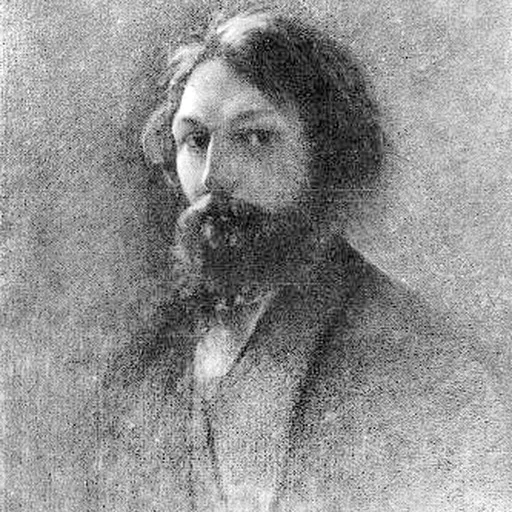
Jules Louis Dupré (French pronunciation:; April 5, 1811 – October 6, 1889) was a French painter, one of the chief members of the Barbizon school of landscape painters.