Artwork
Spring and Autumn Farming
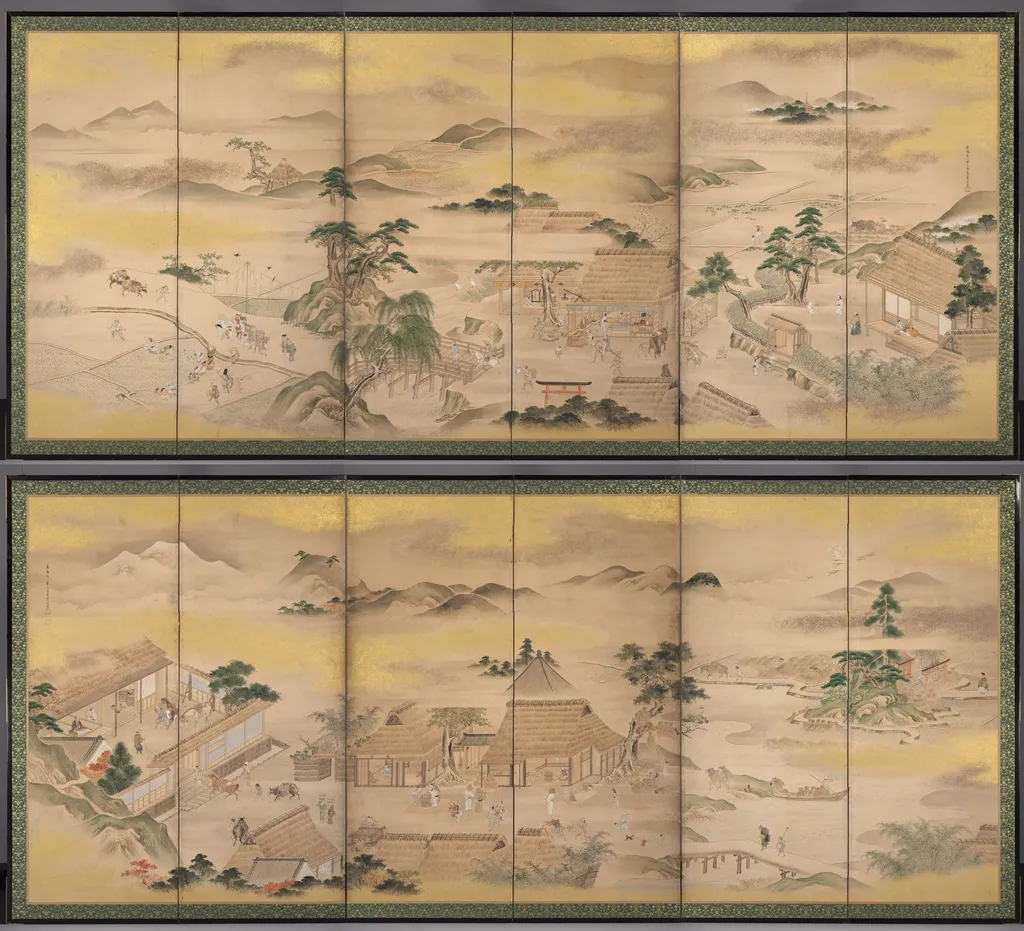
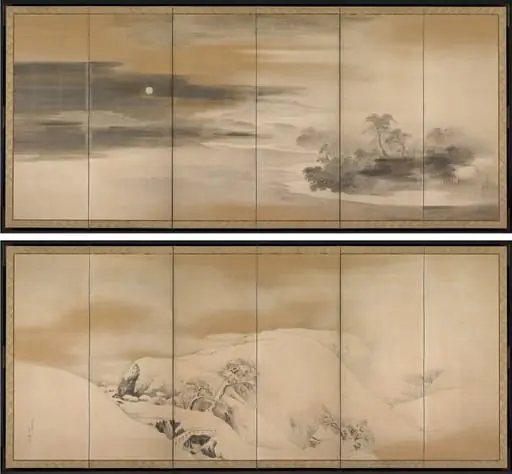
Spring and Autumn Farming is an unspecified painting by the Ukiyo-e artist Kō Sūkoku. It dates from 1774 and is held in the collection of the Cleveland Museum of Art.
About this work
History & Provenance
Created in 1774 by the Japanese artist Kō Sūkoku, Spring and Autumn Farming was produced in Japan during the artist's lifetime (1730–1804).
Created in 1774 by the Japanese artist Kō Sūkoku, Spring and Autumn Farming was produced in Japan during the artist's lifetime (1730–1804). The work eventually entered the collection of the Cleveland Museum of Art, where it is held under the accession number 2012.72. While the specific circumstances of its commission and the intermediate owners between its creation and museum acquisition are not detailed in the available records, the painting's inception is firmly established as 1774.
The painting Spring and Autumn Farming by Kō Sūkoku is held in the collection of the Cleveland Museum of Art. The work, created in 1774, is identified within the museum's records by the accession number 2012.72. While the artwork was produced in Japan, current documentation confirms its location at the Cleveland institution.
Overview
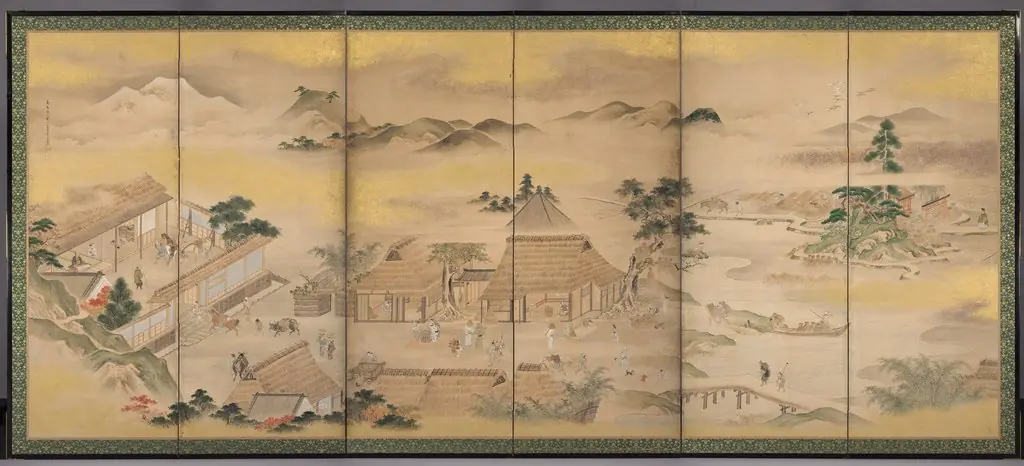
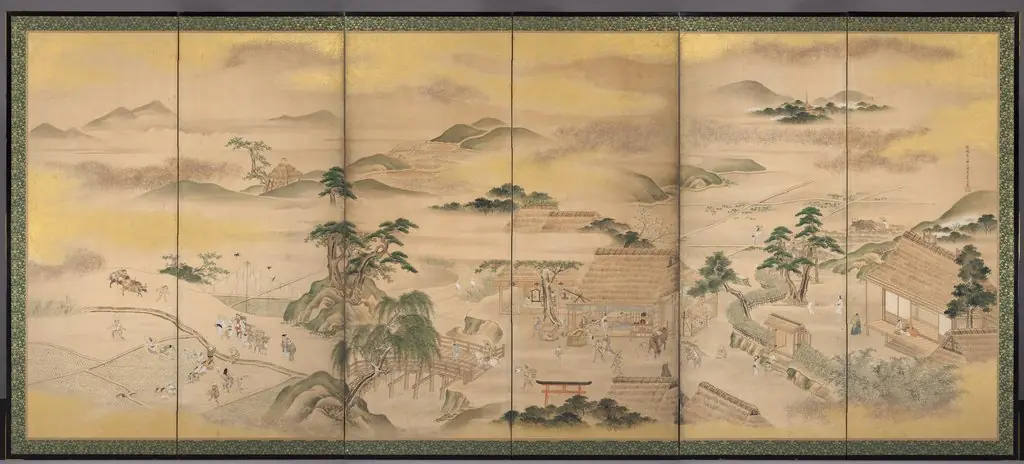
Spring and Autumn Farming, painted by Kō Sūkoku in 1774, is a double‑panel work that depicts rural activity across two narrow horizontal scenes. The upper panel presents workers along a riverbank, tending fields and moving along pathways, while the lower panel expands the village setting with thatched roofs, baskets, and plowing. A backdrop of trees, hills and distant mountains unifies the composition, rendered in a restrained palette of soft, muted tones.
Subject & Meaning
The painting records the cyclical labor of agrarian life, juxtaposing spring planting with autumn harvest. Figures are shown engaged in everyday tasks, fishing, fence repair, carrying produce, illustrating the continuity of communal effort throughout the year. By presenting both seasons side by side, the work underscores the rhythm of the agricultural calendar and the interdependence of human activity and the natural landscape.
Technique & Style
Kō Sūkoku employs fine, linear brushwork to render minute details, allowing individual gestures such as a hand casting a net or a foot stepping on a path to be discerned. The composition relies on flattened perspective and subtle gradations of ink and watercolor, creating a calm yet bustling atmosphere. The muted colour scheme and delicate shading emphasize the serene quality of the countryside while maintaining narrative clarity.
Own this work as a print
Artist & collection

 Spring and Autumn Farming
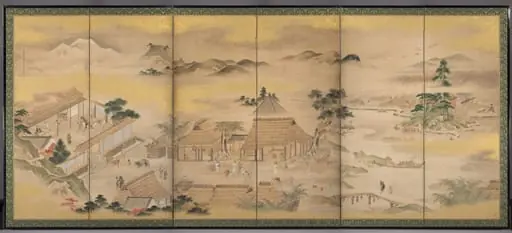 Spring and Autumn Farming (Autumn)
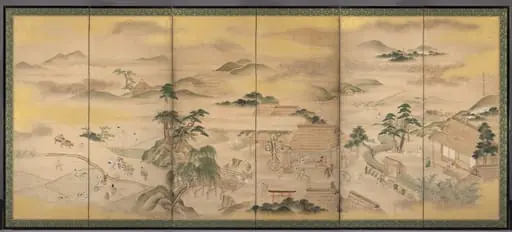 Spring and Autumn Farming (Spring)
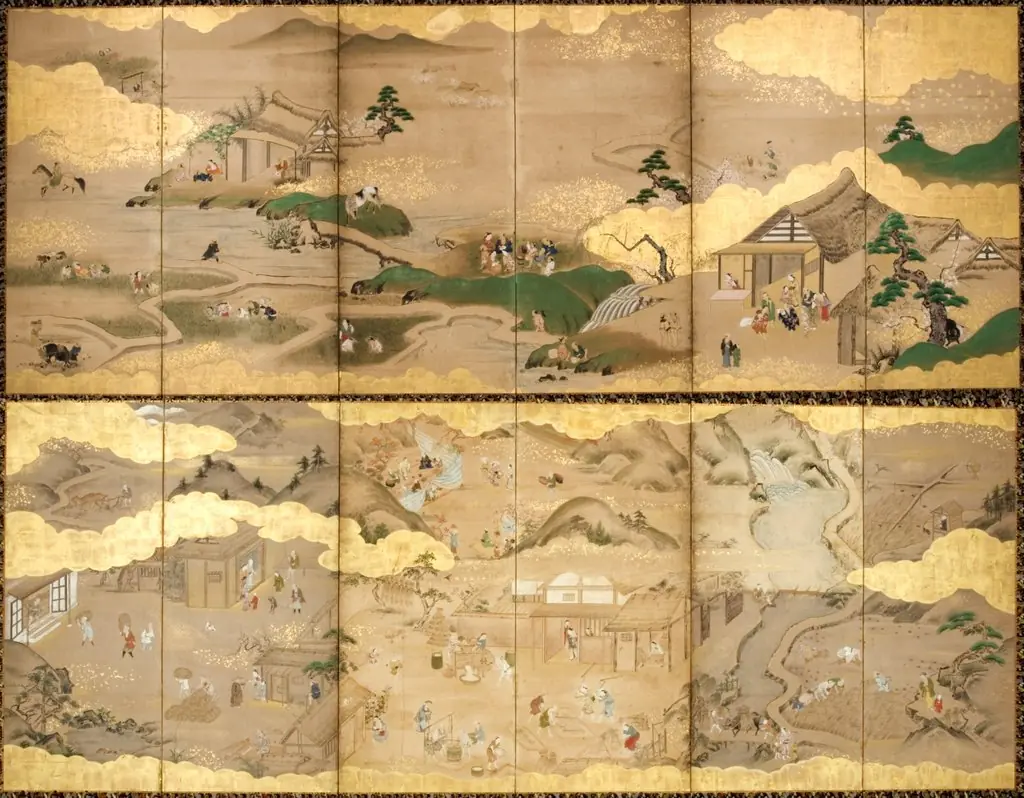 Rice Cultivation through the Four Seasons
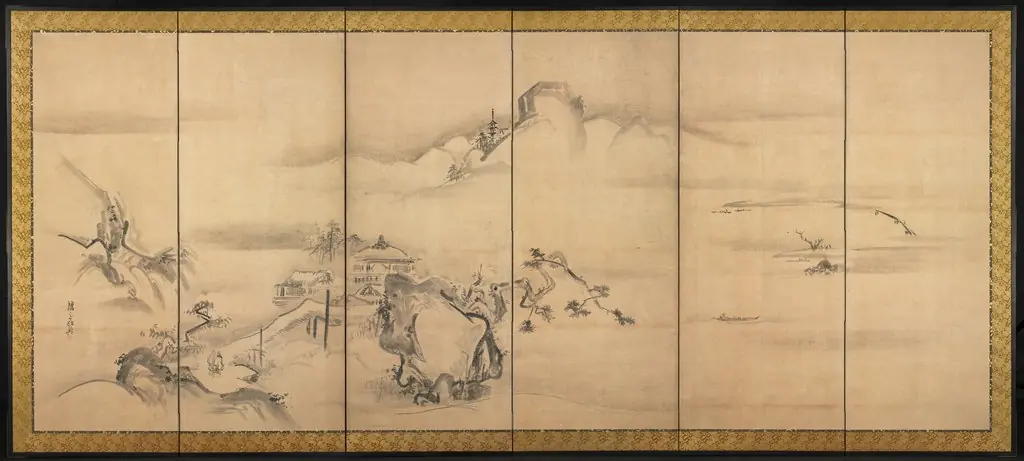 Eight Views of the Xiao and Xiang Rivers
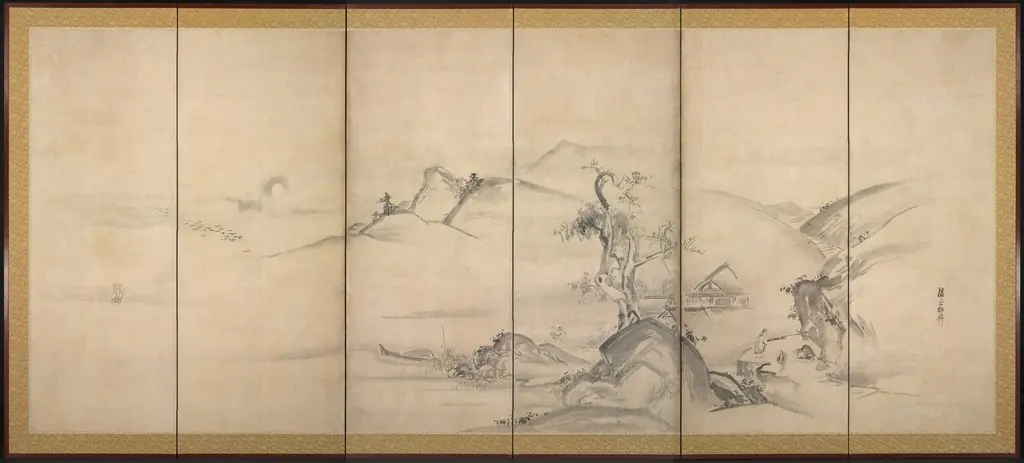 Eight Views of the Xiao and Xiang Rivers
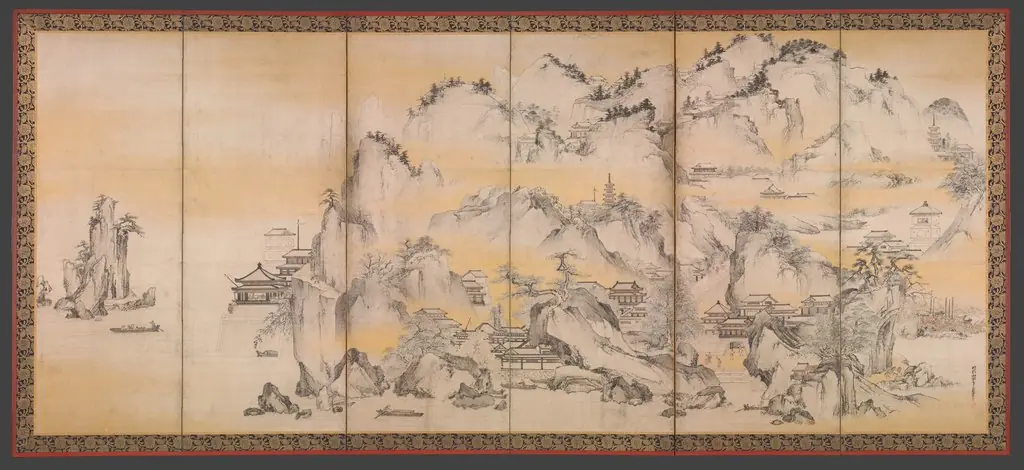 Jinshan Island and West Lake
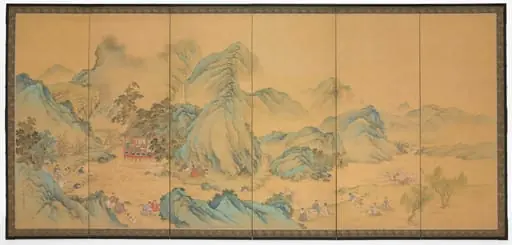 The Gathering at the Orchid Pavilion (front); Geese among Reeds (back)
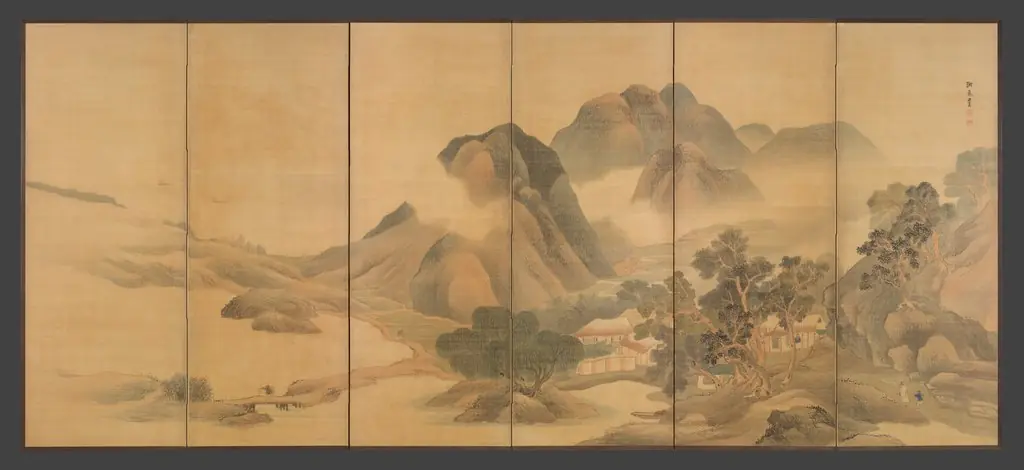 Travels through Mountains and Fields
 Summer Night; Winter Day