Artwork
Lumber Yard
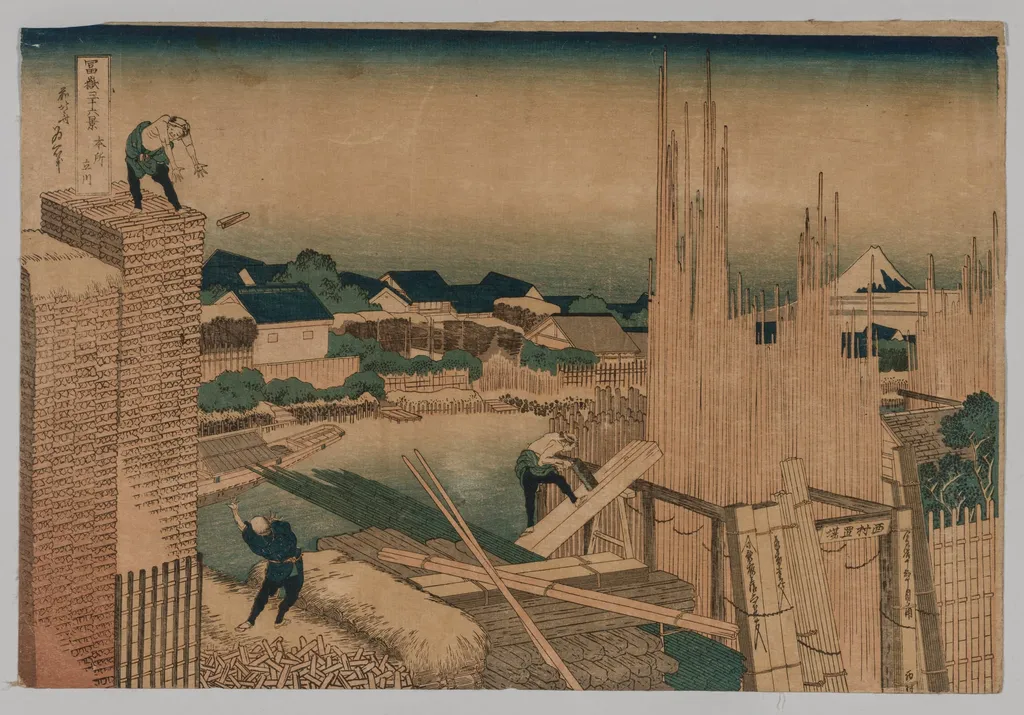
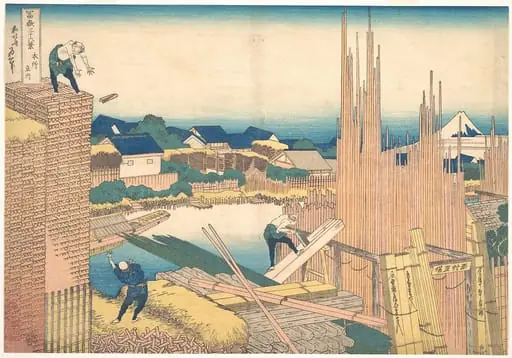
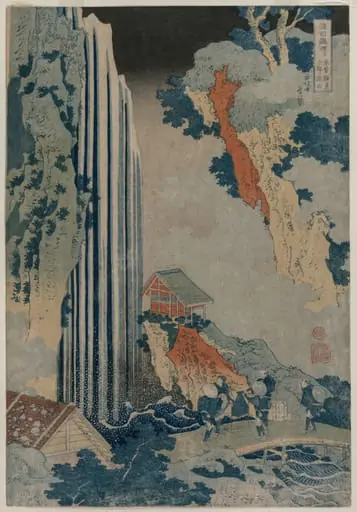
Lumber Yard is a print by the Romanticist artist Katsushika Hokusai. It dates from 1804 and is held in the collection of the Cleveland Museum of Art.
- Accession no.
- 1916.1166
- Credit line
- Gift of Mr. and Mrs. J. H. Wade
About this work
Overview
It depicts an ordinary labor scene in a Japanese lumber yard, capturing workers engaged in routine tasks amid stacked timber and modest structures.
Lumber Yard is a woodblock print by Katsushika Hokusai, dated to 1804. It depicts an ordinary labor scene in a Japanese lumber yard, capturing workers engaged in routine tasks amid stacked timber and modest structures. The work belongs to the Cleveland Museum of Art’s collection and reflects Hokusai’s interest in everyday life during the Edo period, rendered through the medium of ukiyo-e printmaking.
Subject & Meaning
The scene portrays three laborers performing manual tasks, placing materials, holding boards, and adjusting wood, without idealization. Their postures and attire suggest unglamorous, physical work, emphasizing the dignity of labor rather than spectacle. The crowded yard, with its bamboo fencing and simple buildings, frames the activity as a slice of urban or suburban industry, grounding the image in the real world of Edo-period commerce.
Technique & Style
Hokusai employs flat areas of color and strong, clean outlines to define forms and suggest spatial depth without traditional perspective. The composition relies on overlapping shapes and varying scales to imply distance, a hallmark of ukiyo-e aesthetics. The absence of shading and the deliberate simplification of textures reflect the printmaking constraints and the stylistic conventions of the time, prioritizing clarity over realism.
History & Provenance
Created in 1804, Lumber Yard is part of Hokusai’s early output before his famous Thirty-Six Views of Mount Fuji. It likely circulated as a single-sheet print, common in the commercial ukiyo-e market. The work entered the Cleveland Museum of Art’s collection through documented acquisitions, preserving its original state and contributing to Western understanding of Japanese genre scenes from the Edo era.
Context
During the early 19th century, Edo (Tokyo) experienced rapid urban growth, with construction and trade expanding alongside its population. Scenes like this one, depicting laborers and material storage, reflect the economic undercurrents of the city. Hokusai’s focus on such subjects aligns with the ukiyo-e tradition of portraying the transient, everyday world, 'the floating world', beyond aristocratic or mythological themes.
Legacy
Lumber Yard exemplifies Hokusai’s ability to elevate mundane labor into compelling visual narratives. While less known than his landscapes, such works influenced later artists interested in realism and social observation. Its preservation in a major Western institution underscores its role in bridging Japanese print culture with global art historical discourse in the modern era.
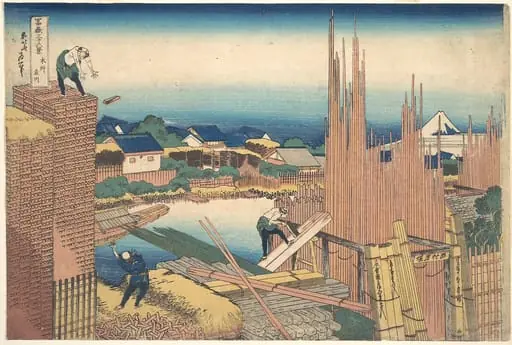
Own this work as a print
Artist & collection

Artist
Katsushika Hokusai spent his life in Edo, now Tokyo, where he drew and carved prints for a living.

- 冨嶽三十六景 本所立川|Tatekawa in Honjō (Honjō Tatekawa), from the series Thirty-six Views of Mount Fuji (Fugaku sanjūrokkei)
 冨嶽三十六景 本所立川|Tatekawa in Honjō (Honjō Tatekawa), from the series Thirty-six Views of Mount Fuji (Fugaku sanjūrokkei)
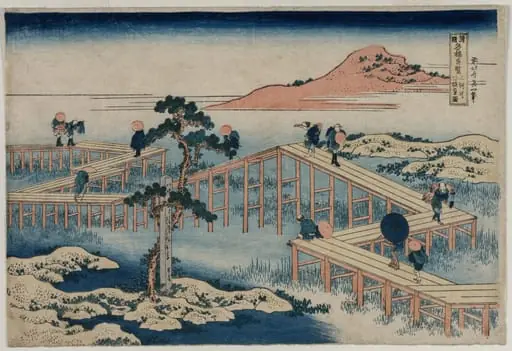 An Ancient Picture of the Eight Part Bridge in Mikawa Province (from the series Curious Views of Famous Bridges in the Provinces)
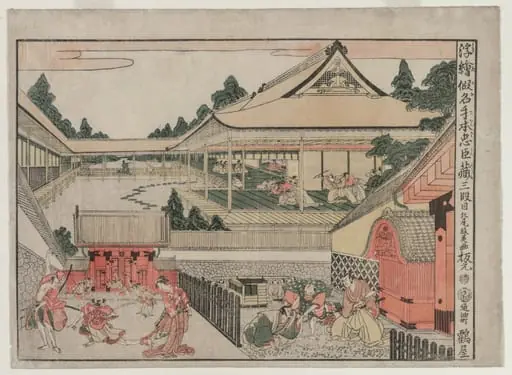 Chushingura: Act III (from the series Perspective Pictures for The Treasure House of Loyalty)
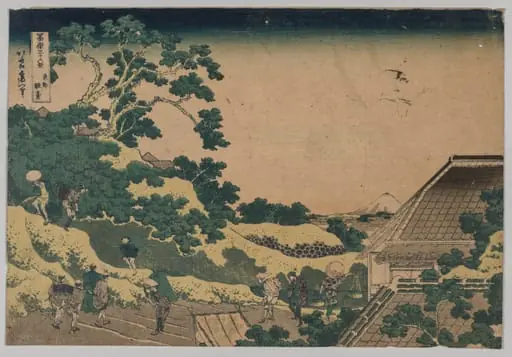 Fuji from Surugadai, in Yedo
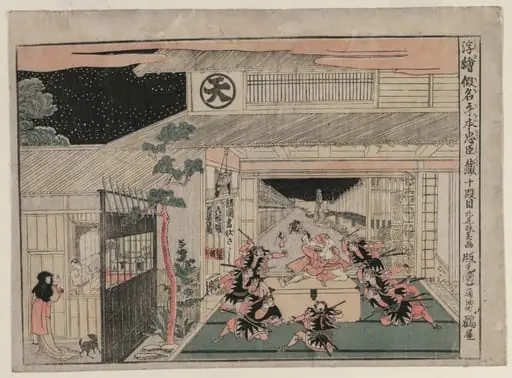 Chushingura: Act X (from the series Perspective Pictures for The Treasure House of Loyalty)
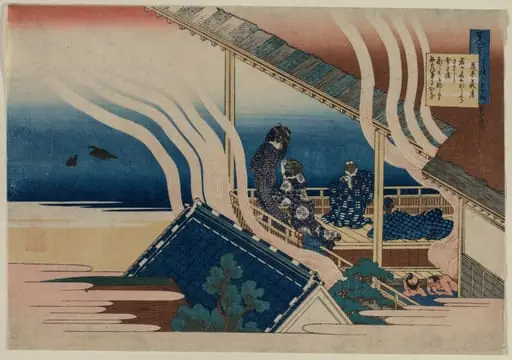 Poem by Fujiwara no Yoshitaka, from the series One Hundred Poems by One Hundred Poets Explained by an Old Nurse
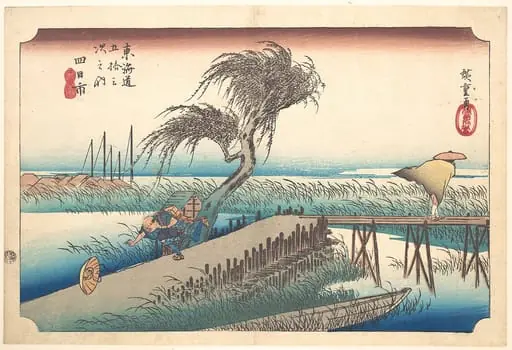 東海道五十三次之内 四日市 三重川|Mie River at Yokkaichi
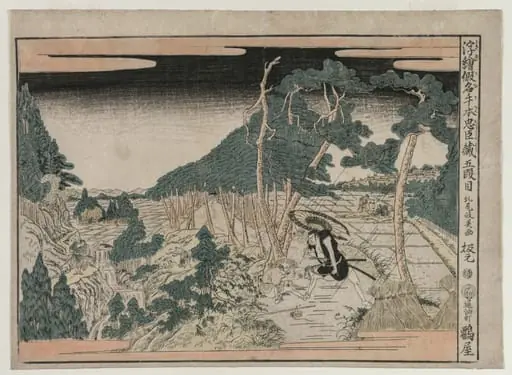 Chushingura: Act V (from the series Perspective Pictures for The Treasure House of Loyalty)
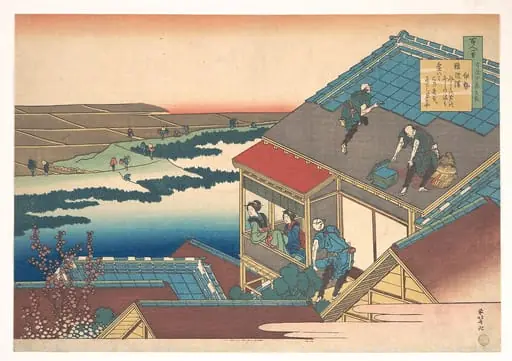 百人一首 うばがゑとき 伊勢|Poem by Ise, from the series One Hundred Poems Explained by the Nurse (Hyakunin isshu uba ga etoki)
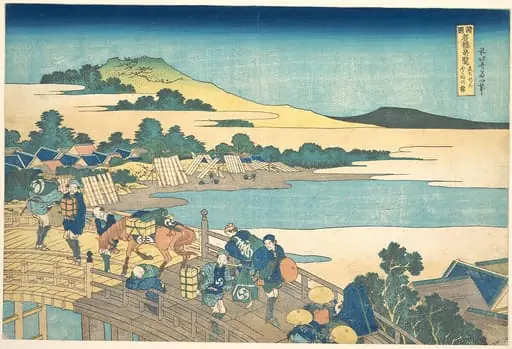 諸國名橋奇覧 ゑちぜんふくゐの橋|Fukui Bridge in Echizen Province (Echizen Fukui no hashi), from the series Remarkable Views of Bridges in Various Provinces (Shokoku meikyō kiran)
 Ono Waterfall on the Kiso Road (from the series a Tour of Waterfalls in the Provinces)