Artwork
Hell Courtesan
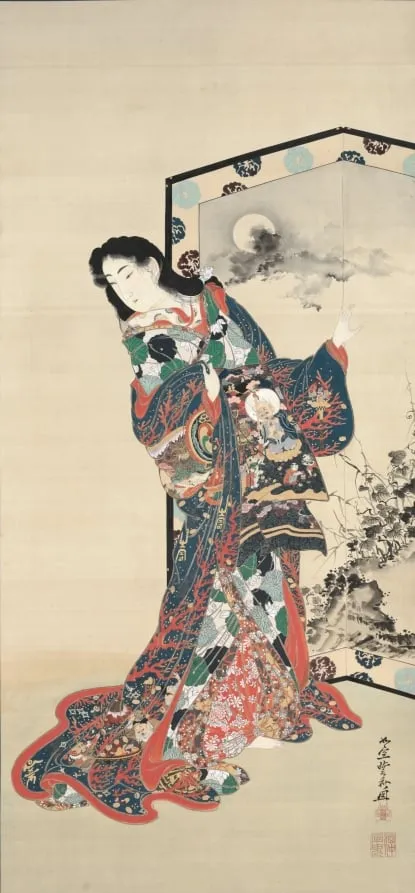
Hell Courtesan is an unspecified painting by the Impressionist artist Kawanabe Kyōsai 河鍋暁斎. It dates from 1880 and is held in the collection of the Cleveland Museum of Art.
- Accession no.
- 1985.268
- Credit line
- The Kelvin Smith Collection, given by Mrs. Kelvin Smith
About this work
Overview
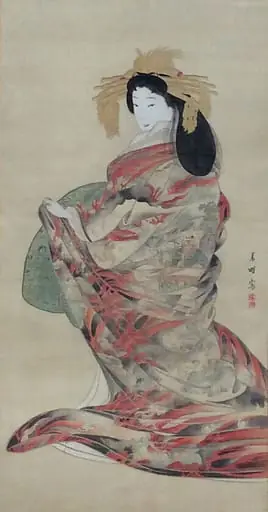
Hell Courtesan is a painting by Kawanabe Kyōsai, created in the 19th century. It depicts a 15th-century courtesan wearing a robe adorned with scenes from Buddhist hell.
Subject & Meaning
The courtesan, known for her robe's hellish imagery, symbolizes acceptance of her suffering as punishment for past sins. Kyōsai's version parodies this legend, substituting the courtesan for Benzaiten, goddess associated with flowing things.
Technique & Style
The painting features intricate detail, with the courtesan's kimono displaying tiny, hellish scenes. A folding screen is visible in the background, adding depth to the composition.
Context
Kyōsai revisited this composition multiple times with variations, blending humor and horror in his interpretation of the legend.
Artist & collection
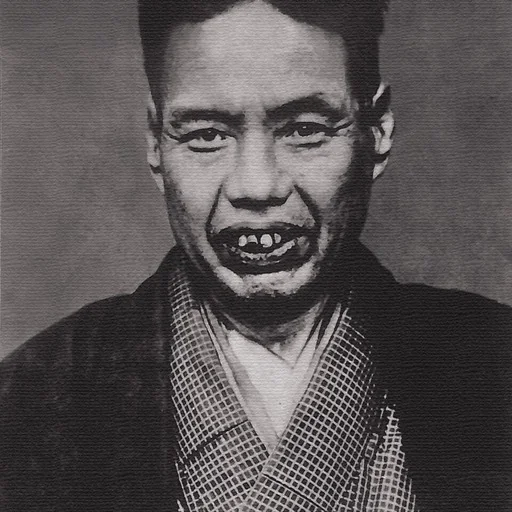
Artist
Kawanabe Kyōsai (河鍋 暁斎; May 18, 1831 – April 26, 1889) was a Japanese painter and caricaturist. In the words of art historian Timothy Clark, "an individualist and an independent, perhaps the last virtuoso in traditional Japanese painting".