Artwork
滝に燕図|Swallows by a Waterfall
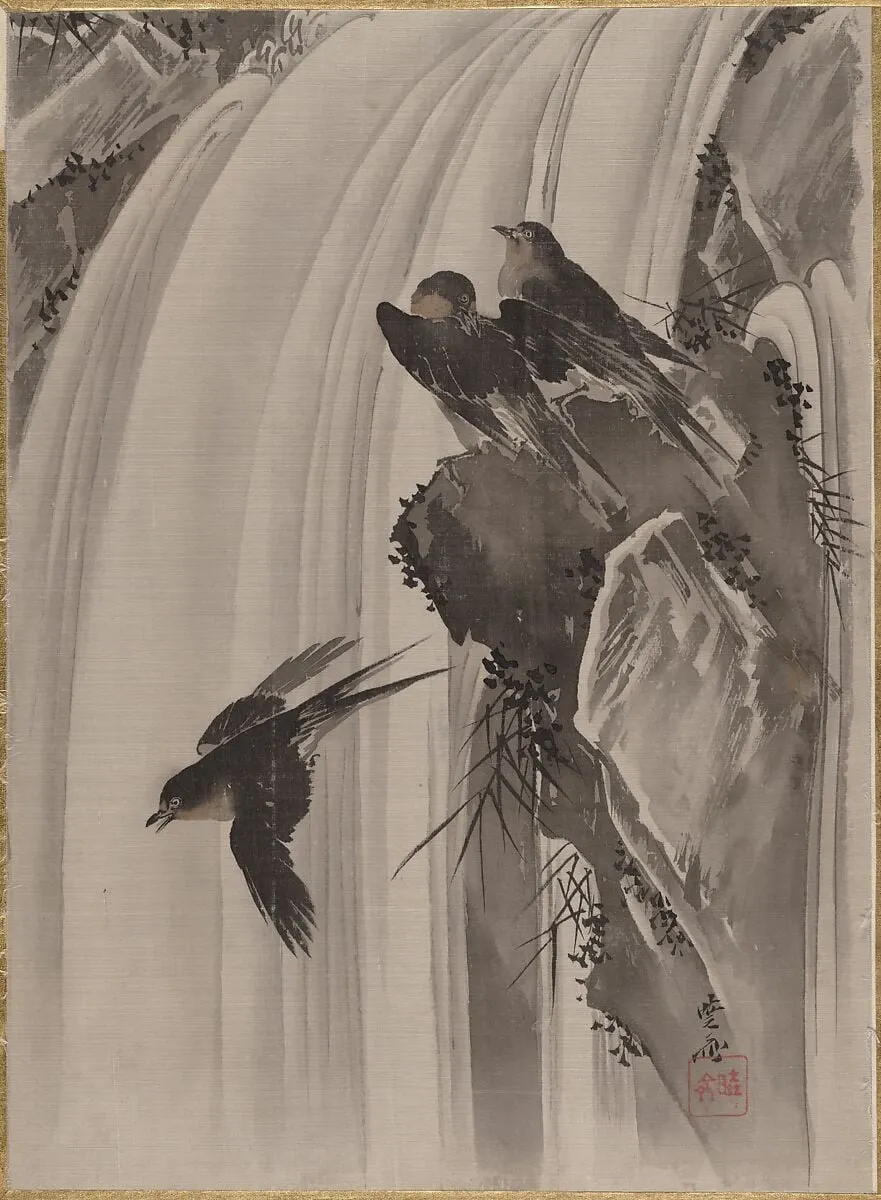
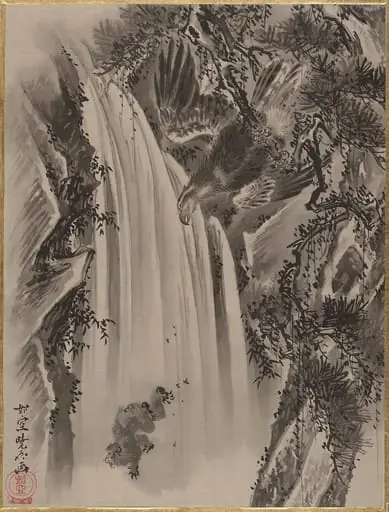
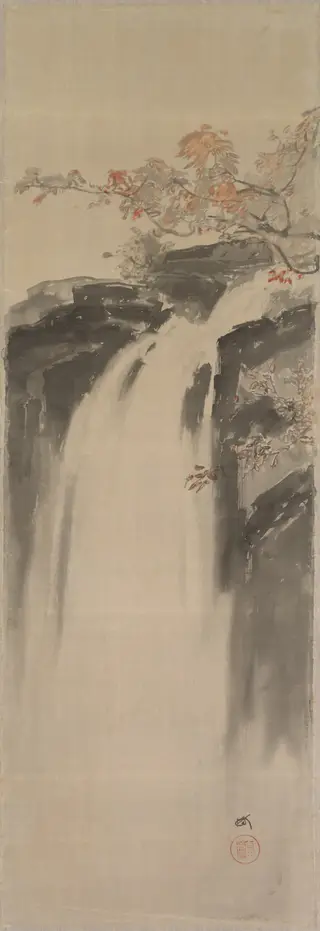
滝に燕図|Swallows by a Waterfall is an ink painting by the Impressionist artist Kawanabe Kyōsai 河鍋暁斎. It dates from 1887 and is held in the collection of the Metropolitan Museum of Art. Kawanabe Kyōsai’s Swallows by a Waterfall (滝に燕図), created around 1887, is an album leaf painting rendered in ink and color on silk.
About this work
Subject & Meaning
It belongs to the landscape genre and uses the bird and waterfall as motifs to emphasize the dynamism of Japanese nature in the late nineteenth century.
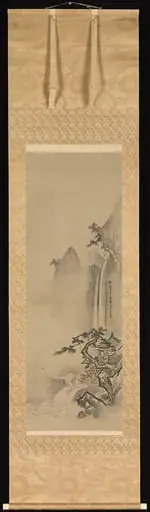
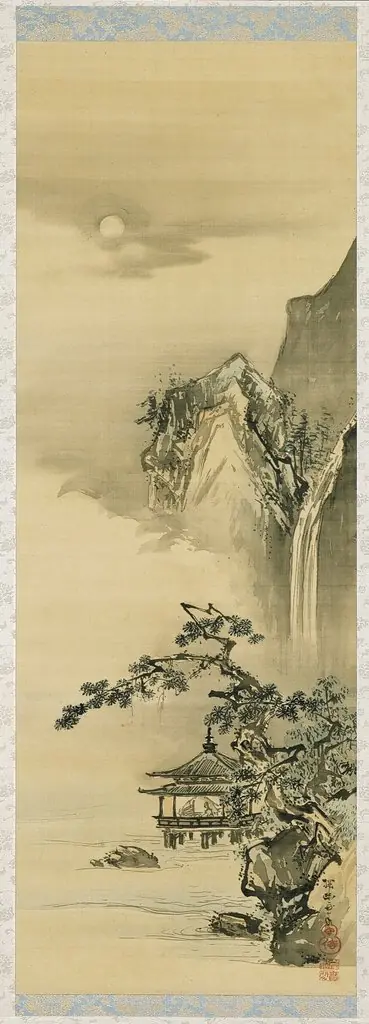
The painting shows a flock of swallows in motion against a cascading waterfall, set within a stylized natural scene. It belongs to the landscape genre and uses the bird and waterfall as motifs to emphasize the dynamism of Japanese nature in the late nineteenth century. The composition captures the fleeting movement of the birds while the waterfall provides a steady backdrop, suggesting a balance between transience and permanence.
The work was created by Kawanabe Kyōsai in 1887 as an ink and colored silk album leaf, now held by the Metropolitan Museum of Art.
Technique & Style
Executed in 1887, the work is painted on silk in ink and color, mounted as an album leaf. The composition combines swift, abbreviated brushwork for the swallows with wet-ink washes and fine mineral pigments to render foliage and mist around the waterfall. Swallows are indicated by rapid, looping outlines and minimal interior detail, while the cascade is suggested through layered, diluted washes that dissolve into the background. The palette is restrained, relying on muted greens and grays punctuated by small touches of warmer pigment.
The handling privileges spontaneity and abbreviated form, aligning with Kyōsai’s late manner, yet the overall tonality and layered ink modeling of the rocks indicate careful control within the fluid medium.
History & Provenance
The work titled "Swallows by a Waterfall" (滝に燕図) was created by Kawanabe Kyōsai in 1887 as an album leaf painting in ink and color on silk, classified as a landscape depicting a bird and a waterfall. It entered the collection of the Metropolitan Museum of Art, where it remains on view, having been acquired by the museum and catalogued with an inception date of 1887‑01‑01; its dimensions are 36.4 cm in height and 26.7 cm in width, and it was produced in Japan. The piece belongs to the landscape genre and features a bird in flight above a cascading waterfall.
Swallows by a Waterfall, painted by Kawanabe Kyōsai in 1887, is held in the collection of the Metropolitan Museum of Art. The work, an album leaf executed in ink and color on silk, is documented in the museum's holdings.
No specific accession number or detailed exhibition history is recorded in the available sources.
Overview
Kawanabe Kyōsai’s Swallows by a Waterfall (滝に燕図), created around 1887, is an album leaf painting rendered in ink and color on silk. This work depicts two birds in motion near a waterfall within a landscape composition. Kyōsai, a Japanese painter and caricaturist, was renowned for his distinctive style and profound mastery of traditional painting techniques during the late Edo and early Meiji periods.
Context
Kawanabe Kyōsai was active during a transformative era in Japan, bridging the late Edo and early Meiji periods. He was celebrated for his unique artistic vision and exceptional skill in traditional painting. Art historian Timothy Clark has characterized Kyōsai as perhaps "the last virtuoso in traditional Japanese painting," highlighting his significant role in preserving and evolving classical artistic practices amidst rapid societal change.
Artist & collection
Artist
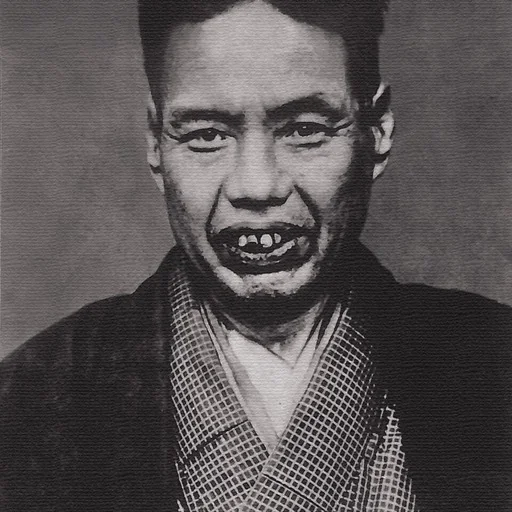
Kawanabe Kyōsai (河鍋 暁斎; May 18, 1831 – April 26, 1889) was a Japanese painter and caricaturist. In the words of art historian Timothy Clark, "an individualist and an independent, perhaps the last virtuoso in traditional Japanese painting".