Artwork
狩野探幽筆 神農・夏冬山水図|Summer Landscape
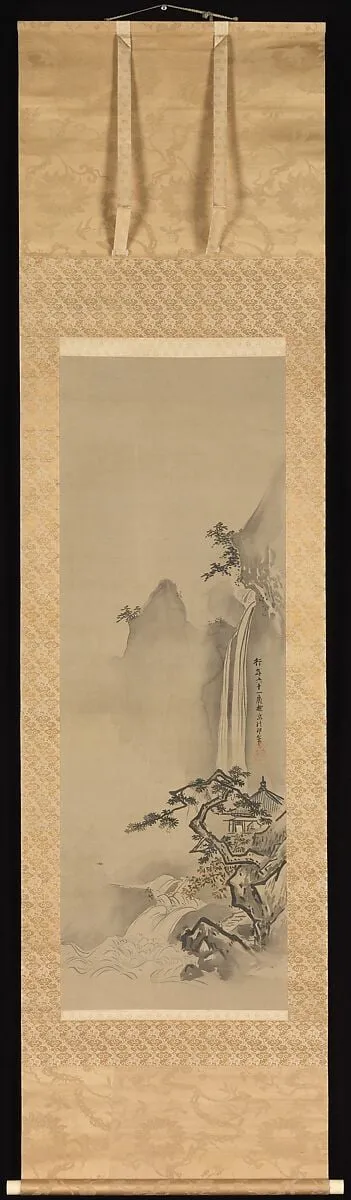
狩野探幽筆 神農・夏冬山水図|Summer Landscape is an ink painting by the Baroque artist Kano Tan'yū. It dates from 1662 and is held in the collection of the Metropolitan Museum of Art.
About this work
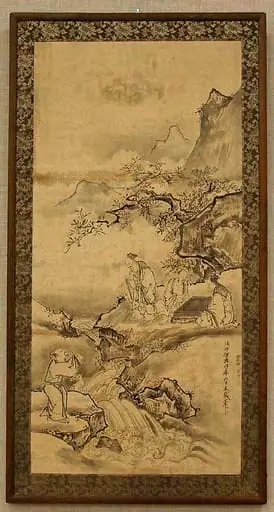
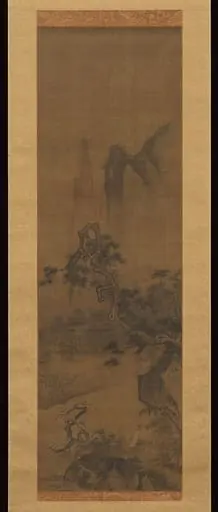
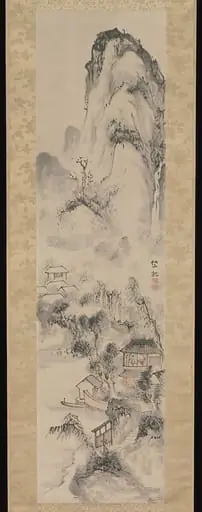
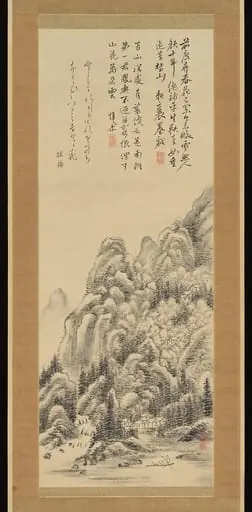
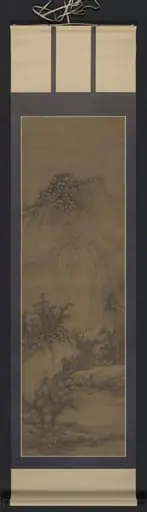
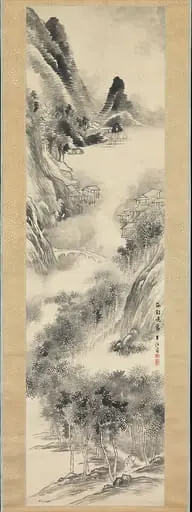
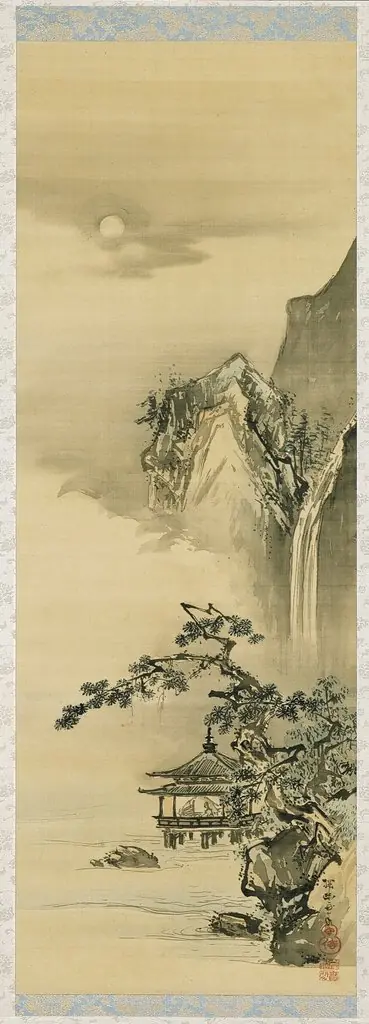
A tall silk scroll shows a waterfall spilling between two cliffs, mist rising, tiny travelers on a bridge below. Kano Tan'yu painted it in 1662 in ink and light color. The cliffs look solid because he layered tiny crisscrossed strokes, built up like repeated pencil marks. Quiet, but every stroke marks where rock ends and water begins. For more, look up landscape painting.
Technique & Style
Executed in 1662 by Kanō Tan'yū, this work is a hanging scroll painted with ink and color on a silk support.
Executed in 1662 by Kanō Tan'yū, this work is a hanging scroll painted with ink and color on a silk support. The composition measures 113 cm in height and 39.4 cm in width. Stylistically, the piece functions as a landscape painting, specifically depicting a waterfall scene.
As one element of a three-scroll set, it exemplifies the genre through its vertical format and application of pigments alongside ink washes on the textile ground. The work originates from Japan and is currently held in the collection of the Metropolitan Museum of Art.
History & Provenance
Created in 1662, the Summer Landscape is a hanging scroll executed by the Edo-period master Kanō Tan'yū. The work was produced in Japan as one component of a three-piece set depicting landscapes and waterfalls, utilizing ink and color on silk. While the specific original commission and early ownership chain are not detailed in the provided records, the painting's provenance is currently anchored by its acquisition by the Metropolitan Museum of Art in New York.
The piece measures 113 cm in height and 39.4 cm in width, reflecting the standard format for such devotional or decorative screens of the era. Its creation date is firmly established as 1662, situating it within the mature phase of Tan'yū's career.
Overview
Created in 1662, this hanging scroll by Kano Tan'yū depicts a dramatic summer landscape featuring a waterfall cascading between steep cliffs. Executed in ink and light color on silk, the work is one of a set of three scrolls. Tan'yū constructs the rocky forms through a meticulous technique of layered, crisscrossed brushstrokes, creating a textured, solid appearance that contrasts with the soft, rising mist.
Tiny figures of travelers crossing a bridge below provide a sense of scale and human presence within the vast natural setting. This piece exemplifies the mature style of Tan'yū, the leading painter of the Kano school during the Edo period, who synthesized traditional Chinese ink painting conventions with Japanese aesthetic sensibilities. The composition reflects his ability to balance dynamic natural forces with structured, rhythmic brushwork, a hallmark of his later career when he served as the official painter to the Tokugawa shogunate.
The work demonstrates the enduring influence of the Kano workshop's training while showcasing the artist's individual mastery of landscape representation.
Subject & Meaning
The composition centers on a dramatic waterfall, which dominates the vertical format as it plunges between two imposing rock formations. A delicate mist rises from the turbulent waters below, adding to the scene's ethereal quality. Far below, a small bridge with miniature figures suggests the human experience within this vast natural setting, inviting contemplation of scale and the sublime.
Artist & collection