Artwork
Untitled
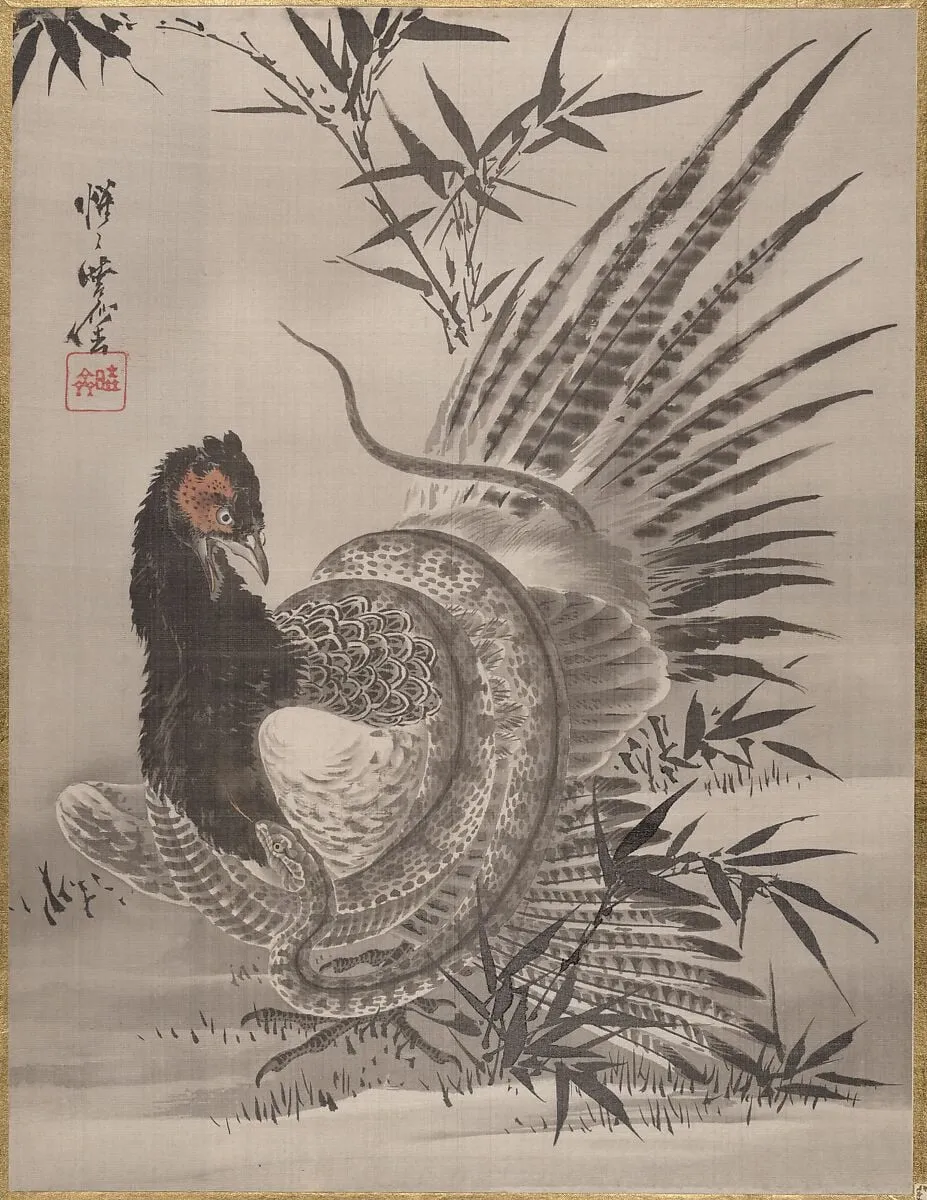
Untitled is an ink painting by the Impressionist artist Kawanabe Kyōsai 河鍋暁斎. It dates from 1887 and is held in the collection of the Metropolitan Museum of Art.
About this work
Subject & Meaning
The album leaf presents an allegorical pairing of a pheasant and a snake, rendered in ink and color on silk.
The album leaf presents an allegorical pairing of a pheasant and a snake, rendered in ink and color on silk. In Japanese visual tradition, the pheasant and the snake carry layered symbolic associations: the pheasant is often linked to vitality and seasonal renewal, while the snake evokes transformation and latent danger. Their juxtaposition within a single composition suggests a meditation on opposing natural forces, a common allegorical device in late nineteenth-century Japanese painting.
Kawanabe Kyōsai's choice to depict these two creatures together transforms a naturalistic observation into a symbolic dialogue between beauty and threat, life and cunning.
Technique & Style
The work is executed on a silk album leaf, employing ink outlines supplemented with polychrome washes, a technique documented for this piece. The support, a thin silk substrate, allows fine detail rendering. Measuring 36.2 cm by 27.6 cm, the piece belongs to the Metropolitan Museum of Art’s collection and was created in Japan in 1887.
Its subject, an allegorical scene featuring a pheasant and a snake, is rendered with delicate line work and subtle color modulation, reflecting the formal conventions evident in the composition. The balanced arrangement of decorative patterning and narrative symbolism characterizes the artist’s style.
History & Provenance
The artwork titled Untitled was created by the Japanese artist Kawanabe Kyōsai in 1887. Executed as an album leaf using ink and color on silk, the piece originates from Japan and measures 36.2 cm in height by 27.6 cm in width. The work depicts a pheasant and a snake within an allegorical context.
While the specific commission details and the initial chain of private ownership are not detailed in the available records, the painting is currently held in the collection of the Metropolitan Museum of Art. The creation date is established as January 1, 1887, marking the work as a product of the artist's late career period.
The work Untitled (1887) by Kawanabe Kyōsai is held in the collection of the Metropolitan Museum of Art in New York. It is catalogued as part of the museum's Japanese paintings holdings, though no specific accession or inventory number is provided in the available documentation. The painting depicts a pheasant and a snake and measures 36.2 × 27.6 cm. Exhibition records are not listed in the sources consulted, indicating that the work has not been featured in publicly recorded exhibitions within the scope of these references.
Overview
Kawanabe Kyōsai, a Japanese painter and caricaturist renowned for his distinctive and independent artistic vision, created this untitled album leaf around 1887. Executed in ink and color on silk, the work presents an allegorical scene of a pheasant and a snake. It reflects the ukiyo-e tradition while showcasing Kyōsai's characteristic blend of traditional techniques with a lively, expressive approach.
Context
Created around 1887, this artwork emerged during a pivotal era in Japanese history. The late 19th century marked a period of profound cultural transformation, as Japan increasingly engaged with Western influences following centuries of isolation. Kyōsai, often considered the final great master of traditional Japanese painting, navigated this changing landscape by maintaining his individualistic approach while adapting to new artistic currents.
Artist & collection
Artist
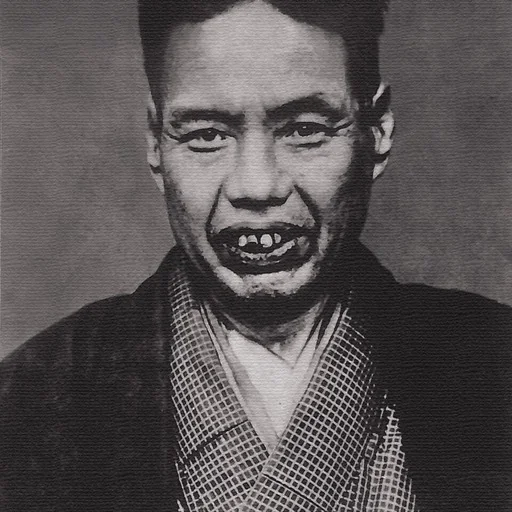
Kawanabe Kyōsai (河鍋 暁斎; May 18, 1831 – April 26, 1889) was a Japanese painter and caricaturist. In the words of art historian Timothy Clark, "an individualist and an independent, perhaps the last virtuoso in traditional Japanese painting".

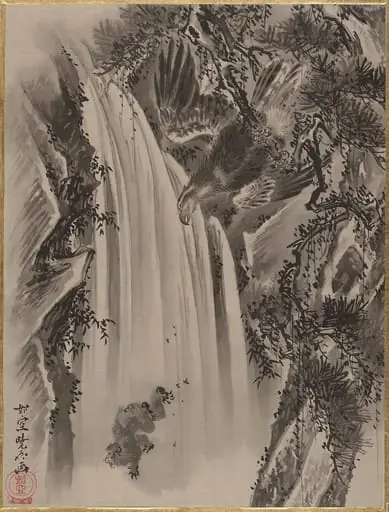
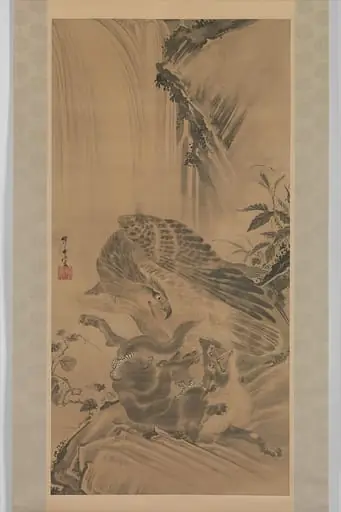
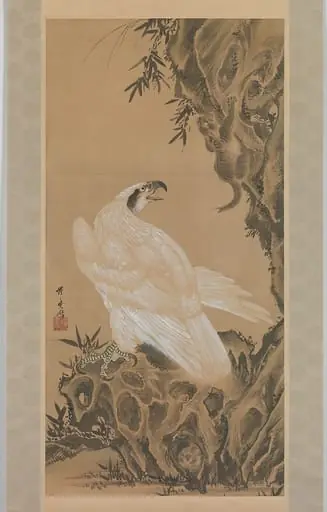
- Untitled
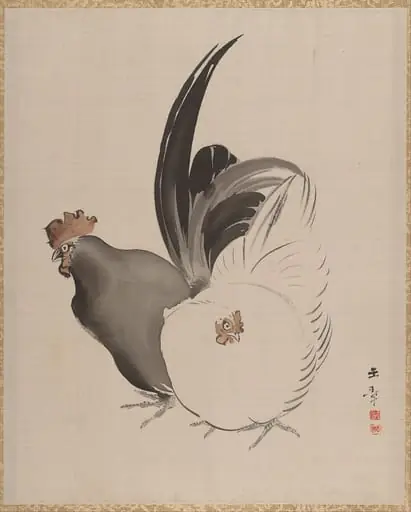 Untitled
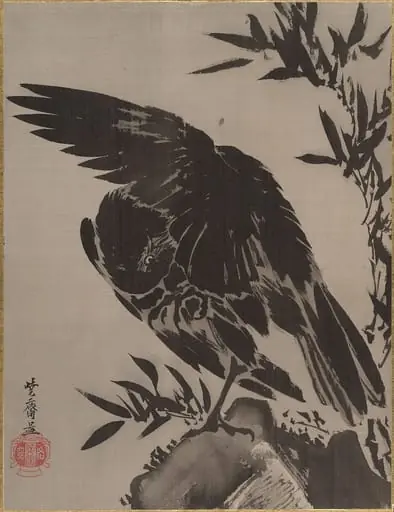 岩に鴉図|Crow on a Rock
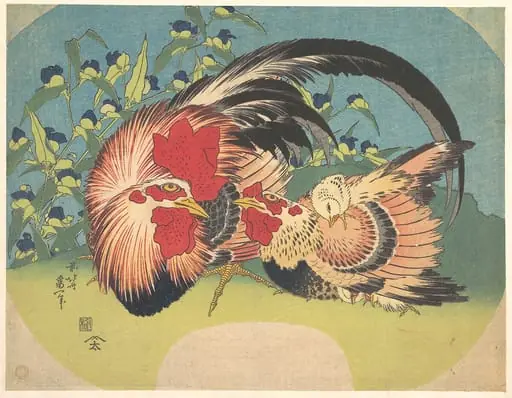 露草に鶏と雛|Rooster, Hen and Chicken with Spiderwort
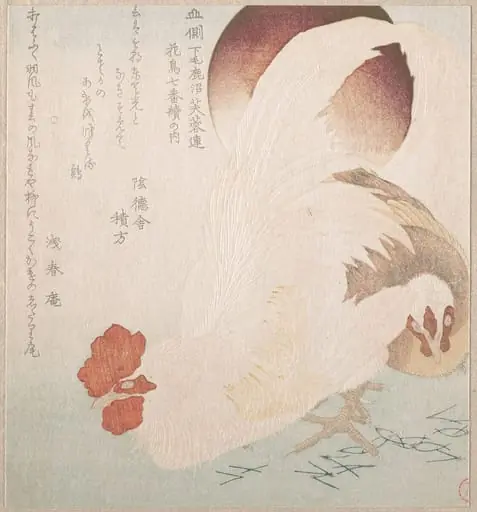 Untitled
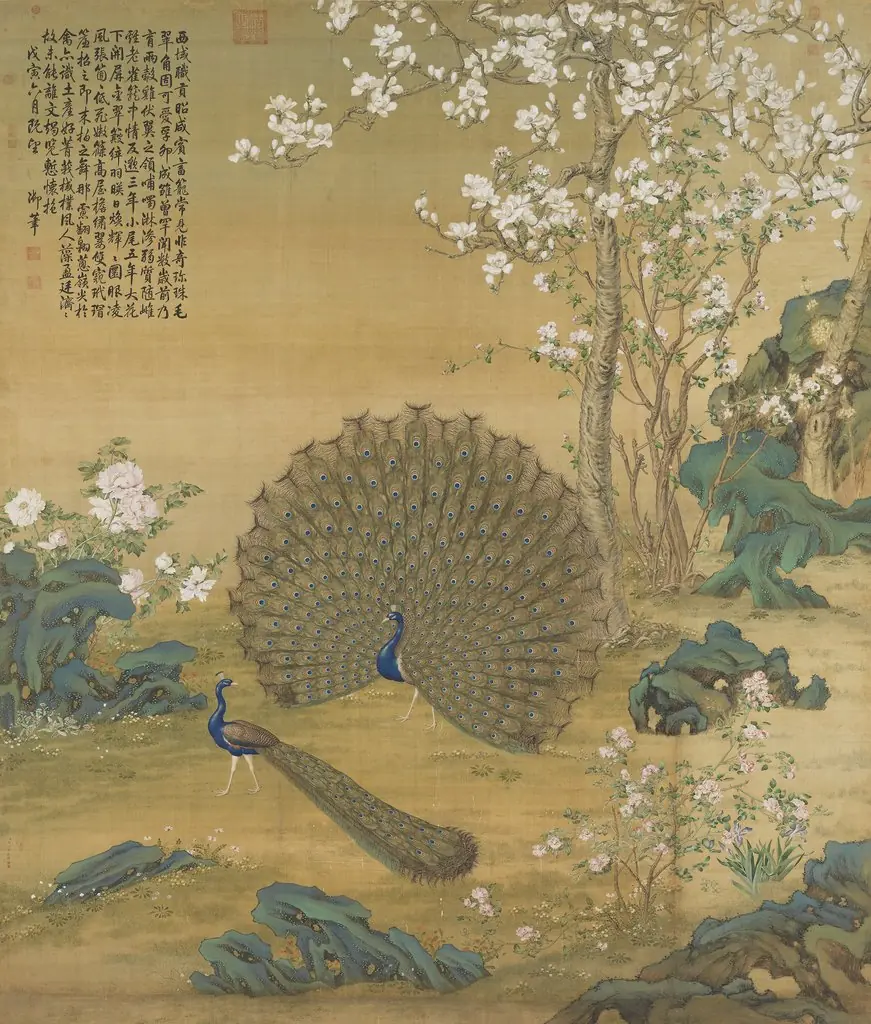
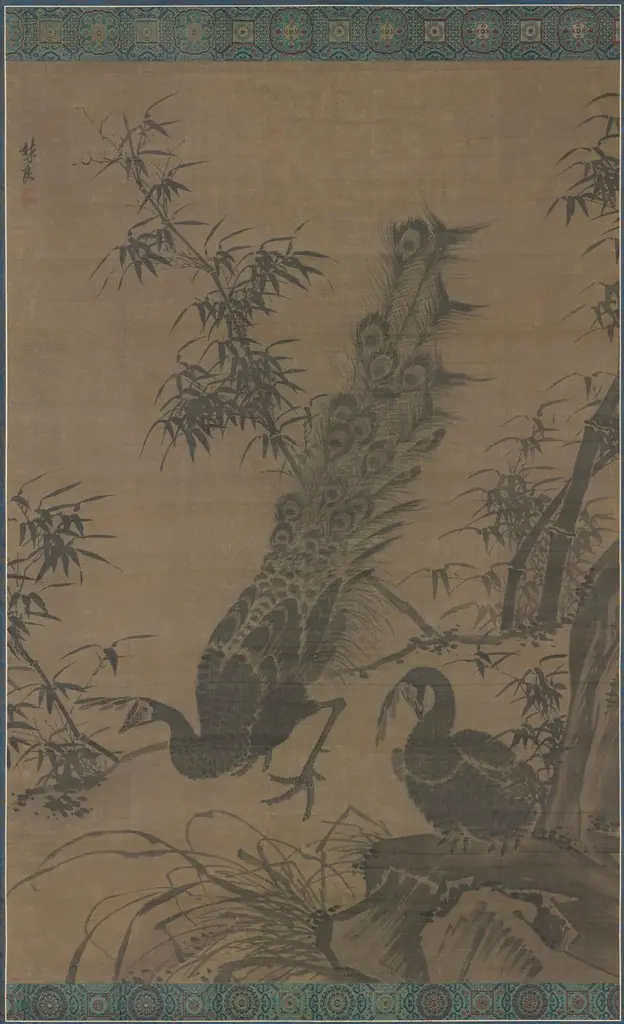 A Pair of Peafowl
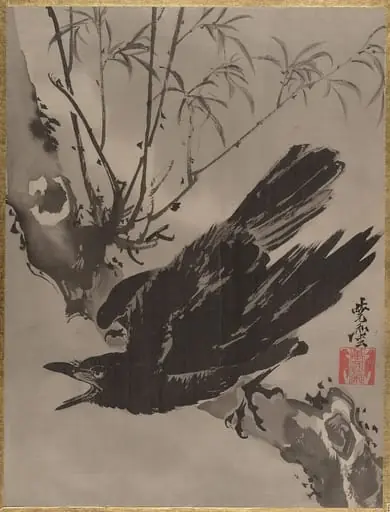 木に鴉図|Crow on a Branch
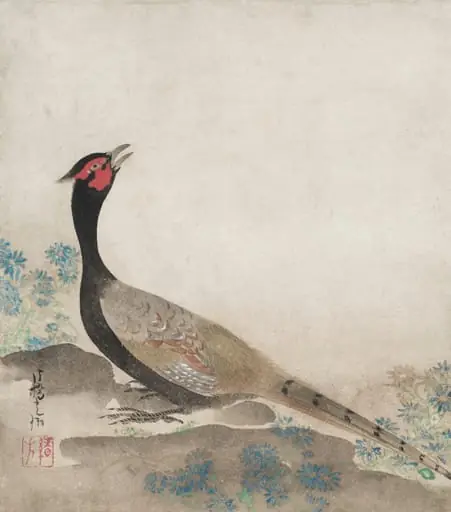 Pheasant
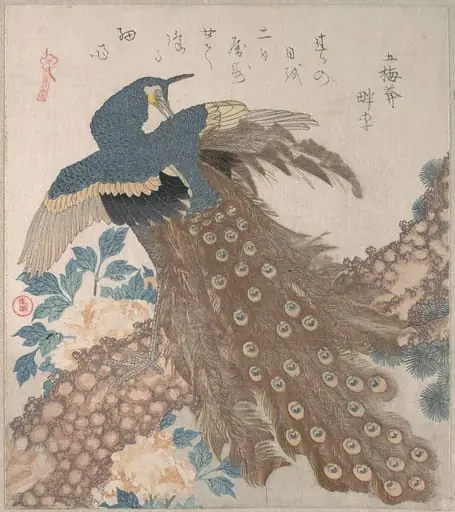 「三ひらの内」松・牡丹に孔雀|Peacock on Pine Tree and Peonies, from the series Three Sheets (Mihira no uchi)
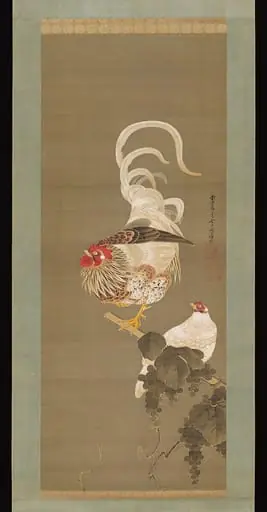 伊藤若沖筆 葡萄双鶏図|Hen and Rooster with Grapevine
 Peacock Spreading Its Tail Feathers