Artwork
Goblins
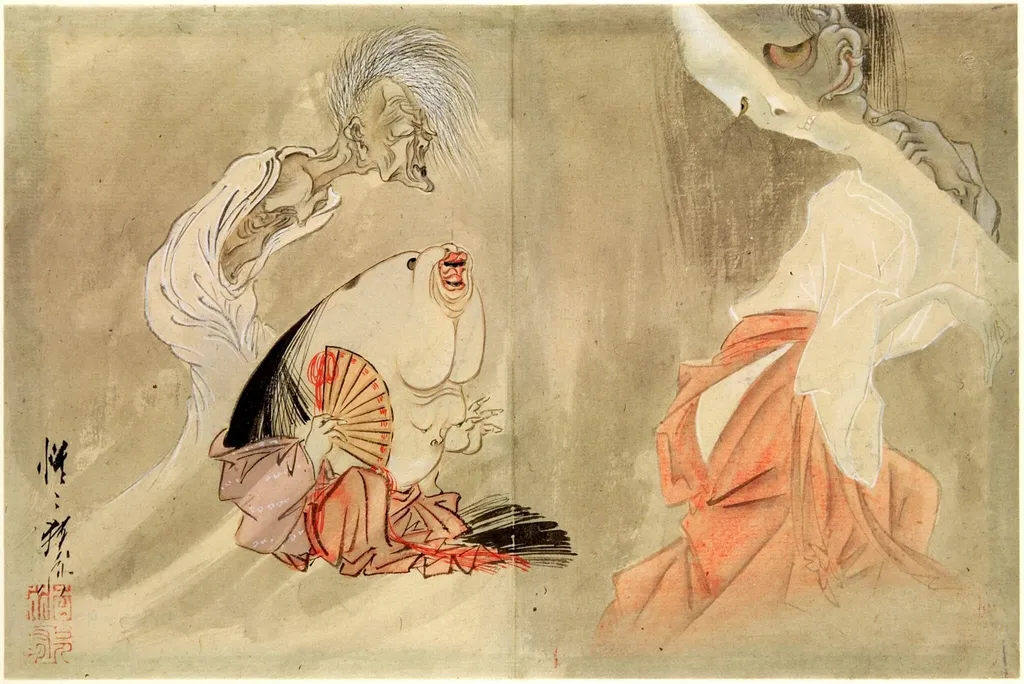
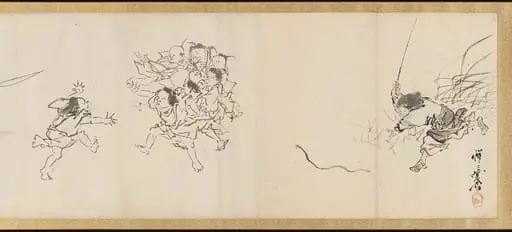
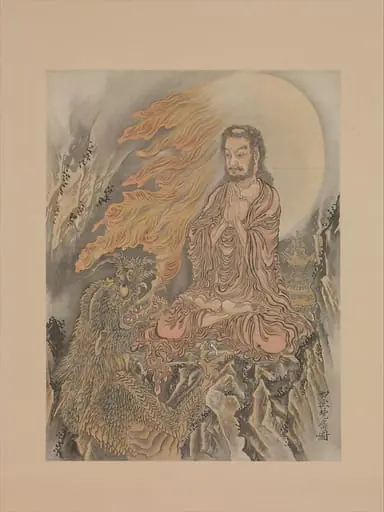
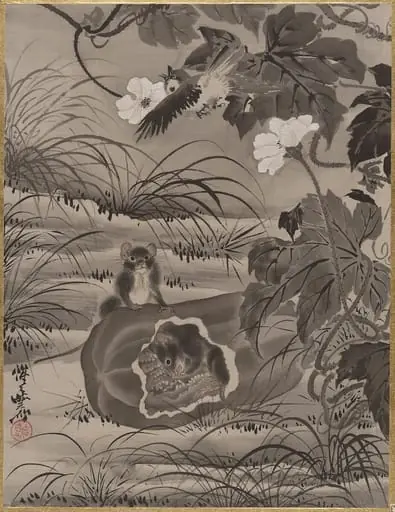
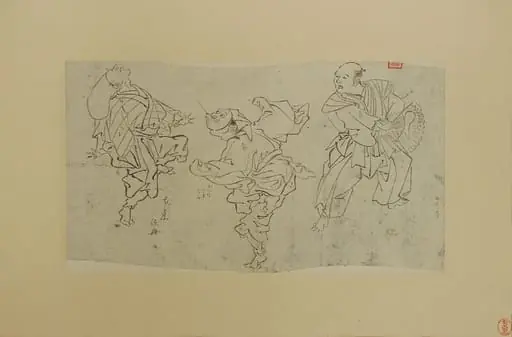
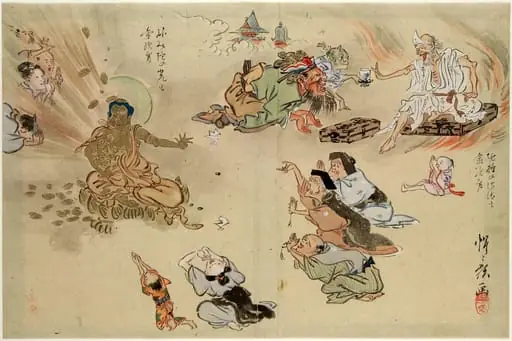
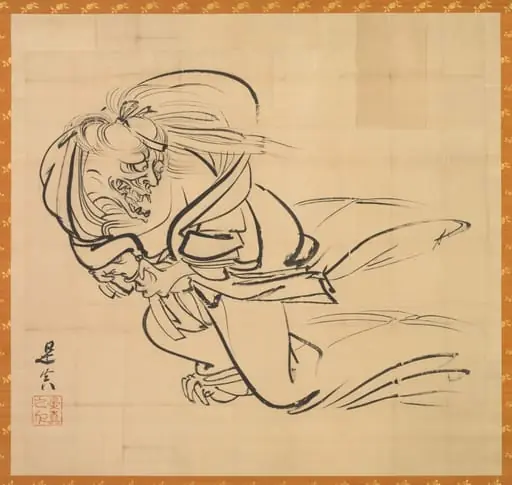
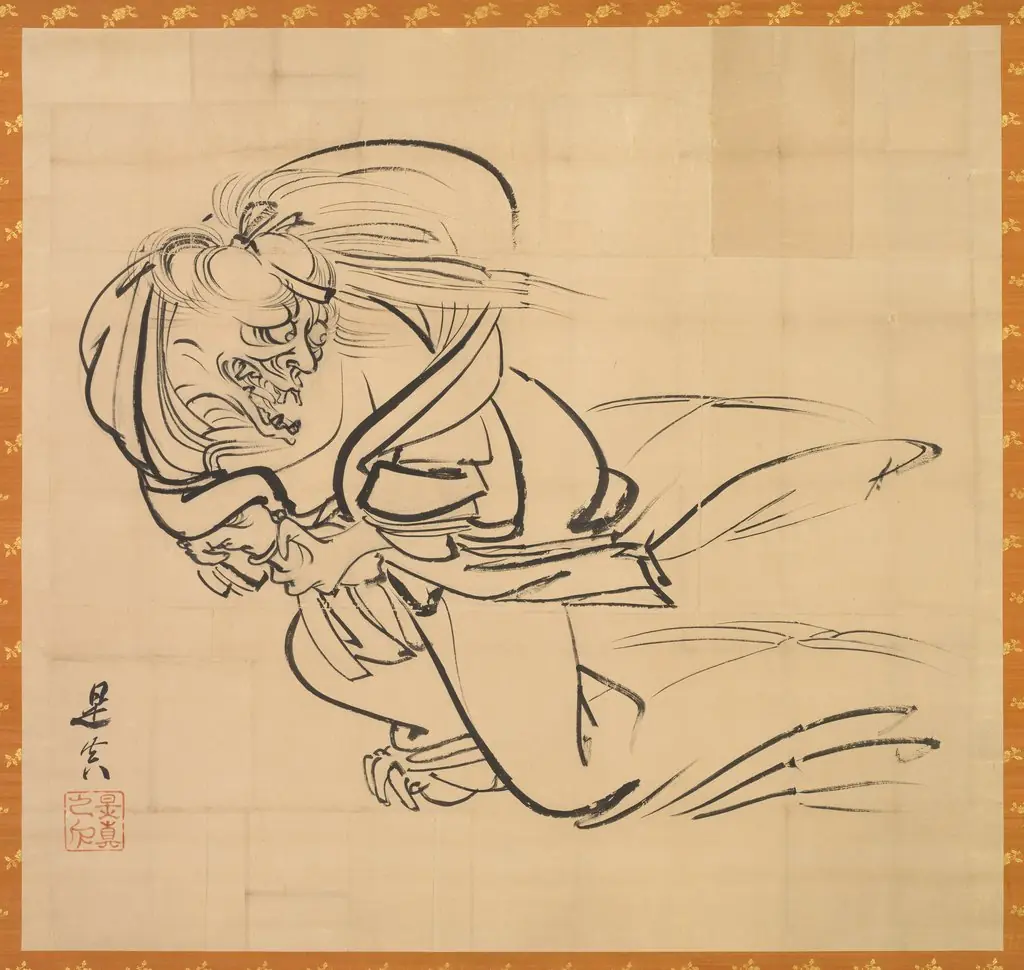
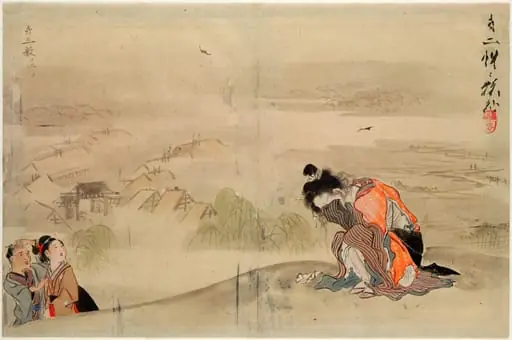
Goblins is a paint painting by the Impressionist artist Kawanabe Kyōsai 河鍋暁斎. It dates from 1870 and is held in the collection of the Victoria and Albert Museum. Created in 1870 by Kawanabe Kyōsai, this ink and light color painting on paper portrays three enigmatic figures in a dynamic composition.
About this work
Overview
Created in 1870 by Kawanabe Kyōsai, this ink and light color painting on paper portrays three enigmatic figures in a dynamic composition. The artist’s signature and seals appear in the lower left, consistent with his practice. The work entered the collection in 1897 after acquisition from Christie’s, a fact confirmed by Asia Department records following provenance research completed in 2022.
Subject & Meaning
The interaction suggests a narrative drawn from folklore or theatrical tradition, possibly reflecting themes of the supernatural, desire, or transformation.
The scene presents a surreal encounter between a spectral figure with flowing white hair, a woman in red reaching outward, and a hybrid creature, part fish, part human, holding a fan. The interaction suggests a narrative drawn from folklore or theatrical tradition, possibly reflecting themes of the supernatural, desire, or transformation. The figures’ gestures imply tension or connection, leaving interpretation open to cultural context.
Technique & Style
Kyōsai employs bold, fluid ink lines to define forms, with restrained washes of color adding subtle emphasis. The muted background isolates the figures, heightening their theatrical presence. His brushwork conveys motion and energy, characteristic of his expressive approach to ink painting, blending spontaneity with deliberate composition to evoke the uncanny without overt detail.
History & Provenance
The painting was acquired at Christie’s in the late 19th century and formally added to the collection in 1897. Its documented history was reaffirmed during a 2022 provenance review conducted by the Asia Department, which verified the acquisition records and confirmed the work’s continuous presence in the institution since its entry.
Context
Produced during the Meiji era, this work reflects Kyōsai’s engagement with traditional Japanese themes amid rapid modernization. His interest in yokai and folkloric subjects persisted even as Western influences reshaped artistic norms. This painting exemplifies his role in preserving and reimagining pre-modern imagery through a personal, dynamic visual language.
Legacy
Kyōsai’s unconventional depictions of mythic beings influenced later generations of Japanese illustrators and manga artists. This painting, though not widely exhibited, remains a representative example of his ability to fuse humor, horror, and movement in ink. Its endurance in institutional collections underscores its value as a record of 19th-century artistic experimentation.
Own this work as a print
Artist & collection
Artist
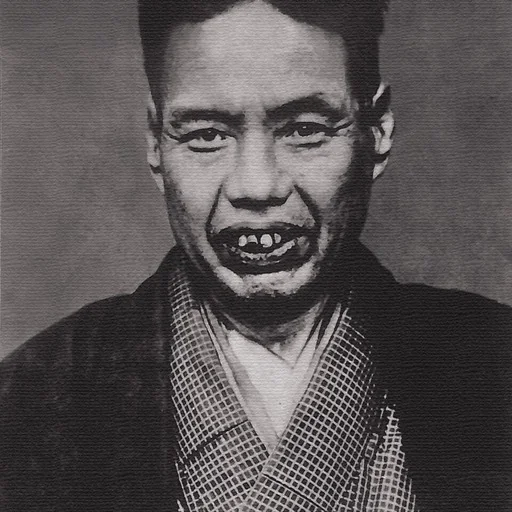
Kawanabe Kyōsai (河鍋 暁斎; May 18, 1831 – April 26, 1889) was a Japanese painter and caricaturist. In the words of art historian Timothy Clark, "an individualist and an independent, perhaps the last virtuoso in traditional Japanese painting".