Artwork
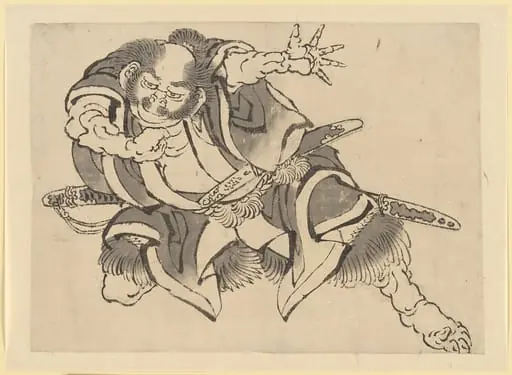
Sketch of Ibaraki-dōji
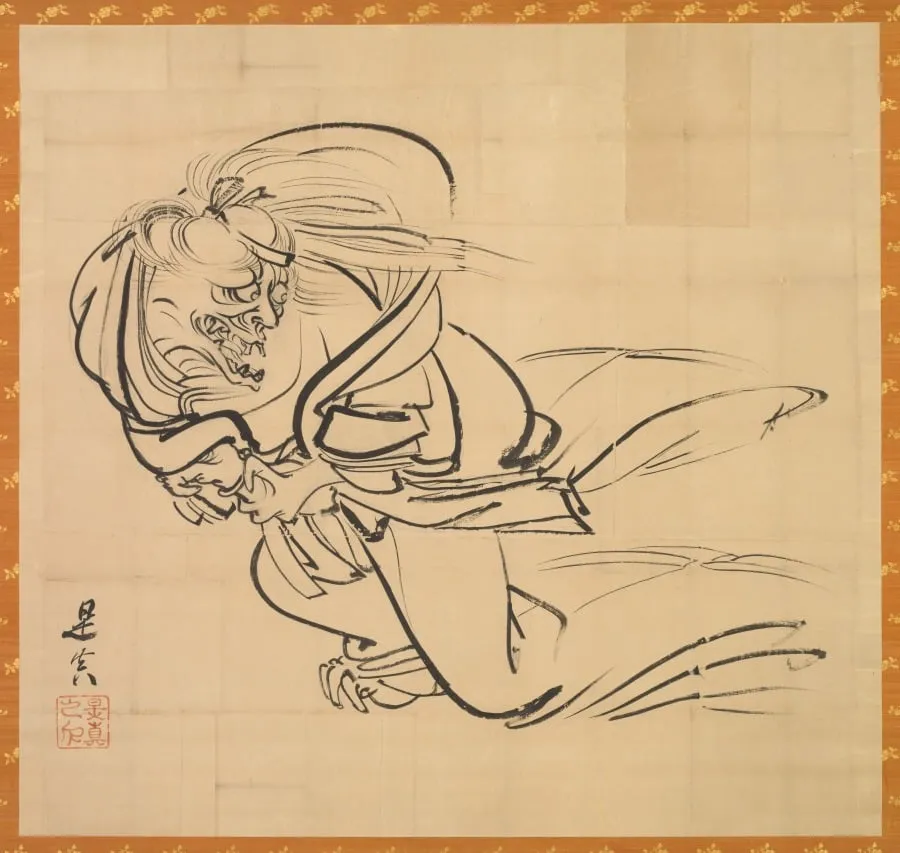
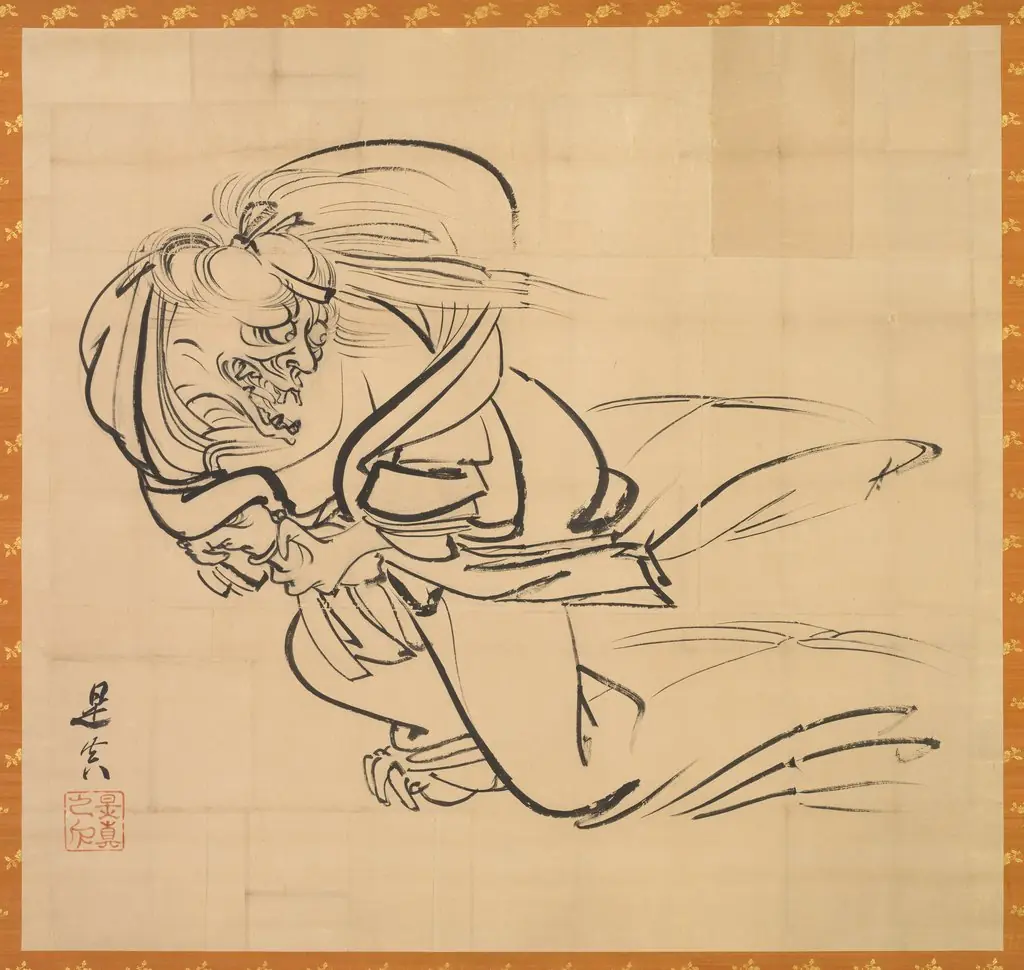
Sketch of Ibaraki-dōji is an unspecified painting by the Romanticist artist Shibata Zeshin. It dates from 1840 and is held in the collection of the Cleveland Museum of Art. The work is a preparatory drawing for a wooden votive plaque intended for a Shinto shrine.
- Accession no.
- 1990.6
- Credit line
- Mr. and Mrs. William H. Marlatt Fund
About this work
You see a wiry demon crouched on a rock, one hand clutching the arm that was just reattached to his shoulder.
You see a wiry demon crouched on a rock, one hand clutching the arm that was just reattached to his shoulder.
This sketch was a practice run for a shrine plaque. The demon’s stolen arm stands for the rights a sugar wholesalers’ union wanted back. The drawing was made when Japan’s rulers were already struggling, years before foreign ships arrived.
Look up the subject “japan, edo period (1615–1868)” to see more everyday objects turned into quiet prayers.
Overview
The work is a preparatory drawing for a wooden votive plaque intended for a Shinto shrine. Executed during the late Edo period, it depicts the legendary demon Ibaraki‑dōji in the act of reclaiming a severed arm, a scene used as a visual petition to the divine.
Subject & Meaning
In the composition, the wiry figure of Ibaraki‑dōji crouches on a rock, clutching the arm he has just reattached to his shoulder. The image functions as a metaphorical appeal by a sugar‑wholesalers’ union, which sought the reinstatement of its right to trade sugar after the Tokugawa authorities had revoked that privilege in an effort to stabilize the economy.
Technique & Style
Rendered in ink on paper, the sketch emphasizes swift, expressive line work characteristic of preparatory studies for shrine plaques. The artist employs a stark, monochrome palette and exaggerated anatomy to convey the demon’s ferocity while maintaining the ritualistic clarity required for a religious offering.
Context
Created before the arrival of American merchant vessels, the drawing reflects the fiscal strain experienced by the bakufu (military government) in the mid‑19th century. Commercial groups such as the sugar wholesalers’ union turned to religious petitions, employing familiar folklore to articulate economic grievances.
Legacy
Although the sketch itself was a practice piece, it illustrates how everyday commercial concerns were embedded within religious art during the Edo era. The work offers insight into the interplay between popular myth, economic protest, and shrine patronage in pre‑modern Japan.
Artist & collection


 Untitled
 Hotei
Hotei 清 蘇仁山 李凝陽像 軸|The Immortal Li Tieguai
 月見布袋図 (Tsukimi Hotei zu)|Hotei Admiring the Moon
 Kingfisher Perched above a Stream
 Untitled
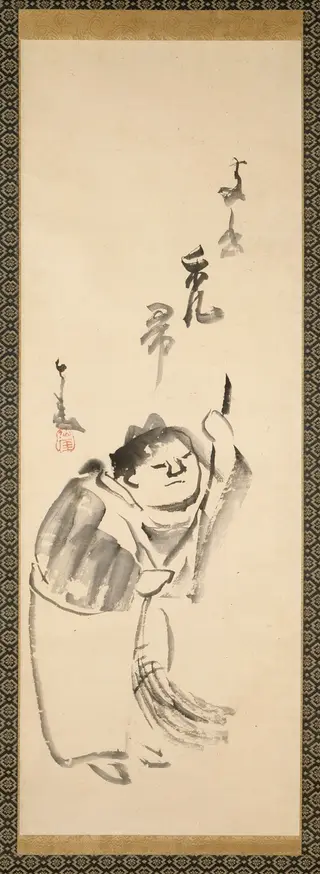 Jittoku and Kanzan
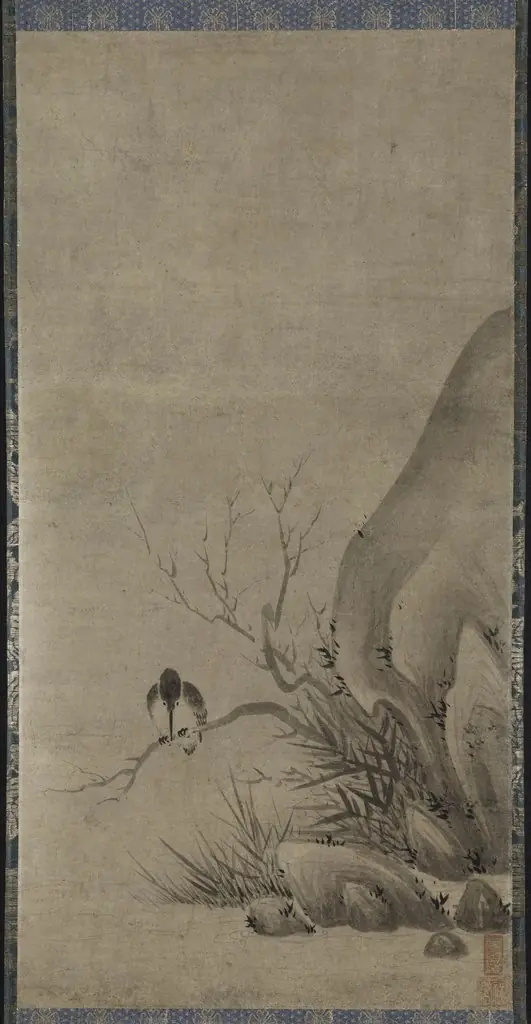 Kingfisher Perched above a Stream
 Untitled
 Untitled
 Nakamura Utaemon III as the Monkey Trainer Yojiro (from the series Famous Kabuki Plays)
- Sketch of Ibaraki-dōji