Artwork
Beacon Rock, Newport Harbor
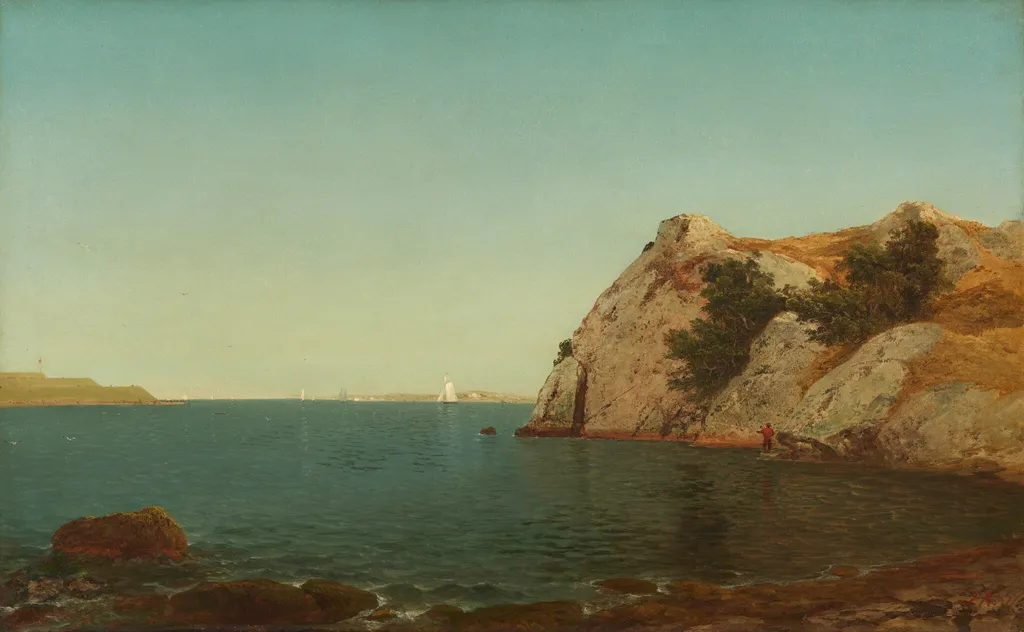
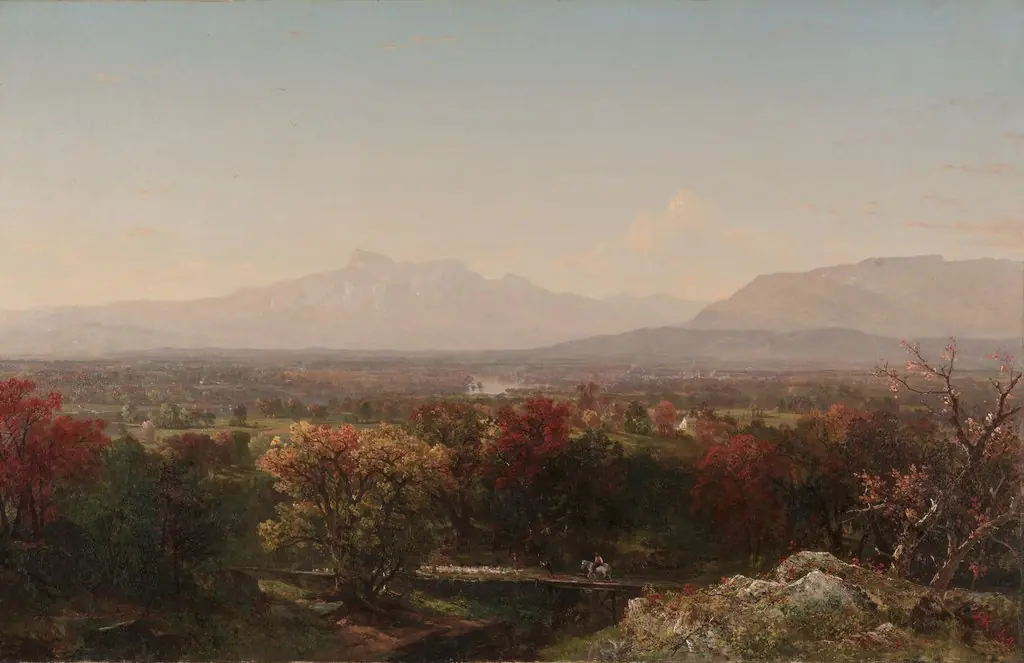
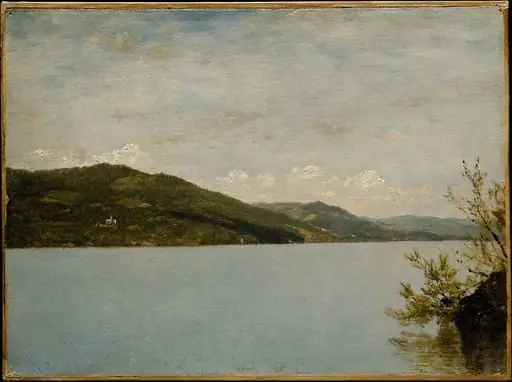
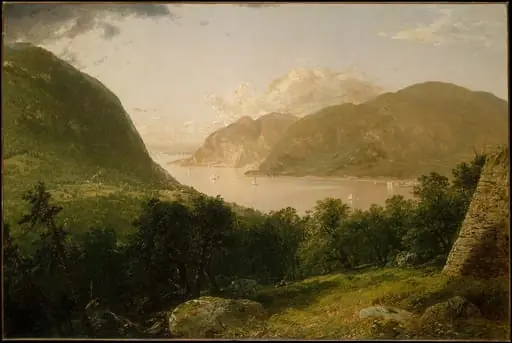
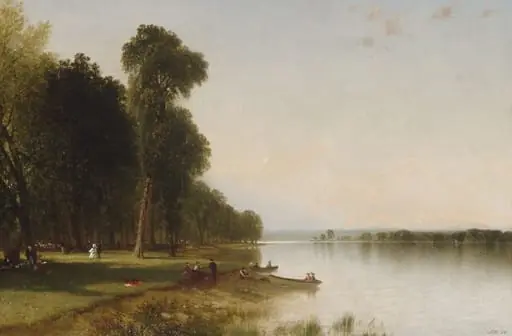
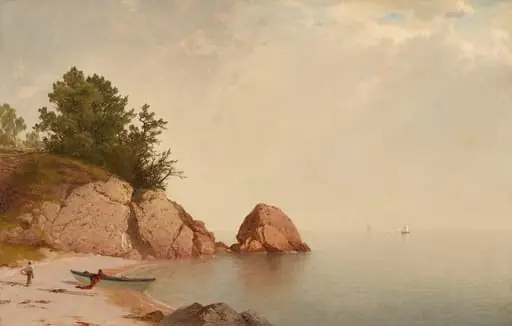
Beacon Rock, Newport Harbor is an oil painting by the Hudson River School artist John Frederick Kensett. It dates from 1857 and is held in the collection of the National Gallery of Art.
- Inscription
- Inscribed:lower right, JF in ligature: JF.K. 57
About this work
Subject & Meaning
The work entered the National Gallery of Art collection through a gift from the Sturges family, whose records indicate it remained in that family until 1953.
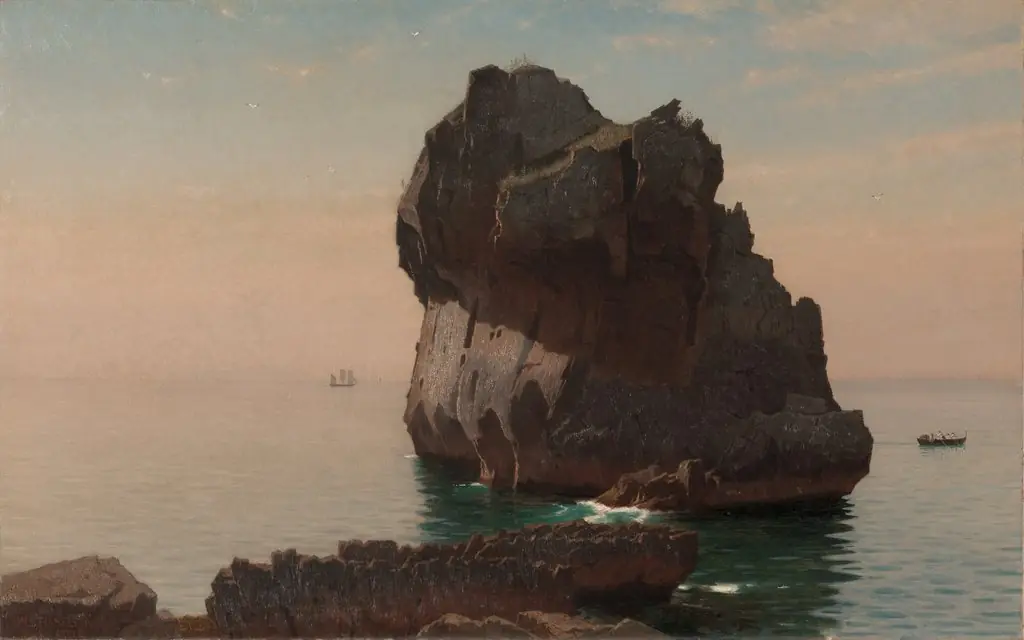
The painting shows a coastal view centered on a distinctive rock outcrop at Newport Harbor, identified as Beacon Rock. Executed in 1857 by John Frederick Kensett, it is an oil on canvas work classified as marine art, a genre that documents seascapes and harbor scenes. The composition emphasizes the natural form of the rock against the water, reflecting the mid‑nineteenth‑century interest in recording specific maritime landmarks.
The work entered the National Gallery of Art collection through a gift from the Sturges family, whose records indicate it remained in that family until 1953.
Technique & Style
Executed in 1857, this marine painting utilizes oil paint applied to a canvas support. The work measures 57.2 centimeters in height and 91.4 centimeters in width. Classified as a painting within the marine genre, the piece reflects the artist's engagement with coastal subjects during the mid-nineteenth century.
While specific details regarding the artist's brushwork, surface condition, or distinct stylistic handling are not explicitly detailed in the available records, the fundamental material composition and physical dimensions are established. The medium of oil on canvas was a standard choice for Kensett's landscape and seascape productions of this period.
History & Provenance
John Frederick Kensett executed Beacon Rock, Newport Harbor in 1857. While family tradition, relayed by Frederick Sturges Jr. in 1966, maintains that the artist painted the work specifically for his grandfather, Jonathan Sturges, definitive documentary proof of this commission remains elusive. No contemporary records from the 1850s and 1860s list Kensett's works within the Sturges collection, and the artist's account books only vaguely reference a "Newport Scene" sold for $300 that year.
Despite these gaps, the accepted ownership chain traces the painting from Jonathan Sturges to his son, Frederick Sturges, and subsequently to Frederick Sturges Jr. In 1953, Frederick Sturges Jr. donated the canvas to the National Gallery of Art in Washington, D.C., where it remains part of the permanent collection.
Beacon Rock, Newport Harbor (1857) by John Frederick Kensett is held by the National Gallery of Art in Washington, D.C. The painting entered the NGA in 1953 as a gift from Frederick Sturges, Jr. (1876–1977) of Fairfield, Connecticut, descending through the Sturges family from his father Frederick Sturges (d. 1917) and possibly from his grandfather Jonathan Sturges (1802–1874) of New York and Fairfield, Connecticut. The NGA provenance note qualifies the earliest ownership as "possibly" Jonathan Sturges, citing a 1966 letter from Frederick Sturges, Jr. stating the work was "painted for my grandfather," while later correspondence from Frederick Sturges III in 1981 asserted a family tradition that all paintings in the Sturges collection were originally purchased by Jonathan Sturges. The NGA notes that no certain evidence establishes that ownership, and that no Kensett works appear in published discussions of the Jonathan Sturges collection.
Kensett's account book records a "Newport Scene" sold for $300 in 1857, which may refer to this painting.
No exhibition history beyond the NGA's 1953 accession is documented in the provided sources.
Overview
Painted in 1857, Beacon Rock, Newport Harbor is a marine landscape by John Frederick Kensett, a central figure of the second generation of the Hudson River School. The work depicts the distinctive basalt formation known as Beacon Rock in Newport, Rhode Island, rendered with the precise, luminous clarity characteristic of Kensett's mature style. The composition centers on the large, moss-covered rock in the foreground, which anchors the scene and leads the viewer's eye across the calm, reflective waters of the harbor.
In the middle distance, small sailboats navigate the tranquil surface, while the background dissolves into a hazy, atmospheric horizon where sky and water merge. Executed in oil on canvas, the painting exemplifies Kensett's transition toward the Luminist aesthetic, emphasizing stillness, infinite space, and the subtle effects of light and air. Created during a period when the artist frequently visited Newport, the work reflects his deep engagement with the coastal geography of New England and his pursuit of a serene, contemplative vision of the American landscape.
Own this work as a print
Artist & collection

Artist
John Frederick Kensett was an American landscape painter and engraver born in Cheshire, Connecticut.