Artwork
『五色染六歌仙』 僧正遍昭|“The Poet Sōjō Henjō (816–890) Slipping a Letter into a Woman’s Sleeve,” from the series Five Colors of Love for the Six Poetic Immortals (Goshiki-zome rokkasen)
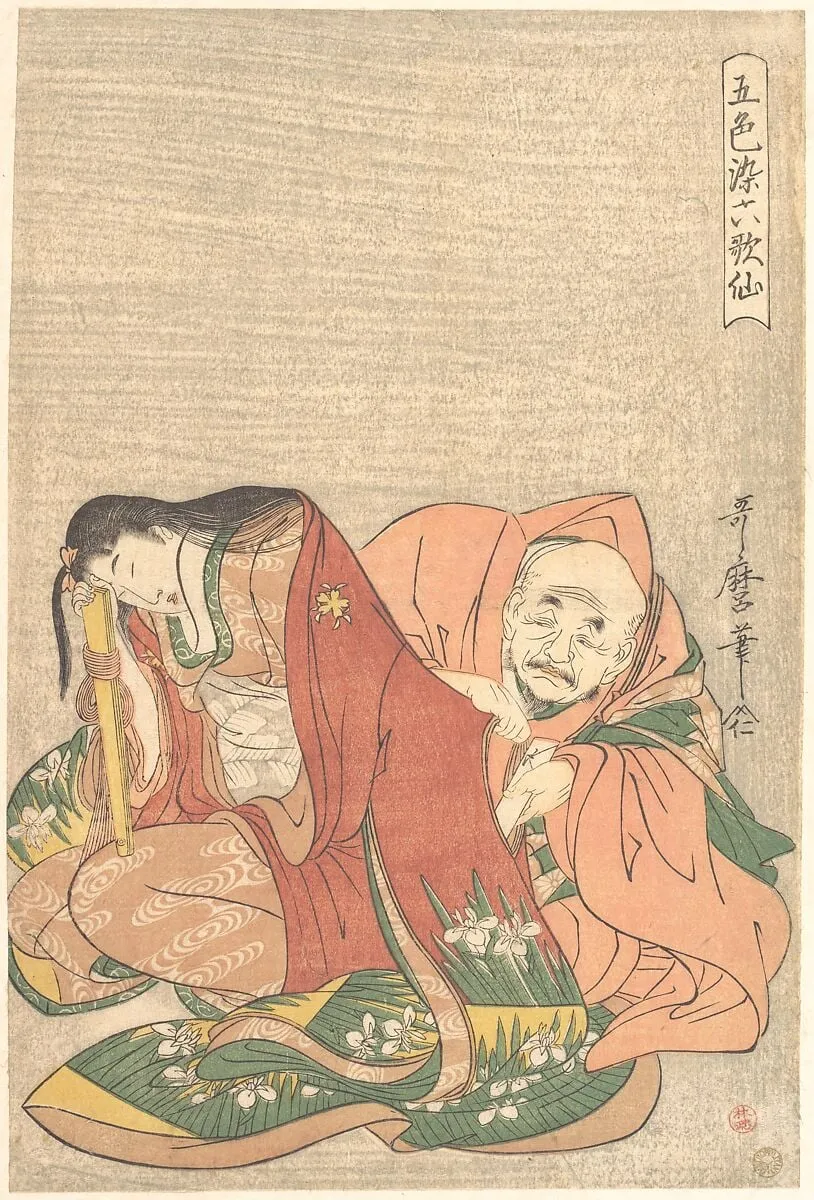
『五色染六歌仙』 僧正遍昭|“The Poet Sōjō Henjō (816–890) Slipping a Letter into a Woman’s Sleeve,” from the series Five Colors of Love for the Six Poetic Immortals (Goshiki-zome rokkasen) is an ink print by the Romanticist artist Kitagawa Utamaro. It dates from 1798 and is held in the collection of the Metropolitan Museum of Art.
About this work
Subject & Meaning
This woodblock print by Kitagawa Utamaro illustrates the Heian-period poet Sōjō Henjō (816–890), one of the Six Poetic Immortals.
This woodblock print by Kitagawa Utamaro illustrates the Heian-period poet Sōjō Henjō (816–890), one of the Six Poetic Immortals. The composition captures a specific narrative moment where Henjō is depicted slipping a love letter into the sleeve of a woman, visually representing the theme of falling in love. As part of the series "Five Colors of Love for the Six Poetic Immortals," the work functions as a mitate-e, a genre that reinterprets classical literary figures within contemporary ukiyo-e aesthetics.
The imagery symbolizes the intersection of historical poetic tradition and the romantic intrigues of the floating world, using the physical act of delivering a letter to embody the emotional state of courtship.
Technique & Style
Executed in nishiki-e (brocade print) technique, the sheet is printed in polychrome ink and color on paper with mica flecks to heighten luminosity. Utamaro’s delicate line and subtle gradations of tone define the figures and setting, while the patterned textile backdrop is rendered with fine karazuri (blind-printing) to suggest woven texture without added color. The composition balances flat decorative pattern against softly modeled faces, a hallmark of Utamaro’s mature style.
The print belongs to a mitate-e series that reimagines Heian poets in contemporary Edo romantic narratives, pairing the canonical subject with the artist’s signature lyricism and technical refinement.
History & Provenance
The woodblock print titled “The Poet Sōjō Henjō Slipping a Letter into a Woman’s Sleeve” was created by Kitagawa Utamaro in 1798. It belongs to the series Five Colors of Love for the Six Poetic Immortals (Goshiki-zome rokkasen). The work is a nishiki-e print executed in ink and color on paper. Currently, the piece is held in the collection of the Metropolitan Museum of Art.
The woodblock print "The Poet Sōjō Henjō Slipping a Letter into a Woman's Sleeve" is held in the collection of the Metropolitan Museum of Art. Created in 1798 by Kitagawa Utamaro, this work is part of the series Five Colors of Love for the Six Poetic Immortals (Goshiki-zome rokkasen). The museum's records identify the piece as a nishiki-e print on paper depicting the poet Henjo.
The provided sources do not specify a unique accession or inventory number for this particular sheet, nor do they list any exhibition history or loan records for the work.
Overview
This woodblock print, created around 1798 by Kitagawa Utamaro, belongs to the series titled Five Colors of Love for the Six Poetic Immortals. It portrays a moment in which the poet Sōjō Henjō, dressed in a dark robe, discreetly places a folded letter into the sleeve of a woman wearing a pale pink kimono, who looks away, partially concealed by a fan.
Context
During the Edo period, ukiyo‑e artists frequently depicted scenes from literature and folklore, blending narrative content with the popular genre of bijin-ga, images of beautiful women. Utamaro’s focus on a fleeting romantic encounter aligns with contemporary tastes for refined, emotionally charged moments drawn from classical poetry.
Artist & collection


 Untitled
 Untitled
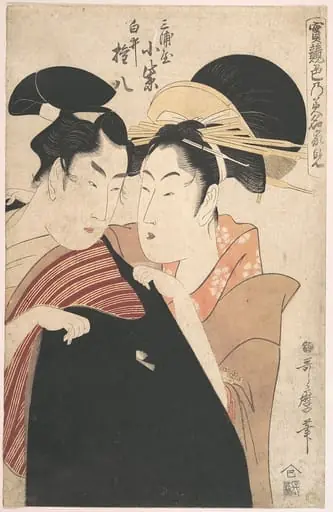 実競色乃美名家見 三浦屋小紫 白井権八|The Lovers Miura-ya Komurasaki and Shirai Gonpachi.
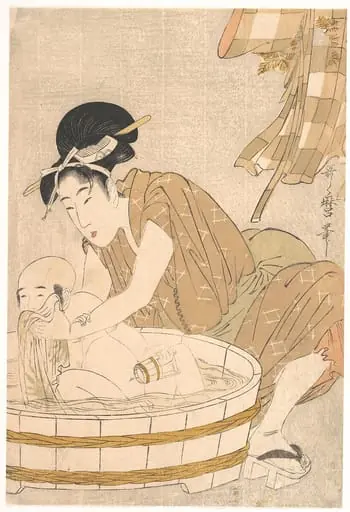 行水|Bathtime (Gyōzui)
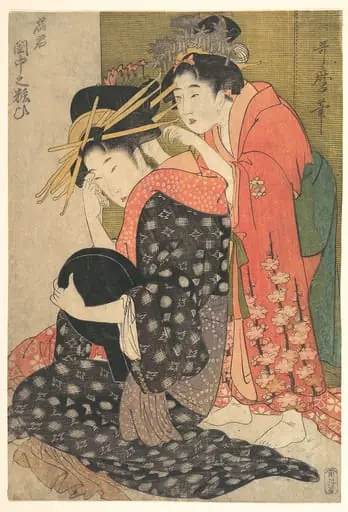 名君 閨中の粧ひ|The Oiran Yoso-oi Seated at Her Toilet
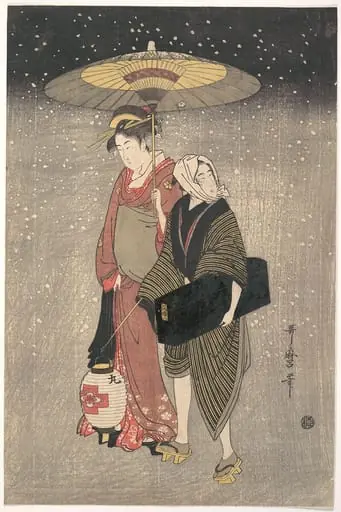 Untitled
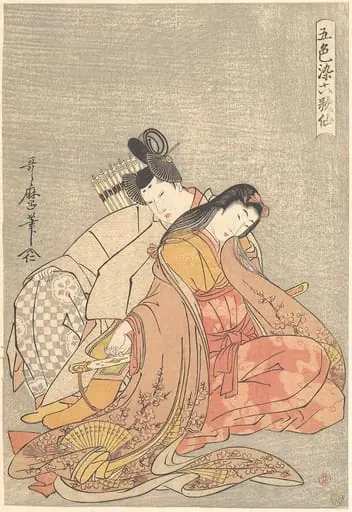
- 『五色染六歌仙』 在原業平と小野小町|“The Poet Ariwara no Narihira (825–880) and Ono no Komachi,” from the series Five Colors of Love for the Six Poetic Immortals (Goshiki-zome rokkasen)
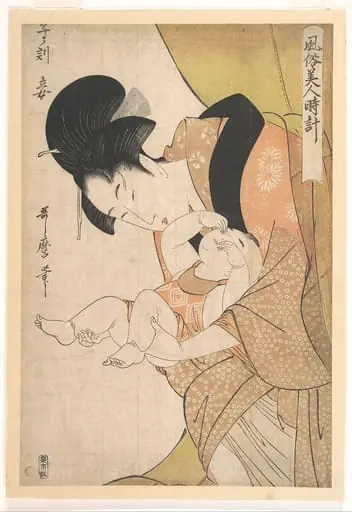 風俗美人時計 子ノ刻 妾|Midnight: Mother and Sleepy Child
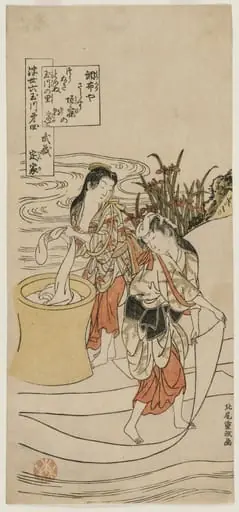 The Chofu Tama River in Musashi Province (from the series The Six Tama Rivers of the Floating World)
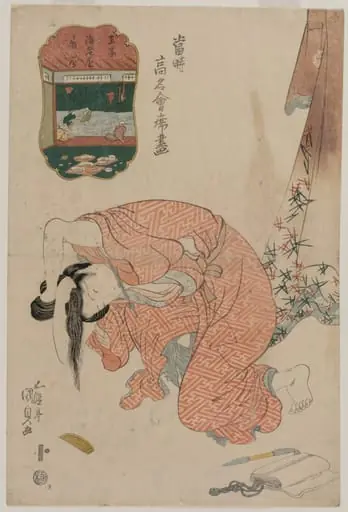 Woman Tying Her Hair (from the series Famous Restaurants of the Present Day)
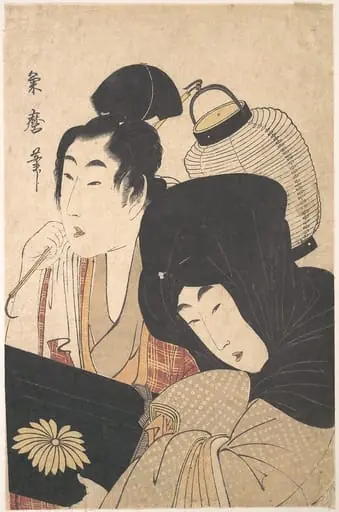 Untitled
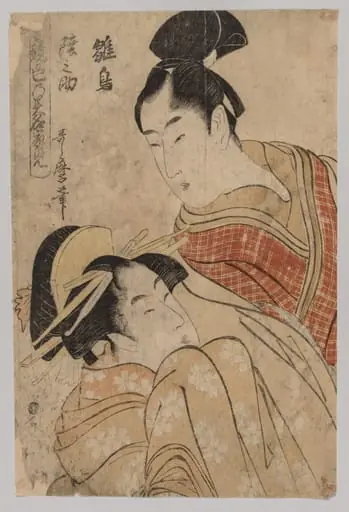 Making Love
 Untitled
 Untitled
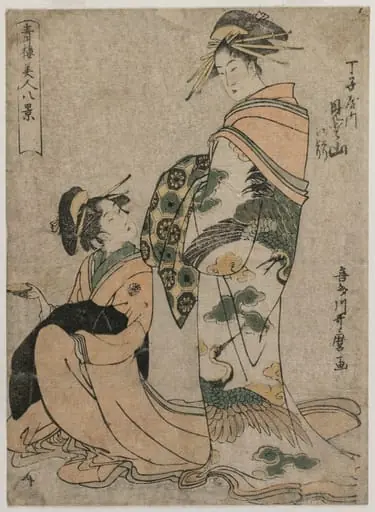 The Courtesan Misyama of Chojiya (from the series Eight Views of Beautiful Women of the Green Houses)
 Untitled
 逢身八契 権八小紫の床の通気|Gonpachi ni Komurasaki no Toko no Tsuki
 初詣|Young Women Visiting a Shinto Shrine
 礫川亭永理 (鳥橋斎栄里)画 壬生忠岑の見立絵|Courtier and Two Ladies of the Court, with a Poem by Mibu no Tadamine